No, it’s a common complication.
A tummy tuck (abdominoplasty) is one of the most advanced types of body contouring and abdominal reconstruction involving the wide undermining of the skin of the abdominal flap and the structural restoration of the rectus abdominis muscles. Formation of a seroma, a localized collection of sterile, amber-colored lymphatic fluid, is one of the most commonly encountered postoperative complications. Patients have some concerns upon seeing a “sloshing” sensation or a soft bulge during their healing stage; they might even ask if a seroma implies that their tummy tuck has been ”bad”. The medical response to this is an unequivocal no. A seroma is not a sign of a surgeon’s incompetence or of a “failed” procedure; it is simply a biological consequence of the body’s inflammatory response to the creation of dead space.
Our team at Lin Health Europe Clinic sees seroma treatment as an integral part of post-operative monitoring. For our international patients who decide to combine a trip to Turkey with their surgery, we stress that although a seroma by itself is not indicative of a “bad” operation, it still needs to be handled with professional attention to avoid any lasting deformity of the contour. Our centre is the leading institution for advanced abdominal sculpting and we provide you with a medical environment where we employ the progressive tension sutures and drainless methods to reduce to a minimum the risk of fluid collection so that your road to a flat, toned figure is through the highest levels of clinical standards.
The Anatomy of “Dead Space”
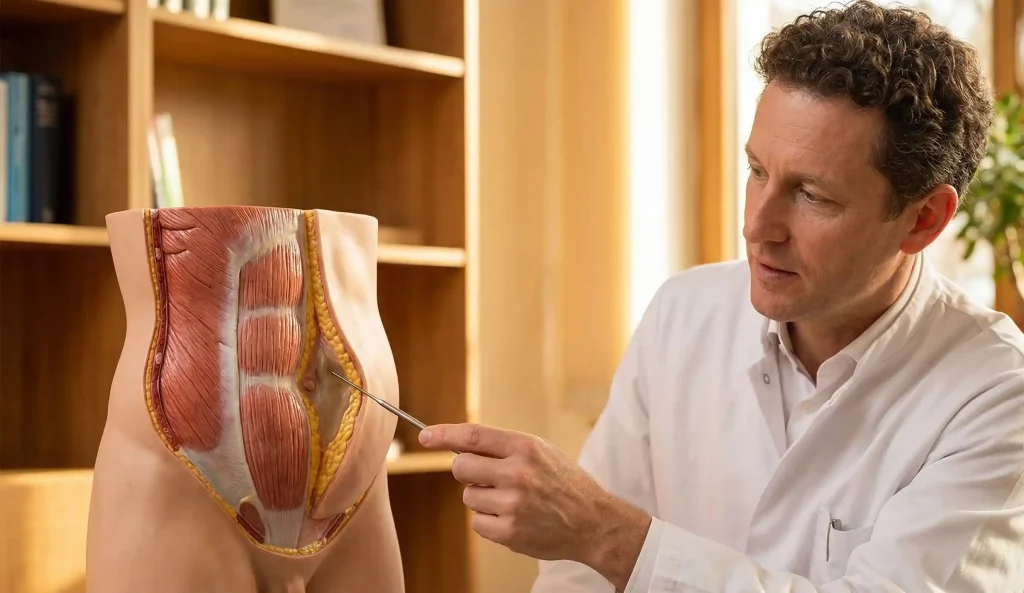
Understanding why seroma is not a sign of “bad” tummy tuck requires knowledge of the abdominal wall anatomy. During abdominoplasty, the surgeon detaches the skin and fat from the muscle so that the tissues can be pulled tighter and excess tissue removed. This detachment may result in an internal “void” or dead space. Filling any empty space inside the body with fluid is the body’s automatic response – specifically, lymphatic fluid and serum – as part of the acute inflammatory phase of healing. Under normal circumstances, the lymphatic system reabsorbs this fluid. Nonetheless, since the surgery has cut the lymphatic vessels in the area, the fluid can be building up faster than the body is able to drain it.
When you visit Lin Health Europe Clinic in Turkey, you will learn that seroma is just the body’s way to “fill the gap” before the tissues have been completely joined back together through the neocollagenesis phase.
Factors Beyond the Surgeon’s Control
Currently, surgical technique only minimally affects the risk of fluid accumulation, while other biological factors completely unrelated to the surgeon’s skills still result in seroma:
- Body Mass Index (BMI): A patient with a higher BMI has a fatter subcutaneous tissue layer. Fat contains numerous small lymphatic vessels and is a highly vascularized tissue; therefore, the more fat manipulated during the surgery, the greater the biological “leakage” of fluids.
- Tissue Sensitivity: Each patient has a different inflammatory reaction. Some of them naturally secrete more exudate (inflammatory fluid) when wounded.
- Activity Levels: Doing physical activities too soon or even walking a lot during the first two weeks around Istanbul can make the elevated skin flap to “shear” against the muscle, which reopens the small blood vessels and triggers the accumulation of fluid.
At Lin Health Europe Clinic in Turkey, we are skilled at conducting a thorough pre-surgical evaluation to pinpoint these risks. Being aware that the body ’s internal ”sewing” is quite delicate during the early healing phases, we advise our patients in Turkey to lead a ”conservative” lifestyle.
How Modern Techniques Minimize the Risk
Until now, a seroma was regarded as a sign of a “bad” tummy tuck, but now top surgeons have figured out a way to prevent the situation with certain sophisticated techniques. Lin Health Europe Clinic, for example, uses Progressive Tension Sutures (PTS). Acting like internal patchwork, these sutures hold the underside of the skin flap in place by directly attaching it to the abdominal muscle wall at different points. This not only eliminates the dead space but also leaves no room for fluid to be trapped.
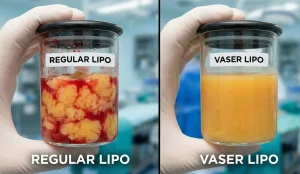
Apart from that, our VASER (Ultrasonic) Liposuction is less damaging to blood vessels and lymphatic structures as opposed to traditional mechanical lipo, which is why our surgical field is much “drier”. The Istanbul team sees these approaches as the very essence of a high-class abdominoplasty and ensures that patients get a recovery that is safer and more comfortable without the need to be reliant on drains, which are generally unpleasant and inconvenient.
The Importance of Professional Management

A seroma is not a sign of a bad surgery, but neglecting a seroma is surely a sign of poor post-surgical care. If a large seroma is left without treatment, it can cause the development of a pseudocapsule — a thick layer of scar tissue that prevents the fluid from ever being reabsorbed.
We recognize the need for excellent postoperative follow-up in Turkey and therefore provide 24/7 support as a standard. If a seroma is seen, we do a Fine-Needle Aspiration (FNA)—a technique whereby the fluid is drained safely and without pain in a sterile setting. Paired with the application of compression foams, which encourages tissue adhesion, our treatment plan here at Lin Health Europe Clinic ensures that a simple biological phenomenon is not transformed into a visually noticeable complication permanently, thereby maintaining the ”flatness” and harmony of the results.
Postoperative Compliance: Your Role in Prevention
The result of a “good” tummy tuck is the collaboration of the surgeon’s accuracy and the patient’s adherence to instructions. The most effective measure to prevent a seroma is the constant, high-pressure use of a Stage 1 Faja (compression garment). The clinical significance of compression is that it physically strives to “glue” the skin back to the muscle.
We in Turkey require our patients to wear their garments 24/7 for six weeks. It takes only a few hours of having no gains in compression to let the fluid rise in the dead space. And we advise Manual Lymphatic Drainage (MLD) too, a kind of medical massage that stimulates the lymphatic system and helps the body to better clear the fluids. Strictly following the guidelines here at our Istanbul clinic actively eliminates the very fluid build-ups that keep many patients wrongly blaming their doctors for malpractice.
FAQ:
Not at all, seromas are a very typical biological reaction of the “dead space” surgically created in a tummy tuck. Actually, the body’s inflammatory mechanism may produce fluid accumulation as it attempts to repair the tissues, even in cases of perfectly executed surgery in Turkey.
We eliminate volume seromas, via a straightforward and virtually painless fine-needle aspiration process in our Istanbul center that is quickly performed. Then we apply a vigorous compression using abdominal foams to permanently fuse the skin and muscle layers.
Having labiaplasty before pregnancy is physically and clinically safe, but one of the key arguments in favor of waiting after children is that you get your results on the basis of your permanent anatomical baseline. Our Turkey-based consultants will give you customized advice that takes into account your lifestyle and plans for starting a family.
The best methods to prevent the development of seromas are the continuous wearing of your compression garment 24/7, implementation of medical-grade abdominal foams, and following strictly the “no-exertion” protocol during the first two weeks of recovery period in Istanbul.
Together with a seroma development, if unchecked, scarring may occur which forms a so-called “pseudocapsule” preventing the fluid from being reabsorbed ever. This could lead to permanent swelling or cosmetic irregularities which is why our healthcare professionals in Turkey stress the critical necessity for early diagnosis and expert drainage.
Pollack, H., & Pollack, T. (2000). Progressive tension sutures: a technique to reduce local complications in abdominoplasty. Plastic and Reconstructive Surgery.
Matarasso, A. (1989). Abdominolipoplasty: a system of classification and treatment for combined abdominoplasty. Aesthetic Plastic Surgery.
Nahas, F. X. (2001). An aesthetic classification of the abdomen based on the myoaponeurotic layer. Plastic and Reconstructive Surgery.
Di Pietro, V., et al. (2014). Management of seroma after abdominoplasty: a systematic review. Journal of Plastic, Reconstructive & Aesthetic Surgery.