Blepharoplasty lifts and tightens eyelids.
“Droopy eyelids” is a typical clinical feature of the physiological aging process in the field of ophthalmic plastic surgery and periorbital rejuvenation. Usually, it is presented biologically in two forms: dermatochalasis – accumulation of redundant and sagging skin on the upper eyelid and ptosis – functional weakening of the levator muscle which is a muscle responsible for lifting the eyelid. When patients inquire about fixing droopy eyelids with age, the doctor’s response depends on the anatomical origin of the problem. Despite non-surgical energy-based devices being able to provide a certain degree of tightening for early-stage skin looseness, surgical correction remains the standard and permanent solution for structural problems through blepharoplasty or levator muscle repair. These surgeries not only “stretch” the skin but also revitalize the internal structure of the eye, resulting in a youthful eye opening, and often the superior visual field is also regained.
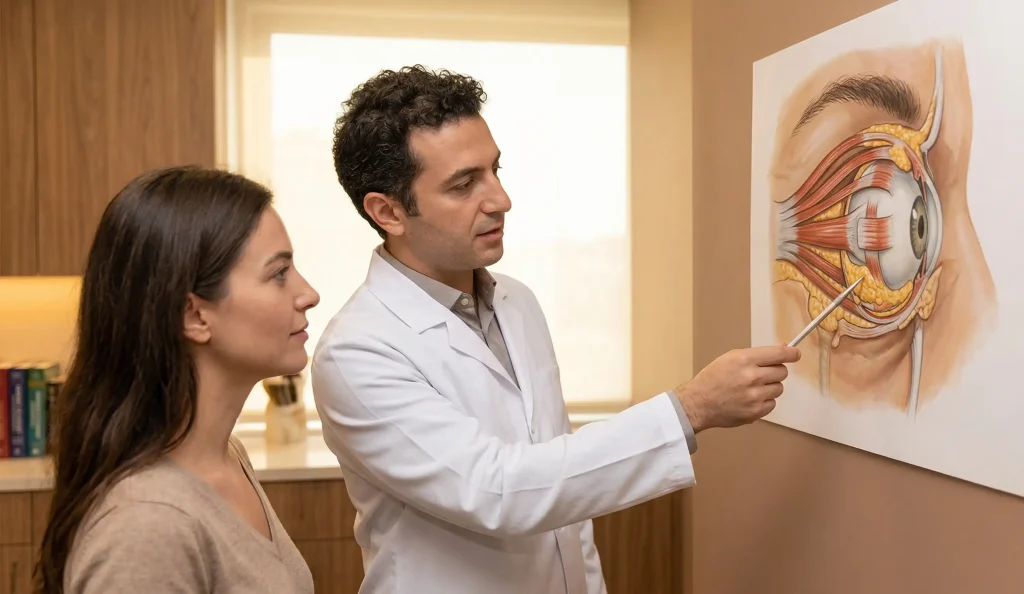
At Lin Health Europe Clinic, we consider eyelid rejuvenation as a highly skilled procedure of “visual and aesthetic restoration”. While discussing with our international patients who travel to Turkey, we point out that a “tired” appearance is usually a mixture of changes in the skin, fat, and muscle. We are the top clinic for complex periorbital surgery and provide a medical thoroughness level where eyelid biometric mapping is used to identify the necessary millimeter adjustment to achieve a refreshed, natural look while maintaining safety and harmony of the eyes at the highest level.
Blepharoplasty: Getting Rid of “Hooded” Skin
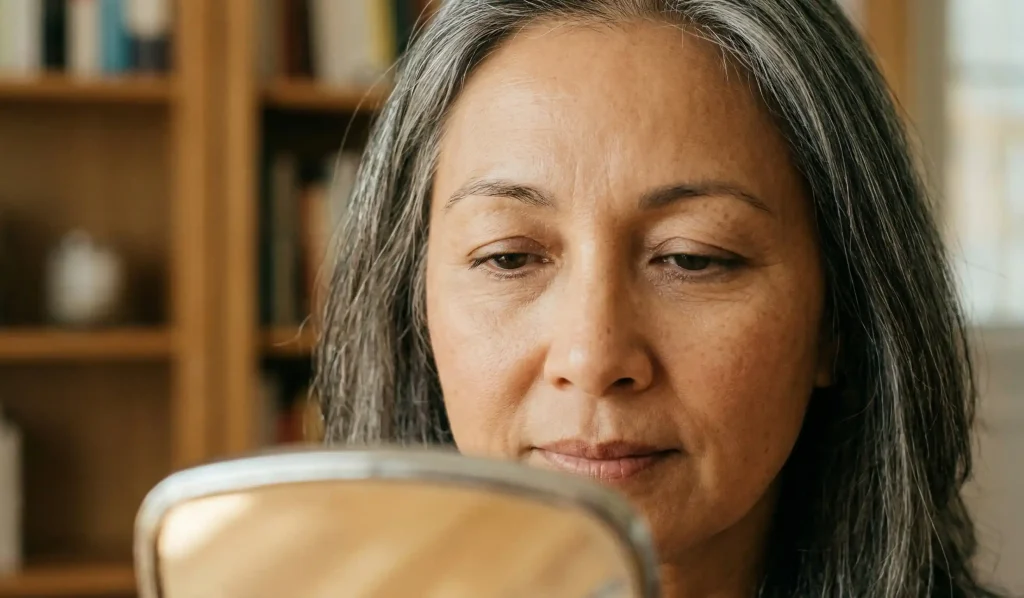
The upper eyelid skin is mainly composed of collagen and elastin. With time, their loss is the reason that the most common problem in droopy eyelids results in the “hooding” effect where the excess skin of the upper eyelid extends beyond the natural eyelid crease and may fall on the eyelashes.
During an upper blepharoplasty at Lin Health Europe Clinic in Turkey, our surgeons remove a very precisely measured ellipse of skin and, if needed, a small portion of bulging orbicularis muscle and fat. This gets rid of the “heavy” feeling of the lids and unveils the natural eyelid area. In Istanbul, we advise our international visitors that this surgery is not purely for aesthetic reasons; by eliminating the load of the drooping skin, we are able to relieve the persistent forehead tension and “brow strain” which patients unconsciously develop as a way to keep their eyes open, so we offer them a sense of relief along with a more open-eyed appearance.
Ptosis Repair: Increasing the Power of the Levator Muscle
When the eyelid margin itself (the one with the lashes) is positioned quite low and partly covers the pupil, the problem is most likely ptosis. It is due to the stretching or detachment of the levator aponeurosis, which is the tendon through which the eyelid is lifted. A ptosis repair is a functional surgery, tightening the internal muscle in contrast to a simple blepharoplasty, which focuses on the skin only.
Our Lin Health Europe Clinic in Istanbul offers this operation through the same incision that is used for a blepharoplasty. So, these two procedures have a high degree of compatibility. “Shortening” or re-attaching of the levator muscle is done to raise the lid itself. This correction is indispensable for the patients of Turkey who have started to experience visual inhibition due to droopy lids, as it not only opens the eyes but also makes them look symmetrical.
Brow Lift Synergy: The Eyelid’s Base
Many times, what seems to be a “droopy eyelid” is the aftermath of a lowered brow. Although the tissues of the forehead lose their strength with age, the eyebrow has to slip down, thus pushing the eyelid skin onto the eye. Without the eyebrow being raised, the blepharoplasty alone may yield results that look and feel cramped or artificial.
Taking a “whole-face” biometric analysis is one of the skills of Lin Health Europe Clinic. In Turkey, an endoscopic brow lift might be proposed to the patient to simultaneously move the eyebrow back to its natural location on the orbital rim which is the base of the eyelid; hence, both work together in a harmonious way that is recognized as “non-operated” in Istanbul.
Fat Repositioning vs. Fat Removal
Aging of the eyelids is also characterized by the shifting of periorbital fat. Some may have “fat pockets” or puffiness, while others may have hollowness that gives them a skeletal, aged look. At our Turkey clinic, we have adopted a less invasive approach to eyelid surgery such as fat repositioning.
Our surgeons move the fat to fill in hollow areas such as the “tear trough” or the hollow upper orbit instead of fat removal which can produce a “hollowed” look later in life. This action keeps the volume of the eye area which is a sign of youth and smoothes out the contours. As always, we stress to our international visitors that volume preservation is the secret of long-lasting rejuvenation, as a “plump” eye area is a biological sign of youth and vitality.
Non-Surgical Maintenance: CO2 Laser and Plasma
Those who have very initial signs of eyelid drooping or who want to extend the effects of their surgery may resort to non-surgical “skin contraction” treatments. Fractional CO2 Laser or Plasma (Plexr) are examples of such technologies that induce a very deep phase of neocollagenesis through minute zones of thermal damage and thus cause the skin tightening and “shrink-wrap” around the eye.
We apply these treatments post-surgery to synergistically ameliorate the skin texture and fine lines. At the same time, our professional rigor compels us to inform our patients that the use of these devices is not a substitute for surgery in cases of significant skin excess or muscle ptosis; they are, rather, maintenance tools to keep the “envelope” of the eye tight and smooth over time.
Eyelid Surgery in Turkey
At Lin Health Europe Clinic, we hold the belief that every eyelid surgery must be a work of art in terms of precision and anatomical respect. Our Turkey location is a place where top ophthalmic science is combined with the highest standards of international patient care. We offer your treatment at special JCI-accredited hospitals reflecting our status as the global leader in medical tourism and high-precision periorbital rejuvenation.
A decision to trust Lin Health Europe Clinic means putting your treatment in the most expert, safety-aware hands in Istanbul. Our internationally known practitioners are committed to producing absolute symmetry and natural ocular dynamics for all our international guests. From your first biometric mapping to your last bright-eyed reveal, you will be under professional rigor and elite hospitality that have made us the number one name in aesthetic medicine. With us, your path to a younger, more alert and confident gaze is controlled only by the skill of the world’s best.
FAQ:
The best option is to have a blepharoplasty done where excess skin is removed and ptosis repair if the muscle that raises the eyelid needs to be tightened. In Turkey, these operations will not only result in rearranging the eyelid anatomy and functioning but also make your face look younger and more awake.
Sure, if the droopy skin or your eyelid margin is so low that it blocks your upward field of vision, then going under the knife will remove this physical blockage. A large number of patients fly to Istanbul and undergo the surgery here and later share their experiences of greatly enhanced peripheral vision and much less eye fatigue.
The ovaries are a continuous source of hormones and by keeping them, your body will be able to constantly supply systemic hormones that play a role in sustaining bone density and cardiovascular health. Our doctors in Turkey not only perform the surgeries but also follow up with you and keep monitoring your hormone levels via biometric tests to make sure that your endocrine remains balanced throughout the healing period.
The main structural benefit that is achieved through blepharoplasty can last for 10 to 15 years; however, the skin will keep on aging naturally over time. Helping your skin to remain in a good condition by protecting it from the sun and getting laser treatments at our Istanbul clinic can extend your rejuvenated look.
It is very important to allow a period of minimum three weeks before you can perform exercises that can cause a sudden rise in blood pressure in the eyelid vessels such as heavy lifting or high-impact exercising. Doing your fitness activities at a slow pace once our medical team in Turkey has declared you fit will minimize the risk that your fragile stitch wounds might bleed.
Lelli, G. J., & Lisman, R. D. (2010). Blepharoplasty complications. Plastic and Reconstructive Surgery.
Fagien, S. (2000). Advanced rejuvenative upper blepharoplasty: enhancing aesthetics of the upper periorbital region. Plastic and Reconstructive Surgery.
Goldberg, R. A. (2005). The evolution of lower eyelid blepharoplasty. Facial Plastic Surgery Clinics of North America.
Rohrich, R. J., et al. (2011). Eyelid and periorbital surgery. Plastic and Reconstructive Surgery.
McCord, C. D., et al. (2014). Eyelid & Periorbital Surgery. CRC Press.