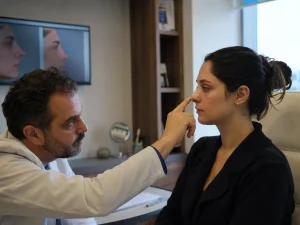

A rash may indicate an allergic reaction to tape or adhesive.
Recovering from surgery can be a real tug on one’s patience as a result of pain, swelling, and reduced ability to move. For certain patients, however, the most annoying thing during healing from surgery is not the pain, but the itch. They observe the skin around their surgical wound becoming furious red, bumpy, and very itchy some days or weeks after the operation. Alarm goes off at once: “Is my surgical wound infected?”
More often than not, it is not bacteria but the bandage that causes the problem. Tape Allergy, or more exactly Allergic Contact Dermatitis, is an immune reaction of the skin to the medical adhesives that is very common. Infections require antibiotic treatment and a visit to the doctor, whereas tape allergies are treated by quieting the skin and getting rid of the irritant. It is vital to be able to distinguish between these two skin conditions because if an allergy is treated like an infection (with antibiotics) it will not get better and by scratching an itchy rash one can easily cause an infection unknowingly. At Lin Europe Clinic, we help you interpret your skin’s messages so that you get the right treatment.
The Enemy is the Glue: Understanding Contact Dermatitis
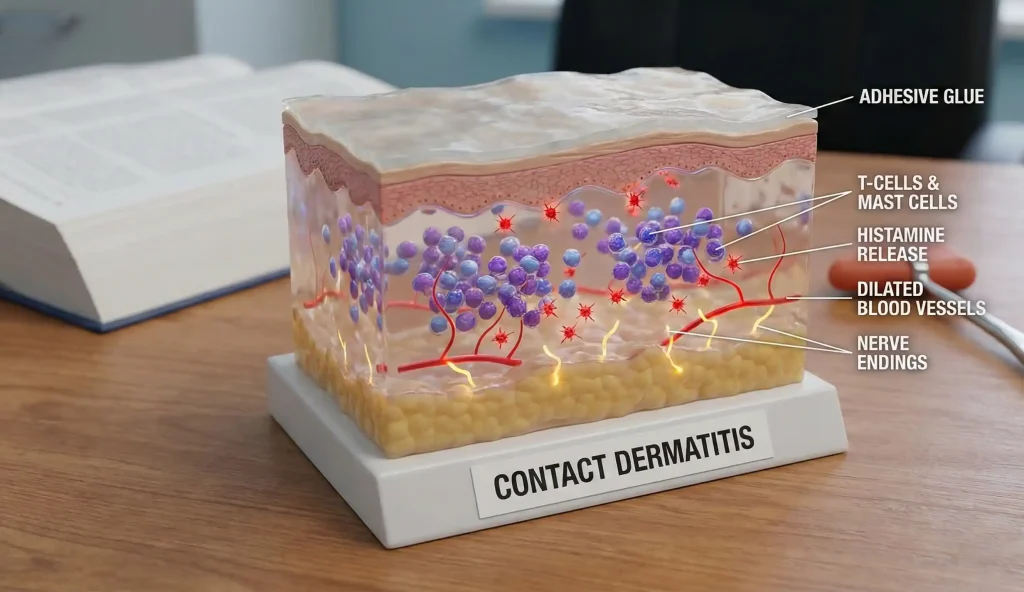
“Tape allergy” is rarely the result of being allergic to the fabric or plastic of the tape. The immune system is responding to the chemical adhesive (glue) on the tape (such as acrylates or rubber-based compounds) or the tackifying agents like Mastisol or Benzoin that are usually rubbed on the skin for better sticking of the tape.
This is a “Type IV Delayed Hypersensitivity Reaction”. After a bee sting, you swell up almost instantly but in the case of a tape allergy, it may take up to 48 to 72 hours (or even longer) for the reaction to become visible. This delay is what confuses the patients. “I have had this tape on for three days, so why is it reacting now?” you might wonder. The T-cells have to first identify the allergen, then move and attack the skin cells that are touching the chemical. The outcome is a local battle scar on your skin surface.
Spot the Difference: Allergy vs. Infection
It is quite scary to see redness around a newly made surgical wound. The redness pattern does, however, tell a lot about what is happening. Infections are usually compared to spreading fire: the area is hot, the pain is throbbing, and the redness extends irregularly from the wound. If it is accompanied by fever or pus, it is even more indicative of infection.
A Tape Allergy leaves a rash in a very neatly defined shape: it is square or linear. The inflammation and rash will be confined to the exact area of the tape or tapes. If you lift the tape just a little and the skin underneath is red and blistered, but if the skin one millimeter away (where there was no tape) is perfectly white and calm, then most likely it is an allergy. The predominant symptom of an allergy is itching and burning, while pain and warmth are the primary symptoms of infection.
The Danger of “Prineo” and Blisters
Many surgeons nowadays in plastic surgery use a kind of dressing known as the Prineo System which is a mesh tape combined with liquid skin glue. This, in fact, leads to great-looking scars on most of the people but trouble for those with sensitive skin.
The skin blisters (vesicles) in the most extreme cases of a tape allergy. The skin will balloon with clear juice, become very runny, and finally flake off like a sunburn. Because it looks similar to a burn, one can get scared. The real issue here, however, is not the allergy, but the skin damage that results from it. When the skin peels off in one piece (epidermolysis), the closed surgical wound is instantly converted into an open wound, which, by default, is highly vulnerable to bacterial infection. This is the reason, why an itch that is accompanied by an aggressive manner should be avoided no matter what.
The Exit Strategy: How to Treat the Itch
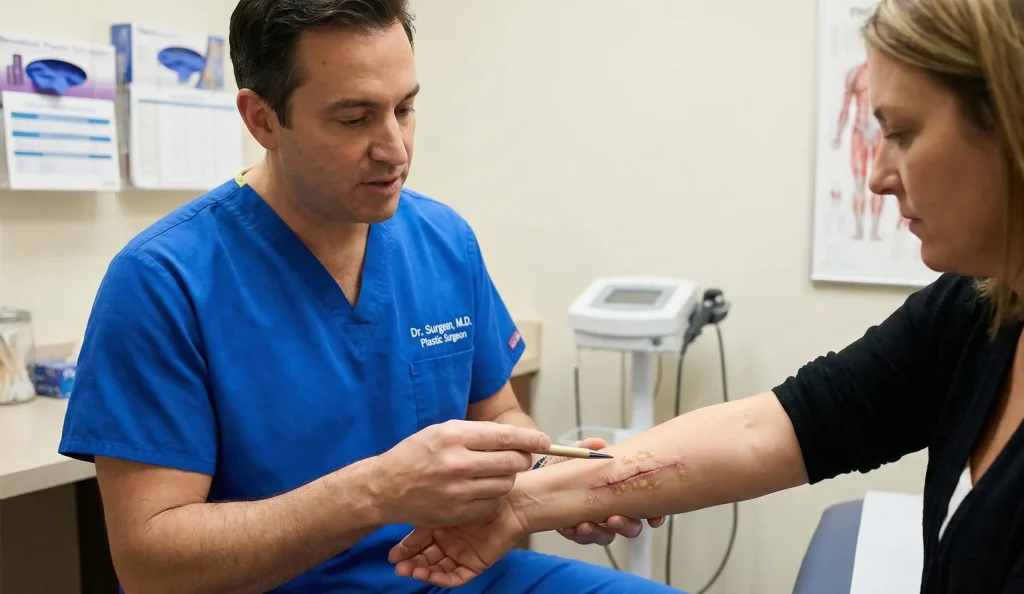
Suspecting a tape allergy means firstly contacting your surgeon. Surgical tapes (such as Steristrips) should not be peeled off by the patients themselves in any case, as this might lead to the reopening of the wound. If your doctor gives his okay, then the irritant should be removed in a gentle manner, which is usually achieved by using an adhesive remover or olive oil to break down the glue so that it does not tear off the irritated skin.
Treatment of the kind “Cool and Calm” starts after removing tape. Antihistamines orally (Benadryl or Zyrtec) can be used to lessen the overall itch sensation. On the red skin around the incision one may use a gentle hydrocortisone cream (1%), but never put itstraight into the incision. As for blistered or weepy skin, refrain from putting heavy ointments instead of keeping it clean and dry because the dirt and bacteria may get trapped. Cold compresses are a perfect alternative to scratching as they numb the itch.
Lin Health Europe Difference: Hypoallergenic Protocols
At Lin Europe Clinic in Turkey, we appreciate the importance of skin sensitivity. We put a special emphasis on this issue and ask the patient specifically about any possible reactions to band-aids, latex, or glue during his/her pre-op assessment. “I get red just from band-aids” is a big warning sign to us. Thus, for the patients suffering from such a condition, we do not use chemical tackifiers (like Mastisol) and instead go for Hypoallergenic Paper Tape or silicone-based dressings that are more skin-friendly.
In case of a reaction, our post-op team is skilled enough to detect it immediately through a photo check-in. They wouldn’t wait for blisters to appear on the skin. The wound care protocol is changed right away with no tape being used, the incision is being held by silicone gel. We don’t allow the scar to be destroyed by the bandage and to do this, we tailor the dressing to keep your skin calm as your recovery.
Frequently Asked Questions About Tape Allergy and Rash After Surgery
Look at the shape. A tape allergy rash usually forms a perfect square or line that fits exactly the area where the tape was placed. An infection spreads in an irregular way, is hot to touch, and throbs with pain.
You may apply it on the reddened skin nearby the cut but never put it directly into the open incision or on the stitches as that may weaken the wound closure. It is better to get your surgeon’s advice first when you have a rash after surgery.
You can indeed observe such a phenomenon. Tape allergy is a case of “delayed hypersensitivity reaction,” i.e., your immune system needs 48-72 hours to identify the glue as an invader and attack it, thus the postoperative rash appearing after several days.
Yes, they can if no attention is paid to the matter. If tape allergy results in a formation of large deep blisters from which the top layer of the skin right next to the incision is peeled, scar can get bigger. The key to the prevention of damage is early discontinuation of the tape and its removal.
You should get in touch with your surgeon without delay. Severe itching is one of the symptoms of tape allergy, you may be told to gently remove the tape yourself or instructed to come to the clinic where they will replace the tape with a hypoallergenic one.
Davis, M. D., et al. (2010). Postoperative contact dermatitis from Mastisol and Steri-Strips. Archives of Dermatology.
Lazzarini, R., et al. (2013). Allergic contact dermatitis to acrylic surgical tape. Anais Brasileiros de Dermatologia.
Widgerow, A. D. (2013). Pain and blistering in the glueless/sutureless wound closure. Wound Healing Southern Africa.