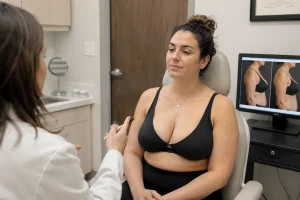

Minimize scars with proper incision placement and aftercare.
One of the most appealing methods of body reshaping for the majority of people is breast implant surgery. But any surgical procedure comes with risks, breasted implant surgery included, among these risks is scarring. Despite the fact that scarring is a standard feature of healing, knowledge of what to expect and how to treat the skin post-operation can considerably determine the recovery and scar-making outcome. This piece of content is your companion throughout the journey from natural healing to long-term care routines, revealing not only how scabs develop but also how to prevent them and what measures can be taken to ensure the best healing.
At Lin Europe Clinic, our goal is to offer you the utmost care that aligns with your aesthetic goals, yielding safe and effective results. The details given here will be of great help to you as you embark on the recovery journey.
Understanding the Causes of Scarring from Breast Implants

The kind of surgery practiced on the breast normally involves the cutting of the skin, which, while doing the necessary task of implant placement, culminates in scars. Scarring is the body’s usual healing process post-operation, and such factors can be taken into consideration to evaluate one’s impact on the scar’s appearance. The spot where the cut is made; the kind of implant employed; the patient’s unique recovery are all factors that influence scar formation. To lessen the visibility of the scars, surgeons make the incisions in places where they are less conspicuous, for example, under the breast, round the areola, or in the armpit. So even though the healing of the body is carefully followed, some people can still have scars which stand out or are elevated due to the response of the body to the process of healing.
The production of scars is an entirely normal physiological process following surgery. The body, in its healing process, repairs the skin by making collagen to close the incisions. Sometimes, the scar may be very noticeable at the beginning, but later on, it will become less and less visible. The only way to make a scar less visible is through taking good care of the wound and being aware of the different factors that affect the healing process.
How Breast Implant Incisions Heal Over Time

At the very beginning, scarring after breast implant surgery will be characterized by redness, swelling, and tenderness; however, such characteristics will disappear after some time. Healing is staged, and the first several weeks are the stage when everything is very crucial. In that period, the body closes the cuts it had made, and new tissue is formed. Later on, the scar will be less raised and lighter in color. The scar will continue to change its shape and color within months, even up to a year, which is the time for full maturation of the scar. After proper treatment, the scar should lose its color and become very faint, thus merging with the natural bulges of the breast.
It is imperative to adhere to the aftercare regimen during this period, which consists of keeping the area disinfected, treating it with recommended medications, and refraining from sun exposure. As the scar heals, it tends to soften, and the texture gets more refined; however, the scar will not vanish completely. The scar may become significantly less visible, but there might be some areas where the incision and the torso’s natural healing process will result in the scar still slightly being there.
Tips for Reducing Scarring After Breast Implant Surgery
You may pursue multiple approaches in order to assist you in the prevention of scarring after getting your breasts implanted. The most useful way is considered silicone gel sheets or silicone-based ointments which contribute a lot in making the scars less visible. Such substances provide hydration and healing, thus avoiding the development of scar tissue that is thick or raised. Besides that, it is fundamental to the recovery journey that the incision site is not only clean but also well-moisturized so as to prevent the onset of an infection which, in turn, can exacerbate the scarring process. Covering the scar with a sunblock having a high SPF can also liberate it from the UV rays that cause the area to darken so that it gets more visible.
Massaging the scar tissue softly after the scar has completely healed can actually do a lot in terms of making the tissue look better as well. Massage of scar tissue works on the breakdown of that part of the collagen that is in excess and, therefore, causes the scar to be raised or thick. Following the instructions of your surgeon for care after the operation is very important if you want to get the best possible aesthetic effect and reduce the appearance of the scar over time. In case you observe any unusual scarring, please contact your doctor for next treatment possibilities.
What to Do if You Notice Unusual Scarring or Complications

Even though cordoning is a part of recovery, some individuals could encounter issues with abnormal scarring and complications. On very few occasions, a body can create too much collagen, and it can lead to keloid or hypertrophic scars. These scars may be elevated, red, and irritate the person. If it happens that your scar is highly raised or you are feeling pain, you should get in touch with a doctor without delay. The healing process of the body can be disturbed by the infection at the place where the incision has been made, and thus, any swelling, redness, or discharge that is accompanied by the incision site should be dealt with right away.
In case an abnormal scar is formed on your body, you have some options to diminish its look. Those can be steroid injections, laser therapy, or in some instances, scar revision surgery. The doctor will consider the problem and decide which step will be next to make the scar look better. Don’t try any treatments or changes of the scar without seeing a doctor first.
Long-Term Care for Healthy Skin After Breast Implant Surgery
Care done for a long time is quite vital in bringing the skin back to health as well as in lessening the visibility of the scar post-breast surgery implant. Several of the most important features regarding scar handling include keeping the scar away from direct contact with the sun. Ultraviolet light may darken the scar, thus making it more obvious, therefore, the use of high SPF sunscreen is very important even when the sky is covered with clouds. Keeping the skin hydrated is very important too. Having dry skin can result in itching and irritation of the area around the scar, and this can slow down the healing process.
If you aim for your body to heal quickly, then physical fitness is a must. Eating a nourishing diet full of vitamins, drinking plenty of water, and refraining from smoking will not only cut the time of your recovery but will also upgrade your skin’s quality. Thus, if you firmly decide to safeguard your skin and pamper it deeply, the marks of your breast implant surgery will fade away and be less visible.
References
- Smith, J. (2022). Breast Implant Surgery: Healing and Scarring. Journal of Aesthetic Surgery, 45(3), 120-130.
- Lee, R., & Matthews, K. (2021). Managing Scars After Breast Augmentation: Best Practices for Healing. Aesthetic Medicine, 39(2), 85-92.
Frequently Asked Questions About Scars from Breast Implants
Yes, scarring is a normal part of the recovery process. The size and visibility of the scar depend on various factors, including the type of incision and how your body heals.
It can take between 12 and 18 months for breast implant scars to fully heal and mature. During the first few weeks, the scars will be red and raised, but they will gradually fade and flatten over time.
Follow your surgeon’s instructions carefully, use silicone-based products, and protect your scars from the sun. Proper moisturization and gentle massaging after healing can also help improve the appearance of scars.
Yes, the type of incision and the location of the scar vary. Common locations include under the breast, around the areola, and in the armpit. Each has its advantages in terms of minimizing visible scarring.
Prevention involves following proper aftercare, including keeping the area clean, avoiding sun exposure, and using silicone gel or ointments to support the healing process.