Body shape changes, but function remains normal.
Simply getting rid of fat or doing minor surgeries on skin can no longer satisfy those obsessed with ideal hourglass figures. Although liposuction can eliminate fatty tissue under the skin, and a tummy tuck can remove loose skin, neither of these procedures will alter the skeletal frame. People whose body shape tends to be “boxy” or “rectangular” often find that their waist cannot be narrower than the width of their ribcage. This is why rib removal surgery, which was once a Hollywood secret, is now being reintroduced as a safe and standard clinical procedure.
We, at Lin Health Europe Clinic, are experts in high-definition body sculpting, and we firmly think that the first step towards clearing out one’s doubts about the anatomy is seeing it for oneself. To have some knowledge of which ribs are taken out and why the human body functions just as well without them are two very important aspect of this long-lasting skeletal change. A person considering such a permanent version of themselves should be aware of these facts.
Anatomy of the “Floating” Ribs: Ribs 11 and 12
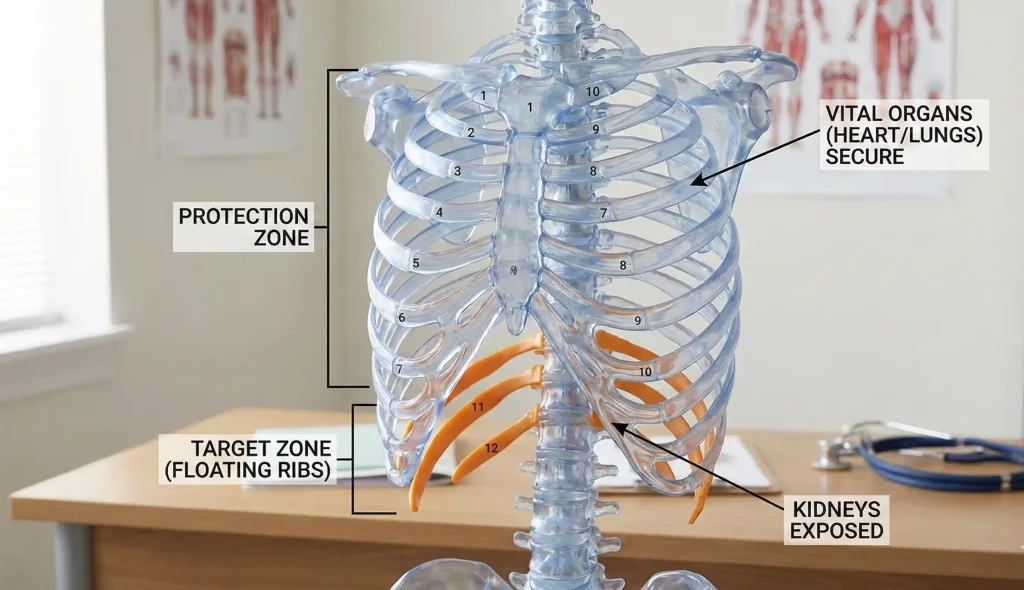
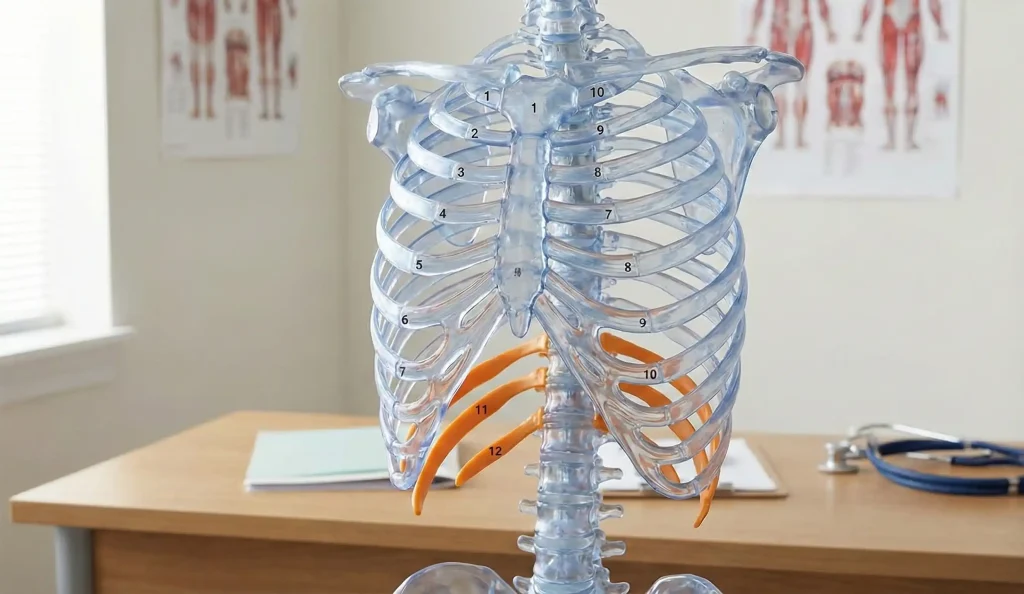
In order to make a rational decision about a rib removal procedure, one needs to first face the hierarchy of the ribs. A normal human being has a total of 12 pairs of ribs. The first 7 pairs, which are also called the “True Ribs”, connect directly to the sternum (the front part of the chest). They serve as the major protective structures of the heart and the lungs. The subsequent 3 pairs (8, 9, 10) connect to the cartilage of the ribs above them.
However, the lower two pairs of ribs—11 and 12—are different. They are absently called “floating ribs” because neither sternum nor other ribs connect to them at the front. They only emerge from the vertebrae and terminate in the side muscles. Being unattached at the front means that these ribs barely contribute to the structural stability of the chest wall or to the mechanics of breathing. Their removal does not therefore lead to the destabilization of the ribcage nor does it result in reduced lung function. In addition to selectively removing the two lower ribs, we sometimes also remove a small part of the 10th rib combined with these two floating ribs for aesthetic rib removal so that the waist is “released” and it can be pinched in even more tightly than beforehand.
Organ Protection: The Kidney Myth
Without a doubt, the most widespread misconception about a rib removal procedure is that such a surgical operation makes the internal organs defenseless against injuries. “Would my kidneys burst if something hit me in the back?” The solution to this question can be found in the anatomical layers of the body.
Although the eleventh and twelfth ribs do provide some skeletal covering to the kidneys and to the spleen from the backside, the organs do not primarily rely on these bones for protection. Your organs are enveloped by several layers of strong, thick muscles, especially the latissimus dorsi, external oblique, and quadratus lumborum, along with dense fascia and retroperitoneal fat. When the ribs are removed, these muscular layers still remain and they give a great deal of protection and shock absorption. In the event that you do not plan to pursue a career in the professional fighting sport or in bare-knuckle boxing, the removal of these tiny, insignificant bones does not constitute an issue of concern as far as organ safety in daily life is concerned.
The Procedure: Piezo Ultrasonic Precision
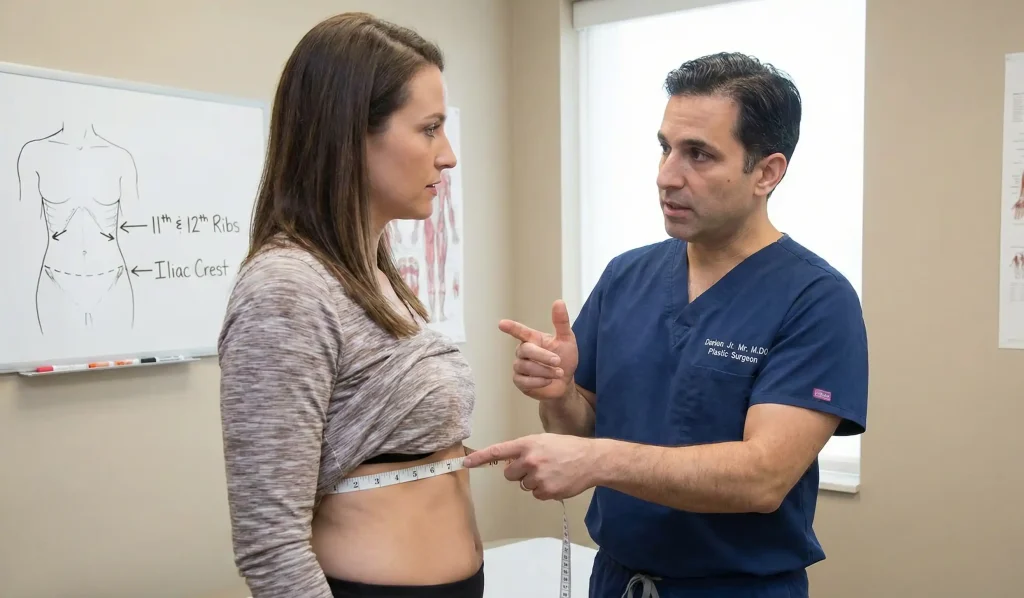
Today, rib removal bears little resemblance to the times when it involved violently breaking down the rib bones. At Lin Health Europe Clinic, we are making use of Piezo Surgery technology. It is an ultrasonic tool that is tuned to a specific frequency which allows me to cut hard-mineralized tissue (bone) and at the same time keeps soft tissue(neurons, blood vessels, muscles) completely untouched.
In making very small cuts at the back (generally in the bikini or bra lines which act as a natural camouflage), we are getting into the floating ribs. We promote the periosteum (the membrane that wraps the bone) and then we take away the outer layer of the rib. Periosteum-preserving rib surgery not only helps in preventing scar hernia but also reduces post-operative pain. This surgical precision protects the pleura (lung lining) so that there is no risk of pneumothorax (collapsed lung).
The Result: Skeletal Waist Narrowing
How does the waist physically change? The changes brought about by rib removal are quite simple. The ones that are underneath the tissues of the waist are no longer held in check by the bones, so the tissues of the waist are finally free to collapse inward. Patients to face results for themselves as soon as the surgery is over (immediately). Consequently, this should not raise any doubts in the patient’s mind when it comes to considering the number of ribs that must be removed if they want to see the desired amount of waist narrowing.
In fact, the reality is that most people who have had their ribs removed see a waist reduction of between 5 and 8 centimeters (2 to 3 inches). Long-term benefits come from a combination of factors. Mainly the result of taking the rib away, the corset becomes a powerful weapon. The fancy method of the two procedures is to be able to limit the post-surgery time period of wearing a corset with the doctor’s approval only. Through healing agents, new tissues get formed and then molding takes place which ultimately restores the shape of a corset directly interacting with the women’s body “around our.”
Recovery and The Breath Factor

Being straightforward, an aftercare practice of rib removal goes beyond what one would expect of lipo. The patient should be able to govern the feelings that come with pain by doing deep breath which means that the condition of the lung accumulators is preserved. Thus, taking in too little air is the first thing that the guessing patient goes in exactly to avoid pain. The wise remedy to this is to use the breathing gadget, which we recommend, called the Incentive Spirometer, every hour. The correct pain control is not only for the patient’s comfort; it is even more a matter of patient’s physical safety, since only the deep breaths which the patient takes by way of good pain management is the one that keeps the lungs neat and user starts creating an airy, wider ribcage inside the body.
Frequently Asked Questions About Rib Removal
It is safe. The 11th and 12th ribs hardly shield the organs compared to the thick muscle layers of the back. If you are not a professional fighter, your kidneys are still well protected by muscle and fat.
Not at all. The floating ribs are not fixed to the sternum and do not serve as primary accessory muscles for respiration. The removal of the ribs will not affect your lung capacity.
The majority of the patients can measure at least 5-8 cm less right after the operation, and if you are diligent in corset training after the procedure, the shrinking can be so drastic as the soft tissues adjust themselves to the new concavity.
Negative. To avoid the growth of the bone, we not only remove the bone but also a part of the periosteum. By changing the shape of your skeleton, you will be able to maintain such a slim figure permanently.
Absolutely. A tummy tuck and a rib removal can be used together. Rib removal is generally carried out along with a tummy tuck and liposuction to take care of not only the bone but also the soft tissue, thus achieving the total waist narrowing.
Matarasso, A., & Wallach, S. G. (2001). Abdominal contour surgery: treating all aesthetic units, including the mons pubis. Aesthetic Surgery Journal.
Shiffman, M. A. (2013). Cosmetic Surgery: Art and Techniques. Springer.
Kudur, M. H. (2015). Waist narrowing by removal of the 11th and 12th ribs: indications, surgical technique, and results. Plastic and Reconstructive Surgery Global Open.