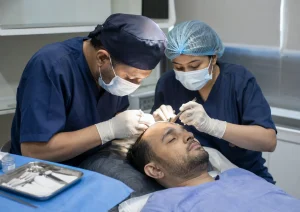
Recovery is similar, but may take slightly longer.
Many people don’t view a facelift as a one-time event that merely “gets things done” but rather as a means to keep up one’s appearance over a lifetime. Should you have gotten a facelift in your late 40s or early 50s, you probably had the pleasure of enjoying the look of a fresher and more vibrant self for a decade. But the truth is, the clock on aging does not actually stop. Now that 10 to 15 years have passed, you could be noticing the old signs of jowling along the jawline or getting loose skin on your neck. You are aware of the procedure, you know its advantages, and, besides that, you remember the recovery. Usually, the question that makes you hesitate is: “Will the second time be more difficult?“
It’s a pretty fascinating combination of pros and cons from the physiological point of view. In a number of ways, the healing process after a secondary rhytidectomy (revision facelift) is actually less difficult and less painful than the first one. However, due to the scar tissue, it is technically a more complex operation that necessitates a higher level of surgical skill. At Lin Europe Clinic, we are experts in these “maintenance” surgeries and we aid patients in realizing that although the anatomy has altered, the goal is still the same: natural, undetectable rejuvenation.
The Paradox: Less Pain, More Swelling
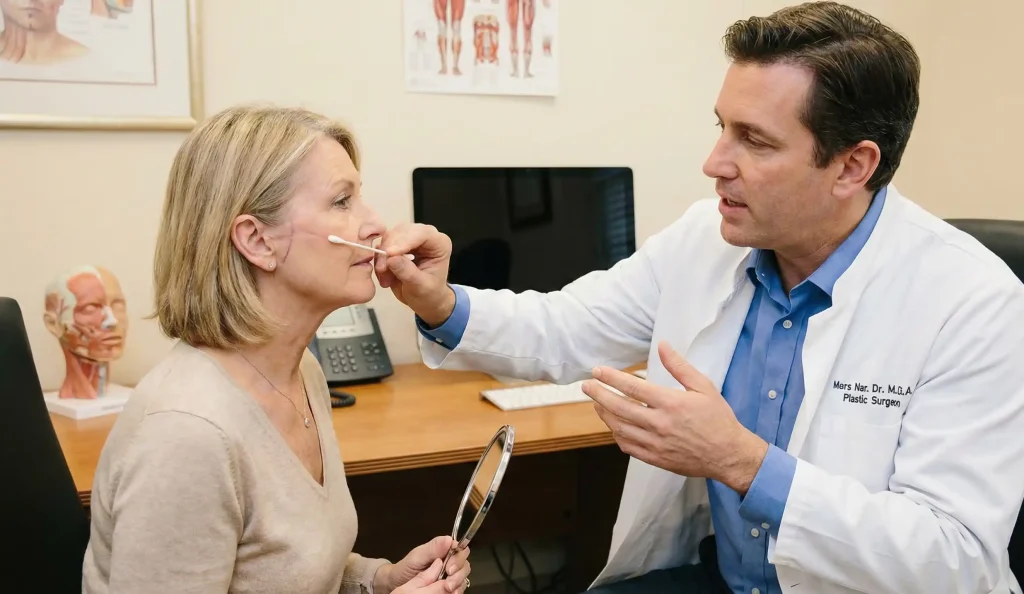
Something that patients never expect is that their second facelift may actually hurt less than the first one. For your first surgery, the facial sensory nerves were moved around and the skin was lifted away from the underlying muscles. Hence, nerve endings located in the cheek and neck area are usually less sensitive or simply “dull” in comparison to virgin tissue. It means that the intense, sharp pain or tightness patients anticipate is often greatly reduced the second time they go through the procedure.
Conversely, the compromise is usually swelling. The lymphatic drainage vessels—the tiny tubes through which waste fluid drains out from the face—were cut in the first surgery and over the years they have. If we cut them again in a second operation, it will cause a temporary “traffic jam” for drainage of fluid. Therefore, even if you have less need for medication, you might feel that the puffiness and bruising keep you for a couple of days longer than they did 10 years ago. In other words, it is a slower “visual” recovery, even if it is a “physical” one that goes easier.
The Challenge of Scar Tissue (Fibrosis)
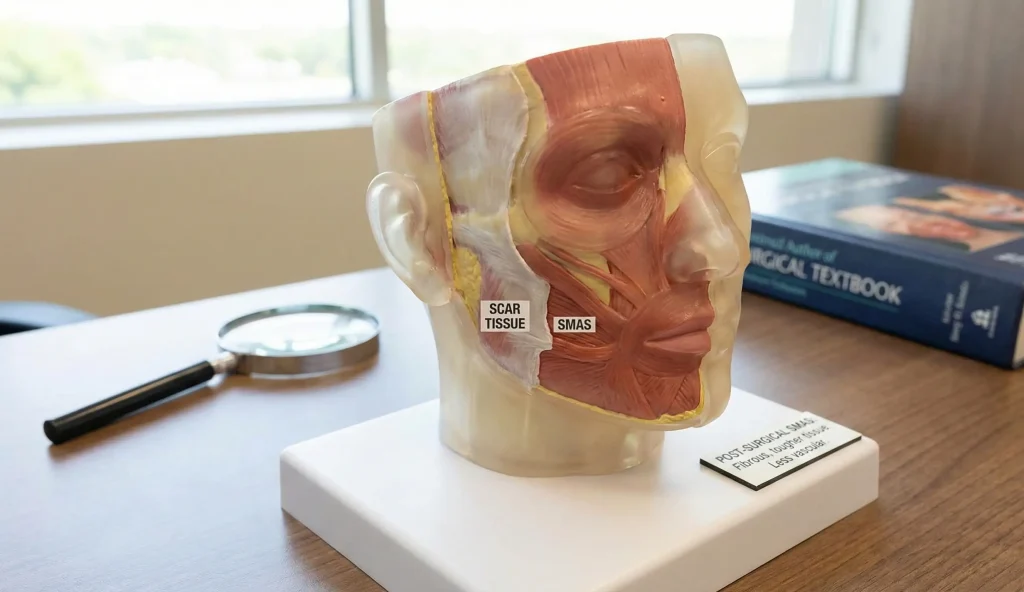
The most common reason why a secondary facelift is considered to be more difficult at a technical level (the surgeon, in fact, not always the patient) is due to fibrosis, the build-up of scar tissue internally. The very strong, fibrous adhesions formed between the skin and the muscle (SMAS) layer after your first operation were nature’s “superglue.” In a primary facelift, the tissue easily comes apart like peeling the skin off an orange. During a revision or secondary facelift, the surgeon has to carry out a painstaking separation of these layers that have been fused to each other, millimeter by millimeter.
Such a time-consuming and challenging dissection means that the surgeon has longer to work, and if the surgeon doesn’t have the required patience, there is a minimally elevated risk of the irregularities occurring. Furthermore, since this scarring has affected the blood supply to the skin, we must be more cautious. We, therefore, limit the extent to which the skin is lifted as much as it might have been during a first-time procedure. Shifting the emphasis from ‘maximum pulling’ to ‘strategic repositioning’ is the way we guarantee that the skin remains healthy and well-nourished.
The “Windblown” Risk: Vector Matters
A primary concern during a secondary facelift is a so-called “windblown” or “Joker” effect. The skin on the face, if ever a surgeon only tries to pull it again towards the ears, can once again become widened or extremely stretched with loss of the natural features. The reason behind this is that the already trimmed skin will have less “spare” cloth to work with.
In other words, a second facelift cannot simply rely on pulling the skin backwards like the first one. Instead, a secondary facelift pays a lot of attention to the Vertical Vector. So rather than moving the skin back, we are essentially raising the tissues straight up. This move supports the anti-gravity effect without stretching the mouth or creating pixie ear deformities. Plus, it is commonplace that we have to repair breakdowns caused by the first operation such as wide scars or the low hairline. The aim is not merely to tighten but reconstruct the natural shape that the first operation and subsequent aging have slightly altered.
The Necessity of Volume: Fat Grafting

Simply put, your greatest difference between then and now is not just your face being pulled down by gravity but your face being deflated. Everyone faces a gradual loss of fat in their face as well as bone density when they get older, especially if they are in their 60s and 70s. If a face is only pulled tight without the use of volume replacement, it will be reminiscent of a skeleton and the result of a plastic surgery will be quite apparent.
Consequently, the vast majority of secondary facelifts at Lin Europe Clinic are accompanied by Facial fat Grafting procedures. Fat from the inner thigh or the stomach area is harvested and then it is carefully applied to the sites like cheeks, temples, and lines around the mouth so that the skin is cushioned from the inside. Imagine that you take an ironing board that is uneven or small and then you try ironing your shirt on it. The process of hand ironing involves pressing the fabric tight and the pulling effect removes wrinkles but if the base is uneven, then the shirt will not be smooth and neat. The reinflation of the face allows us to achieve a youthful look without having to pull the skin dangerously tight.
Timing and Expectation in Turkey
Facelifts are typically effective for about 10 to 12 years, but it all depends on the patient’s skin. Deciding on your second facelift, your skin’s degree of tightness will be the main determinant of your time interval. Becoming very old (late 70s) with paper-thin skin may make a second surgery too risky. Giving yourself a head start (less than 5 years) might mean unnecessary scar tissue creation with minimal benefit.
At Lin Europe Clinic in Turkey, we consider revision facelifts a “Deep Plane” family. Instead of simply pulling the youngsters (the skin) layer (SMAS), we are going under the muscle layer which allows us to bypass most of the surface scarring caused by the previous operation. This method results in a deeper, more structural lift that lasts longer and looks more natural. So your second act can be as graceful as the first one.
Frequently Asked Questions About Secondary Facelifts
Yes, revision surgeries usually cost a little more than the primary as they take longer to perform due to the complexity of going through the old scar tissue and frequently require additional fat grafting.
Technically, yes, but the benefits get smaller with each operation; the chances of your skin getting thin, hair loss at the incision sites, and a very unnatural look are greatly increased after the second procedure.
Typically, a secondary facelift lasts slightly less time than the first one, usually around 7 to 10 years, simply because the skin has less elasticity and the aging process accelerates in later decades.
Indeed, a secondary facelift is a great way to remove a pixie ear (where the lobe is pulled down) by first releasing the tension on the lobe and then properly re-binding the skin.
Basically, your nerves can be weakened temporarily with a little higher probability since scars made by tissues have changed the natural anatomical landmarks and in this way it is more difficult for the surgeon to locate the facial nerve branches.
Stuzin, J. M. (2008). Restoring facial shape in face lifting: The role of skeletal support and soft-tissue distribution. Plastic and Reconstructive Surgery.
Hamra, S. T. (1992). Composite rhytidectomy. Plastic and Reconstructive Surgery.
Marten, T. J. (2008). High SMAS facelift: combined lifting and fat grafting. Aesthetic Plastic Surgery.