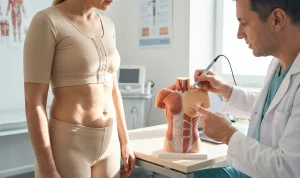
Yes, light walking is encouraged immediately.
Early Ambulation and the Prevention of Deep Vein Thrombosis
In the extremely specialized field of selective abdominal contouring and low-impact body sculpting, it’s essential for a surgeon to know the parameters of a patient’s early mobility following a mini tummy tuck (abdominoplasty), as this would be an important clinical phase. A mini abdominoplasty involves a precisely focused procedure to address the laxity of the skin and the small deposits of fat that are only located under the navel, without the comprehensive upper-abdominal undermining that is typical in a standard tummy tuck.
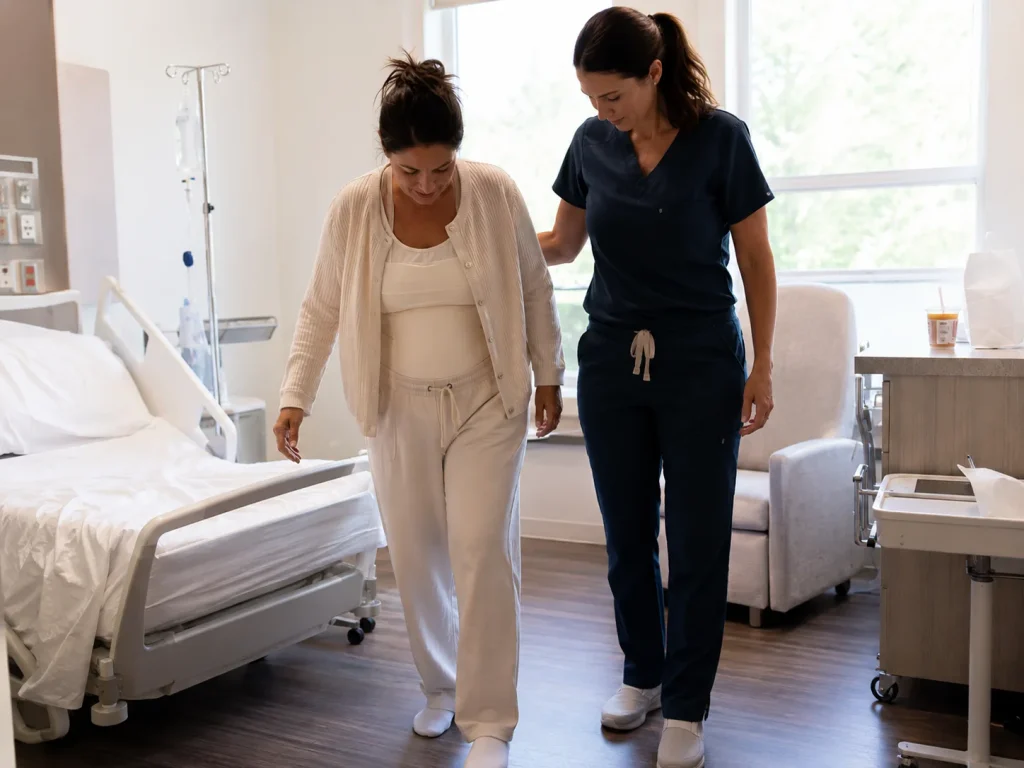
Although the dissection is less invasive, it is still a fact that the patient should walk straight away—that is, within the first four to eight hours post-surgery—to be considered safe. Walking early on triggers the contraction of calf muscles that then act as a pump, pushing the veins’ blood back to the heart and thus efficiently preventing the development of deep vein thrombosis (DVT) or anywhere else in the body. On the other hand, sitting for a long time without any movement leads biologically to such a decline that the risk of getting potentially dangerous blood clots in the lower limbs skyrockets.
The Protective Flexed Posture and Biomechanical Walking Mechanics
While walking is a must, it is not enough; you must walk the right way by changing the manner of your walking so it suits the healing of your abdomen and the less visible lower part of the incision. The surgeon tightens the abdominal wall by folding it in on itself while also getting rid of the excess skin. Thus, the tissue at the time of a full stand in an upright position is under a lot of structural tension.
You should be walking every few hours for short and measured steps around your recovery space. Use a back with a slight round very purposely at the beginning because it is indeed left working that way to reduce the trauma of the pubic line. Keep a rounded back while walking to relieve the tension on the pubic incision so that the deep sutures neither tear nor stretch. Gradually straighten your torso as internal repair layers naturally soften and adapt over the first week.
Torso Kinetics and Athletic Integrity During Your Recovery
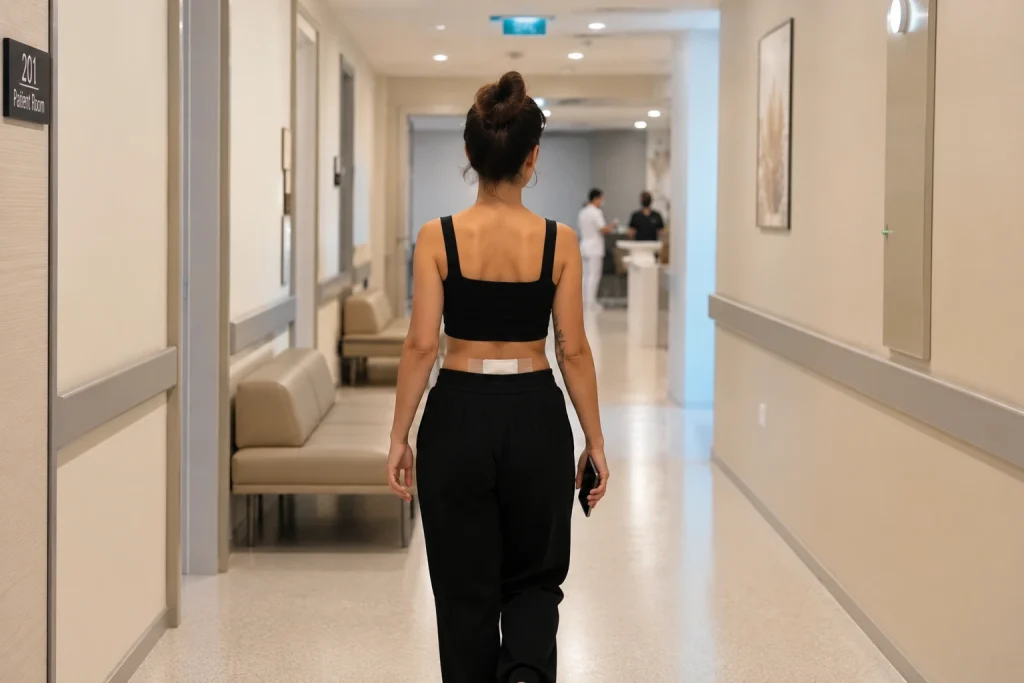
Individuals extremely active and living a disciplined lifestyle and require absolute perfection from their body silhouettes should follow strict behavioral guidelines and keep their recovery environment uncompromised. Intense physical exercises and movements of the core muscles that exert a lot of force done too soon after the surgery can leave unintended consequences, which include the aggressive contraction of the abdominal muscles on one side, resulting in the formation of internal fluid accumulations (seromas).
For your operation to fit your body well, the hourglass figure should be maintained through total abstinence from rigorous exercise, running, or vigorous core activities for a minimum of six weeks. Besides that, abstaining completely from nicotine and all tobacco products is a must. Tobacco is the worst enemy when it comes to attaining perfect healing because it acts as a very powerful vasoconstrictor to the level that it instantly shrinks microvessels supplying the abdominal flaps, and as a consequence, it almost immediately deprives the healing incisions of the very oxygenated blood that is so necessary for clean cellular regeneration.
Clear Expectations: Gentle Pacing vs. Strenuous Exercise
Knowing exactly what can and cannot be done after surgery is the key to the patient’s success and their aesthetic outcome to the highest degree of satisfaction. Patient walking post-surgery is limited to slow, gentle, and continuous pacing designed purely to promote systemic blood circulation and lymphatic drainage.
It will be a huge mistake if you decide to power walk, jog, or lift weights before getting the green light from your surgical team. The biological changes that take place on their own time and which are quite gradual cover a period of six weeks: first doing flexed pacing at home, then by week three going for upright walks out of the neighborhood, and lastly, it is only after the structural stability is confirmed beyond doubt that one can resort back to the customized athletic training regimen.
Mini Tummy Tuck in Turkey
LIN Europe Clinic is your entry into one of the best global medical oases, where your abdominal aesthetics, high-definition body contouring, and surgical pathways would be handled with the highest level of clinical skill and the deepest kind of care. Navigating the exact phases of recovery and the mobility limitations after advanced sculpting of the lower torso are very challenging tasks that require a medically sophisticated, transparent, and highly supportive environment where the foremost priority is the use of evidence-based medicine.
By entrusting your deep faith in our devoted team of experts at LIN Europe Clinic in Istanbul, your recovery parameters will be under extremely high diagnostic accuracy. We have a ready-for-use and comprehensive early-ambulation checklist guidance, in addition to advanced tissue examination protocols and long-term planning especially designed to assist you through the different stages of your tissue recovery and integration into your new lifestyle. Our top-tier medical team is unwavering in their efforts to help you protect both your investment in body contouring and your systemic health, thus allowing you to develop your desired silhouette fully at ease. Come and visit LIN Europe Clinic for the exquisitely refined and thoroughly comprehensive care, and create your perfectly balanced, undiluted shape here in Turkey in safe and secure hands.
FAQ:
Yes, very gentle walking is actually recommended after mini tummy tuck. In fact, starting to walk within 4 to 8 hours even after surgery is really important as it helps to increase blood flow and prevent the formation of dangerous blood clots.
During the first week, you should walk in a deliberately bent over and slightly hunched position.
Actually, gentle walking at a slow pace with a slight flexed posture not only protects the repair, but also ensures proper tissue alignment. On the other hand, if you decide to suddenly do aggressive stretching or straining while fully upright, you might risk the stitches getting compromised.
By 3rd week you will notice that your deep incision margins are stabilizing and most patients are able to make the switch from short indoor pacing to long, fully upright outdoor walks.
Although very gentle walking can be started right away, the majority of people experience internal pulling sensations for about 4 to 6 weeks. After that, they are capable of resuming their regular energetic walking speed without any discomfort.
Baroudi, R., & Moraes, M. (1995). Mini-abdominoplasty: Analyzing early ambulation protocols, deep vein thrombosis prevention, and fascial plication dynamics. Aesthetic Plastic Surgery, 19(2), 123-131.
Matarasso, A. (2000). Abdominoplasty: Evaluating mechanical tension, flexed posture walking, and post-operative mobility guidelines. Plastic and Reconstructive Surgery, 106(3), 691-701.
Rohrich, R. J., et al. (2014) Advanced postoperative care, torso kinetics optimization, and long-term architectural stability in targeted abdominal sculpting. Plastic and Reconstructive Surgery, 134(3), 356-365.