Yes, it can become less effective over time in rare cases.
Botulinum Toxin, a.k.a. Botox, has been the leading anti-aging treatment for more than twenty years now. Recently, however, it has become quite popular among younger patients who see it as “preventative maintenance,” which brought about a new kind of apprehension—the fear of tolerance. Patients are concerned that if they start Botox in their 20s or 30s, the drug might stop working by the time they are in their 50s, thus leaving them immune to its wrinkle-smoothing effects right when they need them the most.
This suspicion is generally incited by the gossip of those who hold the opinion that their effects endure for a lesser degree of time than previously. They figure that their body “gets used to it,” just like when one can develop tolerance to caffeine or alcohol. But, the reality behind the biology is not that straightforward. In most cases, the answer is quite reassuring. For the overwhelming majority of patients, Botox doesn’t lose its effectiveness as treatments go on, and sometimes, the contrary even happens. Knowing how muscle memory and antibody mechanisms work can help you stay on point with your desired results without the fear of ‘running out of options’ anytime soon.
The Myth of Resistance: Understanding Neutralizing Antibodies
The development of “neutralizing antibodies” is the most popular scientific justification for the idea that Botox works one day but stops working the next. The reasoning is that Botulinum Toxin, being a protein from outside of the body, the immune system might finally identify it, and in order to protect the body, create antibodies against it. As amazing as this immune response is, it is literally almost improbable for cosmetic patients. True antibody-induced resistance is said to affect less than 1.5% of patients, and more particularly so it happens in therapeutic patients that get huge doses for muscle spasm or cerebral palsy treatments, whereas we get very small doses for wrinkles.
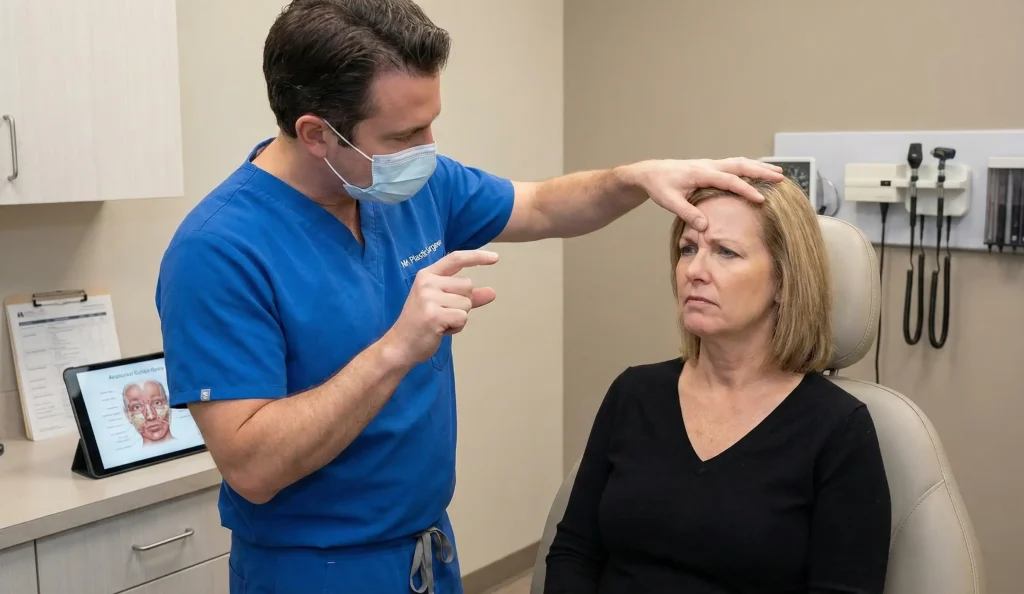
When a patient says “Botox no longer works for me,” it is still far from being immunity. It could be simply an error on the dosage, product reconstitution, or placement side. Because of brow heaviness and skin loosening, the ageing dose that gave a nice effect four years ago won’t work or won’t work as well this time. Thus, it is not the paint failing but the change of the canvas. Switching brands (e.g., from Botox to Dysport or Xeomin) can sometimes help if real resistance is suspected since they have different protein structures, yet in 99% of cases, the drug keeps its full potency forever.
The Atrophy Effect: Why You Might Actually Need Less
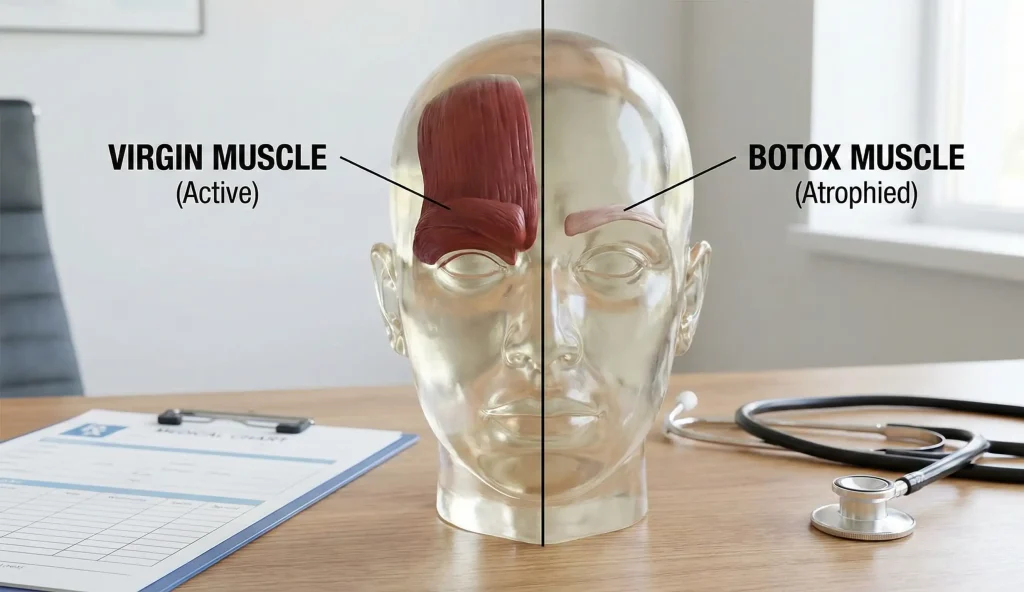
In contrast to fears where the drug is not enough and you have to get higher doses, long-term users usually discover that they need Botox at longer intervals or even smaller injections to achieve the same effect as before. This can be explained by the fact that skeletal muscles follow a “use it or lose it” rule. So basically, by injecting the corrugator muscle (which is responsible for frowning) with Botox, the frown muscle will not be active. After years of disuse, the muscle fibers shrink and become thinner.
Moreover, such muscle weakening is actually an anti-aging plus. Less intense contractions of the weakened muscle column lead to less skin folding, even when the skin is very wrinkled initially. Secondly, Botox users who stay faithful to their appointments have reported that their results last longer i.e. from the usual 3 months post-injection to 4 or even 6 months since the muscle is more resistant to stimulation or better ‘slow to wake up.’ There you have it. It is the opposite of tolerance: Step by step, you are changing your face to look more relaxed and younger for a longer time.
The “Heavy” Look: The Risk of Over-Treatment
On the flip side, the situation of getting Botox too often is not without consequence. The chemically nature of the drug is absolutely intact, but the results can become visually compromised. It is only the frontal muscle that raises the eyebrows. For what reason, if over the years it has been totally paralyzed, it can become so thin that the brow descends and this in turn makes the eyelid heavy or droopy-looking? Hence, the needle-armed professionals as a rule recommend a period of “washout” or less-intensive sessions in the course of time.
The muscle is strong enough to make the brow look good (not wrinkle free) and at the same time the muscle is prevented from going back to its full size and creating the wrinkles. Botulinum neurotoxin lasts in the body typically for three months. The goal is to have enough muscle left to keep the skin flatter but alive for the natural appearance, not to kill it altogether.
Why Results Fade Faster: Metabolism and Lifestyle
There might be a lifestyle factor involved if you notice that your Botox wears off after 6 weeks instead of the usual 12, so no need to point the finger at the drug right away! The metabolism of Botox is correlated with your general metabolic rate. Those who lead very physically active lives—top athletes, runners, or people who simply have a fast metabolism—are probably among the individuals who “use up” a product quicker than others. This means that the toxins are removed from the nerve endings at a quicker pace as a result of an elevated blood flow and the intensified cycle of muscle repair.
On the other hand, it is also worth remembering that Botulinum Toxin needs zinc at the binding step with nerve receptors. Should there be a shortage of zinc in the body, the result would be poor absorption of the drug and thus a feeling of diminished strength and duration of the treatment. The efficacy and longevity of the injection can be maximized by taking a zinc supplement (commonly along with phytase) a few days prior to your appointment, which is a tried and tested method among those who say that they are becoming “resistant.”
Lin Health Europe Clinic: Customizing the Neurotoxin
At Lin Europe Clinic, we do not subscribe to the principle of a generic “20 units for everyone” injection. We look at Botox from one treatment to another relationship and treat it as such. We meticulously keep a record of your dosage alterations. So, if your dosage no longer gives the same effect, we do not just inject more; instead, we try to discover what is causing it. We may even think of rotating the brand of neurotoxin we use, toggling between onabotulinumtoxinA (Botox), abobotulinumtoxinA (Dysport), or incobotulinumtoxinA (Xeomin) in order to maintain the receptors responsive and prevent protein fatigue.
Our long-term maintenance patients also benefit from “Baby Botox” which is an art that we have mastered. We take precise, ultra small units to really smooth out the skin and maintain muscle tone which is what makes skin look lifted and vibrant. We want our clients to still be pretty and even younger looking at 60 than they were when they first came to us at 30. A properly planned Botox treatment course is thus not a temporary flirtation but a true lifetime partnership.
Frequently Asked Questions About Long-Term Botox
In general, no. Long-term Botox use mostly results in muscle atrophy (weakening), which is a reason why the treatment lasts longer, not shorter. Genuine resistance is hardly ever found.
Yes, but it is still very unlikely. Up to 1% of patients produce antibodies that render Botox is less effective. When that happens, switching to a different brand such as Xeomin usually fixes the issue.
If the duration of Botox becomes less effective in the case of it waning, it could be caused by a faster metabolism, more exercise, or the muscle power becoming changed, not by the immune system.
Yes, if it is overused. Having the forehead paralyzed continuously for a long time can thin the muscle and eventually result in brow droop. For this reason, long-term Botox requires expert dosing to preserve muscle tone.
Indeed. If you think you are getting tolerant, to move over to Dysport or Xeomin will be helpful, as these are different protein structures that can work well when Botox becomes less effective.
Torres, S., et al. (2014). Neutralizing antibodies to botulinum neurotoxin type A in aesthetic medicine: five-year clinical experience. Dermatologic Surgery.
Flynn, T. C. (2010). Botulinum toxin: examining duration of effect in facial aesthetic applications. American Journal of Clinical Dermatology.
Brodsky, M. A., et al. (2012). The effect of zinc supplementation on the efficacy of botulinum toxin for facial wrinkles. Journal of Drugs in Dermatology.