
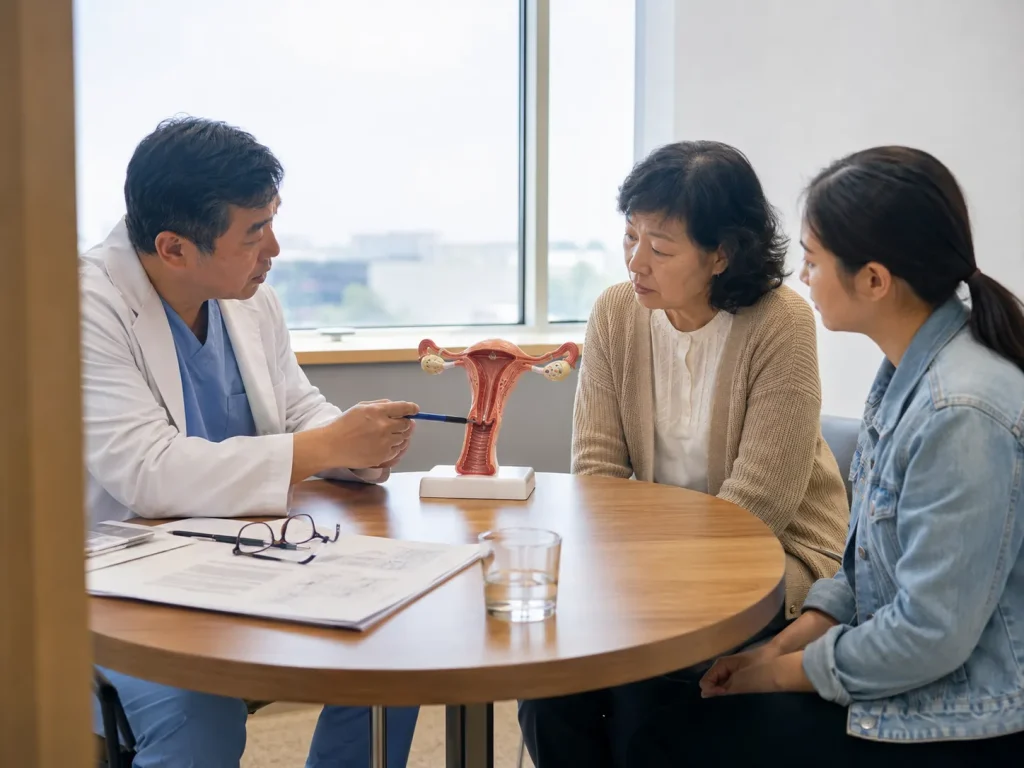
No, cervical removal does not directly cause weight gain.
Biological Realities: Role of Cervix and Hormone Control
When talking to a gynecologist and pelvic reconstructive surgeon about surgical removal of organs or tissues and their effects on the metabolism of your whole body, physiological facts and evidence-based medicine will speak loud and clear. One of the common things that patients worry about when undergoing total hysterectomy is that removing the cervix (which is actually the lower third of the uterus) results in increased body weight after surgery.
The clinical evidence is straightforward: surgery removing the cervix is in no way directly related to an increase in body weight. The cervix is a physical defense, but it’s also got some physiological functions, and beyond that, it neither influences your metabolism nor does it manufacture hormones. Whether you gain or lose weight, how metabolic processes change, and where fat is deposited following the removal of the uterus will be determined exclusively by your ovarian condition and the changes brought about by surgery in the body’s metabolism, not the removal of the cervix tissue alone by surgery.
Different Structures from Hormones
To grasp why your weight changes after a hysterectomy, you have to know the distinction between physical organ removal and hormonal regulation:
- Removing the Cervix and Uterus: You are removing physical organs. It will stop the blood flow of the period and change the position of the pelvic organs, but will not directly interfere with your baseline metabolic, appetite signal, or fat storage mechanism.
- Leaving the Ovaries: Assuming your ovaries are left untouched in the hysterectomy operation, they are still able to produce the same amount of estrogen and progesterone that they usually would. In such circumstances, there is no surgical menopause and, therefore, there is no hormonal-induced metabolism slowing down either.
- Removing the Ovaries: If your surgeon took away one or both ovaries with your uterus and cervix in a hysterectomy, the estrogen level in the bloodstream will drop rapidly, the metabolic rate will decrease, and there will be an increase in fat around the abdominal area due to the hormonal imbalances that are mainly the reason for the weight gain you experience after a hysterectomy – not because of just removing the cervix.
Post-Operation Weight Shift Factors
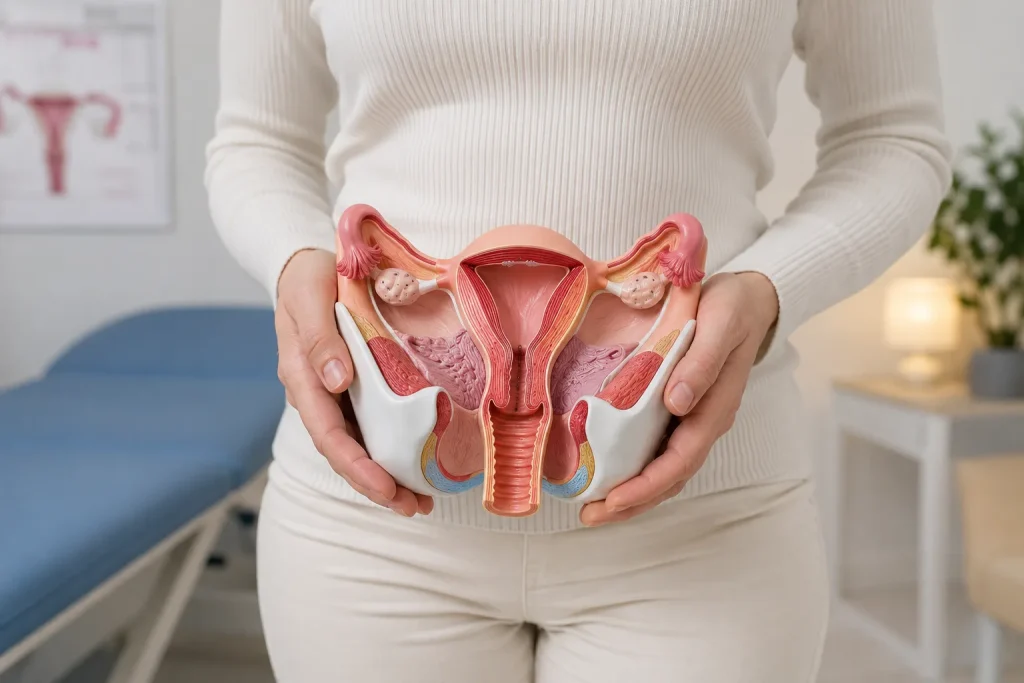
Though removing the cervix alone has no effect on the body’s internal balance, the healing period can be the cause of weight variation:
- Mobility Limitation Post-Procedure: You are supposed to rest for 6 to 8 weeks after you have had your cervix removed by the surgeon and the lower part of the vagina (called the vaginal cuff) has been stitched up. In this short period, you can still exercise but only very lightly; no heavy weight lifting or running at all if you want to heal properly. This is a phase in which your caloric expenditure level drops slightly if you do very little exercise, and it can make you gain a little weight.
- Retention of Pelvic Fluid and Gas Bloating: The post-surgical situation where your body produces a lot of swelling, your vaginal vault gets a bit of a tissue swelling, while your bowel movement becomes sluggish due to the anesthetic drug, all these can result in abdominal distension, very often mistaken for a permanent weight gain.
- Stress and Trouble with Sleep: Surgery has a huge physiological burden on your body, and the temporary sleep pattern alterations can be accompanied by elevated cortisol levels, which lead to fluid retention as well as changing your appetite in the initial phase.
Cervix Removal Recovery
Finding the balance in activities post-surgery is a necessity for anyone who is determined to let the tissues heal at the highest level of quality. One of the main reasons surgeons remove a woman’s cervix and womb is to make a vaginal cuff that allows the surgeon to properly close the top of the vagina. Since these new tissue closures depend on microscopic wound suture sites and the early bonding phase (fibrin) of cells in approximately 6 to 8 weeks, physical protection of the tissue is very important and is a condition for the survival of the structural part of the organ.
An example of forcing a change in intra-abdominal pressure would be trying to back a heavy lift or high-impact exercise right away for the prevention of weight gain, but such action would definitely cause a medical penalty: it can damage the healing edges of the tissue with a very serious complication called vaginal cuff dehiscence (wound separation). In order to have your pelvis locked up in the correct shape through maximum use of anatomical details, you need to take your surgeon’s advice about the activities very seriously during this stage and only perform light walking, which keeps circulation going and at the same time causes the least possible physical stress on the vaginal vault.
Hysterectomy in Turkey
By choosing LIN Europe Clinic, you will have access to the finest medical resort for women’s pelvic reconstruction surgeries, where all your pelvic health, surgical pathways, and post-operative care are handled with unwavering clinical expertise combined with deep, empathetic care. We understand only those with very specific medical expertise and a truly supportive environment can explain accurately and transparently what the precise tissue selection, healing, and internal tissue protective boundaries will be after a patient has a hysterectomy.
When you take your health into the hands of trusted specialists at LIN Europe Clinic in Istanbul, it means they will monitor your recovery and pelvic stability closely at the level of detailed diagnostic assessment of the two. We give thorough, customized post-procedure guidance, high-clarity tissue reviews, and specially made individual healing checklists so that we are able to support you together step by step in all aspects of your internal tissue growth and lifestyle adjustment.
FAQ:
Not really. The cervix is basically tissue; it does not produce any metabolic or regulatory hormones. Weight gain that occurs after a hysterectomy is due to hormonal changes from the loss of ovaries, postoperativemore activity, and sometimes from fluid retention.
A “hysterectomy belly” is essentially a temporary swelling of the belly that usually happens from the swelling caused by the surgery, the healing of the internal tissues as well as some air being trapped in the digestive track when the intestines are in a new position.
Your body will continue using you’re estrogen and progesterone at the same levels when you leave your functioning ovaries intact which prevents sudden change in metabolism and weight increase that comes along with surgical menopause.
Walking around a little is highly suggested after a operation to help increase blood flow in the body. Nonetheless, any heavy exercise, workouts focused on muscles around the core, and lifting weights should be deferred for at least 6 to 8 weeks until the doctor confirms that your vaginal cuff has completely recovered.
In terms of weight gain after surgery, several comparative studies have failed to uncover a clinically significant difference between the two procedures, a full hysterectomy (cervix removed) and supracervical hysterectomy (cervix kept) . Whether you will lose or gain weight mainly depends on the activity of your ovaries and your total lifestyle and habits.
American College of Obstetricians and Gynecologists (ACOG). (2020). Total vs. Supracervical Hysterectomy: Clinical Indications, Ovarian Preservation, and Metabolic Outcomes. Practice Bulletin No. 218.
Farquhar, C. M., & Steiner, C. A. (2002). Hysterectomy rates in the United States 1990–1997: Analyzing ovarian conservation and post-surgical metabolic parameters. Obstetrics & Gynecology, 99(2), 229-234.
Rohrich, R. J., et al. (2014). Advanced Postoperative Care, Micro-Vascular Wound Healing, and Systemic Vasoconstriction Parameters in Pelvic Tissue Recovery. Journal of Aesthetic and Reconstructive Surgery, 34(5), 587-595.