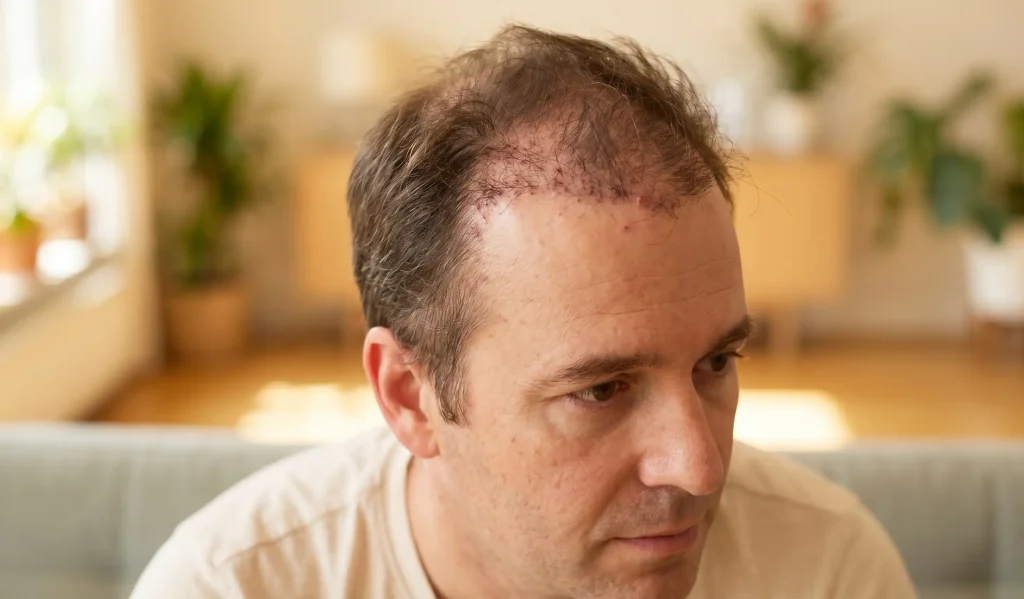
No growth and visible patchy areas.
The Biometrics of Follicular Non-Viability
Success in hair grafting depends largely on the graft’s ability to establish a functioning blood vessel network with the scalp’s dermal matrix. When the biological integration fails, the follicle dies. Biometrically speaking, failure is not always in the form of instant death; sometimes it is no growth at all months after the operation or localised inflammation in the early days.
We, at Lin Health Europe Clinic, treat the survival of grafts with the highest level of clinical expertise. We make a difference between the naturally occurring “Shock Loss” stage—where the hair shaft is shed, but normally the follicle is not damaged—and real graft failure. If a graft does not fulfill its growth potential, that is mostly caused by rough handling during the extraction, blood supply that is not sufficient, or injury. Knowing the visual signs of failure is a must to keep the structural harmony of your restoration and to make sure that your systemic vitality is supported by experienced care.
Immediate Visual Markers: Infection and Necrosis
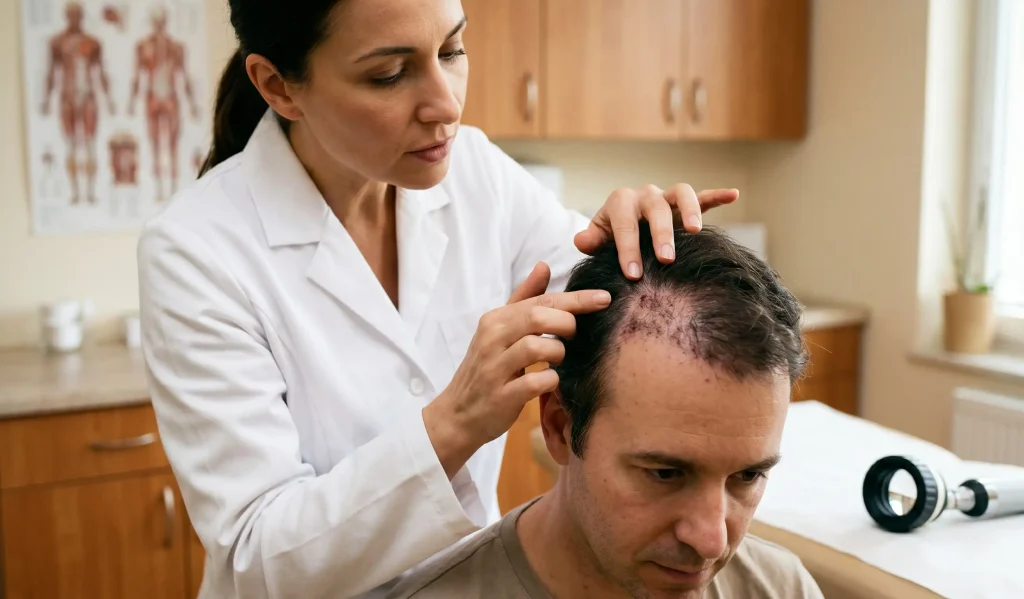
Signs of failing grafts, usually within 14 days after surgery, can be traced back to systemic infection or neglect. In a scene where grafts are reddened, pus-filled, or smell bad, it marks a localized stunt to grafts by infections. Death of the graft may be communicated by a necrosis of the skin, i.e., a scabby dark patch turning black and sunken in appearance, which is a serious interruption of the blood supply.
The professional standard at Lin Health Europe Clinic is that your healing process will be monitored with high-definition precision. Our Istanbul city clinic is like a niche providing special antibacterial protocols that help in the prevention of these complications, besides healing. A graft that looks “puffy” or has sustained signs of intense inflammation even after one week could indicate that it is under stress. Besides the application of medical innovations to post-operative care, we make sure that the “biological bandage” of the scab is assisting the graft rather than being a source of bacteria leading to failure.
Technical Failures: Pitting and Cobblestoning
Some grafts fail because of a lack of surgical brilliance during the implantation phase. They turn out to be:
- Pitting: This is a phenomenon where a graft is implanted too deeply into the scalp. Visually, it looks like a small indentation or “pit” around the hair shaft. It can result in prolonged inflammation and growth problems.
- Cobblestoning: On the contrary of pitting, it is a condition where the graft is not correctly placed in depth, or the incision has been too shallow. The skin has on it a series of small bumps that look like cobblestones.
Such changes in the skin will interfere with the structural harmony and be a sign that the biometrics of the scalp were disregarded. We at Lin Health Europe Clinic also use high-definition tools to be sure that each follicle is placed at the exact depth level that is required for success. A complete clinical mastery essential to solve these problems; usually, a second revision procedure is needed to make the surface smooth and natural-looking again.
Long-Term Indicators: Patchiness and Poor Caliber
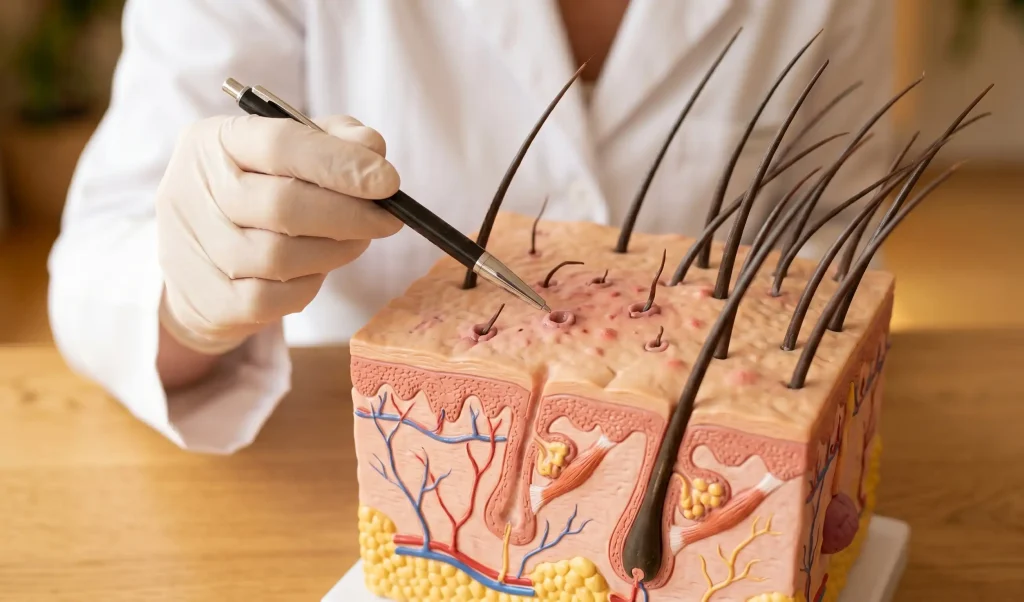
The most obvious indication of a failed hair graft is no growth 6 to 12 months after the surgery. When the recipient area is patchy or showing “empty” spots, the evidence you have is that the follicular units did not survive in the transition process. Also, if the hair that comes out complements thin, ends, or “vellus-like” (soft baby hair), it implies that the grafts are released with poor and inadequate blood supply, failing to grow fully.
Getting a high-definition density necessitates that each graft should be at its highest growth level. Detailed donor-recipient mapping is part of our professional rigor in Istanbul to find the follicles that have the highest systemic vitality for relocation. If there is a “see-through” aspect in the spots that normally should have been above dense, it is a marker of non-viability of grafts from the clinical viewpoint. Our treatment pathways in such situations include specialized regenerative therapies that aid in surrounding tissue and the maturation support of the remaining follicles.
Hair Transplant in Turkey
By ordering your hair restoration to Lin Health Europe Clinic, you are landing in a global base where surgical brilliance becomes the norm. We know very well that recognizing or experiencing failures in grafts can be a downer. Besides being a link to one of the leading countries in medical innovation, Turkey is also an expert in the “repair” of the botched hair restoration works performed in other clinics worldwide. We use the level of clinical mastery that makes it possible to even tackle the root causes of failure, which may have been technical, biological, or environmental ones.
By choosing Lin Health Europe Clinic in Istanbul, you are placing your trust in a medical framework that excels in the technical and biological requirements of hair restoration. We handle your structural harmony with the precision it deserves, ensuring that your final results reflect your systemic health and high-definition beauty. Experience the sophisticated care of Lin Health Europe Clinic and enjoy results that are stable, permanent, and biologically balanced. Your journey to a fuller, more confident silhouette is managed with precision from start to finish.
FAQ:
The symptoms of hair graft failure include a very severe, painful swelling during the first week, “raised bumps” (this can be compared to cobblestoning), “dips” (these are pitting), or simply no new hair growth at all by the time 9 months have passed.
Usually, the patients who see white tips do not realize that these are just root sheaths rather than the follicles. It is only in the case of total graft failure when you would see a completely missing unit of life with bleeding.
Indeed, we have a plan for revision cases at our center here. It is pure technique and artistry that allow us to remove “pluggy” or poorly placed grafts and then use good follicles to restore the original style and structural harmony.
The reasons why a hair transplant might fail are that the surgical technique is not good leading to pitting and cobblestoning, there is an infection, the blood supply in the scalp is poor or trauma of a mechanical type such as picking at scabs has occurred.
Smoking greatly cuts down the overall life energy and the blood flow to the scalp, which is the most common reason why a graft would not survive. We are very strict when it comes to professional advising of patients quitting before surgery.
Unger, W. P., and Shapiro, R. (2010). Hair Restoration Surgery: Biometrics and Procedural Mastery. Informa Healthcare.
Bernstein, R. M., and Rassman, W. R. (2002). Follicular Unit Extraction: Achieving Structural Harmony and Graft Security. Dermatologic Surgery.
Tebbetts, J. B. (2002). Systemic Vitality and Surgical Precision in Regenerative Procedures. Saunders Elsevier.
Janis, J. E., et al. (2005). Scalp Anatomy and Biometrics: Implications for Post-Operative Failure. Plastic and Reconstructive Surgery.
Beehner, M. (2001). A Review of the Causes of Graft Failure in Hair Transplantation. Hair Transplant Forum International.