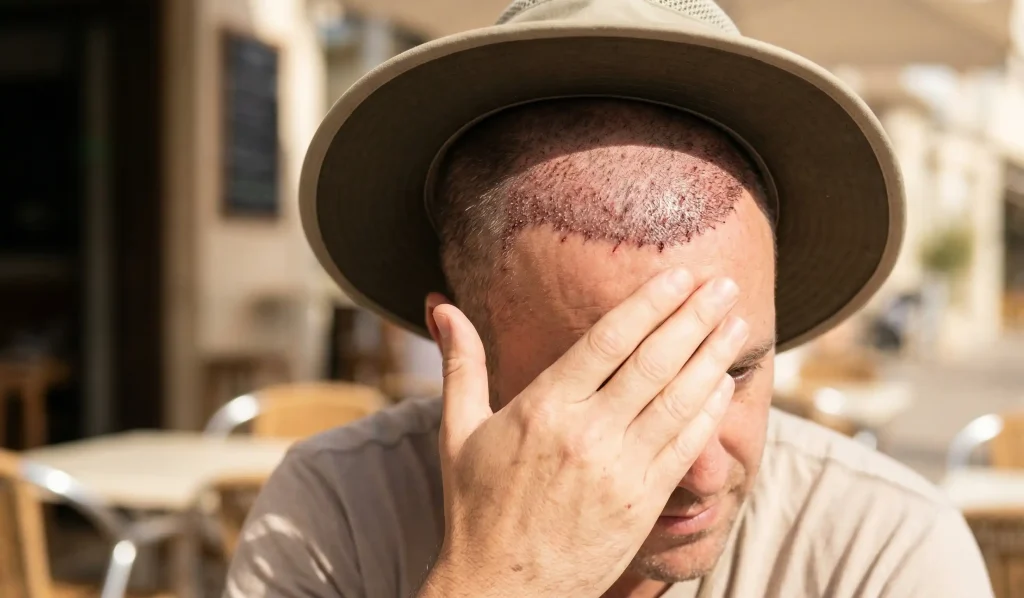
Avoid sun exposure and wear protection.
If we talk about follicular unit extraction and high-definition hair restoration, the very first few hours after the surgery would be a lot more than mere biological vulnerability to the transplanted grafts. The grafts implanted are nothing but “living biopsies” that are relocated in the new vascular environment and for the first few months, they are not equipped with the natural protective mechanisms of established hair. One source of sun damage is Ultraviolet (UV) radiation which causes a significant threat to follicular stem cells’ DNA as well as the healing scalp. Besides, exposure to strong sunlight may result in a localized inflammatory reaction, causing hyperpigmentation of the micro-incisions and, in extreme cases, graft thermal failure. It is not a matter of comfort to protect these hair follicles but rather a critical point for the achievement of long-term density and structural integrity of the transplant. During the first four months, the scalp constantly attempts to repair itself. The neocollagenesis phase is working to seal the graft sites and restore the dermal barrier. Moreover, UV-induced “sunburn” can injure the vascularization of the follicles which would lead to lower yield and a less natural-looking result in Turkey.
The Cellular Risk of UV Exposure on Healing Follicles
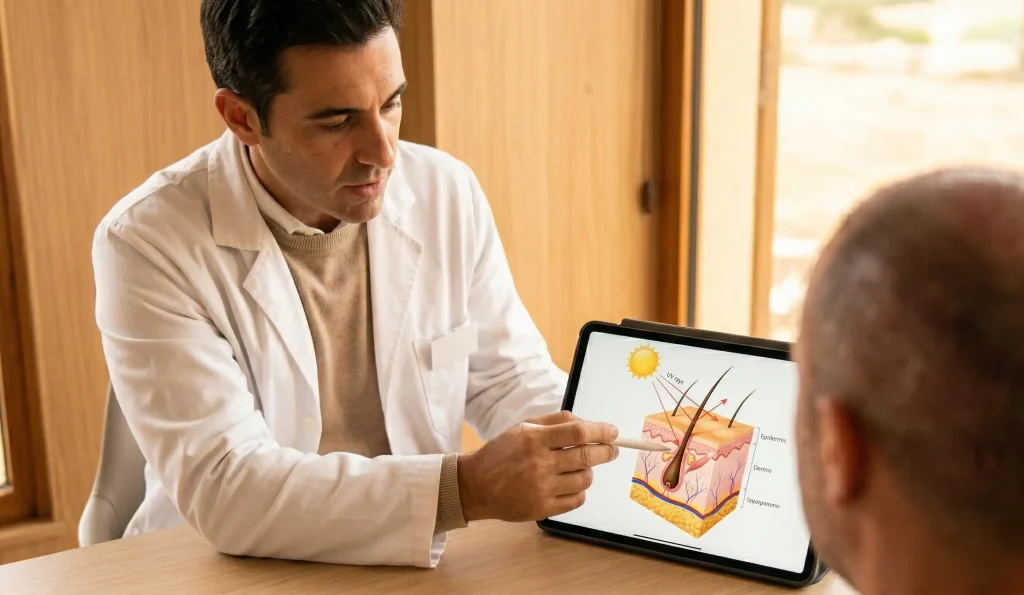
Mostly, chromatophore sensitivity and newly formed scar tissue melanin lack are the main biological risks of sun exposure after a hair transplant. Upon graft implantation, the skin around the graft site is in a state of “surgical shock,” and micro-channels are stripped of the natural defenses that mitigate UV damage. Direct sunlight exposure, especially at early recovery stages, is BBsunlight where UV rays reach the dermis level and cause phototoxic stress to delicate follicular bulbs. Small dots of the transplant turn dark or discolored, visible even after the hair begins to grow and is a characteristic of post-inflammatory hyperpigmentation.
At Lin Health Europe Clinic, we consider sun protection as a biometric priority for our international clients. Our team in Turkey stresses that the first two weeks are the most crucial since grafts are still “rooting” into their new blood vessel. We give a “UV-Defense Protocol” to each patient, explaining specific risks of sun-induced thermal injury to the scalp. Lin Health Europe Clinic surpasses post-op education, applying absolute professional rigor to make sure that the patient comprehends that a single unprotected sun exposure afternoon is enough to destroy the surgical team’s high-definition work. It is this clinical oversight that is indispensable for keeping the commendable high graft survival standards, for which we are famous in Turkey.
Neocollagenesis and the Reconstruction of the Scalp Barrier
Scalp’s healing after a transplant is neocollagenesis-driven where the body generates new collagen to fix the thousands of micro-incisions done during the procedure. This new layer of tissue is at first very thin and extremely exposed to external aggressors. UV radiation is a great inhibitor of healthy collagen synthesis; it causes the production of an enzyme that degrades collagen fibers before they can mature. If neocollagenesis is disturbed by sun damage, the resulting scalp tissue will be fibrotic or lose its elasticity. It is the “spring” and the direction of the hair that are negatively affected by the latter. Biological machinery works most efficiently in the absence of the sun, thus giving rise to a robust and healthy hair follicle seedbed.
Lin Health Europe Clinic in Istanbul is one of the advanced users of topical recovery serums scientifically proven to be capable of inducing neocollagenesis as well as the fortification of the skin against environmental stress in a subtle manner. It is the best way for our foreign clients in Turkey to keep the scalp “Zero-Inflammation”. We are of the opinion that professional rigor could also be extended to the cellular health of the skin envelope, and to biometric accuracy. Our medical team in Istanbul monitors the maturation of your incisions. Being confronted with sun, we allow new collagen to form a perfect and invisible seal around each follicle. Our Biological skin integrity dedication is what guarantees a permanent and high-definition hairline restoration in Turkey.
Strategic Recovery: Timing and Physical Shielding Protocols
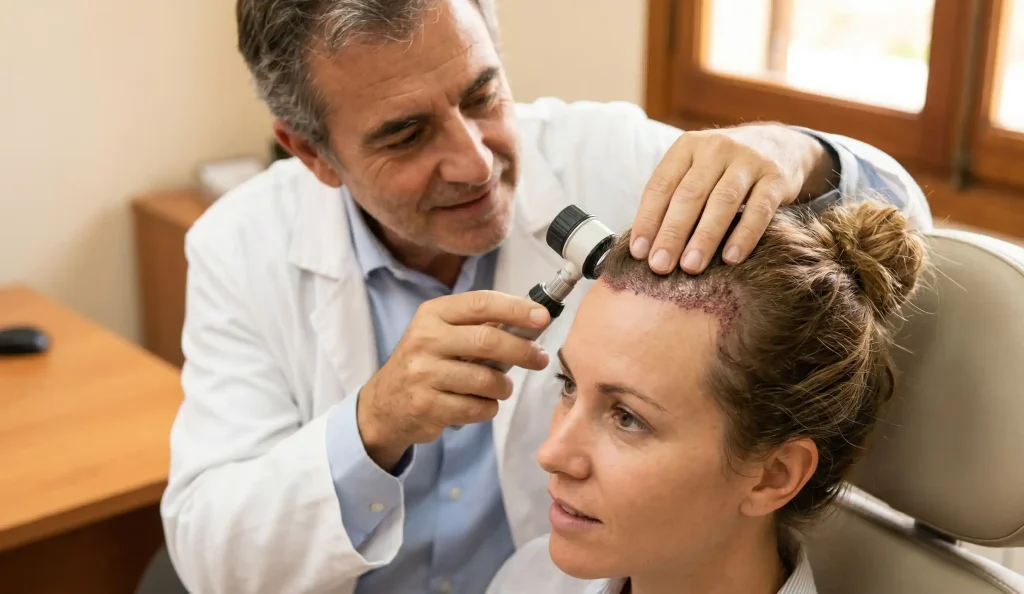
When graft protection is the issue, a phased approach to protecting the scalp is the foremost requirement. For the initial 10-day period, patients are to avoid direct sunlight exposure and headwear that would place pressure on grafts. A more relaxed option would be a loose-fitting, breathable cap that could physically shield the scalp from UV rays. It is mainly advised that the recipient area not be used for chemical sunscreens for at least 3 to 4 months thereafter, as the skin must have closed fully and the neocollagenesis phase well underway in order to avoid any irritation. Strategic timing, i.e., staying indoors during peak UV hours, is by far the most effective “elite” strategy for protecting the grafts during recovery in Turkey.
Lin Health Europe Clinic possesses the know-how to develop a “Sound-Safe Recovery Plan” that matches the Istanbul climate and the home countries of our international guests. We equip our patients in Turkey with specialized, surgical-grade headwear that could protect the grafts without causing friction or heat buildup. Istanbul is where the contact with our skilled hands occurs and treatment with professional rigor to your sequential schedule, the advisement of exactly when the safe period would be to go from the physical hats to topical sun protection is presented. From an environmental perspective, specially managed total follicular investment results in irreproachable results every time. It is through sheer surgical deha that the clinical deha chosen theme of a fuller head of hair is successfully met in Turkey.
Hair Transplant in Turkey
Lin Health Europe Clinic has become a global mecca for those who do not want to settle for less than the ultimate in hair restoration and first-class hospitality. Our Turkey facility is a landmark of medical innovation, delivering the most cutting-edge follicular science with the highest standards of JCI-accredited safety and professional rigor. Making a decision on our clinic means entrusting your hair in the most capable, the most safety-conscious hands. Istanbul is where, by means of top-notch quality of each graft, we consider it a masterpiece of structural integrity and surgical deha. We rank as a leading choice for international patients who not only want the most natural results but also want the most secure and luxurious surgical experience that the world has to offer. Excellence is committed to, our drive is ensuring every guest leaves with a result that lasts and is beautiful.
FAQ:
You’ll need to stay away from direct sunlight for at least three weeks to avoid skin damage. The new hair grafts can be negatively affected by the combination of heat and UV rays.
UV rays for a long time damage the cellular composition of the freshly implanted hair roots. This results in late hair growth and scalp discoloration being visible.
Most patients are allowed to wear a loosely fitting hat after 10 days of healing. Steer clear of tight caps that could be rubbing against or dislodging the vulnerable hair grafts.
Sunscreen should only be applied after the scalp has fully healed and the wounds have sealed. It is best to talk with your surgeon before putting any creams on the transplant region.
When you sweat a lot, the tiny incisions on your scalp could get infected. It’s better for the healing process if you stay cool and in the shade.
Beehner, M. (2014). The Physiology of Hair Graft Survival and Environmental Stress. Facial Plastic Surgery Clinics.
Unger, W. P., et al. (2010). Hair Restoration Surgery: Protecting the Scalp Barrier. Informa Healthcare.
Kim, J. C., et al. (2002). The Role of $neocollagenesis$ and UV Protection in Scalp Healing. Dermatologic Surgery.
Bernstein, R. M., et al. (2011). Follicular Unit Extraction: Managing Post-Operative UV Sensitivity. Journal of Aesthetic and Restorative Surgery.