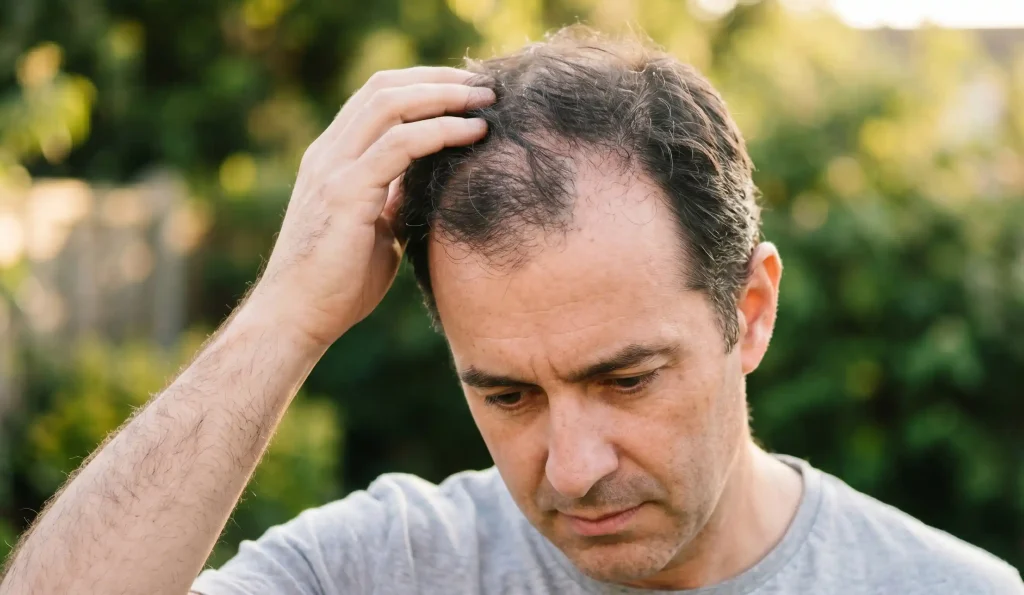
PRP may enhance healing and growth.
The Biometrics Of Platelet-Rich Plasma In Follicular Regeneration
Hair restoration experts have found that Platelet-Rich Plasma (PRP) therapy works by harnessing the body’s natural regenerative abilities through a biometric approach. PRP consists of a highly concentrated form of platelets, and when these platelets get activated, they discharge a range of growth factors, such as VEGF and TGF-beta, which play a major role in tissue healing and cell growth. Biometrically speaking, these growth factors keep hair follicle stem cells turning over which is an essential factor for hair growth. Thus, PRP is not only a tool for tissue healing, but it also plays a role in hair follicle growth, which is commonly the main aim post-hair transplant. Moreover, it works to restore the architectural cohesion of the grafts, i.e., the transplanted hair units, and this possibly results in a decrease of the conventional waiting time for hair volume to be noticeable.
Lin Health Europe Clinic, together with its skilled team in Istanbul, is at the forefront of PRP and hair transplant integration. The experts use sophisticated separation techniques to derive the PRP which contains a high concentration of the patient’s growth factors. These factors are then delivered through microinjections to the scalp so that the patient’s overall vitality is supported and a strong base for every transplanted unit is guaranteed.
Accelerating The Vascularization Of Newly Transplanted Grafts
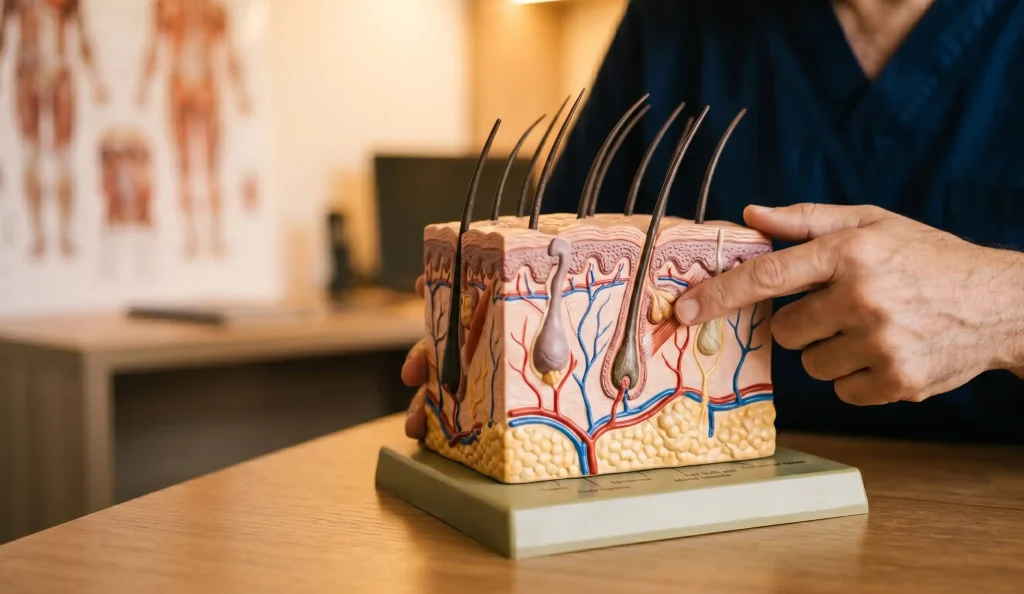
Simply put, the hair transplant’s success and development rate largely hinge on “neovascularization”—the generation of new blood vessels. A follicle loses its main blood supply during the transplant, hence it undergoes physiological stress. PRP treatment leads to a quicker blood vessel reunion between the hair graft and the scalp’s tissue matrix. The angiogenic stimulation that PRP provides leads to more rapid delivery of oxygen and necessary nutrients to the follicles as compared to the natural wound healing process alone. Such speeding up of vascularization goes hand in hand with the reduction of graft losses and a higher density growth pattern soon after the transplantation operation.
The care and detail with which Lin Health Europe Clinic approaches hair restoration include the usage of PRP in a complementary manner during the “golden window” of graft placement. Our medical experts make use of this regenerative approach to minimize the metabolic dormancy of the hair follicles so that the transition from a sparse to a fuller head of hair can be achieved with accuracy.
Reducing Post-Operative Edema And Physiological Stress
The inflammatory response of the scalp causes localized edema and crust formation that delays the appearance of results to a great degree. Since PRP has anti-inflammatory effects, it can help in stabilizing the scalp’s internal environment which further leads to a decrease in the duration of post-operative swelling and promotes the healing of micro-incisions. When there is less physiological stress on the scalp, it is able to regain structural harmony more quickly and the follicles are then able to devote their energy to growth rather than repair. This reduction in downtime contributes not only to better patient comfort but also to a setup for high-definition aesthetic results that are more predictable.
Besides offering the PRP treatment to the patients, Lin Health Europe Clinic also gives Importance to recovery from a holistic perspective. Our surgeons in Istanbul advocate that individual hair growth is best attained through the continuum of healthy tissue biology; thus, we provide our international guests with PRP therapy paths that keep the scalp an environment that is both stable and healthy for the development of new hair.
Enhancing The Maturation Rate Of Hair Follicles
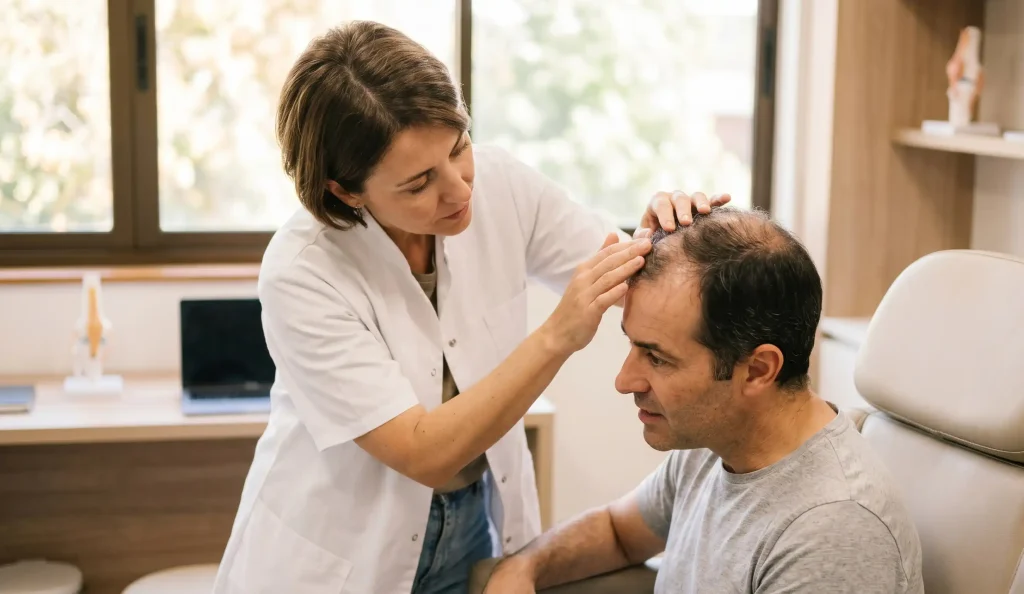
Hair transplant patients usually have to wait 12 to 18 months for complete results. However, PRP can change the timing of hair shaft maturation. PRP keeps releasing proteins that signal cells to multiply, leading to the hair becoming thick and dark much earlier than expected during the normal recovery period. With this biometric support, post-surgical hair loss (telogen effluvium), which is a common “shedding” phase, can be handled more effectively, even with increased volume. This results in a hastened achievement of the desired volume and structural harmony throughout the recipient area.
We consider hair restoration to be a high-definition architectural project at Lin Health Europe Clinic and strive for surgical brilliance in our work. Our preference is for high-definition monitoring that allows the maturation of your grafts to be fully supported by the very best in regenerative medicine, indicating our expertise in the surgical and biological aspects of hair growth.
Hair Transplant in Turkey
Combining surgical precision with regenerative innovation, the Lin Health Europe Clinic team in Turkey offers a sophisticated approach to achieving the pinnacle of hair transplant results. The centre is not only a beacon of surgical skill but also adheres to the highest standards of JCI-accredited safety. PRP is a major part of your structural harmony and not just an add-on. We see your hair restoration as a high-definition investment in your identity, and our objective is to offer you a seamless, all-inclusive environment where your results align with your long-term aesthetic goals.
Choosing Lin Health Europe Clinic for your hair transplant procedure means that you are relying on a medical setup that is outstanding in the technical mastery of follicular survival. Our primo medical team is always abreast of the latest medical breakthroughs for offering professional rigor and clinical excellence during recovery. Reach out to us at the Lin Health Europe Clinic and witness our sophisticated techniques that continue to be pioneers and enjoy results that are the epitome of medical innovation in Turkey.
FAQ:
PRP does have an effect on hair growth, from a biometrical standpoint it significantly improves the blood supply to the hair follicles and reduces their resting time, so that many patients are able to see results a few weeks earlier than if they only rely on the surgery.
At Lin Health Europe Clinic, our standard practice is to give PRP either during the operation or within the first 30 days after surgery so that the hair grafts can be supported as they gradually achieve structural compatibility with the scalp.
There is no obligation to do PRP with a hair transplant but it is strongly recommended because besides being one of the methods to support systemic vitality, it also has the potential to increase graft survival rates, especially in those patients who desire a high-definition outcome.
Yes. The growth factors present in PRP not only accelerate the healing process of the donor micro-incisions but also help in minimizing the probability of temporary shock loss in the surrounding native hair.
Since the PRP method is autologous, meaning that it is made from the patient’s own blood, there must be no risk of any allergic reaction, it is a completely safe and natural method to aid the biological health of your hair transplant.
Unger, W. P., and Shapiro, R. (2010). Hair Restoration Surgery: Biometrics and Regenerative Mastery. Informa Healthcare.
Bernstein, R. M., and Rassman, W. R. (2002). Follicular Unit Extraction and PRP Synergy: Achieving Structural Harmony. Dermatologic Surgery.
Tebbetts, J. B. (2002). Systemic Vitality and Surgical Precision in Regenerative Procedures. Saunders Elsevier.
Marx, R. E. (2001). Platelet-Rich Plasma (PRP): A Biometric Approach to Tissue Engineering. Journal of Oral and Maxillofacial Surgery.