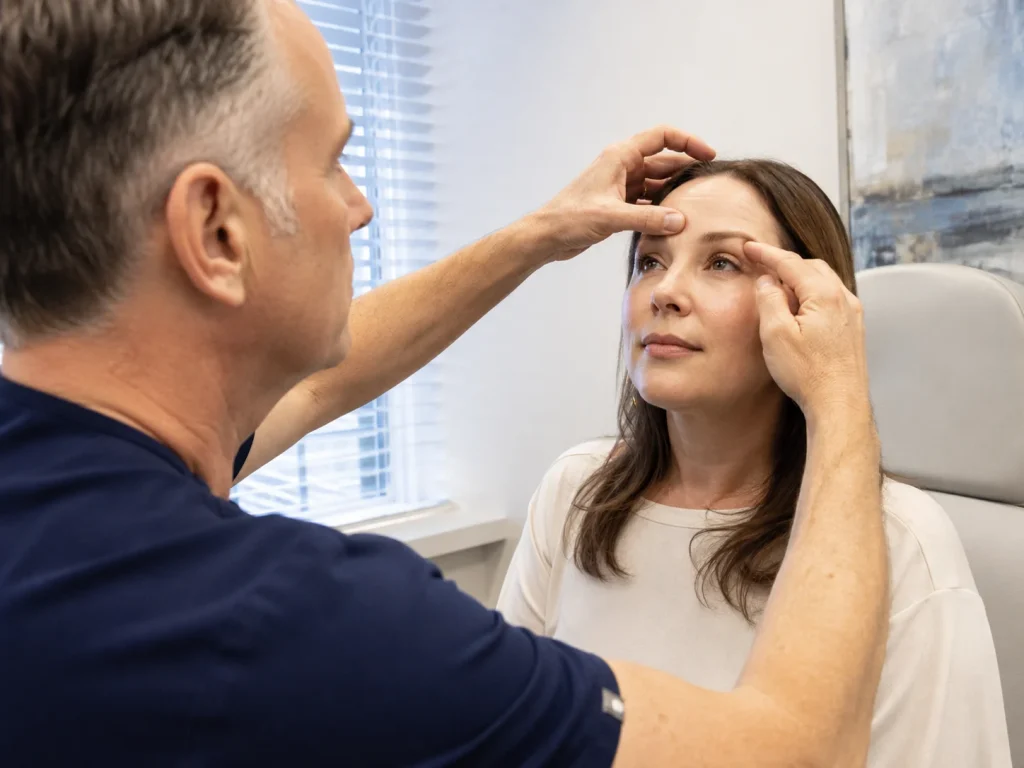
Avoid rubbing eyes and heavy lifting.
Protecting Your Incisions
In the very specialized fields of eyelid surgery and periorbital rejuvenation, your behavior during the first two weeks of recovery is the main factor in determining the long-term beauty of your eyelid lines. The skin on the upper lids and delicate surgical incisions may carry a lot of mechanical strain whenever you blink, squint, or move your facial muscles. In order to not jeopardize your results, you should refrain from all activities that lead to the engagement of intense facial muscles or cause unnecessary physical strain.
Besides heavy lifting, bending over at the waist, or doing strenuous cardiovascular exercises, you should not do any of these within the first 14 days at any cost. These actions will elevate your blood pressure, which will immediately result in fluids being pushed into your thin eyelid tissue, thus prolonging the phase of acute swelling and possibly stretching the delicate edges of your incisions, which can lead to irregular or widened scar maturation.
Preserving the Healing Skin Barrier
During the post-operative phase, periorbital tissue is very susceptible to environmental pollution, particles causing abrasion, and harmful UV radiation. One cannot compromise on protecting the healing surgical ports if the goal is to have a smooth, almost invisible scar line.
- Sunlight Exposure: You should not get any sunlight exposure at all. UV rays trigger the skin to produce melanin in the areas of new skin, which could lead to permanent discoloration of your eyelid scar. Whenever you step outdoors, make it a habit to don high-grade, polarized, UV-blocking sunglasses for at least three months.
- Physical Contact: Keep your hands off your eyelids no matter how much they itch or dry. Touching introduces bacteria, risk of pulling the sutures, and creates mechanical friction that changes the shape of the tissue during the healing and maturation process.
- Chemical Exposure: Definitely stay away from any eye creams that have not been prescribed to you, harsh chemical exfoliants, or retinol-based serums around the surgery site until your surgeon has completely given you the go-ahead, as using these products may lead to severe localized irritation and chemical dermatitis.
Maintaining Vascular Homeostasis
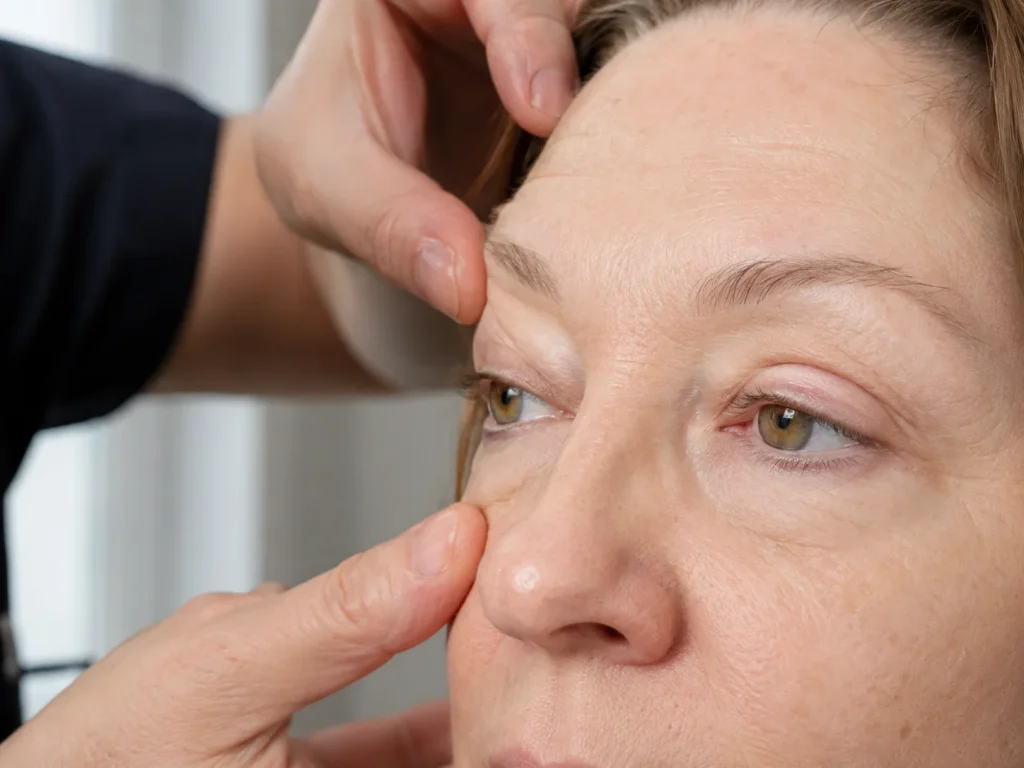
Facial matrix individuals who present their faces at an elite level and demand perfection from themselves must strictly adhere to biochemical limits. Protecting the vascular kinetics around the eye is critical to your visual progress for a high-definition facial aesthetic that is maintained by dedicated individuals. The most critical of all boundaries is the complete and total avoidance of all nicotine and tobacco products for at least four weeks after the procedure.
As a very strong vasoconstrictor systemically, nicotine causes the tiny capillary beds, which are devoted to supplying the thin eyelid skin flaps, to undergo instant narrowing. This deprivation of oxygenated blood in the incisions directly results in the cellular repair mechanism being unable to function effectively, leading to slow healing, the continuous presence of redness, and a significantly increased risk of tissue inflammation locally. Without question, a toxin-free internal system is biologically the best approach to having a perfect, rested gaze.
Preventing Micro-Vascular Bleeding
Disregarding your surgery team’s clear medication guidelines will lead to health-related consequences so severe that they might even endanger the results of your operation. The avoidance of all non-steroidal anti-inflammatory drugs (NSAIDs) such as aspirin, ibuprofen, and naproxen must be strictly adhered to by patients for a minimum of two weeks.
These products interfere with the natural touch of platelet clumping. On the other hand, they also thicken the blood. As a result, you can get subconjunctival hemorrhages (red spots on the white of the eye) or hematomas under the healing eyelid, which can make you quite vulnerable without disclosing to yourself. You should only stick to your surgical team’s specific pain management protocols so that your comfort is maintained but without compromising your systemic blood parameter levels.
Blepharoplasty in Turkey
Deciding to come to LIN Europe Clinic means accessing a top-tier global medical center where your facial aesthetics, structural rejuvenation, and surgical pathways will be managed at the highest level of clinical mastery along with deeply empathetic care. We know that precisely setting boundaries in lifestyle and recovery after advanced blepharoplasty is very challenging and requires a very sophisticated, transparent, and supportive environment that gives paramount importance to evidence-based medicine. LIN Europe Clinic in Turkey is an internationally recognized leader in advanced facial remodeling and plastic aftercare, and your health journey is governed by the highest global patient safety standards.
By entrusting the specialist team at LIN Europe Clinic Istanbul, you are guaranteed that your recovery parameters will be tracked with absolute diagnostic accuracy. We offer detailed, customized post-operative instructions, periorbital tissue mapping, and personalized safety checklists that assist you step-by-step through tissue maturation and lifestyle integration phases. Our top-notch medical team is at your service to make sure that your cosmetic investment and health are perfectly protected so that you may enjoy your dream figure with complete peace of mind. Get to know the polished, all-encompassing treatment of LIN Europe Clinic, and in the middle of Turkey, calmly and expertly, you will receive a perfectly balanced canvas with the smallest details.
FAQ:
You need to refrain from heavy lifting, bending down, rubbing your eyes, using any unprescribed skincare products, and taking nicotine or NSAIDs, as these activities are detrimental to healing and also cause an increase in the visibility of scars.
Wearing makeup of any kind on the eyes, including mascara or eyeliner, is to be avoided strictly for at least 14 days. This is to make sure that you do not get any bacterial infection or the surgical cut lines do not get physically irritated.
Bending down increases the blood pressure in the vessels of the face, and this can lead to bleeding again, the existing swelling getting worse, and unnecessary stress being put on your newly stitched eyelids.
You should not use contact lenses during the first 2 weeks after surgery because the act of putting them in or taking them out can pull on your eyelid skin and also leave the way open for harmful bacteria to come in and cause infections.
You should not do any physical activity that causes heavy sweating, running, or lifting heavyweights for 3 to 4 weeks. This is because such physical exertion and the consequent increase in blood pressure can spoil the symmetry of your eyelids.
Putterman, A. M. (1998). Blepharoplasty: Analyzing localized tissue tension, periorbital healing kinetics, and long-term scar maturation standards. Ophthalmic Plastic and Reconstructive Surgery, 14(2), 123-134.
Hester, T. R., et al. (2000). Advanced surgical protocols in periorbital rejuvenation: Balancing skin excision with kinetic preservation. Plastic and Reconstructive Surgery, 105(3), 1111-1122.
Baker, S. S., et al. (2013). Postoperative lifestyle boundaries, vascular homeostasis, and structural stability standards in aesthetic blepharoplasty. Aesthetic Surgery Journal, 33(4), 512-521.