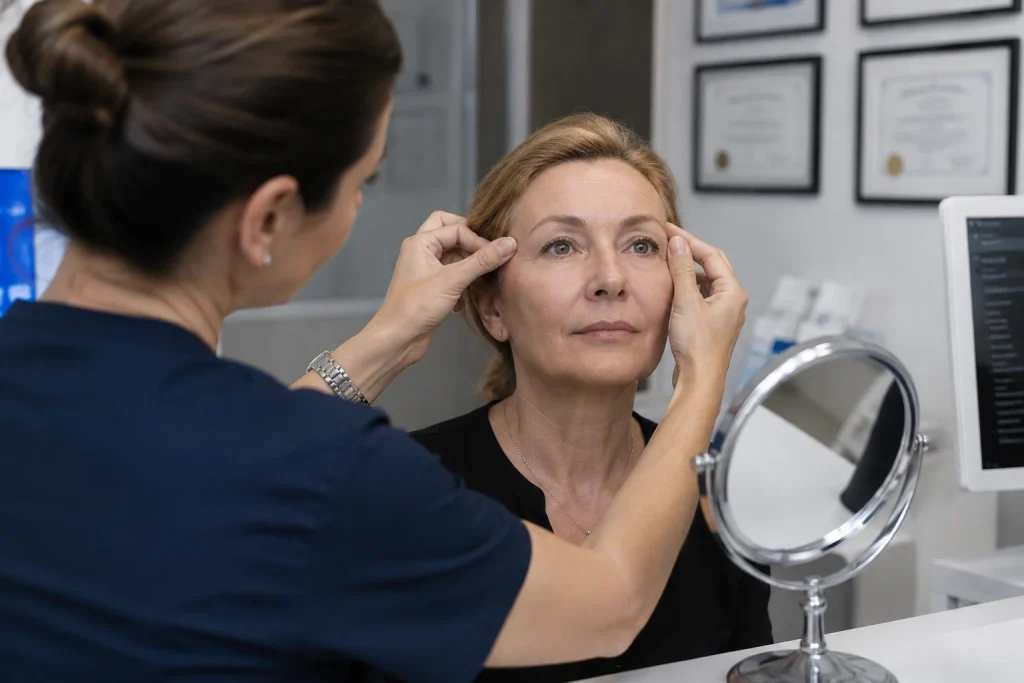
Yes, it can subtly change eye shape.
The Biometrics Of Orbital Anatomy
At the core of facial architecture and aesthetic medicine lies the precise knowledge of the anatomical limits of a surgical intervention. The question often arises whether a traditional facelift or rhytidectomy can permanently alter the eye shape. The answer is found in biometric precision. Clinically, a facelift is more focused on the lower two-thirds of the facial structure, working mainly on the jawline, jowls and the neck’s cervical contour. The natural structure of your eyes, including the fine canthal tendons which determine the eye shape (almond or round), remains untouched in a facelift procedure.
Topmost reconstructive surgeons carefully work on the Superficial Musculoaponeurotic System (SMAS) layer, lifting the fallen fascial structures of the mid-face and lower face. Although this greatly brings the cheeks and jaw into structural balance, the surgical routes of a deep-plane facelift do not extend to the complex eye region. Hence, the size, shape, and biological symmetry of your eyes remain unchanged structurally or fundamentally even after a facelift that is done mathematically correctly.
Lateral Tension And Temporary Alteration
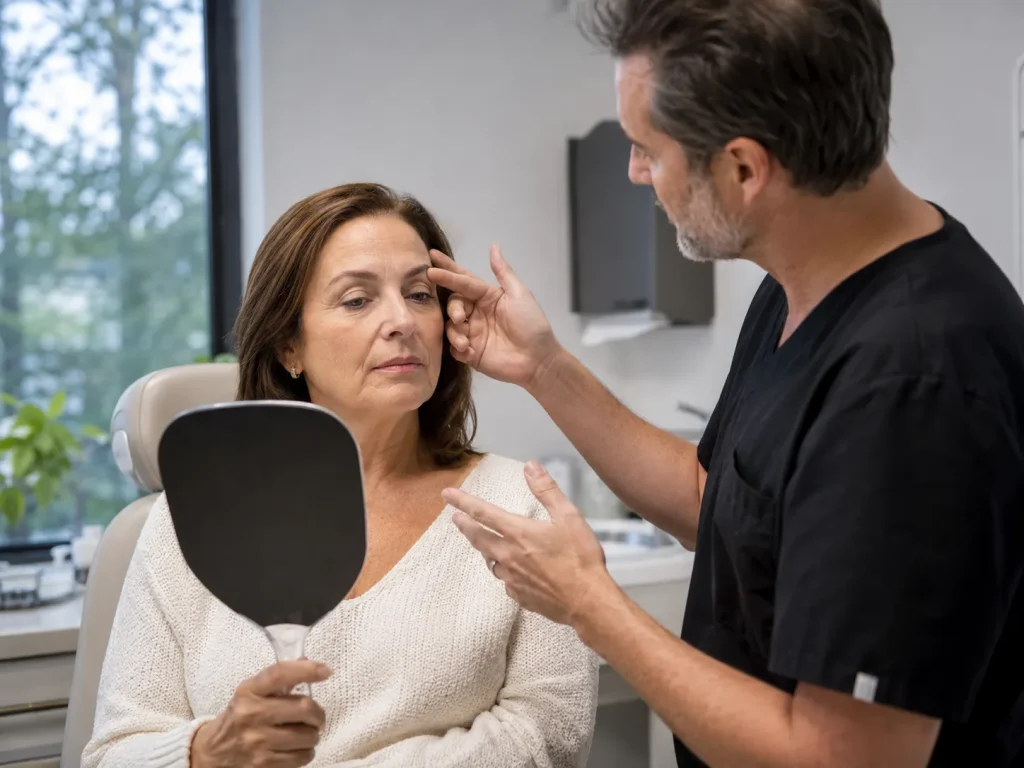
Despite the surgical boundaries of the procedure, patients often report seeing a slight slant or a “pulled” look to the outer corners of their eyes right after the operation. In keeping with utmost professional integrity, it is necessary to remind patients that this change in appearance is not a permanent structural change, but a temporary physiological reaction to the trauma of surgery. The face can experience very serious localized swelling and there will be an aggressive accumulation of lymphatic fluid along the upper cheekbones during the first few weeks of healing.
This severe microscopic inflammation, along with the new mechanical tension of the internal SMAS sutures, causes the surrounding skin to be pushed upward and outward. Due to this temporary pressure, the lower eyelid may be crowded physically and the lateral canthus may be slightly raised, resulting in an unnatural look of the eye. When the deep tissue connections are completely stabilized and all the severe post-operative swelling has been metabolized (after the first 3 to 4 months), this lateral tension disappears completely. The tissue goes back to a softer state and the eyes return precisely to their anatomical untouched shape.
Preserving Athletic Facial Proportions
When you are planning the rejuvenation of your face, one important factor to consider is how the surgical tension will affect your overall physical proportions and architectural goals in the long term. People who are very dedicated to developing an athletic body and one with a particular focus on lower body hypertrophy and gluteal development, aiming for a perfect hourglass figure, will find the maintenance of a highly refined and naturally balanced facial aesthetic very essential. The artificial “windblown” or pulled look of the upper face drastically breaks the elegant flow of your well-maintained figure.
By resorting to tension-free closures of the surface and by strictly lifting the inner deep muscles rather than stretching the skin forcibly, the doctor takes away the possibility of any unnatural distortion in the upper face portion. In addition, this mathematically accurate lifting method perfectly coordinates your newly shaped, young-looking jawline with your well-developed lower body. As such, your facial structure will be the same as that of a highly developed physique – without any artificial ocular tension, as your structural harmony is honored.
Complementary Procedures For The Eyes
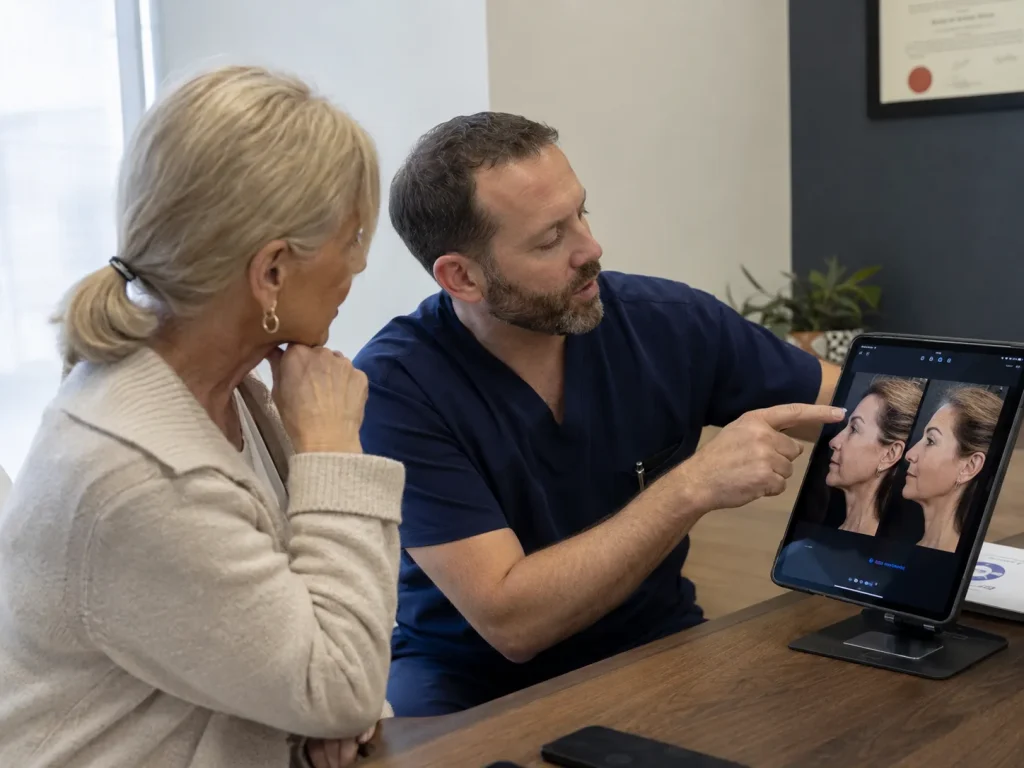
If your main concern is heavy, drooping upper eyelids or deep structural bags under the eyes, then a facelift alone will not bring any changes to those areas. Since a rhytidectomy does not involve the eye area, patients who desire a full, high-definition architectural restoration typically need additional, complementary procedures. Performing a blepharoplasty (eyelid surgery) or a temporal brow lift is most likely necessary if an expert intends to address the changing eye biometrics perfectly.
The combination of a blepharoplasty with a deep-plane facelift, performed in the same surgical session, represents the very best for comprehensive facial rejuvenation. The surgeon carefully removes the excess, damaged skin of the eyelids and the protruding fat pads around the eyes, thereby giving the eyes a permanently bright, well-rested look. This carefully coordinated surgery plan mathematically ensures that the upper and lower face parts will age naturally and harmoniously, resulting in an uncompromised, very natural appearance.
Facelift in Turkey
Opting for LIN Europe Clinic means entering a top medical haven worldwide where your individual facial change will be carried out with great clinical skill and deep compassionate care. We understand that choosing to have a highly complex facial surgery is a big step and that it calls for a highly sophisticated, transparent, and personalized environment that puts evidence-based medicine first. LIN Europe Clinic in Turkey is internationally recognized for outstanding facial contouring and is a place where your surgery plan is strictly based on the highest patient safety protocols and on high-definition refinement.
With your full trust in our expert medical team in Istanbul, you are associated with a world-class medical organization that, to a millimeter, calculates your anatomical needs before the first incision is made. Through excellent diagnostic evaluation and unmatched deep-plane surgical methods, we make sure your lift perfectly rejuvenates your mid-face and jawline while fully safeguarding the natural shape of your eyes. Enjoy the thorough, polished attention of LIN Europe Clinic, in Turkey‘s heart, and attain a beautifully harmonious profile that represents the highest level of biological success, both safely and skillfully delivered.
FAQ:
No, a traditional facelift only addresses the lower two-thirds of your face. It will not change your actual eye shape at all. However, due to surgical swelling in the initial healing phase, your eye shape may seem a little different for a while.
Tightness right after the surgery is due to tissue swelling in the area as well as lifting of the facial muscles mechanically. Such temporary tension goes away fully when the native tissue softens and settles over a period of few months.
A facelift is a surgical procedure that only improves the jawline, jowls, and neck areas leaving the ocular region completely untouched. In order to correct heavy or droopy eyelids permanently, a plastic surgeon has to carry out the blepharoplasty operation (eyelid surgery) at the same time as the facelift.
Top reconstructive doctors don’t just elevate the surface skin; they work deep, lifting the layers of muscles and fascial networks beneath. They use a very advanced biometric method which ensures that your natural expressions and micro-movements are left completely intact and are very authentic.
LIN Europe’s clinic situated in Istanbul is equipped with highly trained surgeons and advanced diagnostic equipment to ensure your safety at all times. Our experienced medical staff implements state-of-the-art deep-plane lifting methods that result in absolutely natural looks without any unnatural eye distortions.
Aston, S. J., & Aston, S. (2001). SMAS techniques and facial anatomy. Clinics in Plastic Surgery, 28(4), 651-665.
Stuzin, J. M., Baker, T. J., & Gordon, H. L. (1992). The relationship of the superficial and deep facial fascias: relevance to rhytidectomy and aging. Plastic and Reconstructive Surgery, 89(3), 441-449.
Mendelson, B. C., & Wong, C. H. (2013). Anatomy of the aging face. In Plastic Surgery (Third Edition) (pp. 78-92). Elsevier.
Rohrich, R. J., & Pessa, J. E. (2007). The fat compartments of the face: anatomy and clinical implications for cosmetic surgery. Plastic and Reconstructive Surgery, 119(7), 2219-2227.