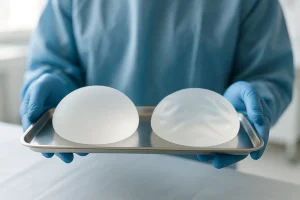
Yes, symptoms can appear years later in rare cases.
Many women look at breast implants as a source of confidence and happiness for a very long time, sometimes even for decades. You may have had the surgery at a young age, liked your appearance, and even stayed healthy most of the time. However, now that you are in your 30s or 40s, you find yourself experiencing a range of rather vague, but debilitating symptoms — like chronic fatigue, loss of memory, joint pain, or even hair fall. Even if you consult a number of doctors, do a lot of lab tests, and get all of your results “normal,” you would not be able to explain your condition. At last, you come across a forum and ask yourself: “Is it possible that my implants have been making me sick after all these years?”
The simple answer to the question Can Breast Implant Illness (BII) Happen Years Later? is a very emphatic YES. Actually, BII hardly ever happens as a direct consequence of the surgery. It is more of a gradual process where the symptoms come on 5, 7, or sometimes 15 years after surgery. While BII is currently not an official medical diagnosis with a unique ICD code, it is gaining recognition by the medical community as a subcategory of ASIA Syndrome (Autoimmune/Inflammatory Syndrome Induced by Adjuvants). At Lin Europe Clinic, we are empathetic towards you. We realize that what you are going through is real and we are here for you and will help you decide on the way to recovery, whether that path will be observation or explantation.
“Ticking Clock” Hypothesis: Why Now?

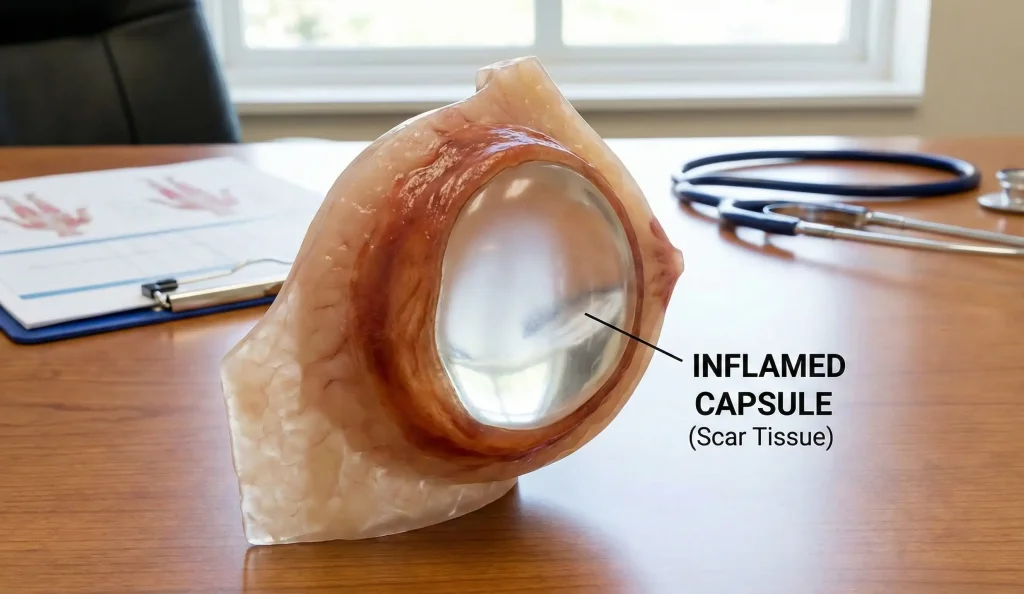
Patients are constantly wondering, “If silicone is a poison, why didn’t I get sick right away?” The most widely accepted explanation is that BII is not just simply a matter of toxicity, but rather the immune system running out of energy. Your immune system has always recognized the implants as foreign bodies. It successfully protected them for years by isolating them with a scar tissue capsule.
Nevertheless, over a period of ten years,the constant very low grade immune response can at some point become immune dysfunction. A trigger event–like a viral infection, severe stress, pregnancy, or hormonal changes–can be the last straw. Thus, the immune system which was managing the foreign body quietly, suddenly goes over the top (autoimmunity) or it becomes exhausted (chronic fatigue). This accounts for the scenario when a woman stays healthy and in good spirits for 10 years, but then suddenly experiences the dreadful symptoms of systemic inflammation in the 11th year.
Identifying Symptoms
The BII symptoms are so nonspecific and involve the whole body that, as a result, they often get misinterpreted as the signs of menopause, thyroid dysfunction, or depression. The “Classic Triad,” in other words, what we observe in our clinic, includes the following three symptoms: extreme and profound fatigue (that even the sleep cannot relieve), compromised cognitive function (loss of memory and “brain fog”), and joint pains in the absence of arthritis.
Nonetheless, in contrast to breast problems like capsular contracture which are painful and which are localized to the breast, one hardly ever experiences pain in the breast itself when it is BII. The explanation is in the chemical composition of the silicone gel inside the implant and the silicone gel that leaks out (called “gel bleed”). Because the implant shell is essentially a semi-permeable membrane, small amounts of silicone chemicals (gel bleed) can get into the capsule over time, therefore they may be acting as an adjuvant that keeps irritating the immune system, hence, leading to the body-wide inflammatory reaction that you experience.
One and Only Treatment: En Bloc Explant
People who believe they have BII face the fact that the removal of the implants is the only way to know for sure. The operation is known as an Explant Surgery. Yet, without removing the inflamed tissue, just getting the implants out is unlikely to relieve the symptoms.
The principle therapy, however, is a Total Capsulectomy en Bloc. The translation of “En Bloc” in English is “all together.” The surgeon very gently frees the capsule from the chest wall and gets the implant inside the capsule out as if it was a baby still in the womb. The surgeon is thereby sure that if there is any silicone that has leaked, bacteria, or inflammatory fluid inside the capsule, they never get in contact with the patient’s body. This is the rationale behind removal of the capsule since the chronically inflamed states are most commonly caused by the capsule itself.
Life After Explant: Will I Look Ugly?
The conflict between one’s physical and psychological health is the main reason why women put off their explant operation. Most of them are so scared of losing their implants that they think they will end up looking “deflated,” “wrinkled,” and even “masculine.” It is important to realize that, although you will be losing the volume, you will not be disfigured. The human body is amazingly elastic; when the constant pressure from the weight of the implant is gone, skin retracts and gets tighter in the space of 6 to 12 months, similar to what happens in the abdominal region after giving birth.
However, should the woman be reluctant to go completely flat, there are natural ways to solve this problem. At Lin Europe Clinic, we do explant surgeries together with Fat Grafting (Lipofilling) quite regularly. Your own fat is taken from the areas that you do not want, like your belly and thighs, and then it is injected into the breast tissue very carefully. This makes it possible for us to create a tiny, soft mound and to enhance the skin’s quality, all while handing you over your feminine figure sans implant. You are giving up volume for health but you do not have to give up your self-esteem.
Explant Surgery in Turkey
When you decide to have your explant surgery in Turkey at Lin Europe Clinic it is because we treat BII with acknowledgement, not disbelief. We refrain from giving our patients the gaslight treatment. If you feel that your implants are negatively impacting your health, we will back your decision and remove implants in a safe way. Our surgeons have great experience and training in the field of En Bloc explant technique which is more complex and less common because the capsule is sometimes glued to the rib cage or the lungs.
Besides, the focus of our work is not just the aftermath in terms of aesthetics. Our breasts may get to look saggy and deflated after the removal of the implants. Quite often, we deal with the explant together with a Breast Lift (Mastopexy) or Fat Transfer so that your natural breast tissues can be reshaped and you would not feel only healthier but be more confident in your own natural body. We send the capsule for pathology testing to rule out other conditions like BIA-ALCL, giving you complete peace of mind.
Frequently Asked Questions About BII
No, at present, there is no single, specific blood test or marker that can confirm BII. The term is a “diagnosis of exclusion,” which means that we identify it by first ruling out all the other potential causes of your symptoms.
According to most studies, about 60-80% of patients report significant symptom improvement after the implant removal surgery, particularly fatigue and joint pain. Nevertheless, there is no guarantee of relief and if some symptoms are not caused by the implants, they may be long-lasting.
For BII patients, the removal of the capsule (Total Capsulectomy) is very much a part of the treatment plan. The capsule is the tissue that is reacting to the silicone so leaving it behind might just continue the inflammation and symptoms.
Yes, in the case of saline implants, the shell is made of silicone, and the body can react to the silicone surface just like gel implants. Besides, saline valves can get mold or bacteria over time, which can provoke an immune response.
They are different in many ways; BIA-ALCL is a rare immune system cancer affecting the capsule fluid. BII involves a group of widespread systemic symptoms (similar to an autoimmune disorder) that are caused by the body’s reaction to the implant.
Cohen Tervaert, J. W., et al. (2017). Autoimmune/inflammatory syndrome induced by adjuvants (ASIA) in 2016. Expert Review of Clinical Immunology.
Magnusson, M. R., et al. (2019). Breast Implant Illness: A way forward. Plastic and Reconstructive Surgery.
Watad, A., et al. (2017). Silicone breast implants and the risk of autoimmune/rheumatic disorders: a real-world analysis. International Journal of Epidemiology.