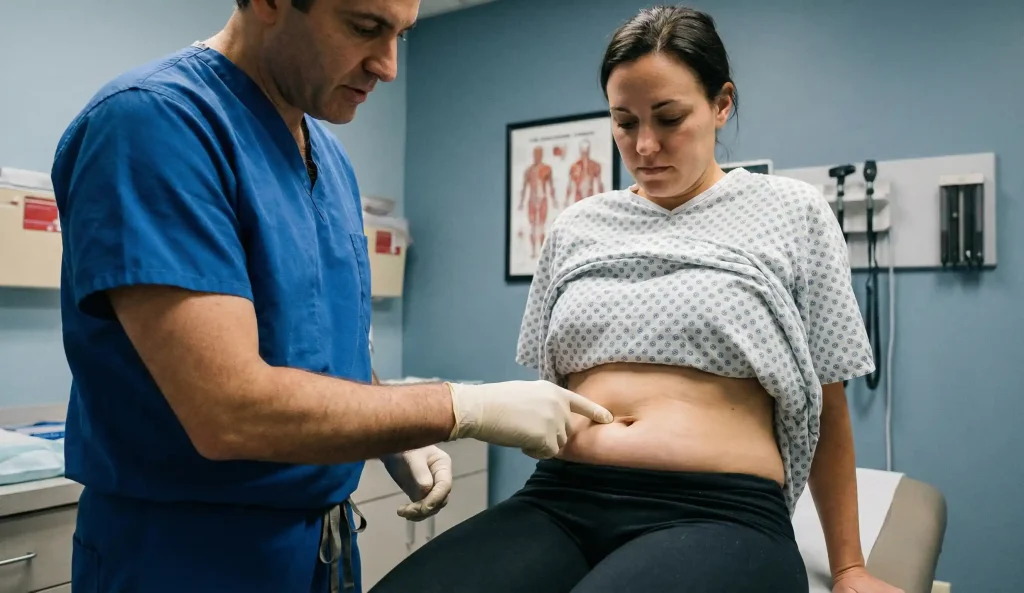
No, it looks natural when done properly.
Often patients contemplating an abdominoplasty focus their attention mostly on the flattening of the stomach and the tightening of the muscles; however, their deepest and most hidden worry is frequently concerned with a tiny detail. The dread of having a ‘fakeness-looking‘ navel is so wide and real that everyone must have seen photos of tummy tuck results where the belly button looks like a perfect, scar-ringed circle stamped onto the skin or a shallow “coin slot” that clearly signals surgery. The belly button is the center of attraction of the abdomen, and if it looks artificial, it spoils the illusion of the natural, athletic torso no matter how flat the stomach is.
Truth be told, making a belly button that looks natural is actually the signature art of a truly talented plastic surgeon. In the past, surgeons merely saw the navel as an afterthought, and they simply cut a hole and stitched the stalk to the surface. Now, though, we consider “umbilicoplasty” an essential and separate art of tummy tuck that requires special techniques in architecture to imitate nature. Here at Lin Europe Clinic, we know that a result is brilliant if you go to a beach wearing a bikini and nobody guessing that you had surgery. It all comes down to that invisibility that only shape, depth, and shadowing can give you.
The Anatomy: It Is Still Your Belly Button
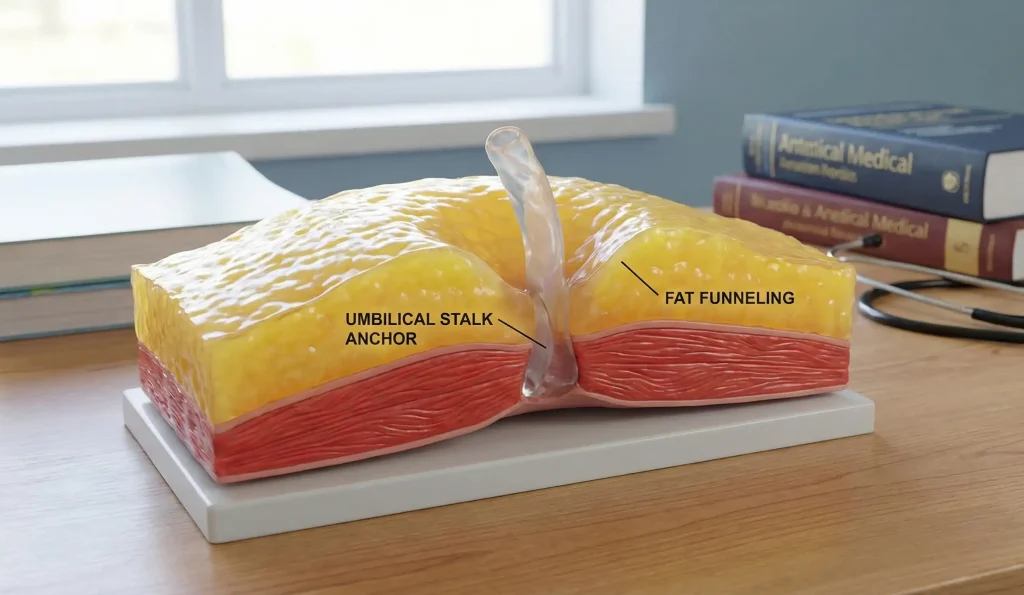
One of the biggest myths is that the surgeon constructs a whole new belly button or implants the belly button during the tummy tuck. Actually, the navel is a stalk attached to your abdominal wall and it has its own blood supply which needs to be preserved at all times during the operation.
In the operation, the skin that surrounds the belly button is cut loose, and the abdominal skin is lifted and pulled down to tighten the tummy. The belly button stalk is still connected to the muscles while the skin is put over it, like a duvet cover over a button. Then the doctor makes a very small and well-planned incision in the new skin right above the stalk and the belly button is pulled through this new hole. The “fake” look results only if this new hole is cut as a simple circle and the edges are sewn flat on the surface; a natural look, on the other hand, is achieved by carefully modeling the skin around the stalk to give it depth and shape.
The “Hooded” Look vs. The Coin Slot
The main feature of a surgically obvious belly button is a perfectly round, open shape, and it is often called “coin slot” or the “cookie-cutter” deformity. In fact, however, a very small number of adult belly buttons are perfect circles; most are slightly vertically oval or have a soft and fleshy overhang at the top known as “superior hooding.”
To prevent the new navel from looking like an artificially made circular one, the current surgical methods are aimed at making this superior hood. We use an inverted U-shape or a V-shape incision instead of a round one. Through this small incision, a tiny piece of the skin is brought slightly over the belly button thus creating a shadow that resembles the natural shadow formed by the skin’s weight in a youthful stomach. The existence of this hooding is very important because it interrupts the appearance of a scarline and gives the navel a vertical orientation that visually lengthens the torso and makes the waist appear slimmer while a horizontal or round navel can make the stomach appear wider and shorter.
The Secret Is in the Shadow: Creating Depth
You can easily tell a tummy tuck scar if it is a line that goes around the navel on the flat part of the abdomen. A normal belly button is a small hole in the abdominal wall where the skin dimple is pointing towards the muscle underneath.
We go “defatting” the area of the new belly button after the operation and do deep permanent sutures to the skin fascia to pull down the skin so that a gradual funnel is formed. What we get through this surgical technique is the funnel being at the bottom which is where the incision line is and so the scar is hidden within the natural navel shadow of the sidewalls and thus becomes almost invisible to the naked eye even if you are in direct sunlight at the beach.
Preventing Shrinkage: The Role of Post-Op Care
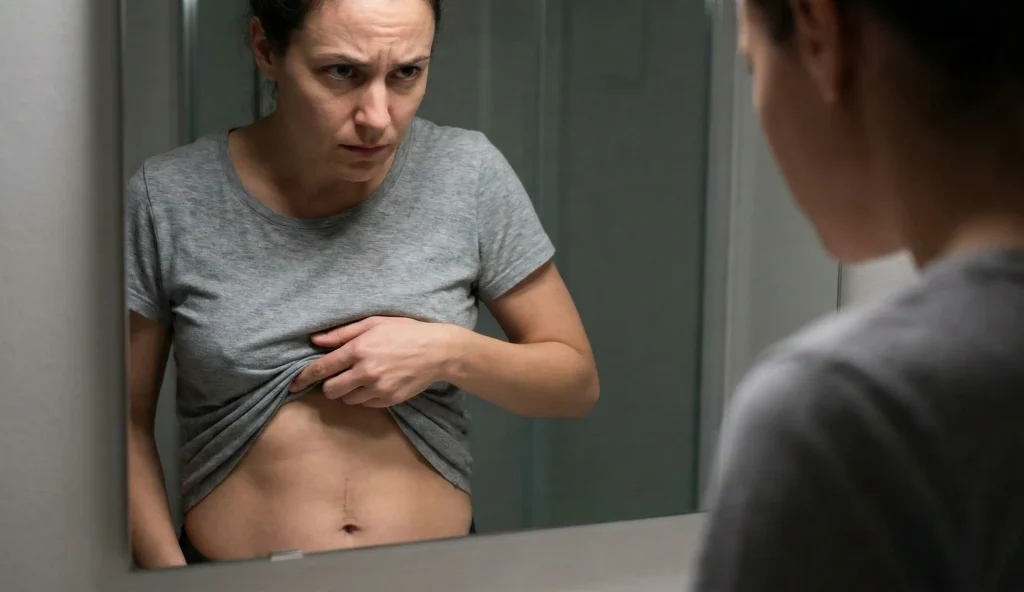
Absolutely flawless surgical technique is not enough to prevent a newly created navel from losing its shape. The formation of scar tissue can sometimes be the reason that the nice round belly button after the operation will become a small backward-looking pinhole; this is an event that usually happens when the scar starts to contract and shrink and is called stenosis.
Besides very careful hygiene, post-op care often requires putting an “umbilical shaper” which can be, for example, medical-grade silicone or a small glass marble that is inside the belly button for weeks after the operation and this helps in not allowing the belly button to close up thereby maintaining its depth while the scar tissue is healing and maturing tightly. Also, keeping the new navel dry is very important here since it is deep as well as healing and if it gets infected with bacteria then the wound will undergo breakdown which will result in an ugly irregular scar staining that will spoil the good aesthetic result.
The Lin Europe Philosophy: Customization
At Lin Europe Clinic in Turkey, we are against ‘one belly button fits all’ because the structure of muscles and the thickness of the skin in each abdomen are different. The navel is a feature whose customization has to be a priority when matching it to the rest of the torso.
Our surgeons will check the length of your belly button stalk and the tightness of your abdominal skin at the time of surgery. This will help them decide on an incision that will result in the least amount of scarring. We are extremely focused on the navel transition zone where the abdominal skin meets the belly button to make sure it is a nice smooth, rolling curve without any signs of a sharp, cliff-like edge. We want your belly button to look so natural as if it has been there all along that you can confidently show off your midriff trusting that no one knows your little secret.
Frequently Asked Questions About Tummy Tuck Navels
Sensory nerves get stretched during a tummy tuck, thus numbness in the belly button and the skin around it is a common short-term effect. Sensation, however, usually comes back slowly over a period of 6 to 12 months
You can have your belly button pierced again, but it’s important to wait until the tissue has completely healed and the scar has softened. Usually, it takes at least a year. Otherwise, there is a risk of the jewelry migrating or being rejected.
For the first few weeks, swelling and scabs may make the belly button opening look smaller or “crusty.” It is perfectly normal, and the shape will return to normal as the swelling goes down and the deep sutures settle.
The surgeon will make a recommendation based on how you heal specifically. Not all patients will need a shaper; however, people who develop aggressive scars are usually given a silicone plug or a marble to keep the shape.
Proper surgery with deep anchoring techniques results in the scar being buried inside the navel depression and therefore, effectively invisible, which means only a natural shadow is visible.
Lockwood, T. (1995). High-lateral-tension abdominoplasty with superficial fascial system suspension. Plastic and Reconstructive Surgery.
Baack, B. R., et al. (2012). Umbilicoplasty: the construction of a new umbilicus. Clinics in Plastic Surgery.
Southwell-Keely, J. P., & Berry, M. G. (2011). Umbilical reconstruction: a review of the literature. Journal of Plastic, Reconstructive & Aesthetic Surgery.