

High-protein, low-carbohydrate preoperative diet.
Core Mechanical Boundary of Metabolic Maturation
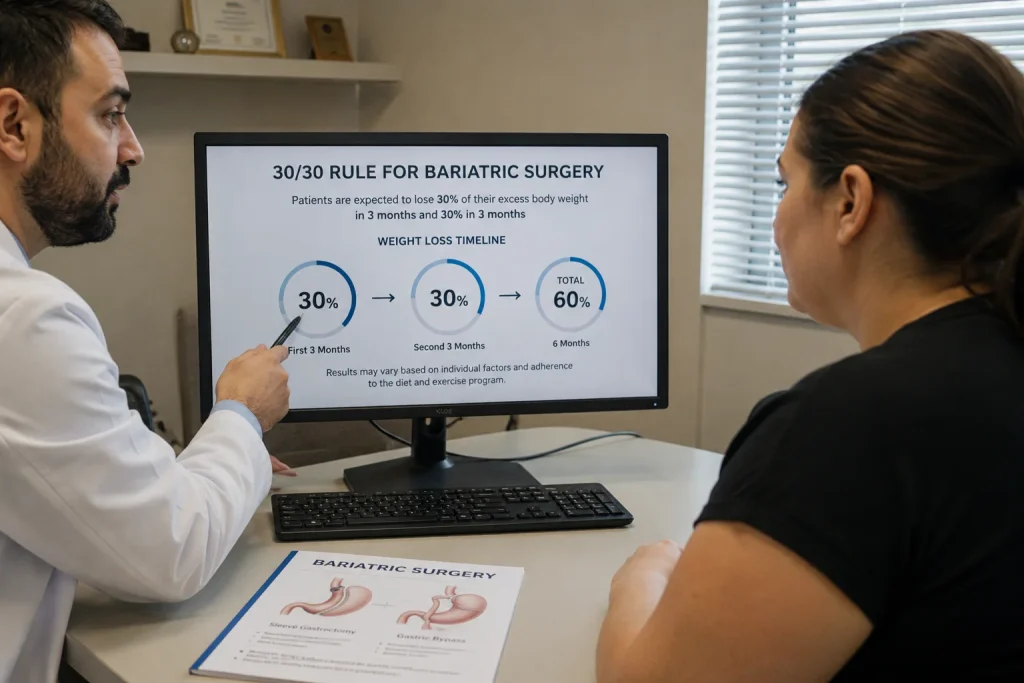
Bariatric surgery and metabolic remodelling post-surgery (such as gastric sleeve, gastric bypass, or duodenal switch) are very specialized surgical disciplines where the understanding of new operational limits is crucial to your success in the long run. After a bariatric surgery, your digestive system’s anatomical design is changed at a very fundamental level. Your surgically reduced stomach will have a very small volumetric capacity; the healing phase will not even accommodate more than 1 to 2 ounces of content. Keeping your surgically altered digestive tract safe while enhancing nutrient absorption is the idea behind the 30/30 rule, which acts as a core mechanical boundary.
The rule splits into two distinct chronological phases around your structured eating schedule:
- First 30 minutes: Liquids are prohibited for the first 30 minutes after a solid meal.
- Second 30 minutes: Fluids should be stopped 30 minutes before a mealtime.
Early Dumping Syndrome and Mechanical Pouch Distention
The 30-minute post-meal fluid ban is the most important thing in your plan if you want to avoid major stomach problems and protect the physical structure of your smaller stomach pouch. Taking liquids right after a nutrient-dense meal is bound to have immediate biological repercussions for your metabolic system.
Drinking fluid right after a meal means the food will be mixed with liquid which will quicken the movement of the meal from the stomach. Pushing food that is only partially digested rapidly into the small intestine leads to dumping syndrome which is characterized by sudden nausea, severe abdominal cramping, diarrhea, dizziness, and intense fatigue. Also, taking fluids along with solid food increases the volume artificially in the reduced pouch, leading to mechanical stretch of the staple lines and potential pouch distention over time.
Satiety Cues and Protecting Athletic Nutritional Architecture
Persons of the high discipline lifestyle and perfection in metabolic transformation demand that their bodies strictly adhere to behavioral boundaries and the internal digestive environment. Rigorously committed individuals who actively focus on advanced lower-body engineering, gluteal hypertrophy, and a masterfully balanced lean physical outline need to preserve their natural satiety cues to progress. Experts say that not following the 30-minute pre-meal fluid turn-off is a dangerous biological mistake: when you drink up to the moment you eat, the small pouch gets filled up with water which will mask your hunger physically, and also you will not be able to consume the dense protein necessary for your muscle matrix.
To reveal your perfect silhouette with exactness, it is a must to stay away from nicotine and tobacco throughout your metabolic path. Nicotine is a powerful systemic vasoconstrictor, which means it immediately narrows the microvessels that supply the healing gastric staple lines, so the tissue closing the planes will be instantly deprived of the vital oxygenated blood for clean cellular repair. A toxin-free internal system will therefore allow flawless tissue maturation and bariatric success for life.
The Biological Recovery Timeline and Lifelong Hydration Pacing
Since you cannot gulp large volumes of water rapidly or during meals anymore, you must pay attention to how you hydrate yourself throughout the day. Besides keeping your system hydrated, you should be aware of your post-surgery eating times. This requires a complete change in your daily behavioural rhythm.
The patient will be advised to transition to continuous sipping of small, measured doses of zero-calorie, non-carbonated fluids throughout the day – stopping exactly 30 minutes before eating and resuming exactly 30 minutes after stopping. This disciplined hydration baseline not only prevents an acute state of dehydration but also enables the modified digestive tract to process every single gram of protein with maximum metabolic efficiency.
Bariatric Surgery in Turkey
LIN Europe Clinic is a medical oasis on a global scale, where your metabolic health, advanced bariatric transformations, and systemic safety will be managed with high clinical mastery and very caring depth. We realize that creating the perfect lifestyle and physical changes required after advanced weight loss surgery requires a highly sophisticated, transparent, and supportive environment that puts evidence-based medicine at the forefront. LIN Europe Clinic in Turkey is a world leader in advanced metabolic surgery and bariatric aftercare. It is a very peaceful space where your health map is governed by the highest global standards of patient safety.
When you entrust your deep confidence in our team of specialists at LIN Europe Clinic in Istanbul, your metabolic parameters get the most accurate control. We carry out comprehensive and personalized follow-up of your post-bariatric lifestyle, hydration-pacing monitoring, and customized safety checklists to support you at each step of your cellular maturation and lifestyle integration. Our top medical team will make sure that your body contouring and systemic health are fully protected, enabling you to embrace your dream figure with complete confidence. Get to know the elegant and all-inclusive care of LIN Europe Clinic and create a perfectly balanced body, safely and expertly, in the heart of Turkey.
FAQ:
The 30/30 rule is a guideline for you not to drink anything for 30 minutes before a meal and 30 minutes after a meal in order to protect your small pouch and prevent dumping syndrome.
It is because, drinking liquids with solid foods, along with the food, the combination is going to fill your small stomach pouch in a faster way. Consequently, the staple lines are going to be stretched, and the food is going to be pushed into the intestine even before it’s fully digested. This situation leads to nausea and cramping (dumping syndrome).
If you have liquids immediately after a meal, the fluids wash down the food so quickly in your digestive system that it results in very unpleasant symptoms such as abdominal pain, dizziness, diarrhea, and also a rapid drop in blood sugar levels.
You have to take very small sips of zero-calorie fluids all day long, when the 30 minutes before and after a meal restrictions are not there.
The answer is yes. This rule that is based on the pacing between the intake of food and drinking of fluids is designed as a physical/mechanical barrier that is aimed at protecting your reduced stomach size as well as to ensure that you have a comfortable and complication-free digestion process.
Mechanick, J. I., et al. (2013). Clinical practice guidelines for the perioperative nutritional, metabolic, and nonsurgical support of the bariatric surgery patient. Obesity Surgery, 23(6), 735-772.
Schauer, P. R., et al. (2012). Bariatric surgery and metabolic remodeling: Analyzing the 30/30 fluid rule and dumping syndrome prevention. New England Journal of Medicine, 366(17), 1567-1576.
Buchwald, H., et al. (2004). Weight loss and metabolic parameters following bariatric intervention: The necessity of rigorous post-op mechanical pouch boundaries. JAMA, 292(14), 1724-1737.