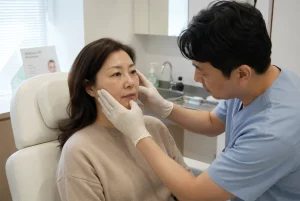
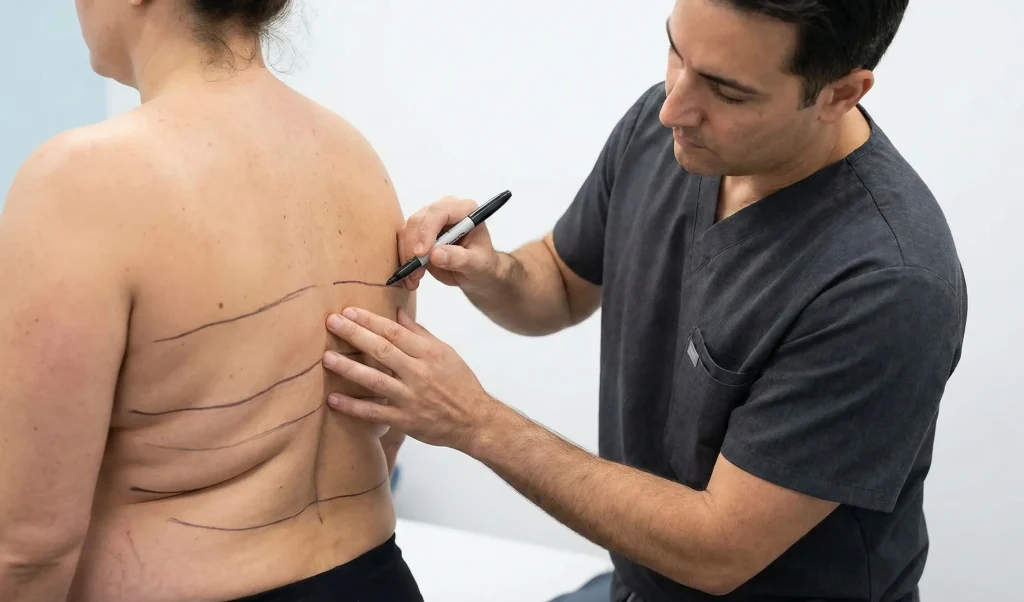
Liposuction can effectively remove back rolls.
Back rolls can be a real challenge in cosmetic surgery. This is the back of the body area that has a unique anatomy and cosmetic surgery specialists have to deal with it carefully. At the same time, many of the patients’ attention is mostly on the front side of the abdomen. Back rolls, medically known as subaxillary or thoracolumbar lipodystrophy, represent fat deposits located at the back, and these fat deposits can significantly change the beauty of the figure. Because these large deposits of heavy and fibrous fat are very densely packed, they don’t respond well to diet and exercise alone. In many cases, people keep seeing their stubborn back problems despite doing hard exercise, so they look up professional help and medical procedures to get a permanent solution.
We, at Lin Health Europe Clinic, consider the removal of back rolls to be under the heading of high-end surgery and body contouring. An excision approach might be necessary to completely smooth out the back if the back rolls are large and the skin is loose. To get rid of back rolls, a surgeon must first locate and effectively work through the thick dermal layers as well as the dense connective tissue that are typical of the back. Energy-assisted liposuction or excisional cosmetic surgery are two ways that can be used to reach this goal. A smooth and anatomically natural transition from the scapula to the iliac crest is what all of these methods aim at. What follows is the clinical summary of how present-day medical institutions take care of this difficult problem of aesthetic displeasure.
The Anatomy of Fibrous Adipose Tissue
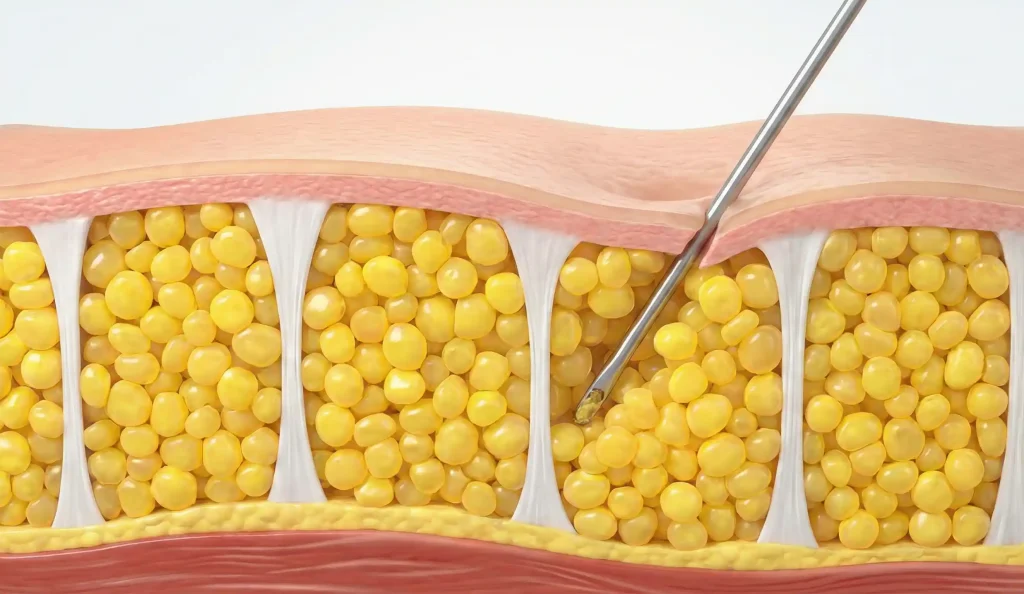
First and foremost, in order to understand why surgical removal of back rolls is necessary, it is essential to examine the tissue composition of the back area. This is quite different from the soft, rounded fat tissue typically found in the belly area that is not as tightly confined by a sheath of connective tissue. Fibrous septae form a complex network which restricts the back fat and, at the same time, these septae work as a natural support system for the overlying skin, being tightly attached to the thoracolumbar fascia that lies underneath.
When adipose tissue (fat) accumulates in the area, the back rolls is induced by the fibrous bands that create a “rolling” or “step-like” effect on the skin surface. With diet and exercise alone, the problem of this “trapped” fat cannot be resolved because the adipose tissue is physically locked into these compartments. Therefore, the only real way to open up these fibrous envelopes and eliminate the fat cells is through surgery (liposuction or excisional lipectomy). In our clinic, we view this as a reshaping of the back contour structurally.
Surgical Intervention: VASER Ultrasonic Liposuction
One of the best medical procedures to get rid of back rolls is vaser (vibration amplification of sound energy at resonance) liposuction. Often, the fibrous fat in the back that traditional mechanical liposuction can hardly handle properly, resulting in less accurate outcomes and more damage to natural tissues.
Vaser employs ultrasound waves from a very small ultrasonic probe inserted in the fat layer and the ultrasound energy breaks down (emulsifies) the fat cells so that they can be removed through suction. Specifically, the reason why this treatment is particularly good for the back is that ultrasound energy selectively affects the fat layer and at the same time, little damage is caused to the blood vessels and nerves. Then, the heat generated as a side-effect of this operation induces dermal contraction which facilitates the folding of the thick back skin over the newly made, slimmed-down figure. That is to say, this approach to fat removal results in a level of skin smoothness that a non-energy-assisted method of fat removal cannot produce.
Circumferential Contouring: The 360-Degree Approach
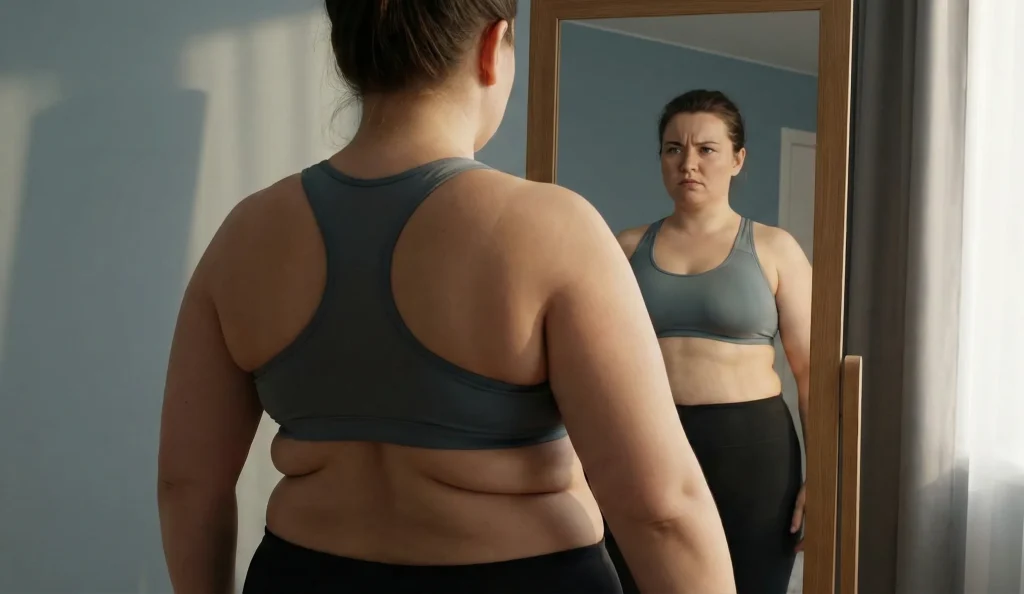
Usually, an isolated focus on a single back roll is not a part of the plan for a successful cosmetic surgery of the back. The posterior torso belongs to a larger continuous unit of beauty that is extended by the lateral chest wall, the axilla (armpit), and the flanks.
In our surgical practice, we most of the time suggest a circumferential or “360-degree” contouring technique. It means that through simultaneous elimination of the subaxillary fat (bra-line rolls) together with the lower back and waist, the surgeon can sculpt the back into a V-figure typical for an athlete. This all-around Surgery eliminates clothes “spill-out” and helps to blend perfectly the transition between the upper and the lower back. By thinning out the whole layer of the posterior subcutaneous, we make a structural change that makes the patient’s trunk look proportionally better overall.
The Excisional Approach: Bra-Line Back Lift
In the case when the remedy for the back rolls is not liposuction only and the back rolls are composed of a lot of redundant skin that is hanging, the treatment is a back lift (Bra-Line Lipectomy) surgery.
This medical procedure entails the actual removal of a horizontally-oriented wedge of skin and fat. The surgeon removes this redundant tissue and raises the remaining skin which is then sutured back. The produced scar is in a perfect position to be hidden by the bra or by the natural horizontal wrinkles of the back, so the scar is not visible when wearing your favorite underwear or swimsuit. This is an extremely effective cosmetic surgery that removes fat and restores the skin’s tension, creating a fully flat and firm back profile.
Post-Operative Management and Recovery
To fully recover from the surgery that was performed in order to remove back rolls, follow-up care and therapy at a specialized medical facility are very important. As the back is a large-area with constant motions during upper-body movements, therefore especially in these cases, the use of a compression dressing is of utmost importance.
A medical-grade compression garment must be worn for a period of 4 to 6 weeks after the procedure, as per the instructions. Two important functions are performed by this garment: it inhibits the build-up of fluid, such as a seroma, in the empty space left behind after the fat removal and it also makes sure that the skin is correctly and evenly pressed down onto the muscle fascia. Your doctor may allow you to carry out light work in a few days, but the complete anatomical result and skin tightening continue to take place for a few months as the internal tissues heal .
Frequently Asked Questions About Back Roll Surgery
Basically, the discomfort experienced is actually a muscle soreness caused by traumatic workout for 3 – 5 days. To reduce swelling and assist the skin to adhere you will definitely have to wear a compression garment for 4 – 6 weeks.
The fat cells surgically removed are gone forever. However, if you gain a significant amount of weight, the rest of the fat cells can expand. That is why keeping your weight stable is your key to a smooth back.
Since back fat is more fibrous and skin is thicker, there is usually more post-operative inflammation, and tightness in the first week of the back as compared to the stomach.
You can strengthen the muscle underneath the fats with exercises but you cannot spot reduce the fibrous fat pad. In fact, surgery is often required, to get rid of the stubborn subcutaneous layer.
The cuts are really small and are concealed in natural creases such as the armpit or panty line. They usually fade to almost invisible white dots within a year.
Di Giuseppe, A. (2013). Ultrasound-Assisted Liposuction: Physics and Techniques. Clinics in Plastic Surgery.
Hunstad, J. P., & Repta, R. (2008). The Bra-Line Back Lift. Plastic and Reconstructive Surgery.
Hoyos, A. E., & Millard, J. A. (2007). Vaser-assisted high-definition liposculpture. Aesthetic Surgery Journal.