A blepharoplasty is often the best option.
Deconstructing the Anatomy of “Tired-Looking” Eyes
The field of facial plastic surgery and oculoplastic rejuvenation is a highly advanced discipline where the treatment of a fatigued eye area is a complex task. One has to look into the various anatomical components surrounding the eyes to identify the cause of the tired appearance. A patient generally complains about looking “tired,” “heavy,” or “aged,” even if he was well- rested. Tired-looking eyes are a problem that cannot be solved by just doing one thing and expecting it to work for everyone. Clinically speaking, it’s important that the eye regions are thoroughly looked at and analyzed before deciding on which procedure/s would effectively treat fatigue.
- Drooping, heavy upper eyelids: an upper blepharoplasty is recommended.
- Dark circles, under-eye bags, and hollow tear troughs: the lower blepharoplasty is the ideal treatment.
- Brows that are very low-hanging and heavy, which cause eyelids to appear pushed down and drooping: a brow lift is the surgical treatment that should be used.
Targeted Procedures for Specific Eye Concerns
Before determining the right surgical intervention or minimally invasive treatment, it is a good idea to correlate certain symptoms with the definitive treatment:
- Lower Blepharoplasty (The Ultimate Under-Eye Refresh): The “bags” around the eyes are really pseudo-herniated orbital fat getting pushed forward through a weakened wall of muscle. A lower blepharoplasty eliminates or positions this overage fat into sunken tear-trough hollows to provide a beautiful transition between lower eyelid and cheek. This removes dark circles and makes under-eye swollen puffiness disappear immediately, thereby giving a very tired appearance.
- Upper Blepharoplasty (Eyelid Hooding Correction): With advancing age, excessive or stretched upper eyelid skin and little fat pockets fall below the normal eyelid crease line, which creates a “hooded” look to the eyes. In some cases, the heavy look may even narrow one’s peripheral vision. The upper blepharoplasty surgery cuts out a thin strip of extra skin and fat through a nearly hidden crease incision, and the eyes are made to look lively, bright, and alert with an open gaze.
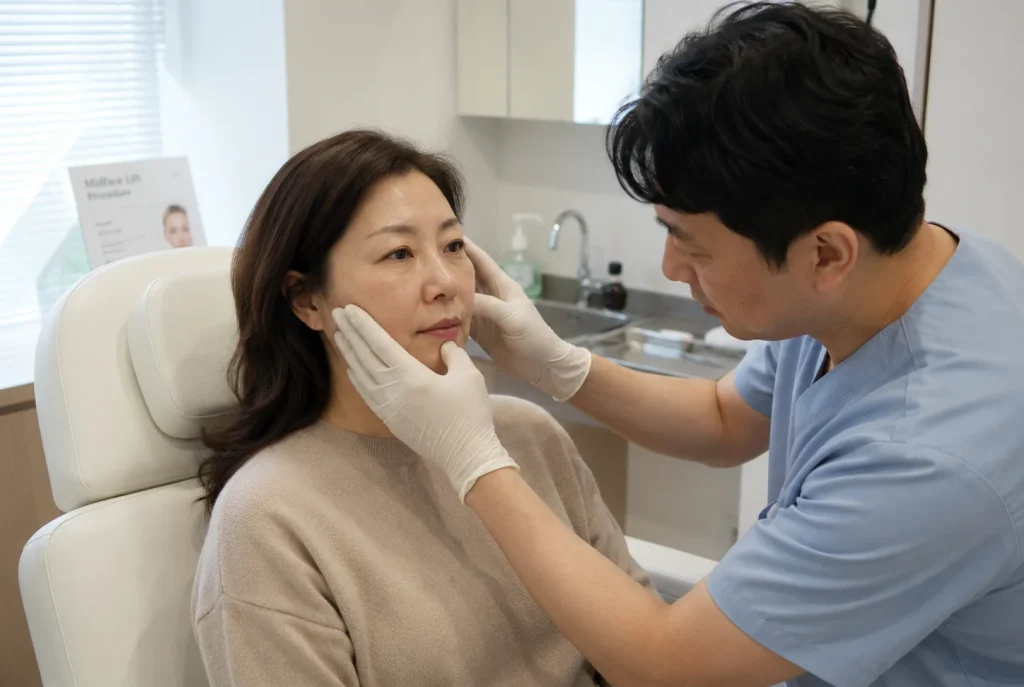
- Midface Lift (Eyelid-Cheek Seam Smoothing): Tired-looking eyes often go hand in hand with flat or saggy cheeks. A midface lift raises the malar fat pad that has descended to the level of the cheekbones and puts it back on the cheekbones, which not only fills the hollow gap under the lower eyelids but simultaneously also smooths the deep lines of the smile and the under-eye hollows in one go.
- Brow Lift (Relief for Upper Facial Pressure): Sometimes, it seems as if one has an upper eyelid skin excess, which in reality may just be a heavy brow that has moved below the upper orbital rim. Raising the forehead and brow position with minimally invasive endoscopic brow lift surgery would relieve pressure on the upper eyelids without cutting eyelid tissue.
Protecting the Eyes and Following the Post-Operative Guidelines
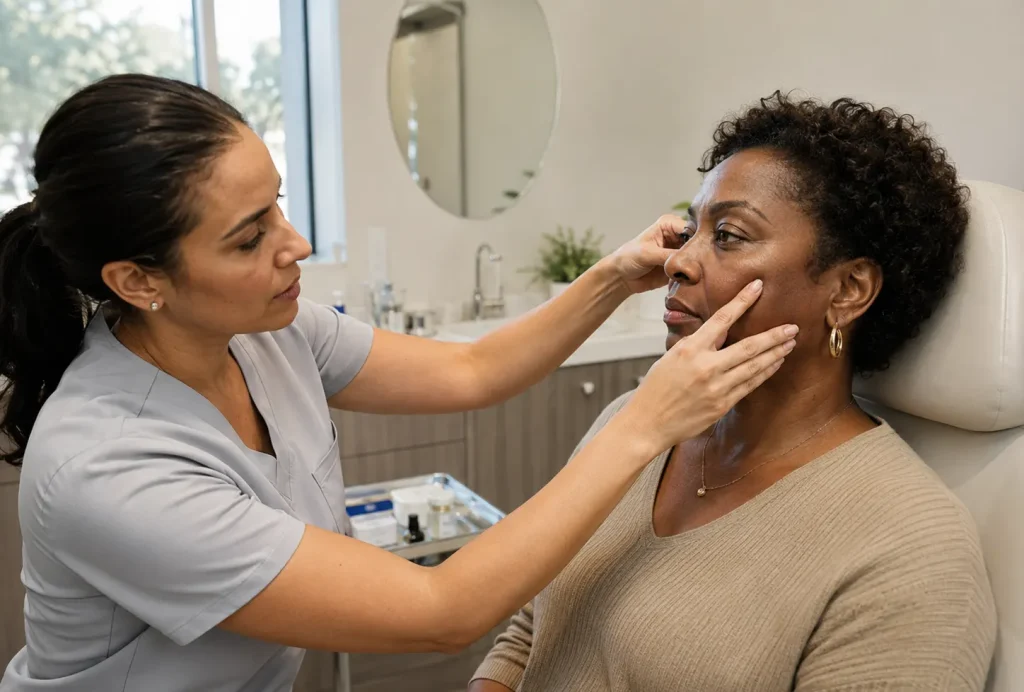
Saving the eyes from damage and strictly following the post-operative rules are very important for perfection-oriented individuals who wish to have their aesthetic outcomes done very right. The ocular and periorbital tissues are extremely fragile and can quickly swell. To make sure that you retain the new contour of your eyes and that it is locked permanently in a very precisely structural manner, you must sleep with your head on two or three pillows elevated for the first ten to fourteen days to enhance the lymphatic drainage and prevent the occurrence and depth of swelling.
Also, you must totally refrain from staring in front of a computer or bright screen for a long period of time, wearing contact lenses, and rubbing the eyes. You cannot exercise heavily, even for some days after the operation, which is advice that is usually given in these types of post-operative situations.
Periorbital Healing and Maturation Timeline
If one gets to understand the different stages of recovery, one would be in a better position to have an in-depth appreciation of what changes one can expect as swelling recedes after treatment:
- Acute Phase of Swelling (1-5 Days): Swelling will be at a maximum around the eyelid region, along with a bit of a bruise as well. One can try to ease the irritation and reduce swelling by using cold compresses.
- Day 7 – 10 (The Day of Thread Removal and the Opening Period): The last thread will be removed. The bruises that are present get lighter in color, going from purple to light yellow, and the affected area of one’s face starts to shine and have a fresh and rested appearance.
- Weeks 2 to 3 (Getting back to Work and Social Events): The major swelling has gone down, and any leftover discolorations would be very easily covered with just a little face paint. Patients usually get themselves back to work and social activities very comfortably during this period.
- Months 1 – 3 (Lasting Improvement and Fading of the Scar): The incision lines that were on the lids have gotten very small and one cannot tell apart a surgical scar any longer after having an operation if there is no scarring, and, therefore, your new and beautiful youthful look should be a lifelong companion.
LIN Europe Clinic
To choose LIN Europe Clinic is essentially choosing a premium medical retreat with the best of clinical excellence and the depth of an incredibly kind heart towards patients. Facial appearance improvement, deep plane surgical elevation, blepharoplasty, and other advanced soft tissue modification procedures at our level need precision, transparency, and a high-level supporting environment that is based on medical science above everything else.
We make sure that, through an in-depth understanding of your personal requirements and condition, a pre-op planning which is totally personalized is developed; a high- definition tissue checkup is carried out together with a healing checklist that is completely tailored to your individual circumstances for your entire tissue recovery process as well as for your lifestyle integration. As a result, you can enjoy the most peaceful of sleep knowing that your cosmetic investment and overall health have been completely taken care of and your new facial profile has been settled with a great amount of happiness and a totally vibrant character.
FAQ:
The right course action is a matter of what ails you. To treat under-eyes bags & hollows, your dermatologist would suggest a Lower Blepharoplasty (with repositioning the fats). If you have drooping upper eyelids, the best bet would be Upper Blepharoplasty. You should get a Brow Lift if your drooping brow is squashing your eyes!
If your dark circles are a consequence of shadows due to fat bags or hollows, lower blepharoplasty will solve the issue by smoothing out under-eye lines. Unfortunately, dark circles caused by hyperpigmentation in skin would be best addressed with skin resurfacing (e.g. chemical peels, laser treatments).
With lower blepharoplasty, you will get a permanent reshaping of the lower eyelid contour as a result of fat repositioning. On the other hand, the use of Hyaluron Fillers will not last long and there are risks attached with them like swelling (the Tyndall effect) or vascular complications at the under-eye part.
Swelling and bruising after eyelid surgery tend to last about 7 to 10 days. Stitches are typically taken out within one week after the surgery, and most patients are already feeling comfortable enough to go out and mingle around by week 2 – 3.
Together the removal of skin and fat from the upper eyelid (upper blepharoplasty) plus the removal of fat and excess lower eyelid skin (lower blepharoplasty) in an isolated procedure is very frequently executed, and it results in the whole eye area being given a full face-lift with only one healing process.
Carraway, J. H., & Mellow, C. G. (1990). The prevention and treatment of lower eyelid complications in blepharoplasty and periorbital rejuvenation. Plastic and Reconstructive Surgery, 85(6), 971-981.
Hester, T. R., et al. (1996). Subperiosteal malar lift and lower blepharoplasty: Rejuvenation of the periorbital complex and eyelid-cheek junction. Aesthetic Surgery Journal, 16(1), 45-58.
Rohrich, R. J., et al. (2014). Advanced postoperative care, deep-plane tissue elevation, and structural stability in periorbital rejuvenation. Aesthetic Surgery Journal, 34(5), 587-595.