No, one graft usually contains one to four hairs.
Clarifying the Distinction Between Grafts and Hairs
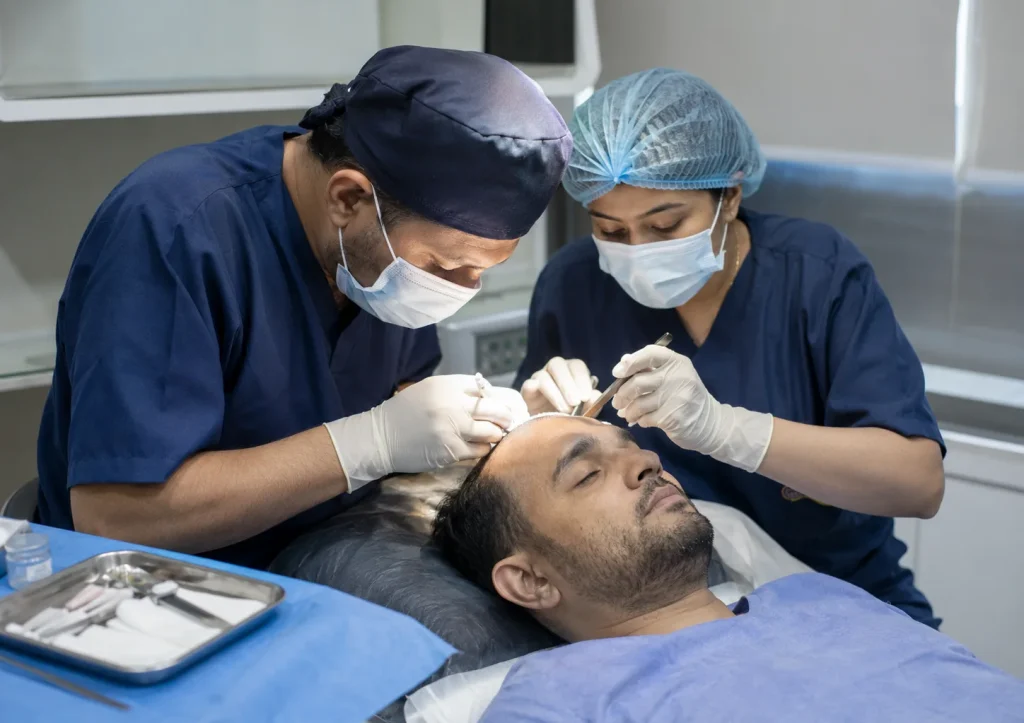
Trichology’s cutting-edge discipline and surgical hair restoration involve mastering the vocabulary of graft counts, a necessary skill for planning a hairline or a crown restoration that is effective and long-lasting. One point in particular about hair transplants is that most patients tend to get mixed up between graft size and a single hair shaft if they do research. Clinically speaking, no, 1 graft isn’t equal to 1 hair. On our scalps, hair is not made of independent, one-hair strands. Our strands grow together in small, separate hair groups called Follicular Units. A hair transplant graft that will be transplanted is actually one follicular unit that is completely removed from the donor area. These units have a minimum of 1 to a maximum of 4 hair shafts that are connected not by glue but naturally via connective tissue, one common oil gland, and a bunch of microscopic blood vessels.
Average Graft-to-Hair Ratios and Follicular Composition
When hair restoration professionals judge the density level of a transplanted donor tissue, they calculate your graft-to-hair ratio. Healthy donor areas of the back and sides of the head generally contain follicular unit grafts broken down along certain distribution patterns as follows:
- 1-Hair Grafts (Single Units): Around 15% to 20% of your donors’ hair falls in this category. One hair strand is a characteristic of a graft, and the front edge of the hairline is softly and naturally created by placing them strategically.
- 2-Hair Grafts (Double Units): This type accounts for most of your donor area (about 40% to 50%). They contribute mostly to the density of the hair that is right behind the front hairline edge.
- 3-Hair and 4-Hair Grafts (Multiple Units): Such grafts constitute approximately 30% to 35% of harvests. With multiple thick hair shafts coming out of one pore, they provide maximum bulk and coverage. The light reflection from the scalp and the visibility of the head skin through the hair can be effectively eliminated, and the hair can look even in the middle and back part of the skull by positioning these grafts there.
In general, the average graft-to-hair ratio for a patient is about 2.0 to 2.3 hairs per graft. So, if the doctor’s estimate is for 2,000 grafts, then roughly 4,000 to 4,600 hairs will actually be planted in the recipient areas during the surgery.
Promoting Follicular Health and Preventing Post-Op Complications
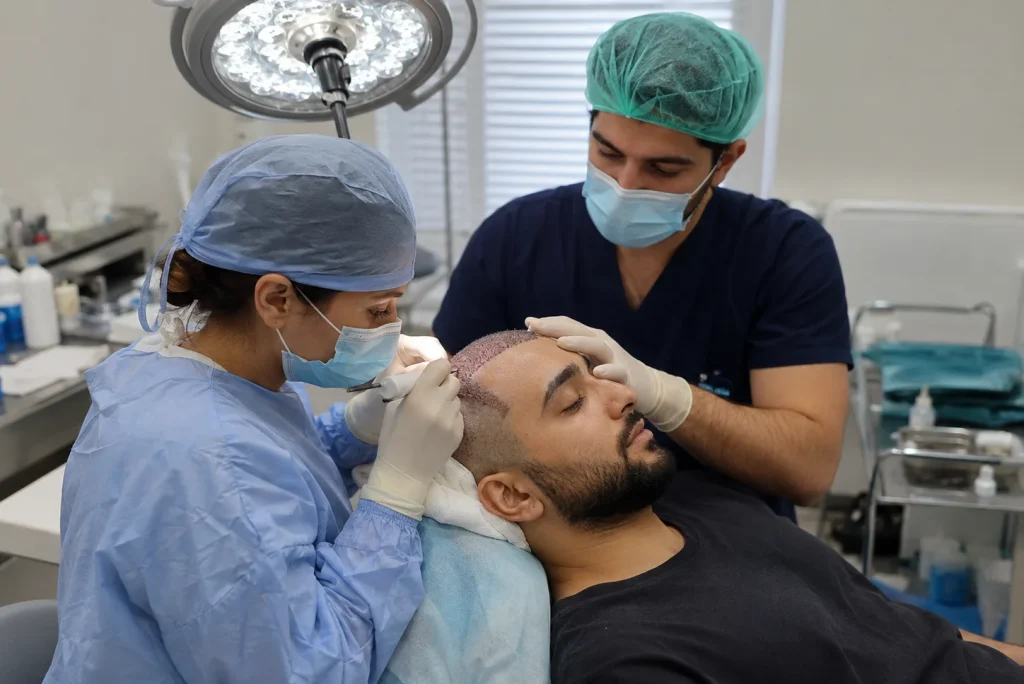
Dedicated hairline restorers who demand the highest perfection from their surgical results need no reminding that they have to protect their post-operative periods against anything else. Every single graft that has been harvested and contains only one or four hairs represents a vital living tissue unit that must stay alive when being re-attached at its new location.
Premature physical activity, friction, and neglecting the special care protocols are all causes of a big problem: such actions may pull out the transplanted multi-hair grafts, harm the very fine vascular networks, and stop healing by prolonging the donor area’s wound closure. Therefore, in order for your grafts to be properly secured with maximal precision, do not sleep on your side but use a special small-size travel pillow under your head for the next 7 to 10 days so that the mattress does not cause your grafts to rub off against the sheet.
Follicular Maturation and Hair Regrowth Timelines
Knowing exactly what stages of growth your hair transplant has been through makes your entire recovery process a much smoother and clearer one from getting to removing micro-crusts of grafts and seeing hair coming out of multi-hair grafts until they turn completely visible :
- Days 1–10 (Tight Binding Time): This is a very small part of the operation. After the multi-hair grafts have been planted, the skin in the recipient areas and around them slowly heals by minute tissue loops (called tissue cuffs) which surround and connect hair follicles to the surrounding cells in your body. You get tiny white scabs which fall off after a few weeks.
- Months 1–3 (Shedding Hair and Resting): Hair shafts (the shaft, or the main part of the hair that we see) of hair that you’ve gotten in a single multi-hair graft can fall out. This event of a temporary fall-out of hair that is still going to regrow is also known as “shock loss.“The underlying hair roots are very firmly kept together under your hair in a quiet resting phase.
- Months 4–6 (Multi-Hair Hair Starts to Come Out): Hair that you will notice from one-hair and multi-hair grafts will be very short hair strands, which might be white or just very light in general. One-hair grafts placed along the hair fringe and multi-hair ones located higher up on the scalp break the skin.
- Months 12–18 (Full Thickness and Final Hair Density): Hair shafts inside every multi-hair graft reach their full size, color, and texture. As a result, very dense hair with completely natural growth covers the head.
Hair Transplant in Turkey
Choosing LIN Europe Clinic means you are entering one of the world’s leading medical destinations – a place where a surgeon, a patient, and the hair aesthetics are treated with deep understanding and great empathy. We are well aware that in order for an exceptional hair transplant to be achieved, the surgeon, the patient, and the hair restoration process have to be perfectly and precisely coordinated in all respects, including donor site harvesting angling, graft-to-hair ratio optimization, and also post-operative care that is protective in nature.
In giving your ultimate trust to our specialized team at LIN Europe Clinic in Istanbul, there is no doubt that the follicular condition will be analyzed thoroughly, right down to the finest levels of diagnostics. We will take you with us through each phase, from the very personal pre-operative scalp mapping, through the examination of the very detailed donor density images, to the highly individualized healing calendars. You can rely on our support and expertise without any question.
FAQ:
One may easily confuse a single hair as a graft, and yet this is definitely not the case. A graft represents a follicular unit which is a natural, intact grouping of hair follicles including the associated connective tissues. Usually, a single graft will result in between 1 to 4 hair strands after surgery.
The average grafts produced in a patient will contain about 2.0 to 2.3 hairs hence a 2,000-grafts transplant should normally give out around 4,000-4,600 hairs.
To recreate a realistic hairline, hair surgeons use the so-called “single-hair method” to place tiny hairs in such a way that the hairline will be quite fine yet gradually thickening with more hairs. That’s essentially nature.
While a doctor is performing an FUE or a DHI procedure, he is helped by the surgical team checking the harvested grafts microscopically. Different dishes are prepared to contain the grafts based on the number of hairs they carry: 1-hair, 2-hairs, 3-hairs or 4-hairs.
Definitely, a patient who has a better ratio of higher hairs-per-grafts (e.g., 2.4 hairs per graft over 1.8 hairs per graft) achieves more hair coverage with a lesser number of hair follicles.
Rassman, W. R., et al. (2002). Follicular Unit Extraction: Minimally invasive surgery for hair transplantation and follicular unit composition parameters. Dermatologic Surgery, 28(8), 720-728.
Bernstein, R. M., & Rassman, W. R. (1995). Follicular transplantation: Patient evaluation and graft ratio calculations. International Journal of Aesthetic and Restorative Surgery, 3(2), 119-132.
Rohrich, R. J., et al. (2014). Advanced postoperative care, micro-vascular scalp perfusion, and tissue integration in hair restoration surgery. Aesthetic Surgery Journal, 34(5), 587-595.