No, chin implants are usually removable with surgery.
Ability of Surgeons to Extract Chin Implants
Since our face forms one of the important indicators of identity, it is vital to be clear about our aesthetic expectations before committing ourselves to surgery. One might be surprised by the number of people opting for chin implant removal. This usually happens after they have gone through a few life changes and realized that the chin implant is not really what they were looking for. Therefore, these people often consult plastic surgeons and wonder whether extracting a chin implant may be regarded as a complex operation or even a difficult one.
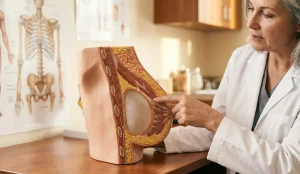
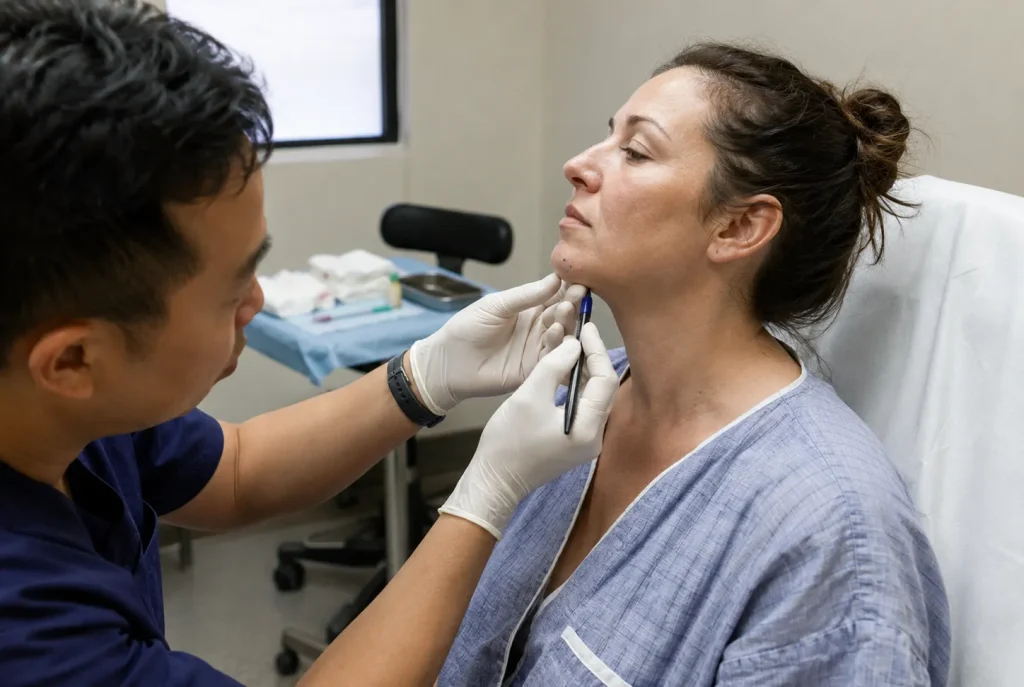
In terms of clinical practice, there are no two ways about it. The removal surgery of a chin implant can be performed safely and quickly, as it rarely entails major complexities except in very few exceptional cases. This is primarily because the implant sits in a pocket over the mandible (lower jaw bone) beneath the periosteum layer. An experienced surgeon can easily reach and extract the implant from either the original intraoral way inside the mouth or the submental, underneath the chin, incision.
Material Types: Smooth Silicone vs. Porous Implants
The ease or difficulty of chin implant removal is primarily determined by the implant type and the way the material blends with the surrounding tissue over a longer period.
- Smooth Medical-Grade Silicone Implants: Silicone implant material does not get absorbed into or fuse with natural human tissue, but your body forms around it a smooth fibrous scar tissue layer wall (a capsule) to hold it in place.
- Porous Polyethylene Implants: Porous materials are characterized by very small holes (microscopic pores). These pores are big enough for natural tissues like blood vessels and bone cells to grow through to get attached to the implant.
Therefore, getting rid of a porous implant is quite an intensive process as it involves slowly picking apart the embedded tissue; thus, the operation will definitely be slightly longer and a lot more complex than the removal of a regular silicone implant.
Changes of the Jawbone and Soft Tissues after Removal

The greatest worry after the removal of a chin implant is how the face region around the chin will adjust when a man-made object used to give projection is gone:
- Bone Remodeling: A shallow indentation on the cortical layer of the jawbone is an example of a phenomenon that happens after many years of implant wear. This phenomenon is due to normal resting pressure from the chin implant which has caused the lower cortical jawbone to leave a very slight, safe impression or minor depression that remains under the thick layer of mentalis muscle and soft tissue. Thus, even after the implant is removed, the structure is not altered and there is no health concern.
- Soft Tissue Adaptation: Following your chin implant removal, the natural soft tissues of your skin and subcutaneous fat in the chin area will contract back onto the bone without any problem. On occasions where your original implant was quite large and your implant period had exceeded a very long time, or your skin elasticity had decreased, the stretched soft tissues might occasionally result in a minor degree of sag (the witch’s chin effect). To address this, your surgeon during removal could do a simple tightening treatment of the soft tissue or the mentalis muscle to restore your youthful, smooth outline and keep that crisp appearance.
Post-Operative Kinetic Boundaries and Structural Recovery
The first few days in recovery, after getting your chin implant removed, you have to be careful because any wrong movement or not wearing protective gear as advised will ruin the chances of recovery and also lead to poor healing. When the implant is out, the periosteal pocket where the device was implanted will first be filled with body fluids, and it will be required that the wound is left to seal up so that the mentalis muscle can attach very firmly to the jawbone again.
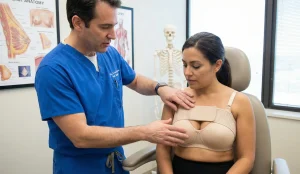
To help the chin of the lower one-third of the face settle and give a structural alignment, you have to wear a chin-compressing garment or an external medical strap tape as supportive measures for 5 to 7 days to maintain a consistent level of pressure to the chin pad area only. Moreover, a soft food diet plan shall be observed during the first 7 to 10 days in order to reduce the excessive stress the jaws undergo while you talk/chew, which may interfere with the healing processes of the tissues.
Chin Implants in Turkey
A decision to place your chin implant removal in the hands of professionals at LIN Europe Clinic means that you will benefit from top-quality facial aesthetics, structural modifications, and surgical interventions carried out by surgeons who excel both in precision of execution and empathy. It is true that the surgical removal of a chin implant requires a high degree of accuracy in the manipulation of the anatomy, material, and tissues and can only succeed through the combination of technical skills and artistic talents, both of which are well represented by our expert staff in Istanbul.
Made-to_measure pre-surgical scans and an in-depth review of your tissues are the things we are doing. Our post-operative healing check-out is personalized and will assist you in each and every step of the way, including how your tissues mature and the lifestyle you can live as your new self. The best part, of course, it won’t stop there, but we are ready to protect your investment with the care of your overall health. You can get the most balanced result in terms of cosmetic surgery with the help of your surgical team at LIN Europe Clinic, in a safe and skillful manner delivered to you right there at the center of Turkey with all these luxurious features you have been hearing about.
FAQ:
Not really, removing a chin implant is typically an uncomplicated and brief operation. Solid silicone implants, for instance, are usually pulled out without any problems through the original incision line, whereas the removal of porous implants is a bit more challenging as surgeons have to carefully separate them from the ingrown tissue.
Generally, your chin skin will still have enough natural elasticity and muscle strength to allow soft tissues to contract smoothly over the jawbone. However, if you are worried about skin looseness, your plastic surgeon can tighten your mentalis muscle, the one that controls skin movement below the chin, during the implant removal process.
Getting better after the implant extraction/removal operation is generally quicker as compared to the time of initial placement. The majority of the swelling and mild bruising disappears within a week to 10 days, and patients are able to get back to their normal daily lives by the end of a week even though at night they still need to wear the supportive tape.
After surgery, pain is a rare occurrence and is very few to mild/domestic pain level that can be controlled wonderfully with the standard medications orally given. Moreover, the local anesthesia along with sedation or general anesthesia will help you to feel moderate to the complete absence of pain during the actual surgical procedure.
Definitely! Suppose you are not happy with your profile and want to change it somehow. So, during the operation where your surgeon removes the old implant, he will probably be able to revise the implant cavity and insert a new, more appropriate implant all in one operation without causing any additional of superfluous operations or procedures.
Terino, E. O. (1992). Alloplastic facial contouring: Clinical anatomy, subperiosteal placement vectors, and revision parameters. Aesthetic Plastic Surgery, 16(3), 195-212.
Yaremchuk, M. J. (2003). Facial skeletal augmentation: Analyzing material properties, porous polyethylene tissue ingrowth, and implant removal dynamics. S.A.M.S. Journal, 27(4), 345-357.
Rohrich, R. J., et al. (2014). Advanced postoperative care, mentalis muscle management, and structural stability in secondary facial contouring. Aesthetic Surgery Journal, 34(5), 587-595.