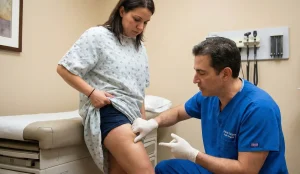
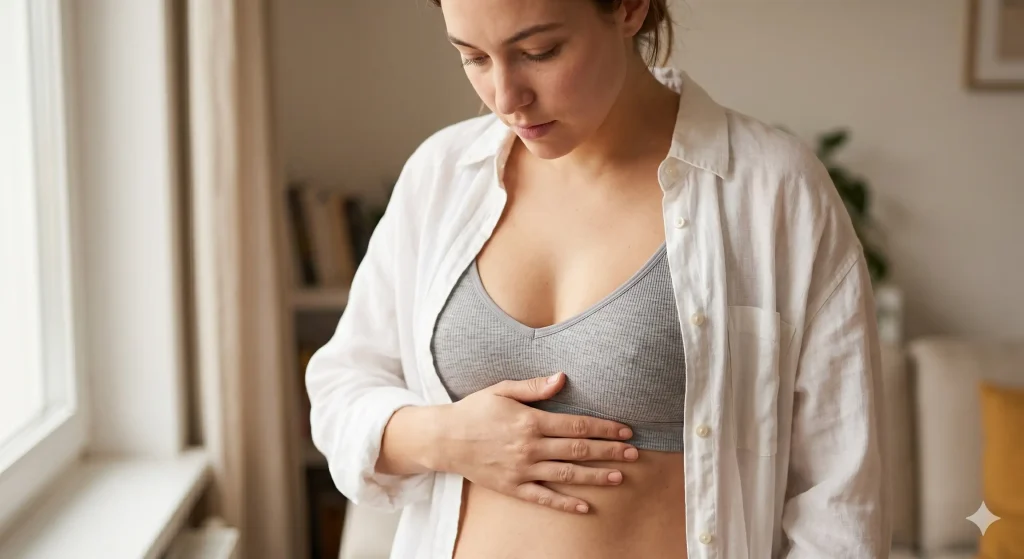
Bloating usually improves within several weeks.
The Biometrics of Systemic Edema and Fluid Retention
Surgical trauma healing at the cellular level impacts not just the breast area but the entire organism. Hence, physical operation on the body here and there can catalyse leakage of plasma components into the extracellular space, leading to localized swelling. Rather unexpectedly, our patients even develop quite considerable abdominal bloating shortly after breast implant surgery. What really happens is quite different from the usual interpretation that it is fat gain, i.e., visually, this transient puffiness is a dramatic alteration in your body’s fluid compartments and plasma leakage alongside an inflammatory response.
At LIN Europe Clinic, we clarify that one of your continuous administrations during anesthesia is intravenous (IV) fluids perfusion used for blood pressure maintenance, hydration and systemic wellness in general. Since the human organism is designed to eliminate excess water naturally, only time allows it to get rid of redundancy. Also, fluids, by reason of gravity being pulled down, tend to accumulate in the lower abdomen and flanks, leading to the appearance of surgical fluid retention. Once this physiological phenomenon is understood, it becomes easier not to get distressed by the situation but to let the body normalize itself smoothly.
Neurological and Gastrointestinal Stabilization
The dose of IV fluids, apart from what else causes postoperative abdominal bloating, mainly results in temporary muscle paralysis of your digestive system brought about by the general anesthetic. This drug causes a deep sleep state, muscular relaxation, at which smooth muscles lining the digestive tract become virtually inert and thus get “put to sleep”. After you regain consciousness, it normally takes a couple of days till these muscles get fully “awakened” and back to performing peristaltic contractions.
Besides that, the painkiller drugs and opioid analgesics that are prescribed and administered to keep the patient comfortable during the initial healing phase are also associated with the reduction of natural bowel movements. As a consequence of the paralysis of the movements of the digestive tract, coupled with the buildup of gas in the intestine, the stomach undergoes the bulging enlargement in its size, which can be visually seen. With our rigorous adherence to professionalism, we reassure our patients that this phenomenon is a perfectly normal, biologically expected reaction. Postoperative body re-shaping necessitates considering the entire body in a manner that allows one to acknowledge that temporary bloating of the abdomen is only one of the side effects of the exceptional work that the surgeon has done in the chest and upper back.
The Clinical Timeline: When Does the Bloating Peak and Fade?
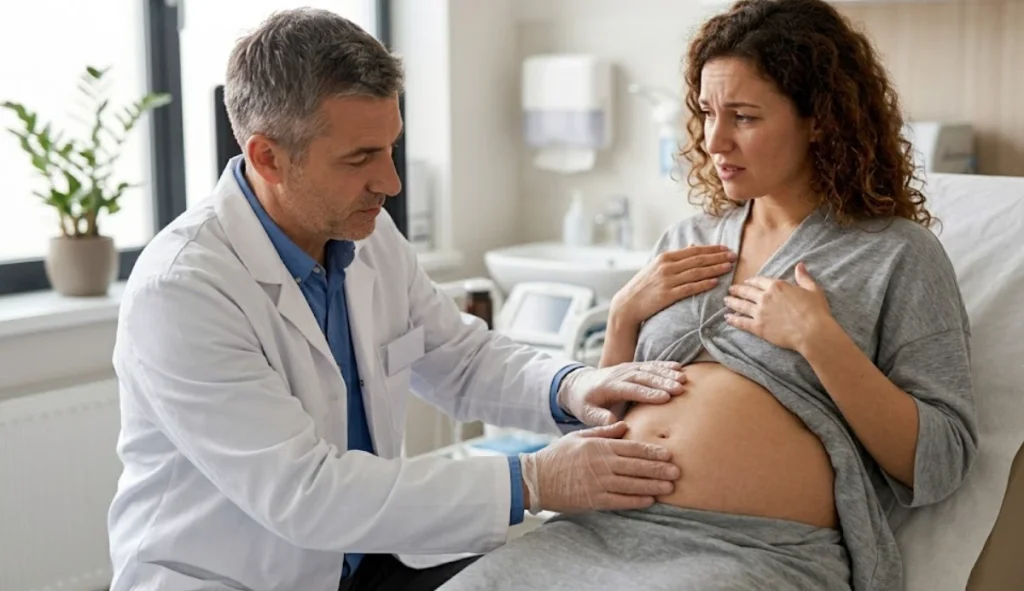
A thorough grasp of typical biological progression is essential to successfully steering through the post-surgical recovery phase. Surgical bloating’s course is so clear that one can forecast the end of this condition when one’s systems restart internally.
- Post-op days 1 to 3 (The Maximum Point): This is the time window when the symptoms of abdominal bloating and fluid retention are at their fullest. Body weight can go up temporarily by even three to five pounds, but this is entirely water weight from water retention and leftover IV fluids.
- Healthcare days 4-7 (Elimination Phase): After stopping the strong pain medication and gradually increasing your physical activity, your lymphatic and digestive systems start working almost as if from a dormant state. Expect a marked rise in urination as your body is getting rid of the surgical edema by letting the fluids out.
- Weeks 2 and beyond (Complete Recovery): Most of the abdominal changes caused by distension will have disappeared by the end of week two. The skin that surrounds the abdomen will feel firm again, and the true contours of the body that has been enhanced will be exposed.
Clinical Mastery: Accelerating the Recovery Matrix
Although natural healing occurs without a problem, some advanced post-operative care techniques applied by the patient alone can lead to a very significant speeding of this biological normalization. For those who choose LIN Europe Clinic, we conduct interviews to determine their specific medical lifestyle so that we can come up with the most effective, scientifically-based lymphatic and digestive system recovery program tailored precisely to their individual needs right after the procedure.
The number one is the initiation of early, mild physical exercise. Getting up and walking around slowly, 5– 10 minutes duration, every few hours, is a great way of getting blood circulated and also wakes up the gut traps, internal gases, and stagnant fluids that are processed and released. As far as diet is concerned, it is fundamental to be very strict about drinking lots of water very regularly—this seemingly paradoxical act basically tricks the body into letting go of the water it had stored. Keeping a high intake of fluids together with a low-sodium, high-fiber diet ensures optimal functioning of the digestive system, which in turn safeguards the overall body health and guarantees that the patient will have the most rapid and least painful recovery possible.
Comparison Matrix: Sources of Post-Operative Swelling
| Swelling Source | Biological Mechanism | Typical Duration | Targeted Clinical Solution |
| Intravenous (IV) Fluids | Excess sterile saline pooling in the soft tissues. | 3 to 7 Days. | Aggressive water intake; gentle indoor walking. |
| Anesthesia / Narcotics | Muscular paralysis slowing the gastrointestinal tract. | 4 to 10 Days. | Discontinue strong painkillers; eat high-fiber foods. |
| Surgical Cortisol Spike | The body’s natural stress response holding onto sodium. | 1 to 2 Weeks. | Maintain a strict low-sodium diet post-operation. |
| Localized Breast Edema | Direct surgical trauma and tissue inflammation. | 4 to 6 Weeks. | Wear the prescribed medical compression garment 24/7. |
Breast Implants in Turkey
Opting for LIN Europe Clinic is deciding on a world-class setting where every little detail of your post-surgical recovery is taken care of with the highest level of medical skill. We fully support the fact that handling the change in body as a result of surgery demands not only excellent surgeons’ skills but also careful explanation and kind help along the way. Our luxury center in Turkey is the very essence of body contouring internationally, offering a state-of-the-art place to look after your health, be comfortable and have your aesthetic needs fully met.
Trusting your case to IN Europe Clinic means choosing an elite medical environment where professional care goes well beyond the operating room. Your full transformation program is developed with the utmost accuracy while providing exact meal and physical activity instructions to minimize side effects such as bloating. Discover the exquisite care of LIN Europe Clinic and reveal a gorgeous, structurally harmonious figure that reflects the highest level of biological excellence, safely brought about in Turkey’s heart.
FAQ:
The peak of abdominal bloating is usually experienced by most patients in the first 3 to 5 days after surgery. Generally, the swelling will disappear completely within one or two weeks as the body effectively drains the excess fluids.
The bloating is a physiological reaction to the intravenous (IV) fluids given during the operation and the temporary digestion system slow down due to anesthesia. Painkillers also have a side effect of causing the body to retain fluids in the particular area and constipation, which is mild, during the main postoperative recovery period.
Stay well hydrated and take small gentle walks in your room, both are excellent ways to activate your lymphatic system and digestion. Furthermore, you should refrain from consuming high-sodium foods and engage in a fiber-rich diet to help your digestive system come back to normal rhythm.
Absolutely, it is very common for the pictures to show a few pounds go up – three to five pounds during the very first week because the whole body is holding the fluids. This increased weight is purely from water and surgical swelling, not from fat, and you will find that it disappears naturally as the body’s balance gets restored to normal.
The only time you should be concerned is when the bloating is combined with very severe abdominal pain, very high fever, or no ability to either pass gas or have a bowel movement for a few days. Under usual circumstances, the bloating is totally harmless and slowly goes away on its own without the need for any major medical intervention.
Holte, K., & Kehlet, H. (2002). Fluid therapy and surgical outcomes in elective surgery: a need for reassessment in fast-track surgery. Journal of the American College of Surgeons, 195(3), 415-422.
Chappell, D., Jacob, M., Hofmann-Kiefer, K., Conzen, P., & Rehm, M. (2008). A rational approach to perioperative fluid management. Anesthesiology, 109(4), 723-740.
Tebbetts, J. B. (2006). Outpatient breast augmentation in 24 hours. Plastic and Reconstructive Surgery, 118(1), 225-230.
Doherty, M., & Buggy, D. J. (2012). Intraoperative fluids: how much is too much? British Journal of Anaesthesia, 109(1), 69-79.
Gan, T. J. (2006). Risk factors for postoperative nausea and vomiting. Anesthesia & Analgesia, 102(6), 1884-1898.