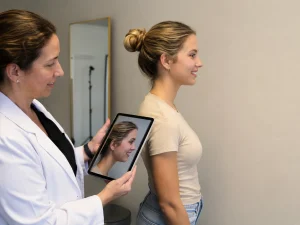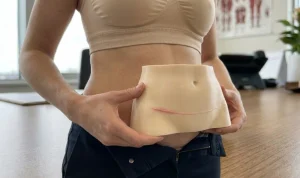
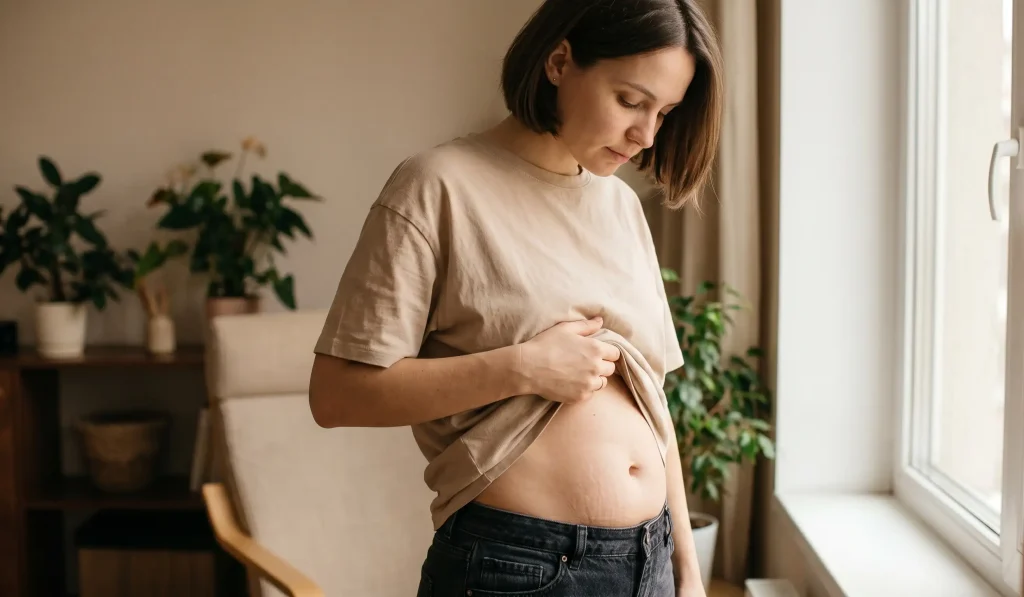
Tummy tuck tightens loose abdominal skin.
The Biometrics of Post-Pregnancy Dermal Laxity
Pregnancy leads to profound changes in the anatomy and physiology of the female torso. From a biometric standpoint, the sudden enlargement of the abdominal wall causes the skin and the underlying connective tissues to be subjected to a massive, sustained hydrostatic pressure. In many cases, the dermal layer may be overstretched beyond its physiological elastic limit as a result of this prolonged stretching. This can lead to the irreversible breakage of collagen and elastin fibers. After the degradation of these main structural proteins, the skin loses its native elasticity and can no longer “snap back,” which is why loose or hanging skin over the lower abdomen remains.
At LIN Europe Clinic, we mention that this anatomical change that occurs after childbirth cannot be totally reversed by simply following a diet or doing physical exercise, even if it’s targeted at a specific area. You can certainly regain muscle tone, but the skin that has been stretched to the point of losing its elasticity will remain as extra skin. The highest level of abdominal restoration can be achieved only by resorting to a surgical technique that requires the physical removal of excess tissues and midsection reconstruction. This surgical procedure not only targets the skin but also the muscle and fascial layers to help the body regain its original balance and natural proportions of the silhouette.
Abdominoplasty: The Gold Standard for Core Restoration
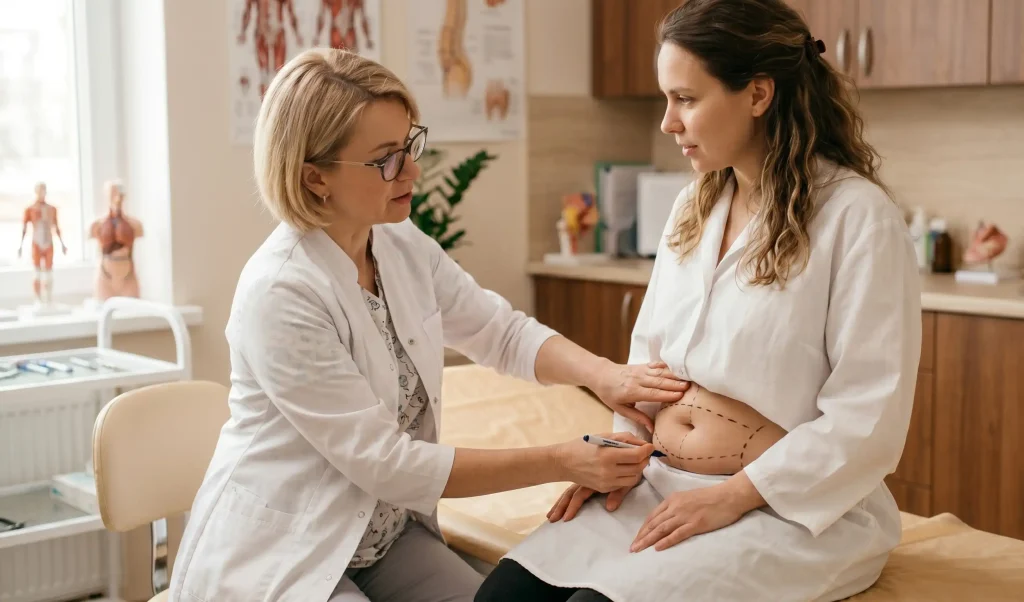
To put it simply, abdominoplasty or “tummy tuck” is the definitive surgical operation designed for the tightening of stomach skin after pregnancy. In fact, from a medical perspective, this procedure represents a surgical masterpiece as it can be compared to the artistic expression of a surgeon who works on a 3D canvas, namely the patient’s entire midsection. Making an incision that is strategically placed and of a low profile in the area of the lower pubic mound, the surgeon can lift the skin, fat, and muscle layer off the abdominal wall up to the rib cage.
When the surgeon gains complete access to the abdominal wall, the hanging skin is drawn very selectively downwards, sculpted to the body’s contours and removed. Besides the general guidelines below, the level of tissue laxity determines the choice of a customised procedure for you:
- Full Abdominoplasty: Operates on the main areas both above and below the navel, involves a second incision for the repositioning of the belly button to a natural, aesthetically pleasing spot.
- Mini-Tummy Tuck: Works only on a small area of skin looseness below the navel, no need to move the belly button, much shorter incision line.
Restoring Structural Harmony: Diastasis Recti Muscle Repair
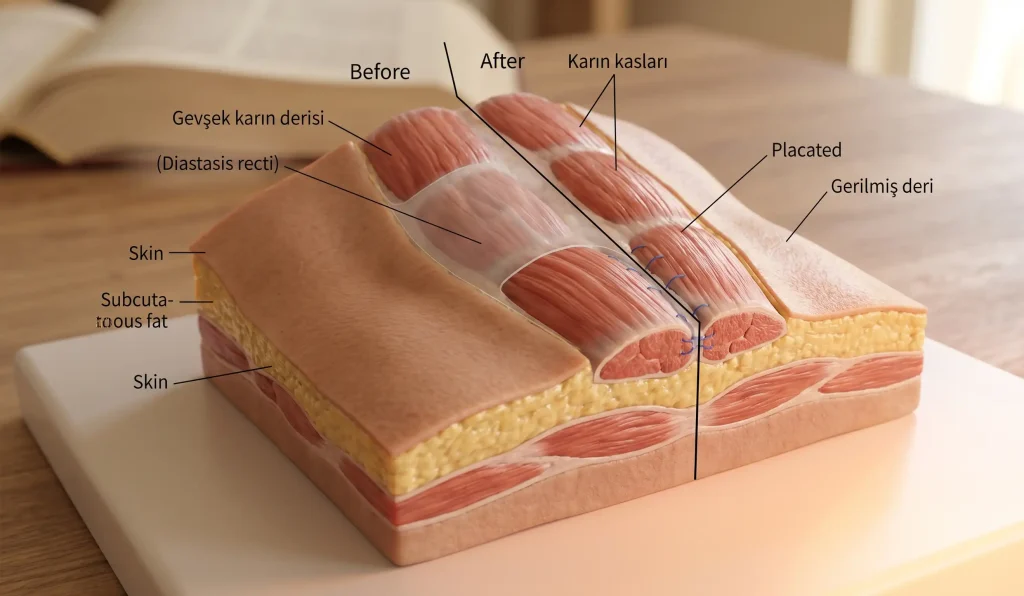
Post-pregnancy restoration involves much more than just skin removal. Besides restoring the normal contours of the abdominal wall, post-pregnancy tummy tuck fastens the repair of diastasis recti, which is the separation of the rectus muscles. The linea alba, which is the connective tissue band, is stretched and thinned during pregnancy, which in turn leads to the separation of the two vertical columns of abdominal muscle. This constantly reddening protrusion of the lower stomach or “pooch” is the result of an internal malfunction and can resist all forms of core conditioning.
It is the muscle plication that is capable of restoring the structural harmony from within the body. With the aid of permanent, strong internal stitches, the separated muscle strips are brought together by the surgeon at the midline in a weaving motion, thereby creating a corset-like effect inside. This action leads to the flattening of the abdominal wall, the narrowing of the waist and the reinstatement of the core’s essential function. Not only do we in our Istanbul clinic work on muscle repair together with advanced lipo-sculpting of the waist but also ensure that the end result is structurally sound and has a high-definition, chiseled hourglass appearance which is in line with the native biometrics of your body.
Comparison Matrix: Mini vs. Full Abdominoplasty
| Clinical Metric | Mini-Abdominoplasty | Full Abdominoplasty |
| Primary Anatomical Target | Localized lower abdomen tissue. | Global upper and lower torso wall. |
| Muscle Repair Scope | Limited to the infraumbilical zone. | Complete midline diastasis plication. |
| Umbilical Transposition | Not required (navel stays intact). | Mandatory with high-definition tailoring. |
| Incision Geometry | Short, horizontal suprapubic line. | Hip-to-hip contour-aligned placement. |
| Ideal Candidate Profile | Isolated lower laxity; minor separation. | Significant skin redundancy; muscle gap. |
| Systemic Recovery Window | 1 to 2 weeks for baseline mobility. | 2 to 3 weeks for cellular stabilization. |
LIN Europe Clinic
Choosing LIN Europe Clinic means stepping into a world-class medical spa where the most difficult problems of the post-partum body are addressed with professional, uncompromising clinical excellence. We understand the very personal nature of the journey to reclaim your body shape after pregnancy and the need to strike a balance between cutting-edge medical technology and caring, personalized attention. LIN Europe Clinic is not only recognized worldwide, placing focus on the mother’s restoration, but also is an environment where your cosmetic aspirations go hand in hand with the highest standards of safety globally.
By entrusting your profound transformation to LIN Europe Clinic, you are opting for a thorough medical system that always puts professional thoroughness and patient-oriented safety first. We will take care of your entire transformation roadmap with utmost professional care, employing advanced tissue-gluing techniques and custom-designed pain-management protocols to maintain your systemic vitality throughout the recovery period. Discover the epitome of refined care with LIN Europe Clinic and attain a profile that not only biologically and aesthetically represents the highest level of success but also one that has been handled with exceptional precision in the very heart of Turkey.
FAQ:
Tummy tuck, medically known as abdominoplasty, is considered the most effective way to get rid of excess skin on the belly. Besides, it also tightens the area around your stomach and helps repair the muscles that have been stretched out.
Working out can strengthen the muscles under the skin but it does not have the ability to tighten the skin that has been stretched beyond its limits. To get rid of the excess skin physically, surgery is the only option.
The operation consists of stitching the abdominal muscles that have separated. It not only enhances core strength but helps reduce the protrusion of the belly that is common after childbirth.
Usually, health professionals advise that you should give your body six months to a year after you have given birth or stopped breastfeeding. During this period, your hormones and tissues will have an opportunity to get back to a natural state.
Indeed, stretch marks that are in the area of the lower belly are removed for good when the loose skin is taken away. However, those marks that are higher than the belly button will be stretched and tightened when the skin is pulled down.
Tebbetts, J. B. (2002). Systemic Vitality and Surgical Precision in Body Contouring. Saunders Elsevier.
Janis, J. E., et al. (2005). Abdominal Anatomy and Biometrics: Implications for Abdominoplasty. Plastic and Reconstructive Surgery.
Nahai, F. (2011). The Art of Aesthetic Surgery: Principles and Professional Rigor in Post-Partum Restoration. Quality Medical Publishing.
Lockwood, T. (1995). High-Lateral-Tension Abdominoplasty: Clinical Mastery of the Dermal Matrix. Plastic and Reconstructive Surgery.