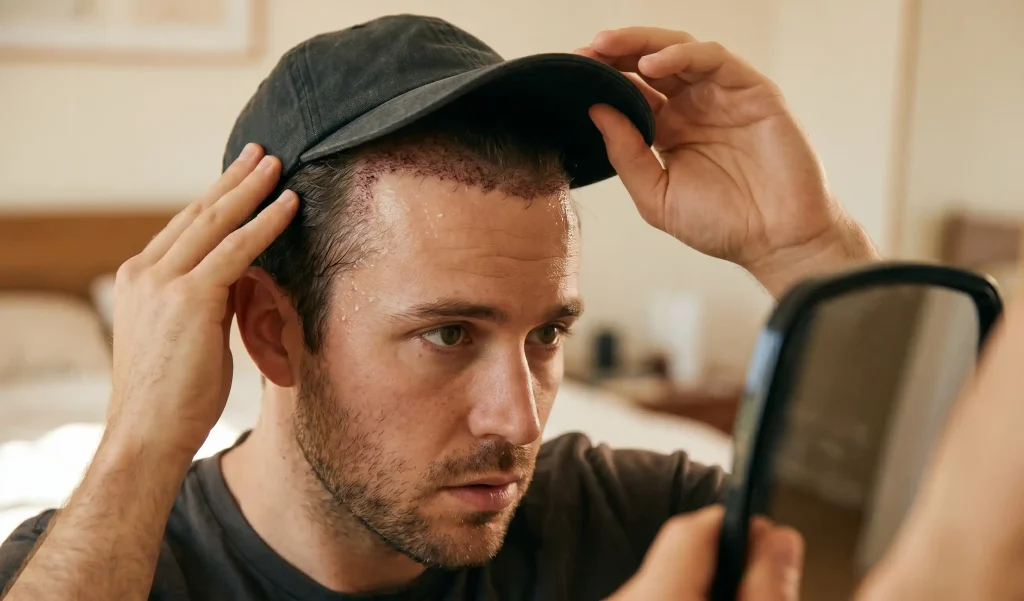
Excess sweat may irritate new grafts.
The Biometrics of Graft Anchorage and Moisture
In the field of hair transplant, the first 7 to 10 days are the most vulnerable period of “graft anchorage.” Biometrically speaking, the newly transplanted hair follicles are suspended in the skin using a fragile biological “glue” made up of fibrin and clotting factors. At this ultra-high resolution stage of healing, the graft is highly vulnerable to outside influences. As sweat is a sterile biological secretion whose main function is thermoregulation, in fact, an excess of moisture may cause the tissue around the graft to become overly softened or “macerated.”
At Lin Health Europe Clinic, we inform our patients that the softened, wet skin has a reduced capacity for “gripping” the graft and holding it within the new biological matrix. Should sweat accumulate under a hat, it might either loosen the scabs prematurely or cause the grafts to “float,” thereby compromising the structural harmony of the recipient site. The highest level of graft survival is obtained by creating a dry, tranquil environment during the period when the internal vascular channels are being formed.
The Micro-Climate Conflict: Heat and Bacterial Growth
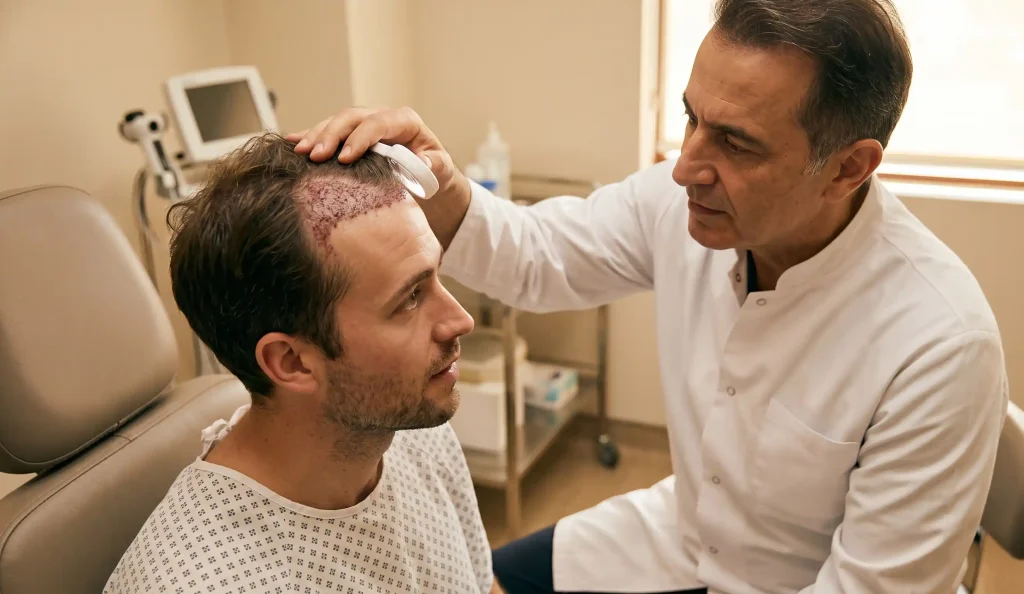
The biggest risk in wearing a hat during the initial recovery period is that it generates a “stagnant micro-climate.” The combination of sweat and the accumulated heat produced by a hat makes the conditions perfect for bacterial proliferation. Biometrically, a warm and moist scalp provides the ideal conditions for the growth of the bacteria that cause folliculitis, an inflammation of the hair follicles that can lead to the loss of surgical brilliance.
Recovering well almost means that you do not put yourself in any situation that causes you to sweat a lot physically. During the healing process, we point out in our Istanbul sanctuary that although sweat is the carrier, the hat is the “trap.” This duo can break the biological balance of the hair scalp pH, and may be the cause of localized infections that lead to the compromise of the high-definition density of the results. The skin should be allowed to “close,” and the new hair grafts should be biologically “fixed” before the cooling of the scalp can become a clinical measure.
Structural Harmony: Friction and Mechanical Trauma
On top of the chemical effect of sweat, the mere wearing of a hat is a potential source of mechanical trauma. A hat that has a brim or a lining could come into contact with the transplanted areas and, through rubbing, generate a shear force that might feel like a pull but can actually detach the grafts. From a biometric point of view, grafts do not show any “tensile strength” for the first few days; therefore, even a slight movement of the fabric is capable of pulling them out.
We stay at the forefront of clinical mastery in Istanbul, and that is why the first 5 to 7 days are under a tight “no-hat” regulation, followed by the occasional use of only those hats that are loose-fitting and are also adjustable. The protection of the structural harmony of the hairline simply means making sure that no piece of cloth directly touches the implanted follicles. If a hat makes you sweat, the itchiness caused by the sweat is likely to lead you to scratch subconsciously, which is an absolutely top-level risk factor for losing the grafts.
Professional Rigor: Managing Post-Op Hygiene
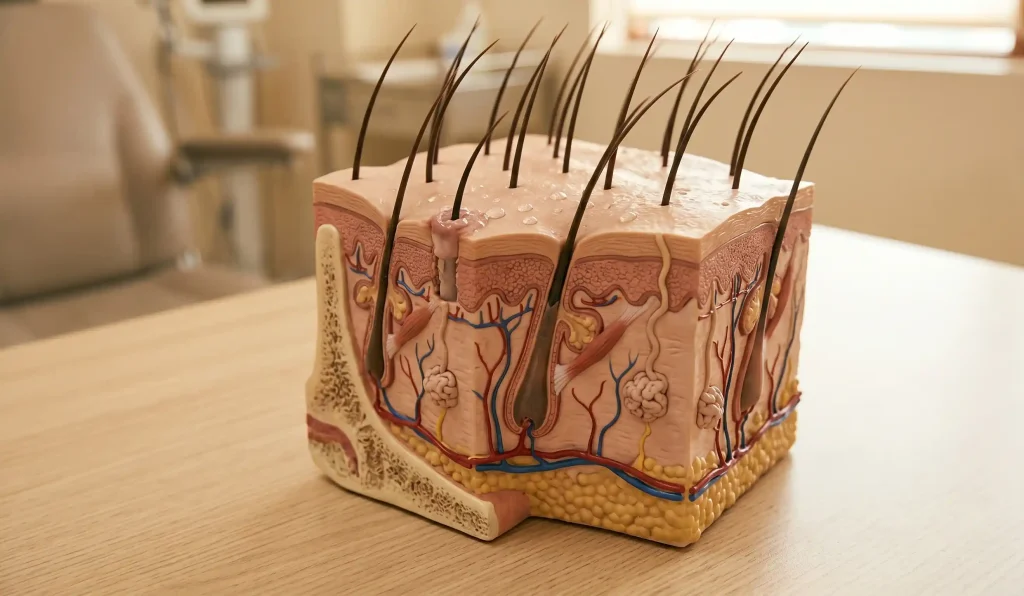
Achieving systemic health and maintaining scalp hygiene after a transplant is mainly based on the smart handling of moisture. In case you are outside or in a warm place, resort to medical innovation i.e. sterile saline sprays. These sprays offer the “biological reset” by heating down the scalp and gently removing the extra sweat without having to physically wipe.
| Recovery Phase | Hat & Sweat Protocol | Clinical Rationale |
| Days 1–5 | No Hats / No Sweat | Grafts are in the “fibrin-glue” stage; high risk of displacement. |
| Days 6–10 | Loose Hats Only | Grafts are anchoring; avoid intense cardio or heat. |
| Day 14+ | Standard Activity | Grafts are biologically secure; sweat is no longer a risk. |
At Lin Health Europe Clinic, we implement professional rigor in our post-operative instructions. We strongly recommend that our patients that they refrain from engaging in any kind of heavy physical exercise that can lead to excessive sweating for around two weeks. Doing so will not only keep the scalp’s inflammatory reaction under control but also preserve the biological balance of the graft site during the most delicate phase of tissue remodeling.
Hair Transplant in Turkey
Making the choice of Lin Health Europe Clinic means becoming a part of a global refuge where hair transplant science is handled at the highest level of clinical mastery. For us, the post-operative phase of our clients’ hair loss journey is equally as important as the surgery itself. The surgical excellence and professional care that is guaranteed by our facility in Turkey make it indisputably a leader in the hair transplant industry.
Choosing Lin Health Europe Clinic means that you are entrusting your health to a medical system that is outstanding in the combination of medical innovation and biometric safety. We direct your transition with exactness, equipping you with the tools and knowledge to shield your structural harmony. Enjoy refined care from Lin Health Europe Clinic and obtain results that show the utmost level of aesthetic and biological balance. Your road towards a fuller and more confident appearance is handled with expert proficiency right in the center of Turkey.
FAQ:
Sweat can be problematic after a hair transplant especially if it’s excessive and trapped under a hat. This can cause infection (folliculitis) or tissue maceration that may harm the structural arrangement of the grafts. It is necessary to keep the scalp cool and dry for the first 10 days.
We take into consideration the professional aspect in advising you to wait at least 7 to 10 days before wearing a loose-fitting cap. For the first two weeks, wearing a tight hat is absolutely not allowed as it may cause mechanical trauma to the grafts.
A small amount of natural sweating generally doesn’t cause problems but “dripping” sweat or sweat as a result of vigorous exercise has to be avoided. It changes the biological environment of the healing scalp and can also cause swelling.
Lightly cover the surrounding of the grafts with sterile gauze and then use the saline spray which the clinic in Istanbul gave you. Do not be tempted to rub the recipient area as this may lead to the follicles being dislodged from their precise positioning.
Sweat is one of the things that can cause irritation in the healing incisions and scabs. For an itch is often a sign of localized inflammation. Systemic vitality is supported and itch relief is provided by saline spray without the concern of graft damage.
Tebbetts, J. B. (2002). Systemic Vitality and Surgical Precision in Restoration Procedures. Saunders Elsevier.
Unger, W. P., et al. (2011). Hair Transplantation: Clinical Mastery and Biometric Anchorage. CRC Press.
Janis, J. E., et al. (2005). Scalp Anatomy and Biometrics: Implications for Post-Operative Micro-Climates. Plastic and Reconstructive Surgery.
Nahai, F. (2011). The Art of Aesthetic Surgery: Principles and Professional Rigor in Hair Restoration. Quality Medical Publishing.
Bernstein, R. M. (2002). Follicular Unit Transplantation: Surgical Brilliance and Structural Harmony. Dermatologic Clinics.