
Very small or very large sizes are the rarest.
The first thing that comes to mind when talking about breast size is generally the range from A to DD cups. Yet, human anatomy is a huge field of nature that goes far beyond what you spot at a normal lingerie shop. You may wonder what counts as a “rare” breast size in reality? At Lin Europe Clinic, we tackle the issue not as a mere question but as a medical fact. We realize that those people situated at the two ends of the normal distribution curve, i.e., with very small or very large sizes, usually face a whole set of physical and emotional problems.
To the question “What is the rarest boob size?” you can answer depending on whether you are talking about the commercial availability or the biological conditions. The very rarest diseases are statistically probably Amastia (the complete loss of breast tissue) and Gigantomastia (excessive, uncontrolled growth). With regard to the bra-size, such band-and-cup combinations as 28AA (a very small figure with barely any tissue) or the sizes that are beyond the K or L cup range are considered statistically to be the rare outliers. Learning about these extremes gives us a better understanding of the human body’s diversity and also sheds a light on the surgical treatments that are available for those who are getting very much hindered by their size and thus losing the quality of life.
Smallest Extreme: Amastia and Micromastia

The most extremely rare “size” is the absence of the breast tissue and nipples altogether, a congenital defect called Amastia. People often make a difference between having very small tits and none at all. Amastia is literally a developmental defect where the mammary ridges did not develop during the embryo’s formation. This condition is extremely rare and may be combined with other genetic problems. One of them is Poland Syndrome where the subject is missing the pectoral major muscle. For such people, the chest is completely flat and thus they have to do reconstruction instead of simple augmentation.
Quite a number of people experience a condition very different from the above, which is severe Micromastia, thus the women suffering from it are called tuberous. What happens there is that a constricting collagen ring surrounds the breast tissue and so the breast has to extend upward and in front rather than becoming round. The patients of this type of deformity will use the AAA cup as a reference number but the rarity lies not only in the amount of breast tissue but also in the shape and structure. A typical breast implant is insufficient to normalize such breasts and thus surgery is needed to release the tissue around a natural footprint.
Biggest Extreme: Megalomania
Facing the issue from a different angle, there is of course Gigantomastia. It is a rare and very serious disease where the weight of the breasts is above 3% of the total body weight of the patient. In other words, it is not just extraordinarily “large breasts” or an H cup; it is a disease that the body has lost control over and the breast tissue grows potency. In some cases, hormonal fluctuations during puberty and pregnancy trigger the breast tissue to grow rapidly. In the most severe cases, the weight of each breast can reach 5 to 10 kilograms which leads to severe damage of the spine and neck.
Cup sizes going beyond an L or M cup are rarely found in standard retail. Females who have been diagnosed with gigantomastia have to buy bras that are custom-made or use binders since they cannot wear standard sizes. The very nature of the condition is that it fatigues a person physically thus making the skin ulcerate and hurting chronically. Thus breast reduction for these people is not a matter of choice but a matter of necessity in order to regain mobility and health.
The Influence of the Band Size on the “Rarity” Factor
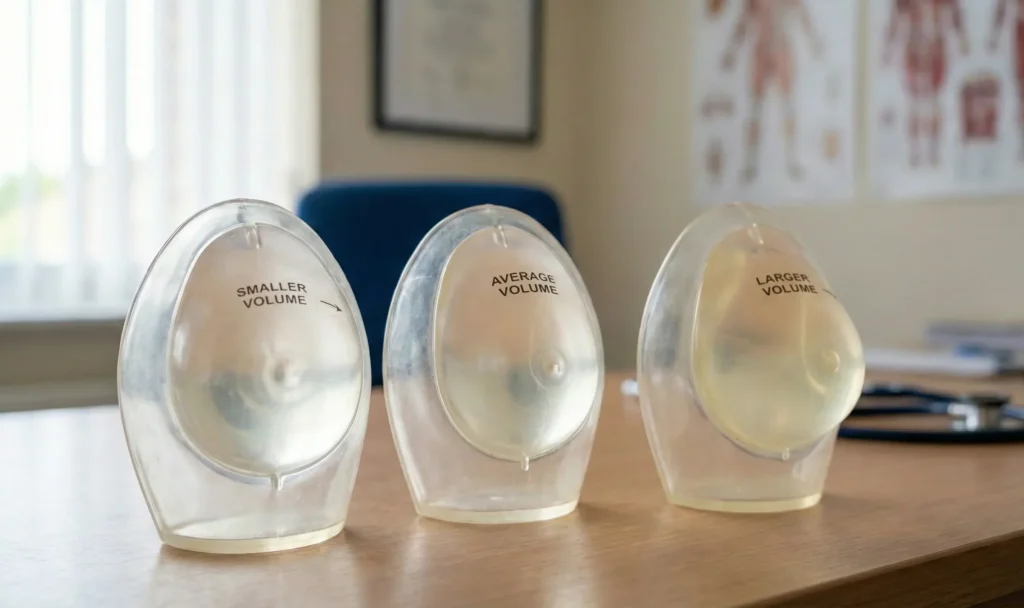
What you need to know is that a “cup size” is not a concept without a “band size“. The volume of a “D cup” constantly varies and it means nothing without a rib cage. Hence, in the case of breast size rarity comes from a combination of two factors. A 28-band size (meaning a very small chest circumference) is a rare thing in adults generally, so naturally, a 28H is quite a beast of a size as it denotes the couple of extremes of very small frame and very big volume.
On the other hand, extremely large band sizes with very small cups like 50AA are also incredibly rare. The average biological weight gain is quite evenly distributed, so the larger a person’s torso is, the more breast tissue she is likely going to have. Spotting these peculiarities can be attributed to being knowledgeable about fitting. A lot of ladies think they are the “rare” size simply because they are in the wrong bras, but once properly fitted, the majority of them will fall into a more common and thus, comfortable size.
Genetics and Hormonal Influence
Your genetic codes plus hormone environment are the main determinants of the rarity of your breast size. Tiny differences made to the estrogen and progesterone receptors of your breasts are decisive in determining your overall breast size. The bizarre sizes are the result of the so-called “end-organ hypersensitivity” where the breast tissue is either super-productive in response to the given amount of hormones (which leads to gigantomastia) or non-responsive at all (which leads to micromastia).
Body Mass Index (BMI) is another factor but less of one than you imagine. Even though the fatty tissue indeed adds to the breast volume, the glandular component is the one which is inherited. This is the gist of why some tiny ladies have pretty big breasts (low BMI, high glandular volume) while some fat ladies have small breasts. The explanation for the patients is that surgical correction is the only solution for them to attain proportionality when body size and breast size are not matching.
Breast Surgery in Turkey

The reason why you select Lin Europe Clinic among all the clinics for breast surgery in Turkey is that we are proficient in dealing with complex cases at both ends of the scale. So, if you are a patient requiring reconstructive augmentation for tuberous breasts or reduction of a massive breast for gigantomastia, our surgeons in Istanbul consider your condition a medical problem to be solved. We do not simply place implants; we rebuild the chest wall to establish a normal anatomical base.
There is no judgment, only the pure healthcare focus in your time in Istanbul. We realize that having a “rare” size can make you feel isolated and that it can affect you physically. We offer VIP transfers and private luxury accommodations in which you can enjoy your recovery quietly. Our doctors provide thorough aftercare so that your change from an extreme size to one of a proportional nature is not only safe but also long-lasting.
Frequently Asked Questions About Breast Size Rarity
Although an H cup is less common than a C or D cup, it is not extremely rare, particularly in women with smaller band sizes. It is a standard size in worldwide specialized lingerie brands.
The smallest size is related to a disease called Amastia, which is a total absence of breast tissue and nipples. From a commercial point of view, AAA is frequently the smallest cup size offered.
Figure asymmetry is very common and almost all females are affected to some degree. However, when one breast is more than one cup size larger than the other, it’s less common.
Gigantomastia is a very unusual disorder in which breast tissue grows excessively, making up more than 3% of the body weight of the person. The condition may develop spontaneously or during pregnancy.
A cups are not rare, however, they are less frequently encountered than the average C or D cup in many Western populations. Statistically, true A cups are rarer when the band size is larger.
Dancey, A., et al. (2008). Gigantomastia: a classification and review of the literature. Journal of Plastic, Reconstructive & Aesthetic Surgery.
Yeslev, M., et al. (2017). Poland’s Syndrome: The role of the plastic surgeon. Plastic and Reconstructive Surgery.
Tebbetts, J. B. (2002). Dual plane breast augmentation: optimizing implant-soft-tissue relationships in a wide range of breast types. Plastic and Reconstructive Surgery.