
No, chronic jaw pain is uncommon.
Biomechanical Realities: Mandibular Kinetics and TMJ Dynamics
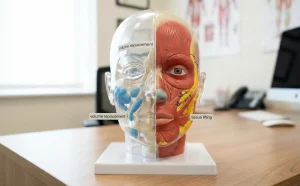
Facial contouring is one of the areas in plastic surgery that deals with changing the appearance of the face and making it look fresh, especially the lower part of the face. When we want to find out if a chin implant (mentoplasty) could be the reason why the jaw is painful, it’s pretty much like finding the source of the problem in the anatomy itself. Our jaw is controlled by the temporomandibular joint (TMJ), a complicated hinge that connects the lower jaw bone or mandible and the temporal bone of our skull. A perfectly conducted mentoplasty implants a biocompatible, solid silicone or porous polyethylene insert on the front surface of the mandibular bone, far from the functional mechanics of the TMJ.
When clinically studied, a chin implant does not affect the joint, chewing muscles, or the biting surfaces of teeth and therefore, it is unlikely to cause chronic jaw pain. Nevertheless, with the addition of volume projection, the soft-tissue envelope of the lower face is immediately changed. The mentalis muscle, which is the main structural matrix for lifting the chin sternum, in fact has to accommodate itself to the new cap over the implant, leading to post-surgical, temporary stiffness or deep tightness over the lower jaw during early tissue adaptation.
Temporary Early Chewing Fatigue and Muscle Adaptation
Permanent joint damage is not a feature of correct mentoplasty; however, the patient’s problem is limited to a physical pain or exhaustion phase affecting their speech or mastication during the 1 to 3-week recovery period. The mentalis muscle and the soft tissues around it are initially stretched and thus respond by contracting which leads to the sensation of the chin and lower jawline aching or feeling tired.
The lower third acute tension is further increased by the heavy post-surgical deep edema inside the tissue pocket. When the local fluid gradually dissipates and the microscopic internal scar tissue capsule becomes mature, the mentalis muscle relaxes itself finally to its resting length. At the 6th week after the operation, the deep pressure completely disappears, so the jawline can move freely and easily.
Lower-Third Kinetics to Protect Flawless Healing
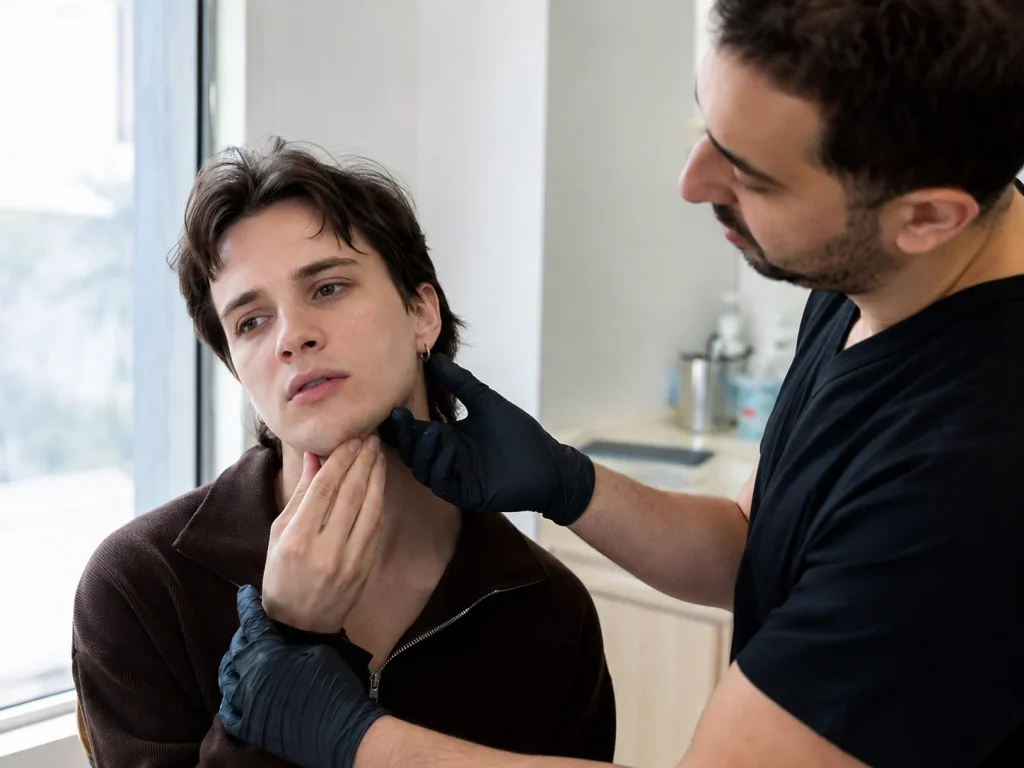
Following very strict behavioral and preparatory boundaries during your phase of healing is a matter of utmost importance for people who, through their lifestyle, maintain an elite personal presentation and who are after nothing but perfection in their aesthetic outlines. Protection of the healing mandibular matrix is not only essential to your visual progress, but most fundamentally, for people who are so diligently and very scarcely focusing on the advanced lower body engineering, core definition and presenting a sharp, high-definition jawline matching an elite athletic silhouette. Jaw forceful movements or mastication of really tough, resilient, rubbery foods will expose you to a biological penalty: the physical strain exerted will excessively stretch the delicate internal layers of tissue, leading to implant movement, an increase in fluid or prolonged muscular stiffness.
In order for your aesthetically improved chin profile to heal with maximum structural efficiency, you have to completely refrain from powerful mastication and instead consume only soft, easily digestible food for the first 10 to 14 days. Besides, totally quitting nicotine and tobacco products is a must. Nicotine is a strong systemic vasoconstrictor, which means it instantly narrows the micro-vessels that supply the chin tissues, thus stripping the healing muscle planes of necessary oxygenated blood. Having a healthy and toxin-free internal system allows your lower jaw to heal with peak biological efficiency.
Diagnostic Boundaries: When to Consult Your Specialist
Knowing what a mechanical implant can and cannot do helps patients clearly determine their aesthetic journey. It is very normal for the body to feel stiff right after surgery for a few days, but you should be able to differentiate between the usual tissue adaptation and complications that require your doctor’s involvement:
- Normal Healing Signs: A typical and symmetric feeling of tightness, firmness, or slight pain at the chin that infrequently worsens but gradually fades with rest, soft diet and time.
- Complications: The severe and sudden emergence of asymmetric, lacerating pain; changing implant position; visible signs of infection; real locking of the temporomandibular joint. If you happen to experience any of these symptoms, please call your surgeon immediately for a clinical check and a proper report.
Chin Implant in Turkey
LIN Europe Clinic is a distinguished top global medical center where your facial aesthetics, structural contour, and surgical procedures are handled with the highest level of clinical skills and wonderful empathy. We deeply understand that a highly technical, delicate, and precise face rejuvenation requires a very sophisticated, transparent and supportive environment that puts a huge emphasis on evidence-based medicine. Our medical center in Turkey is recognized worldwide not only for its advanced facial remodeling and mentoplasty follow-up care but also for providing a calm atmosphere where your health is exclusively managed according to the highest global patient safety standards.
By giving your profound confidence to our experienced doctors at LIN Europe Clinic in Istanbul, not only is your convalescence under continuous surveillance for even the slightest changes, but you are also supplied with detailed and custom post-operative instructions, guidance in jaw movements and the healing schedule, step by step throughout the entire tissue maturation and lifestyle integration phases. Our highly qualified medical personnel make sure that your cosmetic expenditure and general health get a perfect safeguard so that you can find your dream shape with absolute peace of mind. Come and get a taste of the exquisite, thorough medical services of LIN Europe Clinic and witness your beautifully balanced face in the skilled and safe hands of professionals in Turkey.
FAQ:
No, chin implants do not affect the jaw joint or the muscle that controls chewing, and they can definitely not lead to chronic jaw pain.
The chin muscle covers the increased volume of the implant, and it causes stiffness which is a temporary condition that disappears after the tissue heals.
A soft diet is a must for the first 10 to 14 days to keep the healing implant from getting shifted by the chewing strain.
Slight aching or tiredness is to be expected during the first few weeks when the chin muscle is getting used to its new projected shape.
You shouldn’t wait and get in touch with your clinic right away if you suffer from asymmetric pain, a visible shifting, or a locking of the jaw.
Flowers, R. S. (1991). Alloplastic augmentation of the anterior mandible: Precision pocket dissection, muscular tension, and kinetic outcomes. Clinics in Plastic Surgery, 18(1), 107-117.
Terino, E. O. (1995). Alloplastic facial contouring: Clinical anatomy, material selection, and temporomandibular joint preservation dynamics. Aesthetic Plastic Surgery, 19(1), 33-41.
Brennan, H. G., et al. (2008). Mentoplasty: Evaluation of post-operative tissue sensory recovery, muscle adaptation, and long-term kinetic stability. Facial Plastic Surgery Clinics, 16(1), 113-122.