In breast surgery, silicone implants represent one of the primary options for breast augmentation as well as reconstruction interventions. The reason for the rise in silicone implant popularity over time has been their somewhat natural touch, long-lasting quality, and the ability to reveal more voluminous and aesthetically balanced results. Here at Lin Health Europe Clinic in Istanbul, we are committed to providing our patients with multiple variant options of silicone implants so that they can not only get the best fit for their body type but also the best aesthetic and therapeutic outcomes.
Knowing the different types of silicone implants can really get you puzzled. So, you know, if you are in the process of breast augmentation, and reconstruction, or merely wanting to get breast symmetry, then this handbook will guide your way to a proper decision. This piece of writing will walk you through various silicone implant shapes, textures, and sizes, along with factors to consider when choosing one and pre/postoperative expectations.
Understanding Silicone Implants and Their Use in Breast Surgery
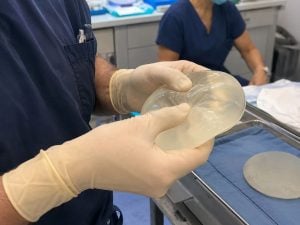
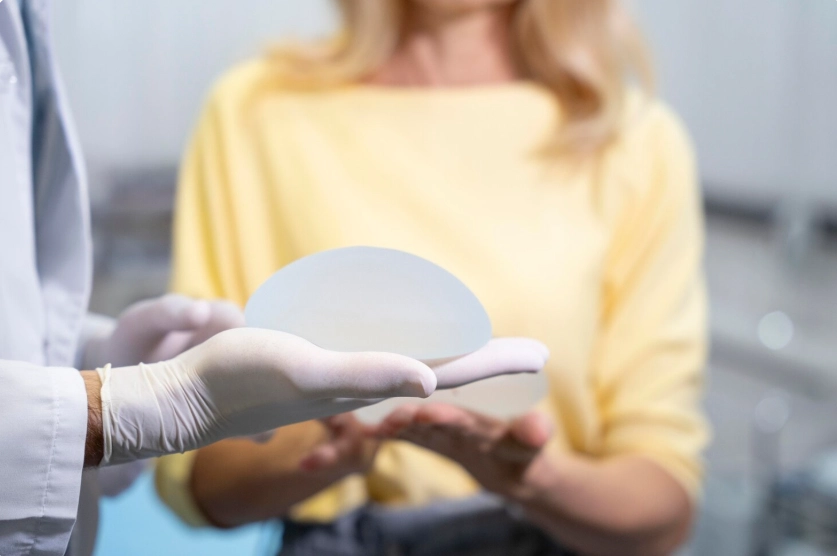
Silicone implants consist of silicone gel that is made to simulate the feel and texture of natural breast tissue. Saline implants differ in that they are filled with sterile saltwater post-production, while silicone ones are pre-filled and are available in different forms, dimensions, and finishes, giving patients a broad range of options.
Generally, in breast augmentation surgery, implants are placed under the tissue of the breast or underneath the chest muscle, which is determined by the patient’s anatomy and the surgeon’s advice. The muscle placement is frequently the method that is chosen, as it results in the most natural appearance, especially for women who do not have a lot of natural breast tissue.
Many patients prefer silicone implants because of their soft, natural feel, which is almost identical to natural breast tissue. Thus, the products are perfect for the ladies, who want the procedures to give them a more rounded, and symmetrical, with the extra volume, look.
Kinds of Silicone Implants: Different Forms, Dimensions, and Finish
Talking about silicone breast implants, there are many alternatives in terms of shape, size, and texture. These factors will have a great influence on the end result of the patient’s appearance. Let’s get acquainted with the various types of silicone implants.
Shape of Silicone Implants
- Round Implants: Such implants are designed as a globe in the traditional sense and therefore, no matter the volume of the breast, a uniform one will be presented. The round implants are perfect for women who want more projection and upper breast fullness be augmented.
- Teardrop (Anatomical) Implants: These implants are designed to look like a natural breast, thus, the bottom part is more filled and it slowly tapers towards the top. They are perfect for patients willing to have a slope-like appearance and lesser projection along with the rest.
Texture of Silicone Implants
- Smooth Surface Implants: They consist of a smooth outer shell and can move easily in the chest pocket. The make-up is natural in feel and soft to the touch, however, shifting may be a problem in the long run.
- Textured Surface Implants: The rougher outer surface is what characterizes these implants, and it is this roughness that helps in lessening the rotation of implants. Besides this, they also provide a higher degree of tissue adherence and thus, women with less natural tissue coverage would be an excellent fit for this product.
Sizes of Silicone Implants
- Silicone implants are available in a large variety of sizes to fit different body types and desired aesthetic results. The right size is determined by the width of the chest, the breast tissue that is already there, and the projection that is wanted. Usually, surgeons measure volume (in milliliters) to give the patient the picture of the implant size which will be most suitable.
Choosing the Right Silicone Implant for Your Body
First of all, it is very important to point out that breast augmentation is not a breast “going crazy” kind of method – it is basically a method of moderation. Therefore, the implant you wear needs to be the right one for you and not for the others. As well, this decision is made by the patient considering her personal taste, in conjunction with the anatomical and professional consideration. Here, at Lin Health Europe, your surgeon will give you the most tailored advice depending on:
- Your Body Type: The width of your chest, width of your shoulders, and the size of your whole body will decide the kind of implant that will fit you the best.
- Desired Outcome: More volume, natural contours, or just a small size increase – what is it that you want? The determination of implant size and shape should represent your own objectives and body ratios.
- Skin Elasticity: In case you have less skin elasticity or a greater amount of sagging, then maybe a teardrop-shaped implant can make you look better than a round one.
- Lifestyle Considerations: Women who do a lot of sports and are very active and sporty might be the ones who go for the smooth implants as they can adjust better more with them during the tight movements.
In your consultation, the surgeon will employ 3D imaging to show how your body would look with different implants. Hence, you can actually see different options before you make a final choice that will be an educated one.
Benefits and Risks of Silicone Implants
Benefits of Silicone Implants:
- Natural Look and Feel: The texture and softness of silicone implants make them resemble and feel like the natural breast tissue, hence they are the first choice of many for silicone breast reconstruction.
- Durability: Silicone implants are usually more durable than saline implants and therefore retain their form for a long time.
- Less Rippling: Owing to their uniformity, silicone implants have minimal or no rippling that can be seen by the naked eye as compared to saline implants, especially in people who are thin.
Risks of Silicone Implants:
- Capsular Contracture: One of the most serious complications, though not very frequent, is the capsular contracture in which the body forms a fibrous capsule around the implant, which then becomes tight and hard thus causing pain, changing of the breast shape and even implant rupture.
- Rupture: Sometimes the silicone implants break, but the rate is very low in modern implants. When a rupture occurs, the silicone gel may stay inside the implant or it may leak into the surrounding tissues which may cause some side effects.
- Need for Replacement: Although silicone implants are made with the intention of lifelong use, it is speculated that the implants may have to be replaced after a period of 10–15 years or earlier if any complications, such as rupture or shifting, occur.
References
- American Society of Plastic Surgeons. (2023). Breast Augmentation (Mammoplasty) Overview. Retrieved from https://www.plasticsurgery.org/cosmetic-procedures/breast-augmentation
- Rohrich RJ, et al. Plastic and Reconstructive Surgery Journal. “Techniques in Breast Augmentation and Reduction.” 2022.
- Lin Health Europe Clinical Guidelines. (2025). Mammoplasty Procedure, Recovery, and Postoperative Care. Istanbul, Turkey.
- Matarasso A, et al. Aesthetic Surgery Journal. “Breast Implant Safety and Postoperative Care: Best Practices.” 2021.
Frequently Asked Questions About Breast Implant Surgery
To prepare for surgery, you’ll need to stop smoking at least 4 weeks before surgery and avoid certain medications like blood thinners. Your surgeon will provide detailed instructions regarding fasting, medications, and necessary health evaluations before the procedure.
Most patients take about 1–2 weeks to recover from light daily activities, with full recovery occurring after 6–12 weeks. During this time, swelling and bruising will subside, and the final shape will emerge as the body heals.
Yes, there are some risks, including capsular contracture, implant rupture, and infection. However, when performed by an experienced surgeon, these risks are minimized through careful surgical techniques and post-operative care.
Breast implants typically last 10–15 years, though some patients may need a replacement sooner if complications arise, such as rupture or changes in the implant’s appearance. Regular check-ups are essential to monitor the integrity of the implants.
Scars from breast implant surgery are typically small and placed in discreet areas, such as the inframammary fold or around the areola. With proper care, these scars tend to fade over time and become less noticeable.