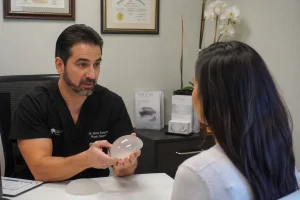
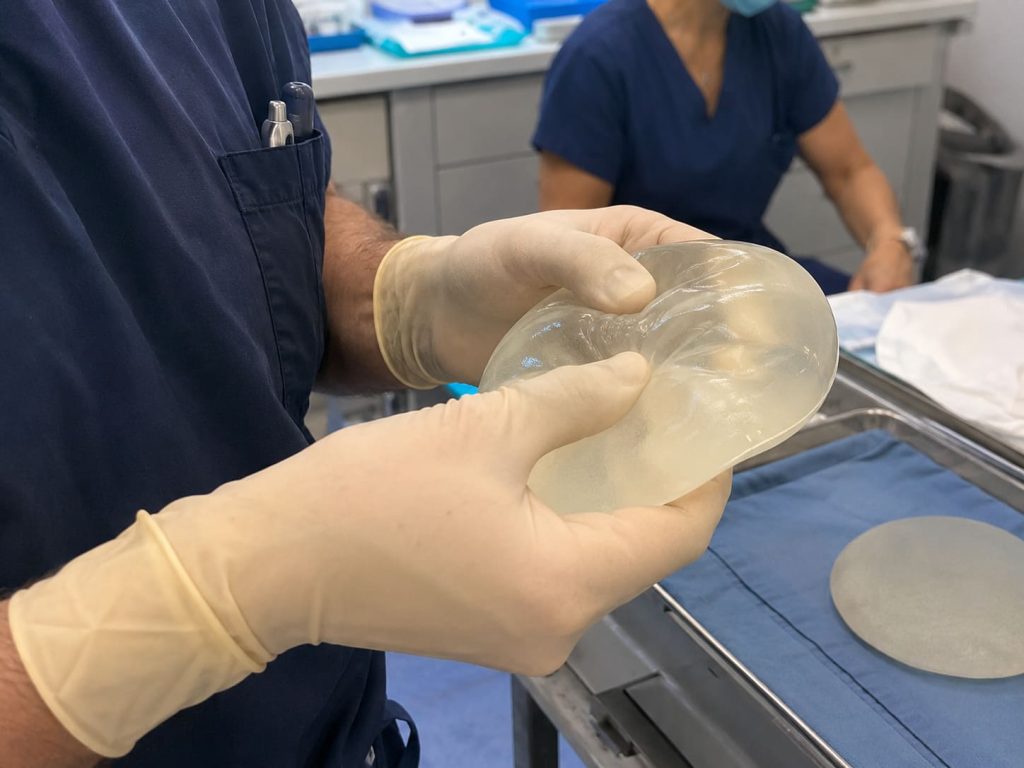
Silicone implants feel soft and natural.
The Physics of Cohesive Gel Mechanics
In the highly technical world of aesthetic breast reconstruction and body sculpting at high definition, the knowledge of the physical properties of new biomaterials plays a crucial role in the planning of your makeover. Breast augmentation is one of the most common cosmetic procedures, and the first thing to consider is whether the augmented breasts will feel natural and soft once the healing process is over.
Literally from a medical point of view, silicone breast implants available on the market today are extremely soft and feel almost the same as young, natural breast tissue. This is largely due to the utilization of cohesive gel technology. In the past, silicone implants were filled with liquid silicone. Nowadays, these implants consist of a cross-linked silicone gel, the one which is commonly called “gummy bear” gel. This material is designed to support shape retention, but at the same time it has a very high degree of flexibility that allows the implant to react in a quite soft manner to external pressure, as well as to change shape naturally through lying down, moving, or standing up.
Structural Elements Influencing Final Softness
Though the implant by itself is very flexible, the actual softness of your breasts post-surgery will be influenced by the following internal factors:
- Levels of Cohesivity (Gel Degrees): Top-tier implant manufacturers provide several gel stiffness levels. Low-cohesivity gels produce a super-soft and almost liquid texture akin to natural fat, whereas high-cohesivity gels result in a firmer upper-pole with a greater degree of projection.
- Covering Glandular Tissue: The extent of the native breast tissue serves as a natural padding over the implant. Patients with a certain amount of breast tissue will definitely feel the softness at the surface right away, as the fat layer naturally mixes with the implant.
- Options for Surgical Placement: The use of the pectoral muscle as a covering layer for the implant is really advantageous (submuscular or dual-plane placement). In this case, the muscle fiber can be pulled over the top edge of the implant so that the implant is completely concealed and the transition from the chest wall to the breast is naturally soft.
Post-Operative Tissue Maturation and Protecting the Capsule Matrix
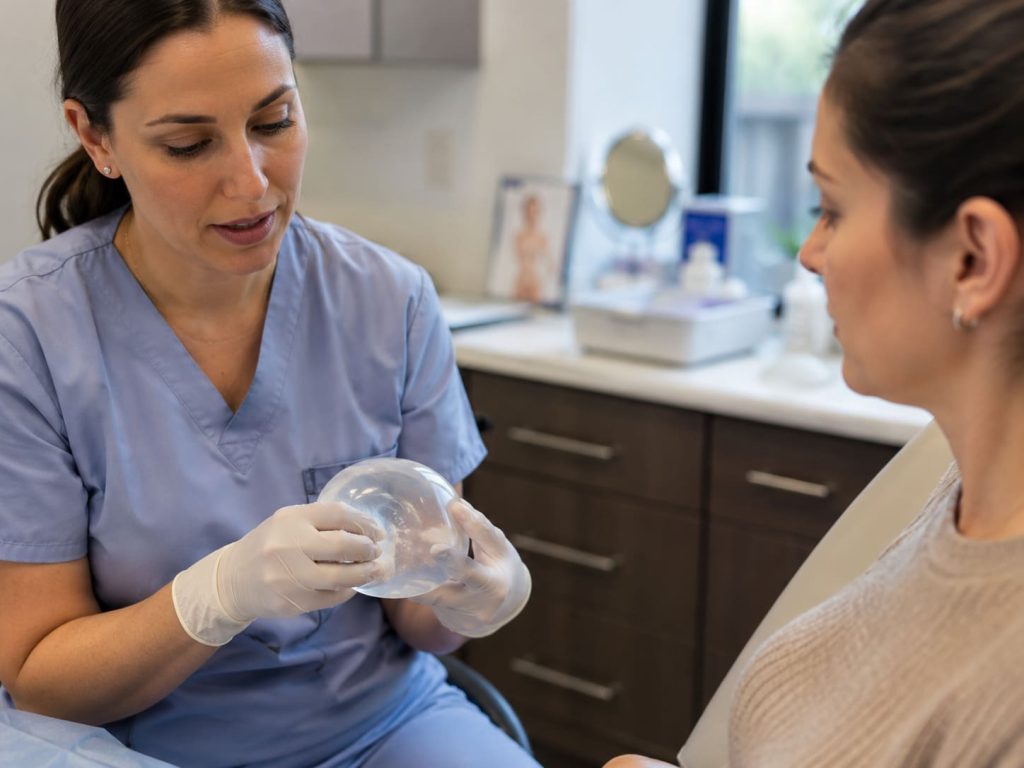
This is very important for individuals who live a highly disciplined lifestyle and strongly desire physical perfection in their body lines: they should follow behavioral rules strictly in the early recovery period. When a foreign object such as an implant is inserted into the body, the immune system will recognize it and start to form a thin internal membrane of protective scar tissue around the implant, which is termed the tissue capsule. If the patient allows fluid to accumulate uncontrolled or the friction is very high and excessively stresses the early capsule matrix, this tissue will thicken and contract, resulting in an undesirable hardening of the breast called capsular contracture.
The best way to give your enhanced bustline time to settle in structural harmony while the tissue capsule is maturing with a soft texture is by using your specialized and wire-free post-surgery support bra without breaks for the first 6 weeks. This medical wear acts as an outer frame that catches mechanical friction and prevents the implant from moving abnormally inside its pocket. Besides, staying completely away from nicotine and tobacco is the rule without exception. Nicotine is a very strong systemic vasoconstrictor – it will immediately shrink the microvessels that supply the breast skin and internal capsule, and this will deprive the tissues undergoing remodeling of the vital oxygenated blood needed for proper, soft cellular healing.
The Tactile Evolution: Early Firmness vs. Final Softness
It is vitally important to have a good grasp of the biology of tissue relaxation so that patients can clearly track their physical changes and feel comfortable as they see the early post-surgical swelling going down:
| Recovery Phase | Tactical Presentation | Underlying Biological Activity |
| Weeks 1–4 | Highly firm, tight, and set high on the chest | Acute inflammatory phase; peak internal tissue fluid retention and muscle tightness masking the true softness of the gel. |
| Weeks 5–12 | Softening begins; breasts start to settle | The “Drop and Fluff” milestone; pectoral muscles relax, swelling drains away, and the skin envelope expands to accommodate the volume. |
| Months 3–6 | Natural, fluid softness and bounce | The internal tissue capsule thins and stabilizes; the implant integrates smoothly with your native tissue movements. |
| Month 12+ | Definitive tissue stabilization | Full tissue maturation is complete; the breasts present their definitive, soft, and beautifully balanced final texture. |
Breast Implants in Turkey
To choose LIN Europe Clinic is to step into a premier world-class medical oasis where your breast aesthetics, high-definition body contouring, and surgical plans are carried out with utmost clinical skill and profound empathetic care. We understand that guidance through the exact physical recovery phases, device selections, and potential soft-tissue changes that lead to the result of a fantastic breast augmentation requires an exceptionally sophisticated, transparent, and highly supportive environment where evidence-based medicine is the primary focus. LIN Europe Clinic in Turkey is recognized internationally as a leading center in advanced breast reconstruction and plastic aftercare, offering a tranquil environment where your health journey is governed strictly by the highest global patient safety standards.
By entrusting your confidence deeply to our committed team of professionals at LIN Europe Clinic in Istanbul, you can be certain that your recovery and tissue parameters will be monitored with absolute precision. We offer detailed personalized pre-operative mapping, high-definition tissue analysis, and customized healing checklists that will take you step-by-step through each phase of your tissue maturation and lifestyle fixation. Our top-tier medical team safeguards your body contouring investment and systemic health, allowing you to enjoy the comfort of your dream silhouette fully. Discover the sophisticated, all-inclusive care of LIN Europe Clinic and let your perfectly balanced canvas be created safely and expertly right in the heart of Turkey.
FAQ:
The latest silicone breast implants are extremely soft and can hardly be distinguished from real breast tissues. In fact, the cohesive “gummy bear” gel is designed to closely resemble human flesh in terms of softness, weight and natural motions.
For the initial four to six weeks, your breasts will be very firm and tight. The hardness you experience is perfectly normal and results from surgical swelling, your body holding onto fluid, and tightness in the chest muscles rather than the implant.
The “drop and fluff” stage happens roughly between 6 and 12 weeks when your pectoral muscles relax and the swelling disappears. Consequently, the implant drops and the pocket is fully filled which makes the breast much softer.
In general, silicone gel implants are softer and have a more natural feeling than saline implants. Saline implant shells are simply filled with sterile saltwater so they can sometimes feel a little firmer or more uniform than cohesive silicone gel.
If a breast is hard permanently, it could be due to a case of capsular contracture, a condition where the body’s normal scar capsule shrinks and becomes very tight around the implant. At LIN Europe, we apply very sophisticated placement techniques that prevent this from happening.
Tebbetts, J. B. (2002). Dual plane breast augmentation: Optimizing tissue coverage, managing capsular contracture vectors, and long-term pocket stability. Plastic and Reconstructive Surgery, 109(3), 1017-1024.
Spear, S. L., et al. (2007). Breast implant life expectancy and cosmetic longevity: Analyzing structural shell failure, gel cohesivity, and softness parameters. Plastic and Reconstructive Surgery, 120(7), 89S-99S.
Rohrich, R. J., et al. (2014). Advanced postoperative care, pocket geometry engineering, and long-term architectural stability in secondary breast augmentation. Aesthetic Surgery Journal, 34(5), 587-595.