
Weight gain from lifestyle and metabolism changes.
The Biometrics of Post-Operative Edema
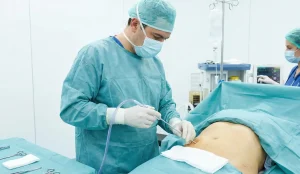
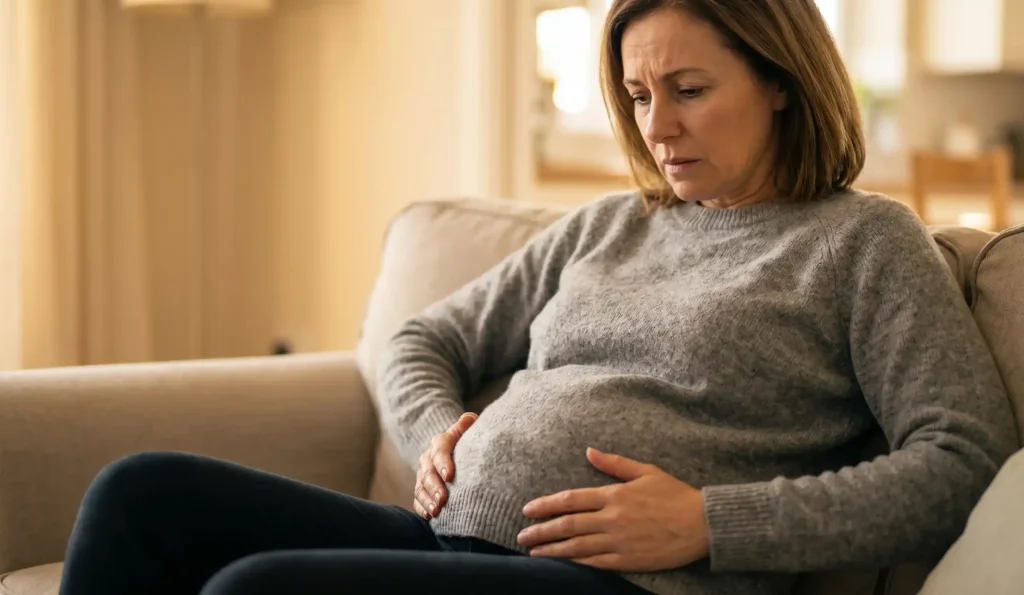
Among other body sculpting procedures, a tummy tuck (abdominoplasty) is the one where weight gain immediately after it is mostly due to a large accumulation of fluid rather than an increase. Biometrically speaking, surgeries are a kind of controlled trauma that initiates an inflammatory response, which is very powerful. The body sends immune cells and fluid to the affected area so as to help it heal, which is the reason why post-operative swelling (edema) occurs.
Here at Lin Health Europe Clinic, we let our guests know that it is entirely normal for the scales to go up by 2kg to 5kg during those first weeks. This fluid is quite dense and fills the volume left where fat was removed. Keeping up your overall health at this stage means being aware that these extra kilos are just a “temporary volume“. Swelling could be further increased by having high-salt food or not wearing compression garments regularly. When your lymphatic system is reprogramming itself to remove this extra fluid, it is only then that you can get a perfect body balance, which is something one can only achieve by giving it a lot of time and being patient.
Visceral Fat: The “Hidden” Weight Gain
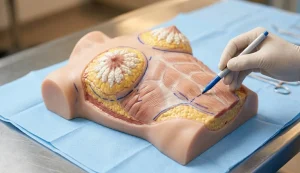
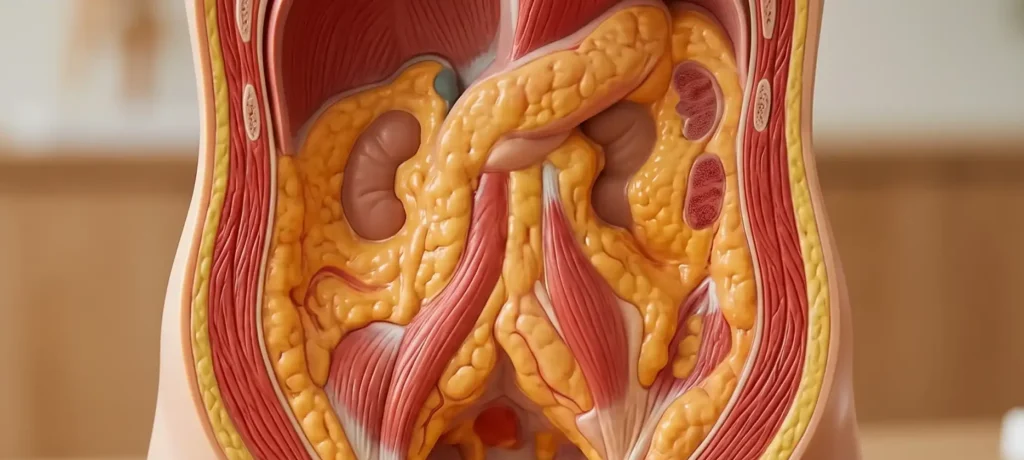
A line has to be drawn in clinical practice between fat that is removed with surgery and fat that is left behind after the procedure. Likewise, a tummy tuck targets the removal of subcutaneous fat—the layer of fat that is just under the skin. On the other hand, it is not capable of dealing with visceral fat, fat that lies deep inside the abdomen and forms a layer around the organs.
If you are wondering why your belly is still “hard” or sticking out when your skin is taut, it is most likely because of visceral fat. Biometrically speaking, if during your recovery period your calorie consumption surpasses energy expenditure, your body might store the newly gained fat as visceral fat. Doing so could bring about a contrast between having a flat skin surface and being heavy overall. Here in Istanbul, our clinical skills allow us to explain these two tissue types very clearly to our patients and facilitate them getting high-definition results which are not hidden by internal weight gain.
Systemic Vitality and the Metabolic Stress Response
As a result of surgery, the body experiences a great deal of metabolic stress, and as a consequence, the secretion of cortisol, the stress hormone number one in the human body, will be initiated. Biometrically, keeping cortisol levels high will result in water retention as well as a temporary decrease in metabolic rate since the body is in “survival mode,” prioritizing healing of the tissues. This physiological reaction is often the reason why it is so maddening to see a number on the weighing scale that keeps increasing while eating normally.
The professional care we give you in our Istanbul center is the implementation of recovery monitoring as a whole. We point out that your overall health is in a state of huge reconstruction. During this time, healing of the external wound as well as muscle repair requires the body to divert its “energy budget”. Therefore, a decrease in non-exercise activity thermogenesis may happen, meaning that unless working out, one is burning fewer calories during the day, simply because you are moving less while the rest of the biological stabilization is taking place.
The Activity Gap: Rest vs. Caloric Intake
In order to show surgical brilliance, one needs to take a break from physical activities so that the wound and muscle repair are not at risk, but this results in creating an “activity gap”. If you start to eat as many calories as before you are quite physically active, you will find yourself in a state of caloric surplus. Besides, since you are incapable of engaging in high-intensity exercises to make up for this, the surplus energy turns into weight.
During the peak inflammation stage, which is the first two weeks, calorie burning reaches its lowest. As of the third week to the sixth mobility increases and body metabolism starts to stabilize, but it is not until week eight plus that systemic vitality gets restored for high-intensity burning. At Lin Health Europe Clinic, we use professional care in creating a post-operative nutritional map. This allows you to have aligned calorie intake and activity level, the one with less caloric expenditure, so that you will still be able to maintain the structural harmony of your new silhouette.
Tummy Tuck in Turkey
When you decide on Lin Health Europe Clinic, you are stepping into a global haven where weight fluctuation is dealt with absolute clinical mastery. We realize that a scale going up after you’ve made an investment in your body can be very disheartening. Our Turkey facility is one of the front runners in medical innovation, providing the most advanced level of monitoring and lymphatic support to help you through a 12-month recovery lifecycle.
By coming to Lin Health Europe Clinic in Istanbul, you are entrusting yourself to a medical framework that is outstanding in both technical and biological aspects of abdominoplasty. We control your unfolding to a high-definition shape with professional rigor so that each fluctuation is recognized and handled. Have Lin Health Europe Clinic experience the finest care and see your results mirror absolute aesthetic and biological balance peak. The path to a well-defined, stable profile is managed with accuracy right in the center of Turkey.
FAQ:
Almost certainly, yes. Most of the “weight” is from post-operative swelling and the body’s inflammatory response to surgery. That isn’t dysfunction of the aesthetic outcome of the surgery.
Generally, the bulk of swollen tissue will slowly be absorbed from the 4th to 6th week, however, your body shape will reach perfection even up to 6 to 12 months as the last of the fluid is reabsorbed.
Your body simply cannot create new fat cells after your surgery, so existing cells will be the ones to enlarge especially in the areas of fat pads remaining, often the mid-back and thighs. Developing a healthy, balanced lifestyle is critical.
This phenomenon is often referred to as “swelling-late-in-the-day”. The fluid gets pulled down with every step you take due to gravity, causing it to accumulate. Clinically it’s mandatory to wear your compression garment to help control such a biological change.
Definitely! Sodium leads to the body holding onto more water. Here at our Istanbul retreat, you have to stay on a low-sodium food plan to get rid of swelling quickly.
Tebbetts, J. B. (2002). Systemic Vitality and Surgical Precision in Body Contouring. Saunders Elsevier.
Nahai, F. (2011). The Art of Aesthetic Surgery: Principles and Professional Rigor in Abdominoplasty. Quality Medical Publishing.
Janis, J. E., et al. (2005). Abdominal Anatomy and Biometrics: Implications for Post-Operative Edema. Plastic and Reconstructive Surgery.
Lockwood, T. E. (1995). High-Definition Body Lifting and Structural Harmony. Clinics in Plastic Surgery.
Matarasso, A. (1991). Abdominoplasty: Clinical Mastery and the Management of Post-Operative Weight. CRC Press.