Pregnancy may change breast shape, not implants.
Effect of Hormones on Breast Tissue and Implant
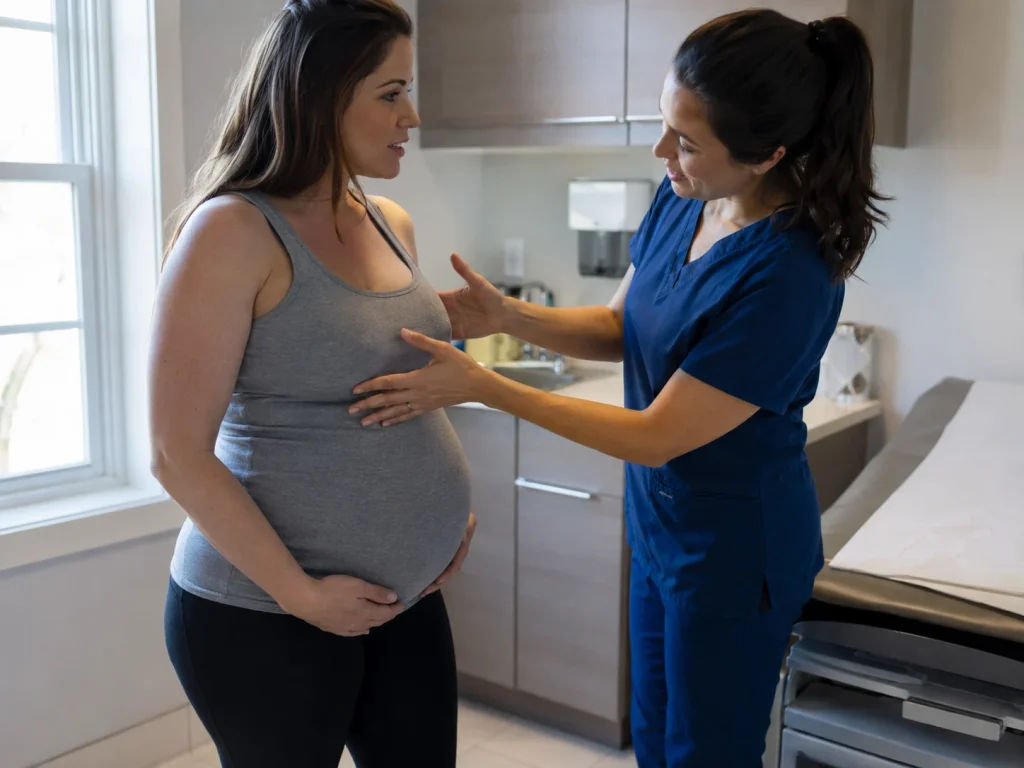
When you are a patient in the tertiary field of aesthetic and revision breast surgery, knowledge about how a prosthesis functions in the motherly body is crucial for planning a continuous body reshaping path. Pregnancy, mainly driven by estrogen, progesterone, and prolactin, not only triggers a massive growth of lobules but also initiates an elaborate plan of the body towards the breast for milk production, resulting in swelling, expansion, and weight increase of the natural breast tissue.
The silicone gel or saline implant inside the breast does not undergo any change due to pregnancy, as it is a medical-grade, chemically inert device that cannot respond to hormonal alterations. On the other hand, the unexpected interaction is with surrounding tissue planes. As your natural breast tissue gets bigger over or around the fixed implant, the skin and internal pocket get mechanically stretched. This, in turn, may influence the implant’s position on the chest wall, which usually results in a fuller look during pregnancy.
Loss of Tissue Volume and Skin Changes After Pregnancy
The usually long-lasting physical results of the pregnancy are most visible after the end of breastfeeding, when the hormone levels have returned to normal. The increased lobules will involute, i.e., the milk-producing cells will dwindle, and the extra tissue will disappear after delivery.
- The Stretched Skin Envelope: While the glandular volume shrinks rapidly, the skin envelope that was stretched out during pregnancy often loses its natural elasticity and fails to snap back completely.
- Tissue Ptosis (Sagging): Consequently, there will be a mismatch as a result of sagging and emptying of the glandular tissue over the fixed implant, which is commonly referred to as the “waterfall effect.“
- Pocket Alterations: Furthermore, the additional weight of the breast during pregnancy may even cause the fold of the breast at the bottom, the inframammary fold, to become stretched, resulting in the implant shifting slightly lower over time.
Structural Integrity and Balance of an Athletic Figure
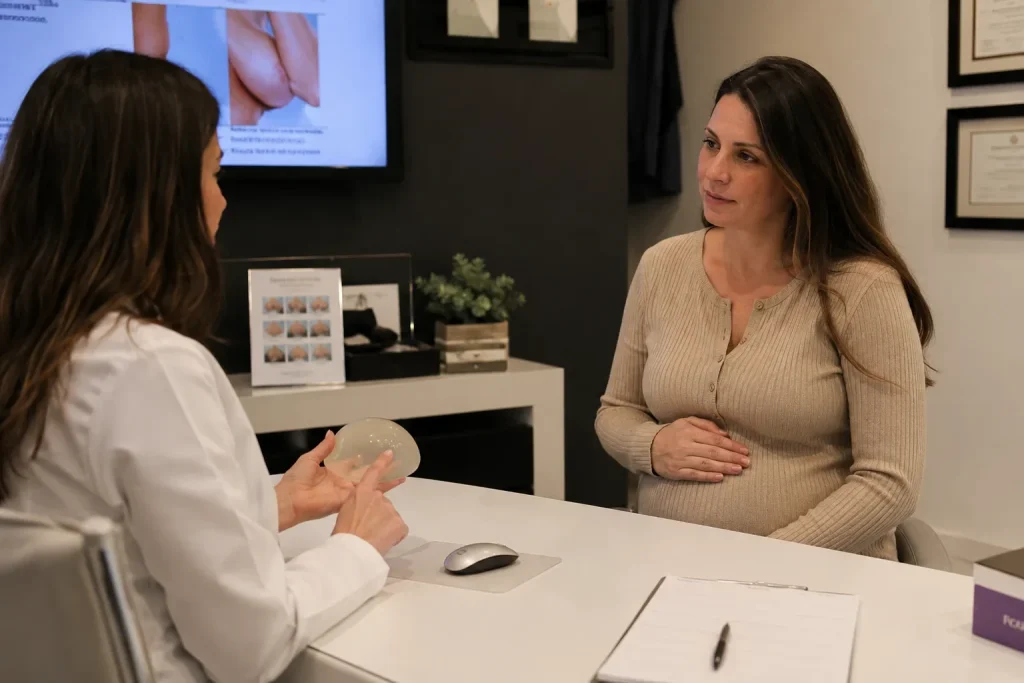
Strict adherence to behavioral and nutritional constraints during this phase of significant physical transition is of utmost importance for those individuals who live with an elite personal presentation and demand the perfection of their bodily contours. Restoring your changing upper torso is critical for people who concentrate on advanced lower body engineering, core muscle definition, and the maintenance of a perfectly balanced hourglass figure. Failure to provide structural support in pregnancy would lead to a major biological disservice: the combined weight of the growing glandular tissue and the implant results in the accelerated breakdown of the delicate internal suspensory Cooper’s ligaments, which gives rise to premature sagging.
To guard your body contouring investment and have your postpartum silhouette stabilize in an aesthetically pleasing way, wearing excellent quality, supportive, wire-free bras is a must as your tissue volume changes. Moreover, getting rid of nicotine and tobacco products completely should be one of your non-negotiables for both maternal and tissue safety. Nicotine is a strong systemic vasoconstrictor, which causes the constriction of microvessels and deprives the dermal layers of oxygenated blood, leading to permanent loss of skin elasticity and exacerbation of postpartum stretch marks. Having a proper nutrition plan with a clean and nutrient-dense diet allows your skin’s architecture to be maintained during this journey.
Postpartum Revision Surgery: How to Restore Symmetry After Pregnancy
Knowing the biology of tissue repair enables one to clearly plan the pathway from surgery to complete restoration of their structural definition. Your body likely won’t be exactly the same after your baby, and you will need to wait at least six months after stopping breastfeeding before you can safely consider any surgery. You could have a secondary correction procedure that could effectively restore the symmetry of your torso if the breasts were left with a deflated and uneven appearance after pregnancy.
The surgeon has the option to carry out a breast lift that will remove the loose skin and the surplus tissue and will reposition the natural breast tissue in a more youthful position, with the implant underneath. If the surgical pockets have become loosened after pregnancy, the team can perform a capsulorhaphy to tighten the internal tissue planes and can also change the implants to modern, form-stable cohesive gel ones to achieve a perfect high-definition silhouette.
Breast Implants in Turkey
LIN Europe Clinic offers you a world-class medical environment where your breast aesthetics, complex revision transformations, and surgical plans are always handled with clinical excellence and deep empathy. We know that it is quite a challenge to go through the physical and emotional changes of motherhood, and deciding on the right diagnostic steps and surgical treatment for these changes requires both great expertise and a warm, supportive environment that puts evidence-based medicine at the forefront. LIN Europe Clinic in Turkey is one of the best in the world for complex revision surgery and advanced body contouring, offering a lovely and safe environment where your health will be managed according to the best global standards in patient safety.
By entrusting your care to our team of highly experienced professionals at LIN Europe Clinic in Istanbul, your body shape changes will be monitored accurately. We offer detailed individualized consultation planning, state-of-the-art postpartum tissue examination, and customized safety checklists to lead you through the different stages of tissue maturation and lifestyle adjustment. Our medical experts will look after your body contouring goals and overall health as you get ready to unveil your dream figure with complete confidence. Come and experience the excellent care at LIN Europe Clinic, resulting in a beautifully balanced physique safely and skillfully created in the heart of Turkey.
FAQ:
Your implants will stay the same, while your real breast tissue gets larger and your skin stretches as a result of the pregnancy hormones. Because of this, the surgical pockets will also be under more tension.
In general, most women with implants can breastfeed without a problem, since the current surgical methods of implant placement are aimed at not interfering with the milk ducts and nerve pathways.
It’s possible for pregnancy to cause the breast skin and internal pockets to stretch, so that after you stop producing milk, your natural breast tissue may sag or look a bit deflated.
You should wait at least 6 months after you have completely stopped breastfeeding in order to let your hormones stabilize and your natural breast tissue shrink back to its permanent baseline.
Indeed, a mastopexy performed after pregnancy can go a long way towards effectively removing the loose, stretched skin and repositioning your natural tissue firmly and youthfully over your implants.
Tebbetts, J. B. (2006). Pocket dissection limits, tissue envelope changes during pregnancy, and managing implant displacement. Clinics in Plastic Surgery, 33(2), 181-195.
Spear, S. L., et al. (2007). Corrective mastopexy and implant revision after maternal tissue changes: Rebuilding the tissue envelope. Plastic and Reconstructive Surgery, 120(7), 2045-2053.
Rohrich, R. J., et al. (2014). Long-term architectural stability, advanced pocket support, and soft-tissue optimization in replacement breast surgery. Plastic and Reconstructive Surgery, 134(3), 356-365.