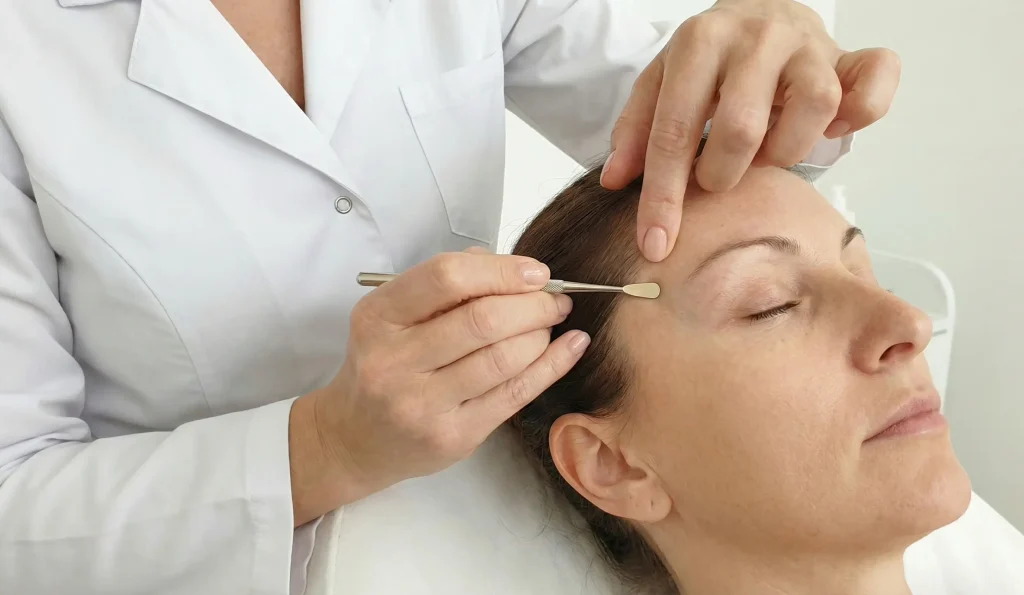
It lifts the outer brows and smooths the temples.
During facial plastic surgery, the upper third of the face reveals the major signs of youthfulness and emotional expressiveness. A temple lift is a surgical procedure which is also known as a lateral temporal brow lift. It aims at helping a person in case of a fall of the lateral side of the eyebrow, together with laxity of the periorbital tissues. It is a very easy and simple facial routine. Unlike a full coronal brow lift that elevates the entire forehead, a temple lift focuses specifically on the temporal region, providing a diagonal elevation that opens the eyes and refines the lateral orbital rim.
We at Lin Health Europe Clinic consider a temple lift to be one of the main articles of an anatomical rejuvenation. With aging, there is a decrease in volume of the subcutaneous adipose tissue in the temples and the ligaments supporting the brow become weaker, leading to lateral hooding and a “tired” look. For individuals planning a trip to Turkey to undergo a facelift procedure, it comes down to knowing the difference between a skin-only facelift and a deep-plane temporal suspension to get results that not only look good but are also long-lasting.
Anatomical Objectives and the Deep Temporal Fascia
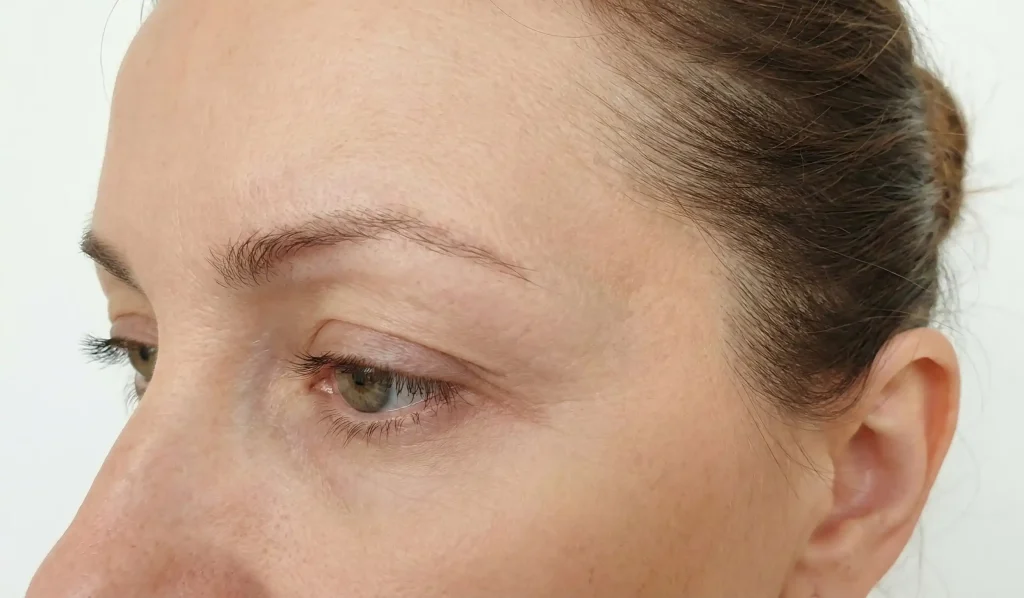
The main purpose of a temple lift is to move the lateral one-third of the eyebrow back to a higher place. It is a fact that different parts of the brow have different anatomical supports such as the frontalis muscle that covers the inner and middle portions, while the outer one lacks direct muscular elevation and is more vulnerable to the effects of gravity. It is through the release of this through the deep temporal fascia that the surgeon can achieve the willful release of ligaments and thus shift the location of the brow to a position that is young, up and to the side.
The procedure is done through a temporally located scalp region that is hair- covered and the incision is scarcely noticeable. Afterwards, a precise dissections down to the layer of the temporal muscle’s protective envelope are performed by a surgeon through this approach. At Lin Health Europe Clinic, our surgeons always emphasize the importance of the superficial temporal fascia (STF) layer release. Afterward, this layer is attached to the underlying, immobile fascia thus, we make a stable internal suspension that produces the “lifted” look characteristic of modern surgery without creating the tension that is often associated with older surgical methods.
Correction of Periorbital Hooding and Lateral Canthus
The correction of periorbital hooding is the most important functional advantage of a temple lift.
When the lateral brow sagging is the main culprit in pushing down the skin of the upper eyelid, a fold is formed that can be so heavy that not only does it interfere with the usage of cosmetics but in a severe case, it can even limit the visual field. The temple lift aids in “getting rid” of this excessive skin by fixing the root cause, that is, the brow position, rather than just removing the excess eyelid skin feature of the standard blepharoplasty.
Besides the above, the surgical intervention has the capacity to significantly change the lateral canthus too. By pulling in a diagonal vector, the method may help neutralize the depressing or drooping of the outer eye corner, thereby counteracting the “sad” or aging eye look. At our facility in Turkey, we often perform this in conjunction with other periorbital procedures to create a more comprehensive rejuvenation. This lateral tension also smoothes the “crow’s feet” area, providing a secondary benefit to the fine lines radiating from the orbital rim.
The Endoscopic Approach and Tissue Fixation
The endoscopic technology has made modern temple lift possible, in fact, it has transformed the facial anatomy on a wider basis. An endoscopic temple lift is based on a small camera and devices that allow the dissection to be performed with only minor incisions as opposed to traditional methods. In this way, the sentinel vein and the temporal facial nerve branch are more closely observed resulting in a higher percentage of patient safety.
Tissue fixation is the most critical step in ensuring the longevity of the lift. In securing the permanence of the results of the patients’ temple lifts, the Lin Health Europe Clinic surgeons employ several internal anchoring methods ranging from heavy-duty sutures, cortical tunnels, to the use of special bio-absorbable fixation devices like Endotines. These fixation devices serve as a bridge between the elevated tissue and the temporal bone during the time the body is getting the message of new positioning and setting up the bond. When the fixation device is dissolved, the subcutaneous adipose tissue and fascia will have permanently reattached themselves in the temporal bone’s new, higher location.
Synergy with Midface and Forehead Procedures
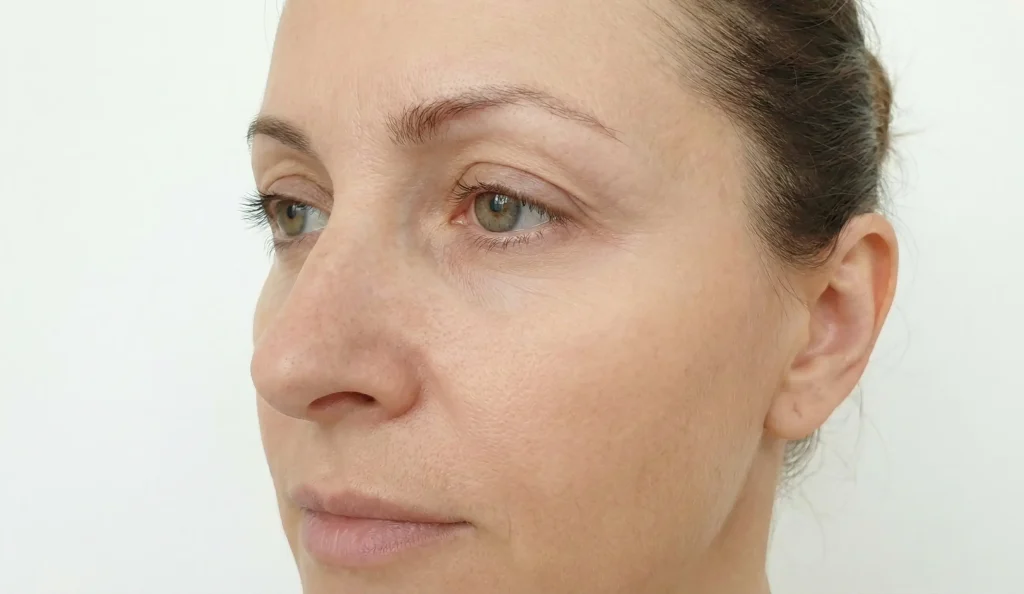
There are very rare occasions when a temple lift is done by itself. To get the most optimal results, the surgeon has to see if they can link the temples with the midface in the right way. It is quite common that the temporal descent in patients occurs together with the sagging of the malar fat pad area (cheek fat). Temporarily combining a temple lift with a midface lift, it will be possible to create a continuous rejuvenating vector that will extend all the way from the lateral brow to the nasolabial fold, thus the transition between the upper and middle thirds of the face becomes smooth and natural.
Also, a temple lift is a very suitable option for a patient who does not need to have a full forehead lift. If a patient has a high hairline, a traditional forehead lift would further increase the height of the forehead, which is often aesthetically undesirable. Because a temple lift focuses on the sides of the head, it does not alter the central hairline, making it a “hairline-sparing” procedure. At Lin Health Europe Clinic, we conduct detailed facial mapping to ensure that the chosen procedure maintains the patient’s unique facial proportions while effectively reversing the signs of aging.
Temple Lift in Turkey
The philosophy of the Lin Health Europe Clinic is via surgical work to restore the patient’s face to the natural look of the past, giving them full confidence and a great feeling of their new look. We totally understand that the combination of a surgeon’s technical expertise with his/her understanding of the face anatomy is the prerequisite for any successful surgery in the periorbital region. Our surgeons in Turkey have a deep understanding of the small nuances of the temporal suspension, which means that every time they comply with the patient’s unique tissue laxity degree. Moreover, they apply their skills to the highest possible level and finish with a very natural and effective result.
Apart from that, we always work from the best facilities, thereby meeting the strictest international norms to sterilize and ensure the physical safety of our patients. Patients from abroad who are coming to Turkey for treatment at Lin Health Europe Clinic can benefit from a full medical journey, including highly sophisticated preoperative 3D imaging and devoted postoperative care. Our goal is a temple lift that does not show signs of surgery, but rather re-establishes the patient’s natural look of being rested and refreshed, thus helping the patient regain confidence through safe and effective facial plastic surgery.
Frequently Asked Questions About Temple Lift
A temple lift is a cosmetic operation to raise the outer part of the eyebrow and the temporal area. It aids in brightening the eyes and getting rid of the excess skin on the upper eyelid due to sagging during your treatment in Turkey.
The operation relocates the peripheral brow to the original level of a young person and also the skin at the outer corner of the eyes gets smooth. The procedure at Lin Health Europe Clinic with smiles visibly refresh a face worn out picking up the wrong or dropping features.
The changes made at surgery to the deep fascia and ligaments are expected to last a long time and be very strong. Even though the natural process of aging will still go on, the structural advantages of the lift will be apparent for a big number of years.
It is generally believed that this process will be safe providing that the operation is done by a surgeon who is specialized in facial surgeries and is also knowledgeable about the deep temporal anatomy. The use of endoscopic methods in Turkey is a great step towards safety as it gives a better view of the nerves, thus reduces the risks.
A temple lift aims primarily at the eyebrow height and the lateral periorbital skin’s position. In contrast, a cat-eye treatment is mainly concerned with the transformation of the eye’s outer corner to make it more slanted and attractive in an exotic way.
Knize, M. P. (1996). An anatomic basis for low-incision temporal brow lift. Plastic and Reconstructive Surgery.
Ramirez, O. M. (1995). The anchor subperiosteal forehead lift. Plastic and Reconstructive Surgery.
Stuzin, J. M., et al. (1989). Anatomy of the frontal branch of the facial nerve: the significance of the temporal fascia. Plastic and Reconstructive Surgery.
Connell, B. F., & Marten, T. J. (1991). The forehead lift: managing the adnexa. Clinics in Plastic Surgery.