No, implants do not raise prolactin levels.
Prolactin Measurements and the Neuroendocrine System
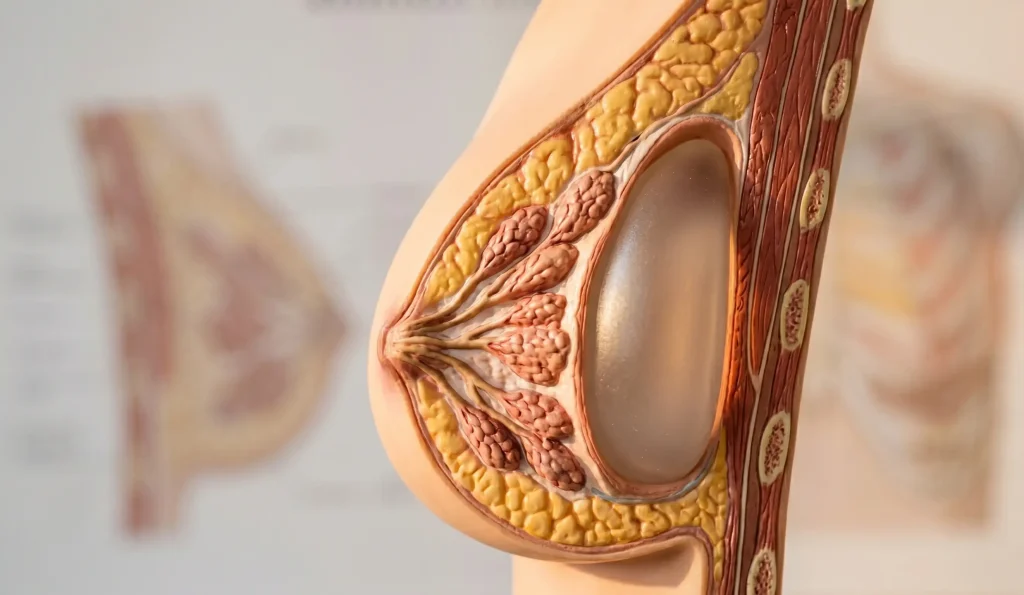
Within the specific field of breast reconstruction and enlargement, it is very important to know how the hormones in the patient’s body can respond to the operation. One of the main questions that doctors are asked is whether a woman who has implants in her breasts gets higher levels of prolactin, which is the main hormone responsible for milk production and the growth of breast tissue. In strict biometrical terms, the implant—whether made of cohesive silicone gel or saline—is just a biologically inactive medical device. It does not contain, produce, or chemically cause the creation of hormones. Still, the surgical act may affect your overall energy to some extent temporarily.
At Lin Health Europe Clinic, we point out that high prolactin levels after breast enlargement by implants are not so much the result of the chemical interaction between the body and the implants as it is the body’s temporary neuroendocrine response. The chest wall and nipple-areola complex have a very rich nerve supply coming from the thoracic intercostal nerves. These nerves, when touched, extended, or otherwise activated inadvertently in the course of surgery, can produce an extreme biometric message that is sent to the pituitary gland located in the brain. The brain gives the surgical stimulation the value of a biological requirement, for instance, the natural stimulation through breastfeeding, and thus releases prolactin.
Surgical Brilliance: Incision Placement and Interaction with the Nerves

The possibility of a neuroendocrine reaction depends very much on the surgery plan that is picked. From a medical view, which is the location of the cut in the breast tissue determines the degree of re-direction of the nerves that are sensitive and responsible for the release of prolactin. Incisions through the glandular tissue, like periareolar ones (around the border of the areola) are statistically more likely to lead to the stimulation of these neural pathways. This direct interference can break the structural harmony of the localized nerve network, causing a significant but transient hormonal surge.
The preservation of structural harmony with minimal damage to the gland is what truly separates the best surgeons from the rest. At Lin Health Europe Clinic, one of the most common approaches we make use of is through an inframammary fold (IMF) incision—a small incision made in the natural crease under the breast. This method enables the entire clinical excellence team to avoid the major glandular tissue and the nipple-areola complex totally and to make the pocket in a dual-plane or submuscular position. By following this methodological thoroughness, we considerably lower the mechanical exposure of the sensory nerves, and thus, the likelihood of prolactin release is minimized.
Systemic Energy and the Restoration of Hormonal Equilibrium
Should a prolactin increase after breast enlargement be noted, in most cases, the expression of such elevated hormone levels is through galactorrhea—the milk-like fluid discharge from the nipples unexpectedly. Although this may be an unforeseen event along the healing period, it is very helpful to view it as a totally harmless and only temporary sign of the body’s systemic energy effectively dealing with the surgical treatment. The sensory nerves are in a heightened state of reactivity due to the inflammatory phase of the recovery and their adaptation to the new internal biometrics resulting from the implant’s presence.
In order to respond to this brief hormonal change, professional care and certain lifestyle adjustments are necessary to ensure the uninterrupted restoration of the biological balance. The patients are highly discouraged from any additional stimulation of the nipple-areola complex during this time. Overzealous rubbing, tight dressing that causes friction, or continuously inspecting the area may lead to a feedback loop that sustains prolactin release. By leaving the area untouched and enabling the localized swelling to subside naturally, the nerve hyper-excitability is decreased.
Capsule Formation and the Maintenance of Biological Harmony
It is important to differentiate between the early wound healing phase and the long-term implant presence. In biometrics, once the surgery wounds have closed and the body has created a stable, fibrous capsule around the implant, the mechanical stimulation of the chest wall is no more. The internal breast structure achieves permanent structural harmony, and the implant settles down in its final, aesthetically pleasing position.
Once the capsular contracture process is done, the neuroendocrine stimuli are no longer active. You should remember that neither silicone nor saline implants has the biological potential to cause high prolactin levels on a long-term basis. If a patient is found to have such levels years after surgery, such an event is considered unrelated to implant-related medical technology. Strong clinical skills are required to perform a systematic differential diagnosis in order to identify other etiological factors like thyroid diseases, side effects from drugs, or benign pituitary tumors.
Breast Implants in Turkey
To decide on Lin Health Europe Clinic means to step into an international oasis where the complicated merging of art with the human body’s internal endocrine system is performed with top-notch clinical proficiency. We understand very well that breast augmentation is not just a cosmetic change, but a serious biometric transformation that involves a deep comprehension of the body’s systemic responses. Our luxurious premises in Turkey are a beacon for surgical brilliance with a homely atmosphere where your physical change and hormone health are perfectly in sync.
By sourcing Lin Health Europe Clinic, you commit to a medical ecosystem that not only fully understands the anatomical side of things and the aesthetics but also puts a strong focus on the safety of patients. With the highest professional standards, we handle your full process, and your results will be functional, symmetrical, and in ideal structural harmony. From the preliminaries to the final tissue maturation after surgery, what we offer you is the advanced, natural care from Lin Health Europe Clinic, which will lead you to achieve a silhouette that represents the highest level of clinical artistry. Your metamorphosis to a more elegant and self-assured appearance is guided with the utmost accuracy in the heart of Turkey.
FAQ:
No, breast implants that are being used these days are safe devices that do not react with the body at all. You can rest assured that they do not have any hormones nor do they emit any hormones into your system.
Interrupting the nerves in the chest during surgery temporarily causes the brain to be ‘tricked’ to release prolactin. This neuroendocrine reflex usually goes away by itself after the acute healing phase is over.
It is very important that you stay away from touching, massaging, or stimulating your nipples any way. Also, a good, well-fitting surgical bra will give the necessary support needed for the nerves to calm down naturally.
No, a temporary biometric change like this cannot be a permanent systemic condition. As the swelling goes down, your original biological balance will be restored.
Indeed, incisions made under the breast fold cause minimum direct nerve irritation. This particular method of surgery dramatically lowers the likelihood of a temporary prolactin release.
Tebbetts, J. B. (2002). Systemic Vitality and Surgical Precision in Mammary Procedures. Saunders Elsevier.
Adams, W. P. (2011). Breast Augmentation: Clinical Mastery and Biometric Stability. Saunders Elsevier.
Janis, J. E., et al. (2005). Thoracic Anatomy and Biometrics: Neuroendocrine Responses in Surgery. Plastic and Reconstructive Surgery.
Nahai, F. (2011). The Art of Aesthetic Surgery: Principles and Professional Rigor in Patient Care. Quality Medical Publishing.
Stuzin, J. M. (2008). Biological Balance and Medical Innovation in Tissue Repositioning. Plastic and Reconstructive Surgery.