Avoid until fully healed, about six weeks.
Understanding Dermal Adhesion Through Biometrics
In the art of reshaping the nose, one of the most successful outcomes is the so-called “shrink-wrap” effect—which refers to the skin very naturally gripping the new internal cartilage and bone framework. Skin and the other soft tissues of the face are physically lifted during a rhinoplasty, allowing surgical changes to the shape to be made. Then, the skin starts a phase of “dermal re-adhesion,” which is very fragile at first: skin has to form a strong biological bond with the framework underneath so that the finely sculpted contours of the nose become clearly visible.
Lin Health Europe Clinic handles this stage of adhesion with intense professional diligence. When you use pore strips, you essentially make the skin surface undergo a “mechanical traction.” The adhesive strip, if used too soon, can even physically lift the skin off the healing cartilage and bones. This breaking of the biological bond may cause the swelling to go up, scar tissue (fibrosis) to form between the layers, or even a loss of the pristine definition achieved through surgical excellence. The clinician is expected to ensure protection of this structural synchronization, especially within the first few months of the recovery phase.
Surgical Excellence and the Cartilage Matrix
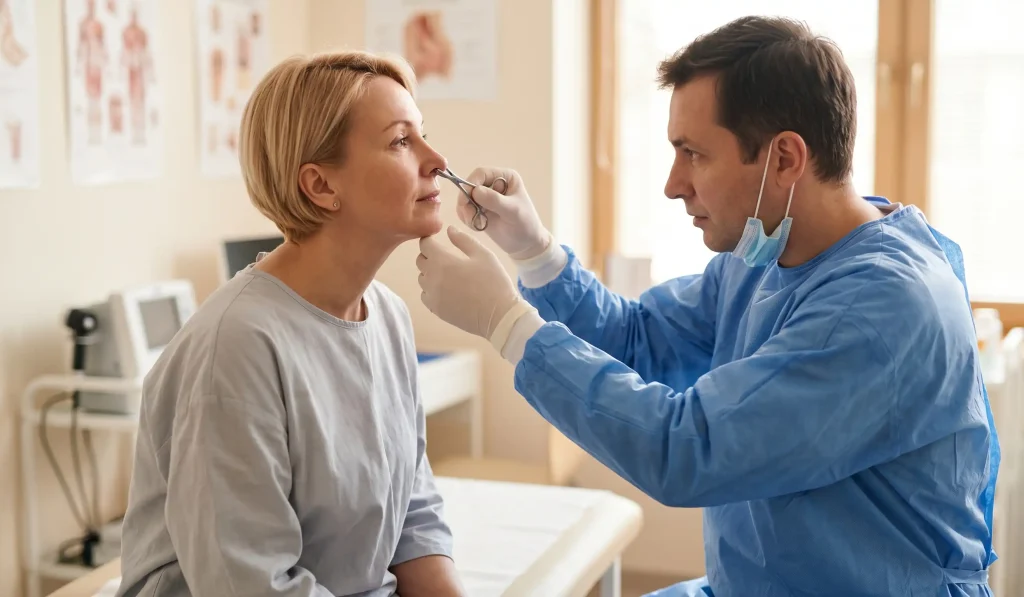
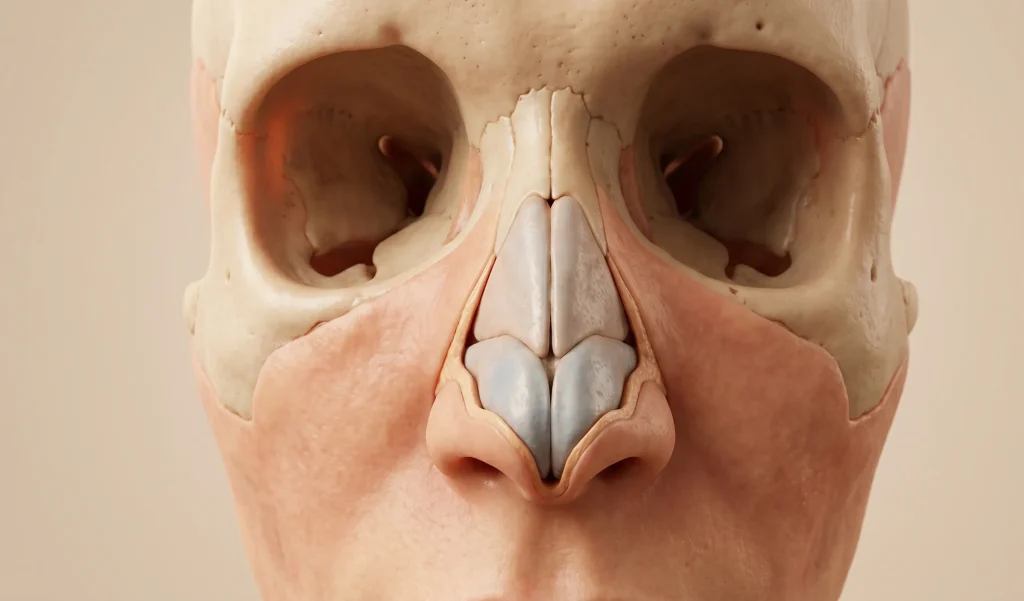
The foundation of a beautifully sculpted nose usually depends on the cartilage grafts, which are only pieces of tissue and very delicate suturing techniques. In terms of biometrics, these elements are undergoing changes for the first 6 to 12 months post-surgery. Pore strips removal involves “pulling” to clean the pores. This force, though seeming insignificant, can cause the nasal tip and bridge to be overstressed unwarrantedly. Sometimes, the mechanical pull may be so strong that it will cause a minor movement of the delicate grafts before they get fully “cemented” in the biological matrix.
Structural harmony realization demands that the nose is not treated just as a surface to clean but rather as a complex biomechanical system undergoing reconstruction. Lin Health Europe Clinic strongly advocates that the nasal tip is the most vulnerable part and the one that takes the longest to reach its peak of absolute stability. Employing adhesive strips while the tissue has not been fully restored in terms of tensile strength can result in a loss of internal symmetry and external smoothness. That is why we exercise clinical mastery by recommending a complete “hands-off” approach towards aggressive mechanical skin treatments for the very long term.
Systemic Vitality and the Sebaceous Rebound
Patients often experience increased oiliness and blocked pores (sebaceous rebound) after surgery, which is quite normal. This happens because the skin was covered with a splint and bandages that interfered with its natural systemic health and exfoliation cycle. Although the temptation to clear pores with a pore strip is understandable, this stage should be handled with scientific innovation rather than extreme intervention.
The skin post-surgery is commonly thickened and hypersensitive to stimuli due to edema. In terms of systemic vitality, we suggest going for gentle, non-mechanical alternatives while the tissue is still in the process of maturation. Perfect skin care entails using mild salicylic acid cleansers or professionally oriented chemical exfoliants that break down the debris without the need for adhesive pulling. This way, you can keep a clean skin while not interfering with the biological equilibrium of the healing nasal tissue. By staying away from the “trauma” a pore strip causes skin inflammation which results in prolonging the “swollen” phase of recovery is avoided the nature.
The Recovery Timeline: Reaching the Absolute Pinnacle
The return to aggressive skin treatment is not to be done without an organism’s biological roadmap being followed. Although every patient’s biometrics are different, the overall clinical agreement for the use of pore strips is as follows:
- 0–3 Months: Absolutely not allowed. The risk of damaging dermal adhesion and grafts stability is very high.
- 3–6 Months: Extremely careful. Only mild chemical treatments are to be used for maintaining structural harmony.
- 6–12 Months: Slowly getting used to it again. Pore strips may only be employed if your surgeon, being an expert in clinical mastery, has confirmed that the skin has completely adhered and that the internal network is stable.
Usually by the end of one year, the nose has reached its absolute pinnacle of stability. At that point, the systemic health of the skin has rebounded to normal, and the risk of mechanical displacement is minimized. Still, we always exercise professional care in recommending that the initial use of a strip be done very gently while watching the tissue for any “rebound” swelling or redness.
Rhinoplasty in Turkey
Deciding on Lin Health Europe Clinic is like signing up for a global sanctuary experience where your change is highly defined and managed from the operating theater to your everyday beauty regime. We realize that our clients’ maintaining a clear and chiseled profile is one of their top priorities.
Lin Health Europe Clinic stands as a leader in surgical brilliance, making sure your procedure is backed not only by technical expertise but also long-term aesthetic guidance. By entrusting our clinic in Istanbul, you are entrusting a medical system that is the best at the crossroads of medical innovation and patient education. We perform the transition with professional rigor, delivering the protective structural harmony roadmap. Give yourself the possibility to experience the expert care of Lin Health Europe Clinic and be delighted by the results that represent the absolute pinnacle of aesthetic and biological balance. Your path to a refined, stable, and vibrant ensemble is expertly managed right in the very heart of Turkey.
FAQ:
Because pore strips exert a strong mechanical force which might even separate the healing skin from the new nasal skeleton. In addition, the structural balance can be spoiled and this might even lead to internal scarring or the loss of high definition details.
After at least 6 months, most surgeons in our Istanbul sanctuary would allow the use of pore strips. For ultimate safety and to really preserve the wonderful surgical result of the tip, 12 months is actually the best clinical requirement in most cases.
We recommend a few acidic brands of exfoliants such as BHA and also medical-grade facials performed by the professionals. These deeply clear the pores and at the same time, no mechanical force is applied.
In the first few months, it could well happen as the pull and pressure might lead to the collapse of the cartilage pieces and/or cause swelling which will make the nose appear differently. Protecting the structural balance of the bridge is very important.
Yes, the “sebaceous rebound” is a sudden bodily change and it will only lasts a short time. When the skin is biologically balanced once again and the nasal tissues go back to the point of being in good systemic health, the level of the pores’ work will return to normal as well.
Tebbetts, J. B. (2002). Systemic Vitality and Surgical Precision in Facial Procedures. Saunders Elsevier.
Gunter, J. P., et al. (2002). Dallas Rhinoplasty: Nasal Surgery by the Masters and Biometric Recovery. Quality Medical Publishing.
Janis, J. E., et al. (2005). Nasal Anatomy and Biometrics: Implications for Post-Operative Skin Care. Plastic and Reconstructive Surgery.
Nahai, F. (2011). The Art of Aesthetic Surgery: Principles and Professional Rigor in Rhinoplasty. Quality Medical Publishing.
Tardy, M. E. (1997). Rhinoplasty: The Art and the Science: Clinical Mastery and Structural Harmony. Saunders.