Avoid until healing is complete.
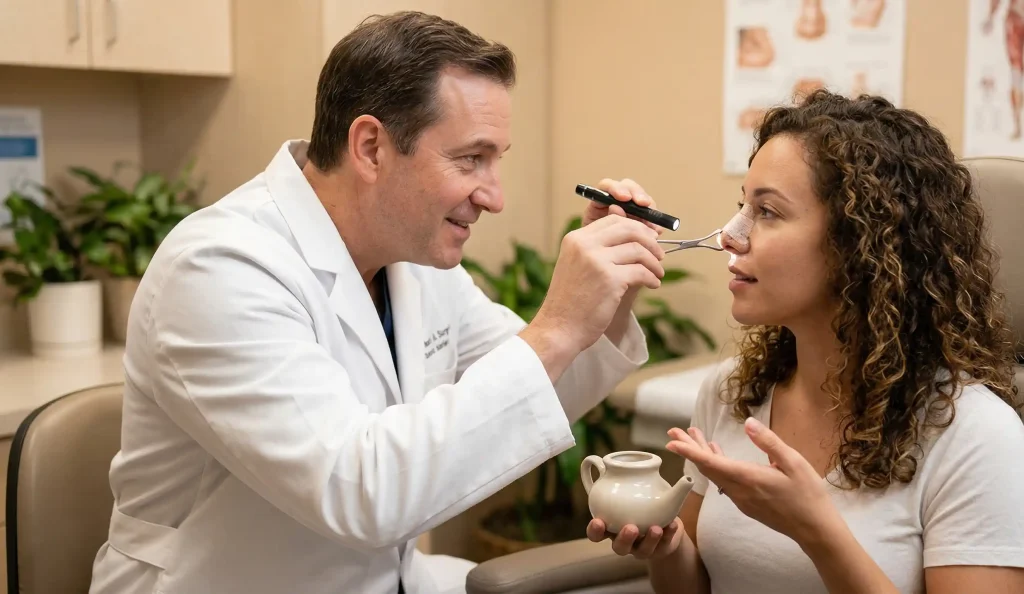
Endonasal physiology and structural rhinoplasty are highly specialized fields with the focus on getting a clear airway while at the same time protecting the healing tissues. After the operation, the inside of the nose is very likely to be blocked by swelling, dried blood, and surgical splints. Even though irrigation is done for hygiene, using a Neti Pot that depends on the steady flow of water is generally forbidden at the beginning of the recovery phase. Most surgery protocols require that, after a transition period where very mild saline mists are used, the patients can perform a full Neti Pot after 2 to 4 weeks. This period is necessary so that the internal stitches and cartilage grafts can at least start the light phase of neocollagenesis which leads to the development of the tissues that will make the nose strong enough to cope with the Neti Pot mechanical pressure in Turkey.
Examining Different Nasal Irrigation Options
To treat your respiratory system just as well as a professional would, you must be able to tell the difference between the types of irrigation methods you can still use after your rhinoplasty in Istanbul:
- Saline Mist Sprays: They come in the form of a light aerosol which hardly exerts any force on the nasal tissues. It is the gold standard for the first 14 days as it only keeps the mucosa hydrated and helps in loosening the surgical crusts without putting any strain on the nasal repairs.
- Regular Neti Pots: They depend on gravity and a large amount of water to rinse thoroughly all the sinuses. Although this method is very efficient for deep cleaning, the moderate pressure of the water flow is more appropriate for a nose that has already gone through the early stages of neocollagenesis.
- High-Pressure Squeeze Bottles: You should not use them at all during the first 6 weeks because the manually generated pressure is quite unpredictable and therefore can lead to trauma of the internal structures of the healing septum in Turkey.

The Physical Risk of Intranasal Pressure
The main reason not to use a Neti Pot too early is that it can put a lot of pressure on the not-yet-healed septum and internal valves. It is quite possible that even the usually low pressure of a gravity-driven Neti Pot, if used on internal tissues that are still in the so-called ‘surgical shock’ state. If the fluid enters the nasal cavity before the internal cuts have been tightly closed, it can get between the skin and the reshaped cartilage.
Localized pressure like this is capable of causing further swelling or, to a small extent, displacement of the fine grafts. At Lin Health Europe Clinic, our main concern is to keep the recovery environment ‘pressure-free’ during the first week in Istanbul. This is to give the phase of neocollagenesis a chance to firmly hold the new nasal structure without mechanical interference. By staying away from strong water flow, we keep the structural integrity of your outcomes in Turkey.
Sterility and the Risk of “Tap Water” Infection
One can only be as safe as the water one puts in a Neti Pot. It is quite risky from a clinical perspective to use unfiltered tap water after a rhinoplasty. The nasal mucosa is very well supplied with blood, and after the operation, its natural defenses are down for a while. Microbes present in tap water can lead to the development of serious infections in the sinuses or at the locations of the internal cuts. For our patients coming from abroad to Turkey, using distilled, sterile, or previously boiled water is an absolutely must for any form of irrigation.
Lin Health Europe Clinic is an expert in creating a ‘Bio-Clean Recovery Environment‘ for our patients in Istanbul. Medical-grade saline solutions are what we offer for your hygiene practice to be both sterile and safe. We take our education role very seriously and so we make you fully aware of the fact that at this stage, your nose is a surgical sterile field. By holding this high level of care in Turkey, we shield the phase of neocollagenesis from any microbial pathogens.
The Transition from Mist to Flow
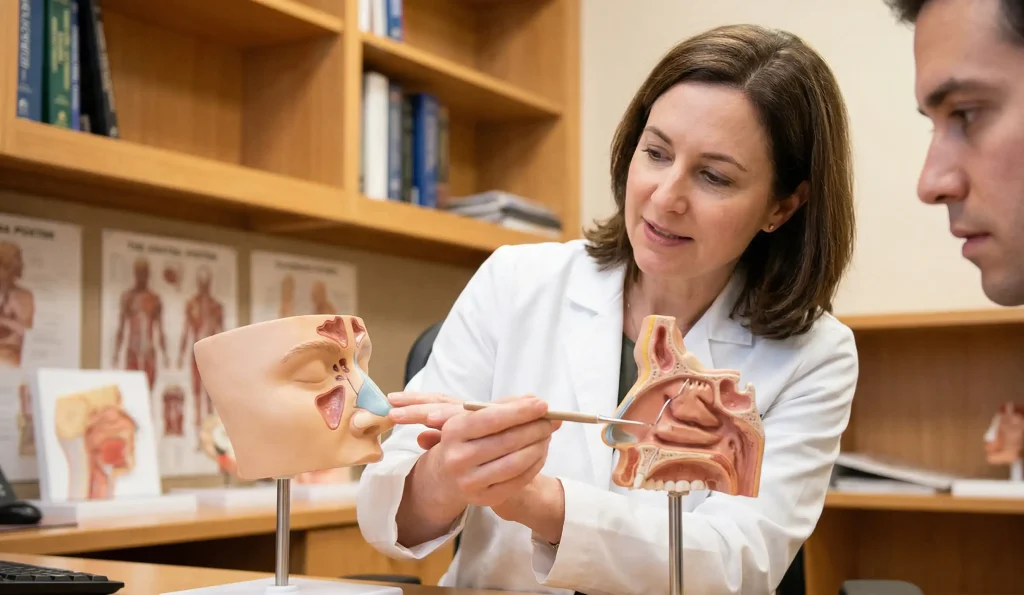
Only very basic irrigation is done during the first post-nose job week. It mainly serves to exchange the humidity level of the mucosa and to keep crust formation away from the nasal entrances. The most suitable method for this is using a saline mist spray. After internal splints are removed which is a normal procedure around day 7, the airway gains considerable size internally. Yet only after that and only when the internal cuts have started healing, can one think about shifting over to a Neti Pot. This change means you can clean your sinuses more thoroughly without being exposed to ‘back-pressure’ risks.
At Lin Health Europe Clinic, a top-notch biometric nasal evaluation is done before we give the nod for patients’ deeper irrigation. For our foreign visitors in Turkey, this is essentially a stage-wise re-adoption of their old hygiene routines. Lin Health Europe Clinic takes the overall atmospheric comfort of your nose very seriously and makes sure that the neocollagenesis phase will give you not only a beautiful but also a fully functional nose.
Neocollagenesis and Airway Stabilization
The extent to which your internal nasal passages will remain as they are now in the future depends on the neocollagenesis phase. The tissues that were temporarily held together by fibrin ‘glue’ during the initial healing days will be gradually replaced by a firm collagen matrix during the following months. This newly-formed collagen matrix not only strengthens the mucosa but also helps in maintaining the septal repairs intact. Once this biological ‘setting’ has sufficiently progressed, the nose can be used for Neti Pot irrigation without posing any threat to either the aesthetic or functional results attained in Istanbul.
Lin Health Europe Clinic keeps a ‘Recovery Concierge‘ service operating 24/7 so as to help patients in Turkey cross these stages of maturation smoothly. We keep close tabs on the nasal tissues’ ability to resist structurally, so that you also receive a schedule that is personally tailored for your re-introduction to deep irrigation. This clinical restraint on the part of our patients in Turkey leads to a lifelong, high-definition outcome where health coexists with beauty.
FAQ:
No, you should not use a Neti Pot for at least 2 to 4 weeks after the surgery as your tissues are still going through the phase of neocollagenesis and a high-volume flush can exert unnecessary pressure on your internal repairs in Turkey.
A saline spray hydrates the mucosa without the mechanical stress of a large water flow. In fact, turning to these gentle sprays is a way in which doctors in Istanbul maintain the cleanness of the nose while at the same time safeguarding the internal grafts during your primary recovery in Turkey.
In order to exclude the risk of infection, you must always use distilled, sterile or boiled water. Our Istanbul clinic highlights the importance of medical-grade saline, as the use of this product guarantees a sterile environment of your nose during the critical phase of neocollagenesis in Turkey.
Generally, patients are allowed to use a Neti Pot after their internal splints have been removed and the major part of swelling is gone, i.e. approximately during the 3rd or 4th week.
It is very unlikely but very high pressure might disrupt the closing of the internal wounds. Compliance with our recovery standards in Istanbul will ensure that the internal phase of neocollagenesis remains uninterrupted, thus securing your outcome in Turkey.
Rohrich, R. J., et al. (2011). The evolution of rhinoplasty: managing the nasal mucosa and irrigation. Plastic and Reconstructive Surgery.
Toriumi, D. M. (2006). Structural stability and mucosal healing in advanced rhinoplasty. Facial Plastic Surgery Clinics.
Gunter, J. P., et al. (2002). Dallas Rhinoplasty: Nasal Surgery by the Masters. Quality Medical Publishing.
Constantian, M. B. (2000). Rhinoplasty: Aesthetic and Functional Nasal Surgery. Little, Brown and Company.