No, recurrence is usually uncommon.
The Realities of Nasal Bridge Reshaping
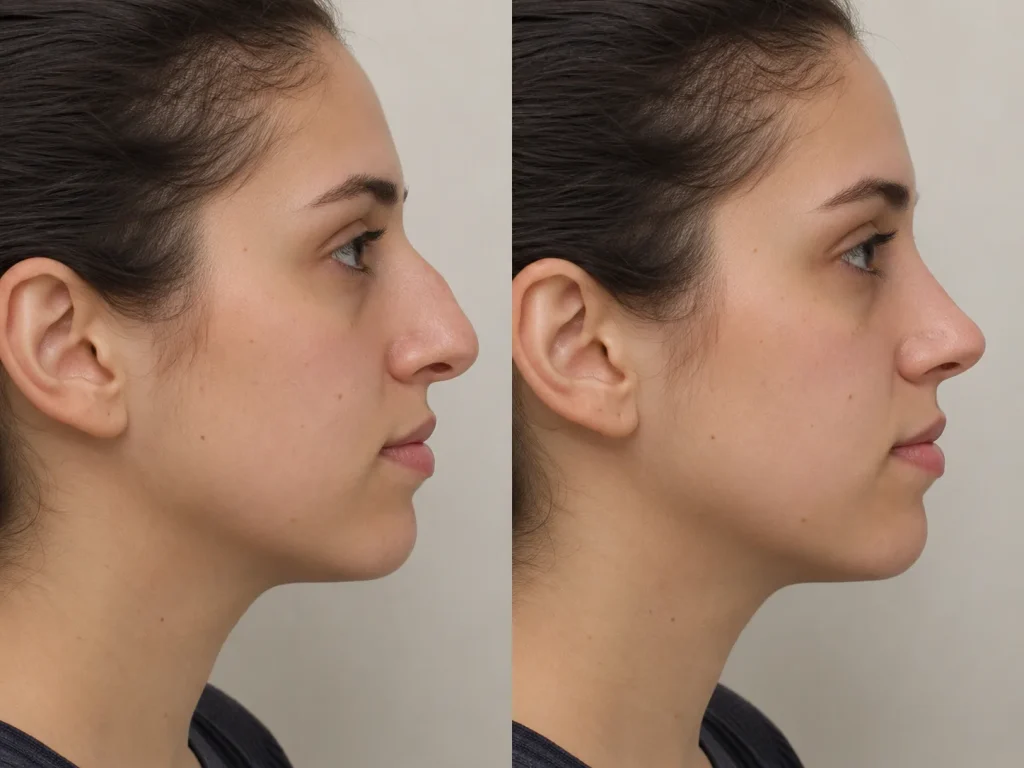
Among experts who are deeply immersed in advanced rhinoplasty and osteotomy engineering (the manipulation of bones), that’s a question we quite often come upon: Is there still a possibility of having the nasal bridge altered years after the operation? It is true that when you take down, e.g., a big dorsal hump made of strong nasal bone and quite bendable septal cartilage, the purpose is to keep the profile straight.
Bone and cartilage tissues are, from medically authoritative perspectives, unable to reproduce the original dorsal hump after its elimination. Such regeneration or reconstruction by biological means does not happen in nature. Nonetheless, it is quite common for a person’s face to reflect a new, small bump or unevenness on the bridge in later life. Such a change is very often not the original hump but rather the result of different healing phases such as localized swelling, bone remodeling anomalies, or structural support displacement.
Situations That May Seem as a Recurring Dorsal Hump
It is quite difficult to explain how one may feel the development of a “hump” again after the nasal bridge was straight and smooth. It is better to break down the biological mechanisms that happen after a surgery like rhinoplasty:
- Long-lasting Post-Operative Edema: Fluid retention that is a natural reaction after surgery may focus mainly on the spot where bones of the nose come together with the lateral cartilage (key area). The liquid build-up is like a swollen, hard lump, which is mistakenly considered to be bone but is just fluid that is going to disappear within 6 to 12 mois.
- Formation of Calluses Around Tissue Membranes: If the bone has been damaged in any form through breaking or filing, the healing reaction of the body to the bone will happen automatically. At times, the healing process may be quite robust and deposit a lot of calcium or scar tissue, which forms a callus, a slightly hard ridge at the edges of the cut bone.
- Collapse of the Middle Part of the Nose: If the structural support of the nasal bridge was not secured sufficiently during the operation with the help of cartilage grafts (spreader grafts) that the hump removal usually needs, the cartilage of the middle third could collapse inward and become pinched. Such a situation is an architectural collapse that reveals the upper bone edge, which is upper, thereby mimicking the shape of a hump.
In other cases, there are also such factors as an overcorrection from one side to another by your nose surgeon when he/she wants to eliminate a hump.
Protecting Lines of the Structure and Taping Treatments
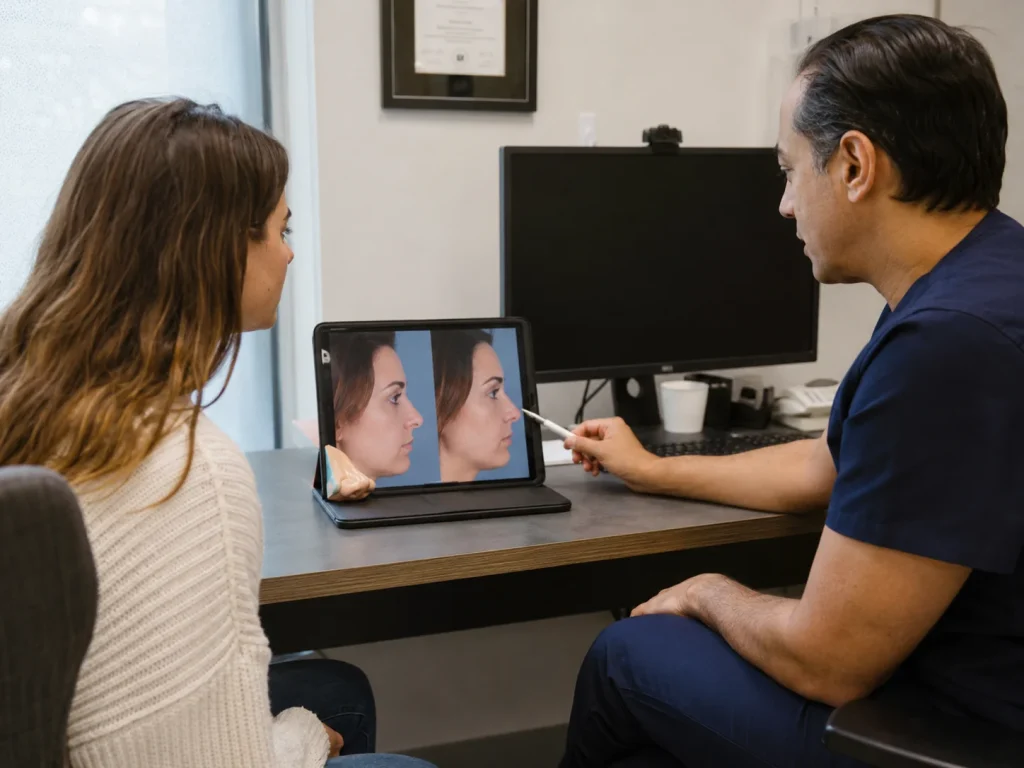
If you are a person who is so particular about your looks that you think that every facial profile is only a matter of a fraction of a millimeter away from being perfect, then it is crucial to you that you strictly stick to your post-operative recovery rules and limitations that are given by your doctor. As the skin will be pulled back and shrink after a nose surgery, which has been redesigned by you, it is vital, through an understanding of your body’s local reactions, not to let those reactions cause unwanted scar tissue that may alter the shape of the nose. A situation where swelling is spread unevenly and left on the bony borders may result in the formation of dense, asymmetric scar tissue that could spoil the result.
Your surgeon’s night tape taping program for a good recovery has been personalized to you; for your nose profile lines to be very precisely fixed permanently, it’s necessary to do that regularly. Medical tape put on the nose bridge gives a mild, continuous outward pull that flattens out any early callus build-up and causes the water to drain from your nose equally. Besides that, tobacco and nicotine should absolutely be kept out. Nicotine is such a strong vascular vasoconstrictor that it shrinks microvessels almost instantly, depriving your remodeling bone cells, which need oxygenated blood, of an essential oxygen supply, resulting in rough, irregular fusion of the bone skeleton after surgery.
Schedule of Bridge Assessment: Swollen Tissue vs. Actual Projections
To tell when a swelling will go away, or a real bump is present, you’ll need to be aware of the typical tissue maturation timeline:
| Recovery Phase | Bridge Presentation | Underlying Biological Activity |
| Weeks 2–6 | Fluctuating, firm bump | Early callus formation and acute soft-tissue swelling; highly responsive to taping. |
| Months 3–6 | Firm, stable ridge | Early bone stabilization; local edema begins to clear, unmasking structural margins. |
| Month 12+ | Definitive nasal profile | Bony remodeling is complete. Any remaining bump represents true bone or scar tissue. |
Steroid Use in Treating Scars: Your doctor can do a minor, on-the-ho micro-injection of steroid to remove scar tissue at a specific spot of the bump when the latter is determined to consist of a dense pocket of early scar as opposed to a solid bone.
Rhinoplasty in Turkey
Choosing LIN Europe Clinic will expose you to this amazing world of cutting-edge medicine, which combines the artistry of nose shaping with the science of structural rebuilding and the craft of surgical techniques to make you look and feel your best at every stage of your journey from an idea to realization. We take it for granted that your recovery and the architectural transformation after rhinoplasty of a very high standard will not be without complexity and you, therefore, will require the highest level of sophisticated transparency and support which are based mainly on evidence-based medicine and a very strong patient-centered focus. LIN Europe Clinic in Turkey is a world leader in the field of facial contouring surgery and plastic aftercare which provides you with a peaceful environment where your health journey is completely in accordance with elite worldwide patient safety and comfort standards.
We invite you to rely fully on LIN Europe Clinic‘s highly professional surgeons who will not miss a detail when diagnosing your conditions. You will receive complete, customized, post-operative recommendations. The team will also carry out very detailed tissue-kinetics (tissue movement) analysis reviews in high definition. In addition, healing checklists, step-by-step instructions, and a tailored lifestyle programme will help you reach the goal you have set yourself. Our top-tier surgical team is there to make sure your investment in body sculpting and general wellness is totally safe, so the outcome is one of satisfaction without any worry that you might lose your figure. We guarantee perfect results with our LIN Europe Clinic team of professionals that you can get in Turkey‘s beautiful city of Istanbul.
FAQ:
Excised bone and cartilage don’t regenerate; you can never get that original hump back again. On the other hand, the formation of new bumps could be temporarily or even permanently due to issues like swelling, scar tissue or bone calluses.
A bone callus refers to a dense deposit of calcium in theform of a ridge. These natural structures formed by the body help the wounds heal where a surgeon has shaved or cut nasal bones. Most of them soften and shrink over time in the first year.
A swelling has fluctuating size, gives an impression of being a bit soft or rubbery and it reduces when we tape at night.Severe, very resistant ones are more likely to be the result of a scar and/or bony structure which will stay completely hard, unchanged, regardless of treatment.
Indeed, it can be done. Applying compression tape regularly after getting a few months off work helps you flatten out the accumulation of fluids and also shapes the tissues on the bridge evenly.
It will usually still be in shape of some sort if there is a real defect in the bone or cartilage beyond the 12-month deadline when the healing tissues have been settled. A touch-up procedure done through rhinoplasty revision can get rid of it.
Rohrich, R. J., et al. (2011). The rhinoplasty recovery matrix: Analyzing operational parameters, dorsal hump reduction, and tissue adherence standards. Plastic and Reconstructive Surgery, 127(4), 1651-1663.
Toriumi, D. M. (2007). Structure rhinoplasty: Managing the middle vault, bone callus formation, and long-term osteotomy stabilization. Clinics in Plastic Surgery, 34(1), 119-126.
Gunter, J. P., et al. (2014). Advanced postoperative care, managing dorsal irregularities, and structural stability in secondary facial contouring. Aesthetic Surgery Journal, 34(5), 587-595.