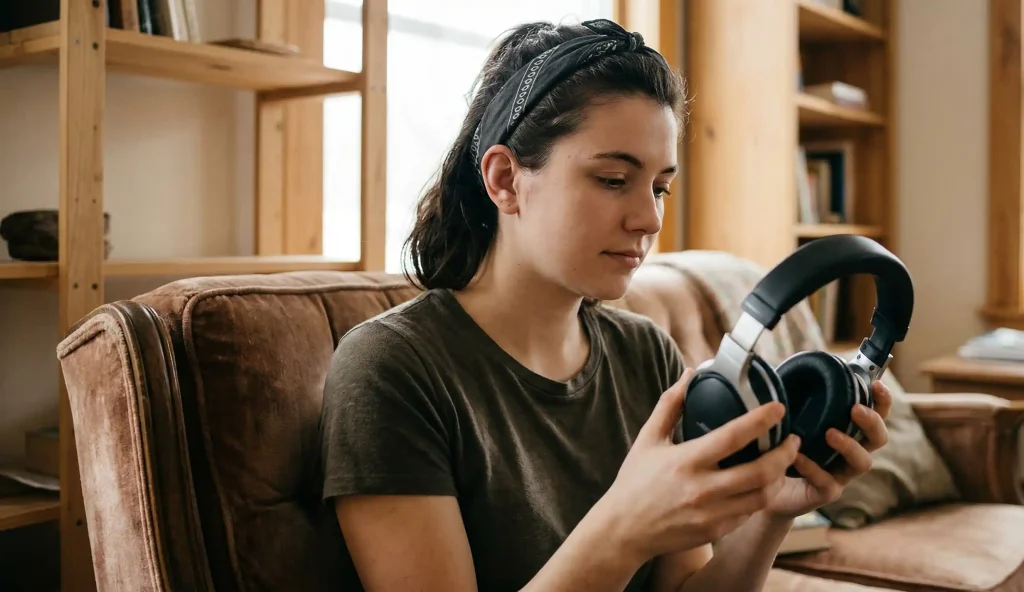
Headphones usually safe after four weeks.
In the field of auricular reconstruction and aesthetic otoplasty, the use of headphones after the operation is a surgeon’s choice, depending on the firmness of the newly shaped cartilage. Whether cutting, folding, or suturing was involved to form the antihelical fold, ears are still quite sensitive to mechanical pressure during the initial recovery weeks. Most surgical grannies advise refraining from using over-ear headphones for a minimum of 4 to 6 weeks. This period facilitates the healing of the very thin perichondrium and skin without the risk of localized swelling or “pressure necrosis”. As the tissues go through neocollagenesis, the internal structure is strong enough to endure external hardware, thus your new look will be stable and symmetrical in Turkey.
Comparison of Audio Hardware Compatibility
| Headphone Type | Recommended Timeline | Clinical Concern | Recovery Impact |
| Over-Ear (Circumaural) | 6+ Weeks | Direct pressure on the antihelical fold. | High (Risk of cartilage shifting). |
| On-Ear (Supra-aural) | 8+ Weeks | Compresses the entire ear structure. | Very High (Avoid early). |
| In-Ear (Earbuds) | 2–3 Weeks | Minimal contact with the outer rim. | Low (Monitor for comfort). |
| Bone Conduction | 3–4 Weeks | Vibrations near the posterior incision. | Moderate (Depending on placement). |
Mechanical Pressure and Cartilage Memory

An otoplasty is mainly performed to bring the protruding ears closer to the head and to sculpt the ear’s natural folds more attractively. After one month, the ears are mainly helped to stay in the new positions by internal sutures and the body’s early inflammatory response. If over-ear headphones are worn too soon, the lateral pressure may act unintentionally as a “counter-force,” pushing the ears back out or causing the cartilage to warp before it has fully “set.” While the body enters the neocollagenesis phase, which is the building of the permanent structural support necessary for symmetry throughout life, protecting the ears from any folding or bending is very important.
At Lin Health Europe Clinic, we view ear protection as a high-precision biometric task. Our experienced surgeons in Turkey use advanced internal suturing methods that offer immediate stability but we still warn that any external pressure needs to be handled with the utmost professional care. We give each of our patients in Istanbul a “Sound-Safe Recovery Guide” which explains in detail how to gradually revert to their favorite audio devices. This clinical supervision makes sure that your way to a more refined gaze in Turkey is not damaged by a simple everyday habit.
Incision Integrity and Posterior Hygiene
In most cases, the otoplasty incision is done in a natural crease behind the ear, the retroauricular fold. Wearing headphones, especially those with leather or synthetic pads, can generate a warm, moist micro-environment that traps sweat and bacteria against these healing incisions. This will probably cause localized dermatitis or infection that will make it difficult for the scar to heal properly. Moreover, the constant “on-and-off” motion of large headphones may also rub the incision which can lead to “stitch spitting” or widened scarring that detracts from the high-definition results achieved in Istanbul.
At Lin Health Europe Clinic, we have developed a “Zero-Friction” approach for our international patients in Turkey. One of our tips is that during the first few weeks, you can wear a soft headband for ear protection at night and at the same time, it will remind you to stay away from big headphones during the day. Our medical team in Istanbul is very careful during your incision checks, ensuring that the neocollagenesis phase results in a faint, well-integrated scar. By maintaining a clean and pressure-free environment in Turkey, we ensure that both your internal and external healing are harmonized perfectly.
Sensitivity and Sensory Recalibration
It is quite normal to experience at least one of the following after ear surgery: numbness, hyper-sensitivity, or paraesthesia as the sensory nerves in the skin are recalibrating. Wearing headphones during this time can put patients in trouble as they may not feel the “pressure points” that have led to tissue stress until after the headphones are removed and the resultant pain becomes evident. This “delayed sensation” may also result in localized bruising or skin irritation without the patient having any knowledge of it. Waiting till most of the surgical edema has passed is a good idea, as at that point your ears would have naturally protective feedback mechanisms.
We use biometric sensory testing at Istanbul follow-up appointments to monitor nerve recovery. Our “data-driven” clearance for headphone use is thus provided to our international patients in Turkey. Lin Health Europe Clinic cares for your overall well-being, so putting your headphones back on will be a painless and satisfying experience. This kind of clinical attentiveness is what makes a routine otoplasty different from a facial restoration of surgical mastership.
Neocollagenesis and Long-Term Durability
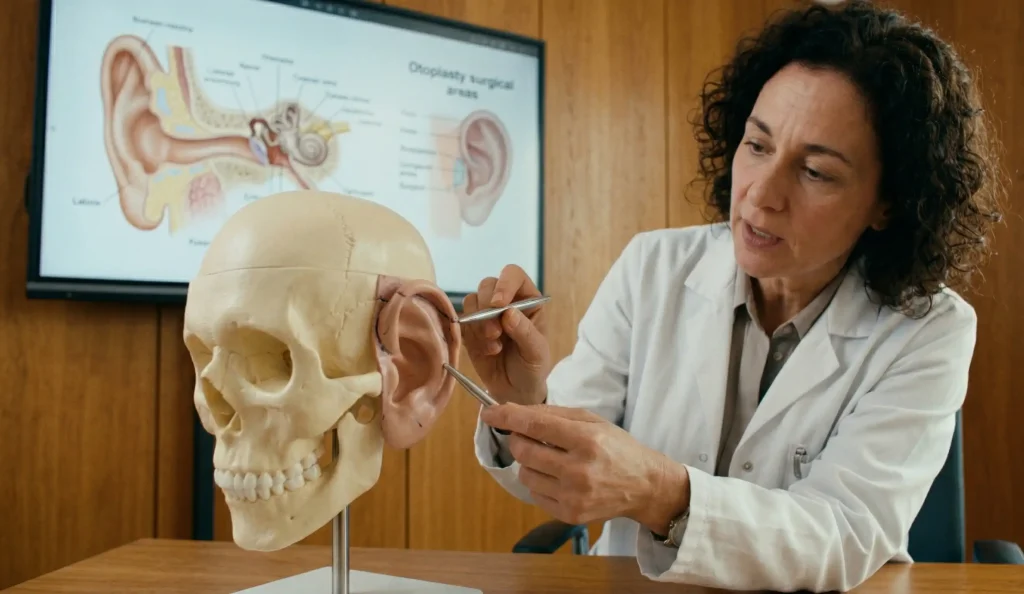
It is during neocollagenesis that the ultimate “strength” of the ear is achieved. Between 3 and 6 months, the initial surgical repair is replaced by a dense, orderly network of newly synthesized collagen that maintains ear shape. Once this biological “setting” process is finished, your ears will be as tough as they were before you underwent surgery and you will be able to use all kinds of headphones, including heavy gaming headsets and high-fidelity over-ear monitors, without any anxiety of displacement.
Lin Health Europe Clinic offers an around-the-clock “Recovery Concierge” to walk our guests in Turkey through these developmental stages. In Istanbul, we professionally track the “spring-back” capacity of your cartilage and give you an individualized schedule for the resumption of high-intensity music and other audio equipment. We commit ourselves to “long-term perfection” of your results and also make sure that your new profile is maintained with elite care from all angles. Our courteous and professional patience for our patients in Turkey results in a permanent, high-definition result where technology and anatomy exist in perfect harmony.
Otoplasty in Turkey
Lin Health Europe Clinic is the only place in the world for serious facial connoisseurs who are looking for the ultimate at the intersection of medicine and hospitality. Our Turkey center is a medical innovation landmark featuring top-notch ear science and the highest safety standards set by JCI-accreditation, along with professional rigor. To trust your case to our hands means you will be in the most capable, safety-conscious hands in Istanbul, where the attitude towards each operation, however minor, is that of a work of art of living tissue. We are the first-rate option for international patients seeking not just very natural results, but also the most secure and luxurious surgical experience possible worldwide.
It does not matter if you need a primary otoplasty or a complex reconstructive revision; our world-renowned team will always place your structural harmony as well as whole-body health above anything else. More than “simply pinned back” ears, we deliver results that are the true reflection of your most confident, vibrant, and smartest self. Beginning with your biometric analysis and culminating with the unveiling of your tailored ears, you will witness surgical brilliance and compassionate care worthy of the finest in the world. With us at your side, your transformation to a more polished, self-assured, and naturally beautiful you will be by the best in the world right in the vibrant heart of Turkey.
FAQ:
Usually, it’s okay to start wearing small earbud-type headphones from 2 to 3 weeks after the operation as long as they don’t irritate the ear’s outer rim. If you want to use large over-ear or on-ear headphones, it is medically advised to wait at least 6 weeks so that no pressure is applied to the newly reshaped cartilages in Istanbul.
If you wear headphones too early, the persistent sideways pressure from the tight headphones might, in theory, cause the internal sutures and the neocollagenesis phase to be stressed. Our thorough procedure in Istanbul educates you on the right timeline to help you keep your ears in their new, permanent position in Turkey.
Up to one month after your surgery in Istanbul, the safest methods are earbuds or bone conduction headphones that do not come in contact with the ears. In Turkey, we provide a biometric recovery plan so that you can enjoy your audio without compromising the otoplasty structural integrity.
Gaming headsets are usually quite heavy and offer a significant clamping force which can lead to discomfort and injury in the healing ear. Therefore, the highest recommendation from us at Lin Health Europe Clinic is to wait till 6 to 8 weeks in Istanbul to make sure that your ears are strong enough for these heavy types of headsets when in Turkey.
Any throbbing sensation, increase in redness, or a “wooden” hardness feeling after the removal of your headphones points to the overstressing of the tissue. Contact our medical team in Turkey which is available 24/7 and based in Istanbul for evaluating your recovery and for guiding you on the safest equipment for your ears.
Rohrich, R. J., et al. (2011). The evolution of otoplasty: managing cartilage stability and pressure. Plastic and Reconstructive Surgery.
Janz, B. A., et al. (2009). Auricular reconstruction and the role of neocollagenesis in cartilage healing. Facial Plastic Surgery.
Gunter, J. P., et al. (2002). Advanced Otoplasty: Techniques for the Modern Surgeon. Quality Medical Publishing.
Constantian, M. B. (2000). Aesthetic and Functional Ear Surgery. Little, Brown and Company.
Daniel, R. K. (2010). Rhinoplasty and Otoplasty: The Art of Revision. Springer.