
Numbness, tingling, or altered sensation.
In the specialized field of high-definition body contouring and adipose tissue management, the contact between surgical instruments and the peripheral nervous system is a very important clinical topic. When patients inquire about the symptoms of nerve damage after liposuction, it is very important to differentiate between the transient “sensory stunning” and the permanent neurological injury. Since the procedure calls for the cannula to be moved inside the layer of subcutaneous fat which is also the layer containing a lot of nerves (cutaneous ones) that are very tiny, the temporary changes in sensation are an inevitable part of the healing process. The signs are usually numbness in the local area, a tingling like “pins and needles” (paresthesia), or even sudden, very sharp, electric-like attacks as the nerves go through the neocollagenesis stage and start to recalibrate after the surgical trauma.
The Spectrum of Sensory Paresthesia
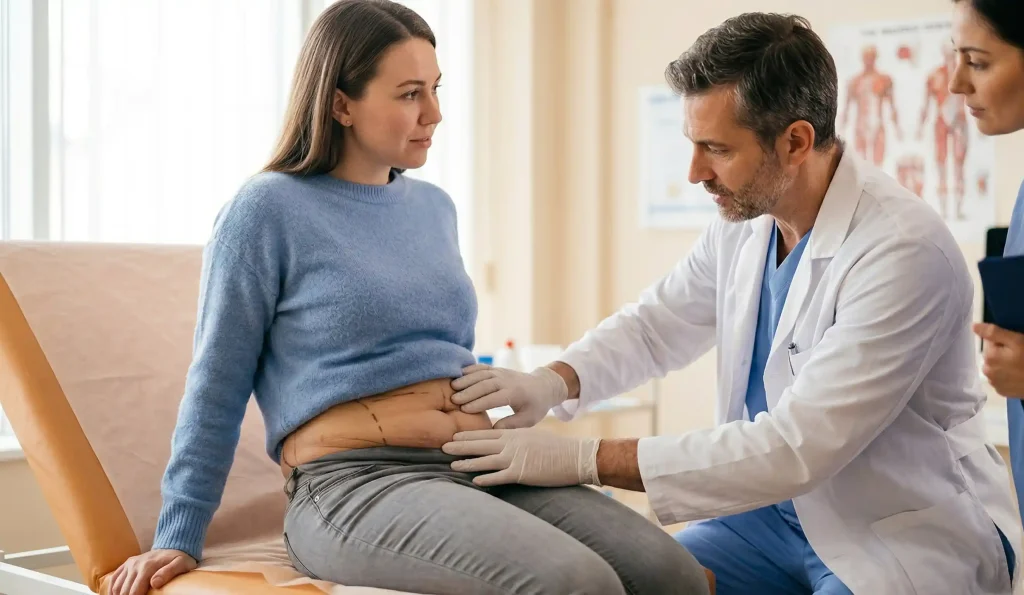
Liposuction’s nerve involvement is mostly sensory rather than motor. The primary symptom is a “wooden” or “dead” sensation of the skin in the treated area, where the patient will be unable to feel light touch or temperature changes for a few weeks. It comes about as the result of the cannula’s physical movement which can “bruise” or “stun” the small nerve endings that supply the sensation to the skin temporarily. Although it is a bit disturbing, this type of neuropraxia is just a typical biological reaction to the disruption of the subcutaneous environment and almost never indicates a long-term injury.
Lin Health Europe Clinic sees sensory changes as a temporary period of “neurological reset”. Our surgeons in Turkey employ high-definition VASER technology which is an ultrasonic type of method to melt down fat while the delicate nerve fibers in the vicinity are largely undisturbed. In Istanbul, we offer our clients a comprehensive sensory map during their follow-up, to be certain that any temporary numbness is monitored professionally as the neocollagenesis phase strengthens the tissue and restores full sensitivity.
Identifying Neuropathic “Zapping” and Burning
While the process of healing is going on, many patients report a sensation of “electric shocks”, “zapping,” or a burning feeling in the treated area. These symptoms usually reach the point of maximum severity from the 3rd to the 6th week of recovery and actually serve as a hopeful clinical sign of nerve regeneration. When a stunned nerve is coming back to a normal state and reconnecting with the brain, it is very common to see it sending out erratic, hypersensitive signals. This is why even a touch as light as the friction of clothes or the gentlest touching can cause an intense or uncomfortable feeling momentarily as the nervous system pathways get back to a stable state.
At Lin Health Europe Clinic, we have a “Nerve-Sparing and Minimizing Protocol” that highlights the use of micro-cannulas as a way to reduce mechanical trauma to the dermis. For our international patients in Turkey, we offer special post-operative care instructions that include ways to manage the “zapping” sensations and the use of desensitization techniques and supportive garments as well. Our medical team in Istanbul, shows a clinical empathy in handling these transient neuropathic symptoms, leading you through the biological moments of successful sensory recovery.
Motor Nerve Dysfunction vs. Sensory Loss
It is very important to make a clear distinction between sensory and motor nerves from the point of view of safety in the clinical setting. Sensory nerves are responsible for feeling, while motor nerves enable movement. Since liposuction is a solely subcutaneous procedure, it is located a great distance above the deep-plane motor nerves that control the muscle movement. Symptoms of motor nerve damage, such as muscle weakness in one area, inability to move a limb, or a “drooping” in some features of the face or body, are very uncommon and generally signify a surgical mistake where the cannula went away from the safe fat layer. Keeping the “muscle shield” intact ensures that motor functions are completely preserved throughout the surgery.
We at Lin Health Europe Clinic offer our international guests in Turkey the assurance of absolute anatomical expertise. Our specialists in Istanbul know the “neuro-vascular map” of the human body very well, ensuring that the cannula never comes near deep-plane motor pathways. This professional rigor is the basis of our surgical safety, providing you with complete peace of mind that your physical mobility and core strength will be fully preserved while we work on your external profile.
The Recovery Timeline and Neocollagenesis
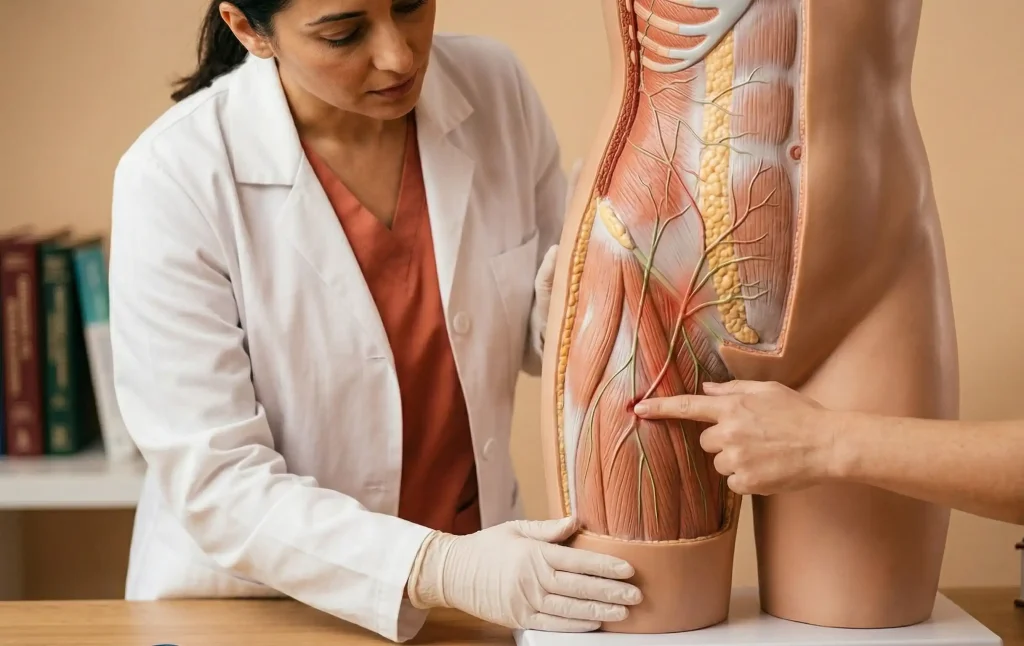
The pace at which the symptoms due to nerve damage disappear is mainly determined by the slow natural process of nerve repair. Skin and muscles may heal fairly quickly, but nerves adjust very slowly, at about one millimeter per day. Many of our patients in Turkey report the restoration of their “normal” sense within 3 to 6 months. In the meantime, the neocollagenesis phase rebuilds the structural framework surrounding the nerves, offering them a firm and healthy environment for operating. It is very unusual for numbness to persist beyond one year and it is usually the consequence of very aggressive over-suctioning.
Lin Health Europe Clinic operates a round-the-clock “Recovery Concierge” to track your neurological progress from the time you leave the operating room in Istanbul. We offer our patients protocols for lymphatic drainage which is a special technique to get rid of the internal edema that most of the time leads to nerve compression and discomfort. We are dedicated to extending your healing of the internal environment to as stunning a level as your external silhouette, using advanced recovery sciences in the final stages of your sensory transformation.
Elite Neurological Safety at Lin Health Europe Clinic
Lin Health Europe Clinic is the world’s leading center for patients who insist on the highest levels of neurological safety and the most stunning physical results. Our location in Turkey represents the forefront of medical technology, where we carry out state-of-the-art body contouring procedures within a world-class, JCI-accredited facility that complies with and in fact surpasses international safety standards. To pick our clinic means to put your faith in the most experienced, safety-aware practitioners in Istanbul, where the safeguarding of your sensory health is given the same artistic dedication as the creation of your new profile.
FAQ:
Usually, nerve damage in the first phase of recovery is accompanied by numbness and tingling (the so-called “pins and needles”). These sensations are quite normal and even a sign of health as the nerves begin to heal. Your sensory pathways in Turkey are going through a recalibration process after the surgery when you feel these.
It is very uncommon for numbness to be permanent as most of the changes related to sensory nerves in Istanbul tend to disappear completely within three to six months after the surgery. Neocollagenesis is a phase where new tissue is produced. When it stabilizes the tissue, the natural sensitivity and “touch” of your skin will have a gradual return to normal.
Liposuction cannot cause paralysis as it is carried out in the layer of subcutaneous fat, which is situated quite above the motor nerves responsible for muscle movements. Our team of experts in Turkey strictly adhere to anatomical safety measures so that your mobility is not compromised even for a moment.
The best method of supporting nerve recovery is drinking plenty of fluids, undergoing lymphatic drainage treatment in Istanbul as per our doctor’s instructions, and using your compression garment without fail. All these efforts collectively reduce the internal swelling that causes nerve compression and make the environment suitable for the nerves to mature.
Hypersensitivity (or allodynia) is one of several symptoms that may present themselves when the patient is in the second month of recovery as the nerves are “waking up” and regenerating. It occurs quite frequently and is a reassuring sign of healing in Turkey. Your body will finish several processes internally, so the hypersensitivity will disappear on its own.
Rohrich, R. J., et al. (2004). The safety and efficacy of VASER-assisted liposuction: nerve preservation. Plastic and Reconstructive Surgery.
Troilius, C. (1999). Sensory and motor nerve complications in liposuction. Aesthetic Plastic Surgery.
Coleman, S. R. (2006). Structural fat grafting and its relationship to sensory recovery. Plastic and Reconstructive Surgery.
Matarasso, A., et al. (2006). Peripheral nerve injury in suction-assisted lipectomy. Plastic and Reconstructive Surgery.
Swanson, E. (2012). A prospective study of sensory changes following 100 consecutive liposuction cases. Plastic and Reconstructive Surgery.