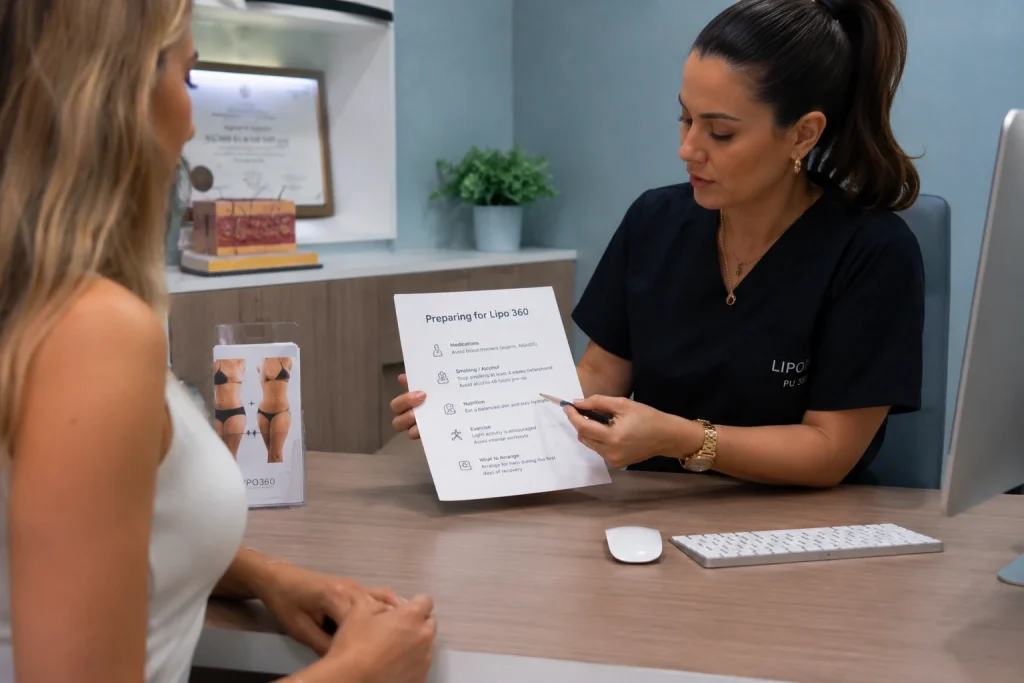
Stop smoking, hydrate well, and maintain a stable weight.
Establishing Your Metabolic Weight and Body Composition
Changing your physical framework in preparation for Lipo 360 is a proactive approach that is required in the highly specialized field of advanced contouring of the body and circumferential high-definition sculpting. Unlike a weight-loss surgery, Lipo 360 is a refined technique that removes difficult subcutaneous fat deposits from the whole midsection, including the abdomen, waist, flanks, and mid-to-lower back. If you want exceptionally sharp definition and long-lasting contours, you should reach a stable body weight close to your goal and maintain it for several months prior to surgery.
Once the body presents itself in the operating room at a stable and consistent weight, the surgeon will be able to accurately identify and sculpt the different layers of adipose tissue with utmost accuracy. A significant change in weight immediately prior to the surgery can influence the density and structural distribution of the subcutaneous fat cells, in this way having a negative effect on the symmetry of your circumferential outcome. A stable metabolic plateau indicates that the skeletal and muscular framework is perfectly aligned underneath for skillfully executed micro-cannula fat extraction.
Improving Vascular Function and Removing Hemostatic Agents
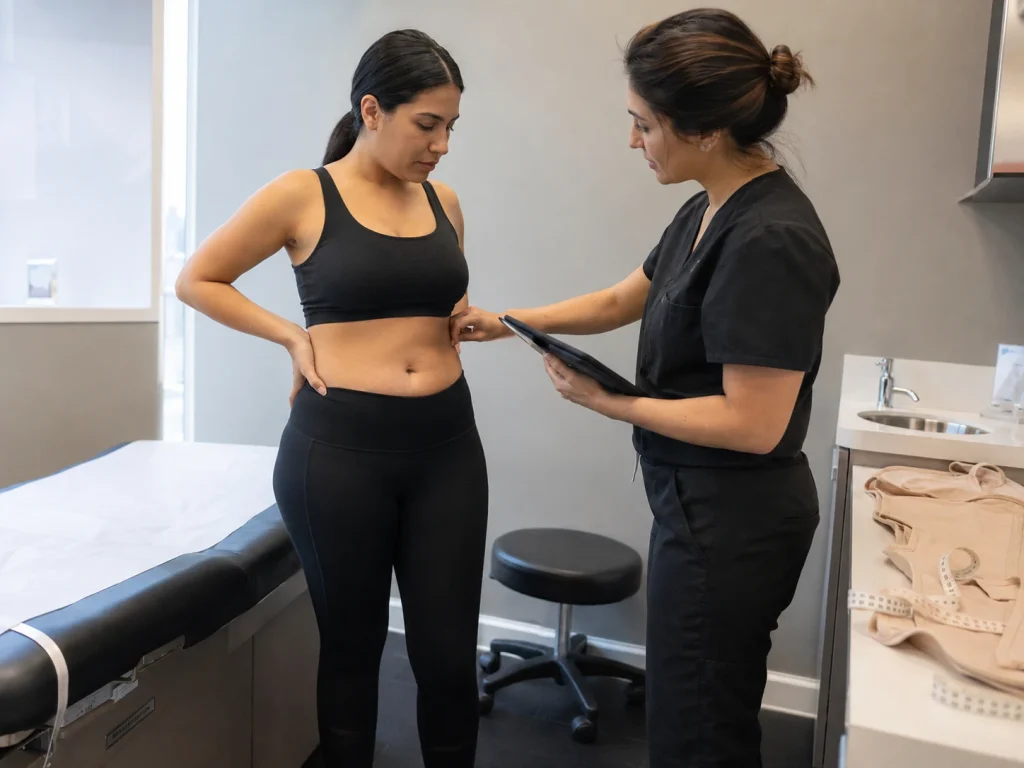
A critical step to ensure the continuation of surgical maneuvers without problems and to keep to a minimum the appearance of post-operative fluid collections (seromas) or bruising of the deep tissues is the optimization of your vascular kinetics. Numerous medications used daily, as well as over-the-counter anti-inflammatory drugs and systemic supplements, contain valuable molecules that interfere with the usual platelet aggregation. Controlling the chemical boundaries at such a micrometric level is a definite way to make this preparation step, and chemically, it is non-negotiable.
At least 2 weeks prior to your Lipo 360 procedure, you must stop using all types of non-steroidal anti-inflammatory drugs (NSAIDs) altogether, which also includes aspirin, ibuprofen, and naproxen. On top of that, the systemic supplements with high doses of vitamin E, fish oil (omega-3 fatty acids), ginkgo biloba, ginseng, and garlic extracts are the ones that you should restrict very strongly, as they have all been shown to alter the natural clotting cascades and, hence, during the extensive tunneling process of circumferential liposuction, these can cause unanticipated micro-vascular oozing.
Providing Energy to Cells
Following a rigorous nutrition and lifestyle routine is absolutely necessary for individuals who have fitness as a central theme of their lives and also want to enjoy the best recovery possible. The only way to keep your progress in terms of advanced lower body engineering, gluteal hypertrophy, and maintaining the narrow waistline is to make sure that your muscle tissue remains intact and in good condition. If you do not supply your body with the proper nutrition, you will pay a heavy biological price: the large-scale destruction of cells during lipo 360 can cause your system to turn into a catabolic state, and will start breaking down your essential amino acids if your nutrient stores are already in a low state of depletion.
To be able to fully support the post-operative tissue maturation and avoid muscle wasting, you need to focus on a preoperative diet. Shifting towards a high-protein and nutrient-dense composition is a must. Lean protein such as chicken breast, white fish, or tofu) Together with essential amino acids and complex carbohydrates are excellent choices for actively loading your cells for the healing phase. In addition to that, completely removing the use of cigarettes and any other nicotine products for four to six weeks before this surgical intervention is a must. Nicotine is a strong vasoconstrictor, which means that it narrows very tiny blood vessels and consequently, your skin flaps will receive less oxygenated blood, something that is necessary for the smooth retraction over your newly sculpted torso.
Preparing Skin for Surgery and Compression After Surgery
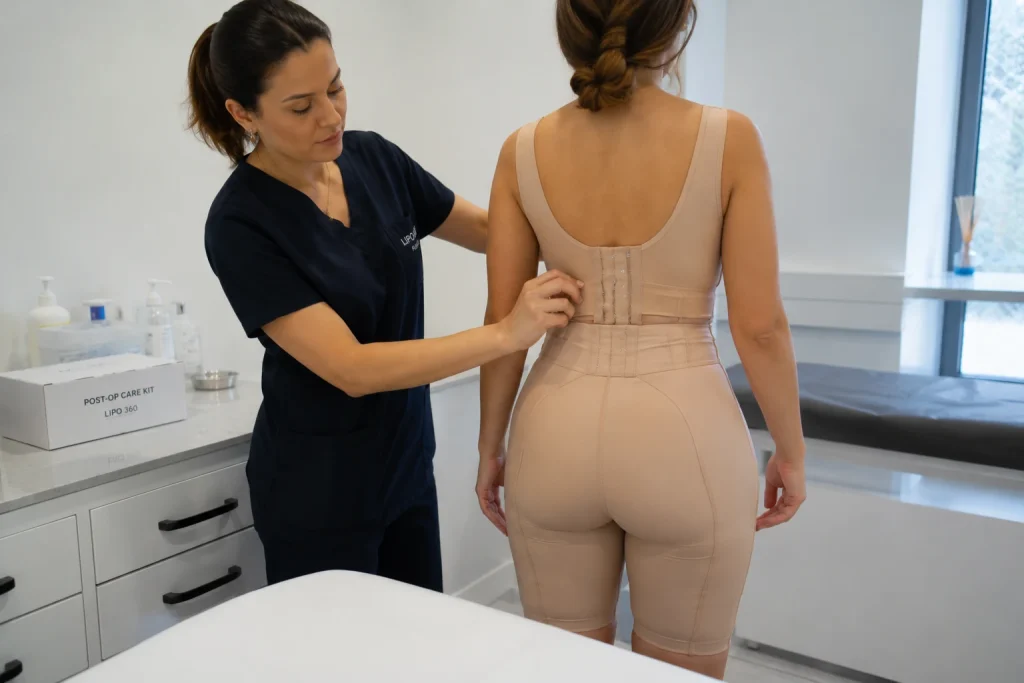
In addition to changing your internal chemistry, you can also do things to the physical tissues as well as the home environment that will benefit you a great deal in releasing your circumferential investment in the immediate post-operative phase. Since Lipo 360 works on various anatomical areas of the body at the same time, a large surface of the skin needs to be able to heal and retract uniformly against your newly thinned midsection matrix. One way of maintaining tissue elasticity is by regularly using topical moisturizers for skin hydration until one day before surgery.
At the same time, it is very important that you set up your post-surgical compression before you come to the clinic. There is no circumferential lipo without compression therapy. This therapy is administered immediately and continuously to get rid of dead spaces, reduce fluid accumulation, and pull the skin to a firm and flat silhouette. Get hold of specialized Stage 1 compression garments (fajas) and abdominal boards and create a recovery space where you can rest with your torso slightly elevated. This arrangement will mechanically act against gravity, will alleviate post-operative swelling, and will enhance circumferential drainage.
Liposuction in Turkey
The decision to come to LIN Europe Clinic opens the doors to a top-notch global medical haven where your body aesthetics, high-definition contouring, and metabolic pathways are handled with the highest level of clinical knowledge and the deepest empathetic care. We understand that going through the complicated preparation and lifestyle changes involved in advanced circumferential sculpting can be overwhelming. We have created an ultra-sophisticated, transparent, and highly supportive environment for our patients that puts evidence-based medicine first above all else. LIN Europe Clinic in Turkey is recognized worldwide for its specialty in advanced body contouring and lipo 360 aftercare, offering a tranquil setting where your health plan is strictly regulated by the highest global patient safety standards.
When you entrust your care to us at LIN Europe Clinic in Istanbul, you can be assured that your preoperative health parameters will be tracked with the highest level of diagnostic accuracy. Nutritional counseling is one of the services we offer as part of the comprehensive, personalized care. Along with this, we conduct pharmacological safety checks and conduct wound mapping so that you can be confidently guided step-by-step through each stage of your tissue healing and lifestyle integration. Our team of highly trained medical professionals will safeguard your body contouring investment and systemic health in such a way that you will be able to enjoy your dream shape completely stress-free. Discover the sophisticated and all-inclusive care of LIN Europe Clinic, harmoniously and safely delivered to you in the center of Turkey.
FAQ:
You can prepare your body by keeping your weight steady, eating plenty of protein, stopping the use of blood thinners and supplements for 2 weeks, and completely avoiding nicotine products.
There is no weight you must achieve before lipo 360, but it is best if you are within 10 to 15 pounds of your target weight for best finishing results.
No, smoking and any other form of use of nicotine must be stopped completely 4 to 6 weeks before surgery to avoid severe skin and tissue necrosis.
You should discontinue the consumption of vitamin E, fish oil, omega-3 fatty acids, ginseng, and green tea extracts for 2 weeks before surgery as they have blood-thinning effects.
In order to meet anesthesia safety standards, you must not eat, drink, or have any form of liquid for at least 8 hours prior to your surgery.
Gilliland, M. D., et al. (1997). Safety and preparation protocols for high-volume circumferential liposuction. Aesthetic Surgery Journal, 17(4), 223-231.
Spector, J. A., et al. (2006). The impact of nicotine and vascular vasoconstriction on breast and torso tissue remodeling. Annals of Plastic Surgery, 56(6), 611-615.
Rohrich, R. J., et al. (2004). Perioperative fluid management and safety standards in liposuction: An evidence-based consensus review. Plastic and Reconstructive Surgery, 113(5), 1473-1485