
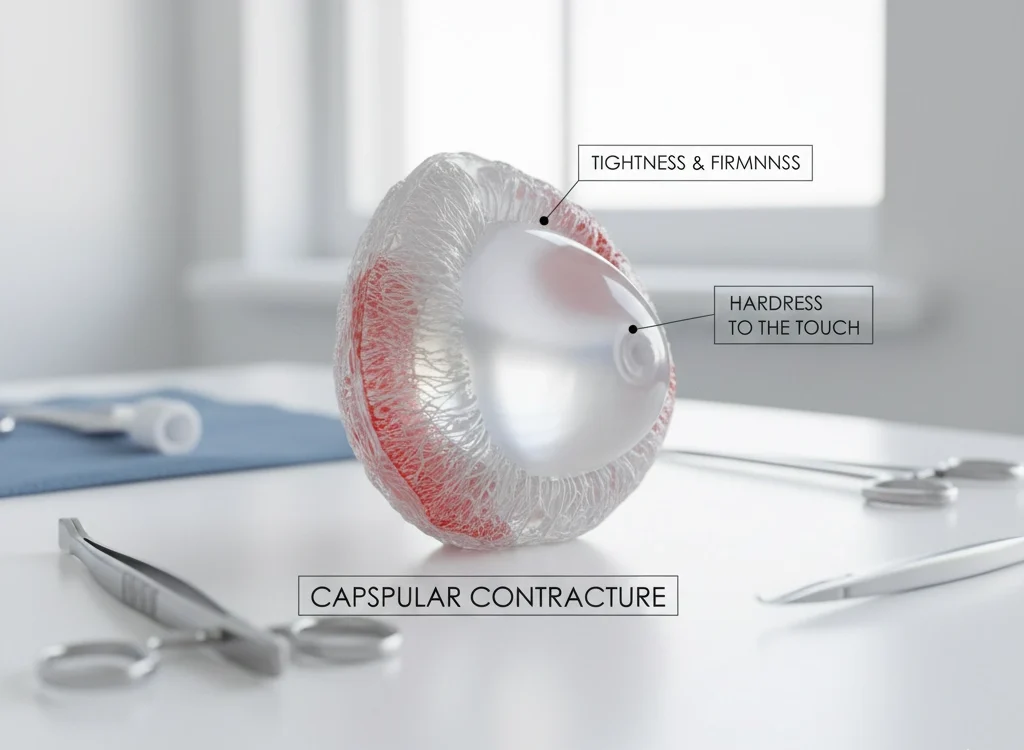
It includes hardness, shape changes, and discomfort.
Breast Implant Encapsulation Symptoms: Early Warning Signs
After a breast implant procedure, you wish to have stable and safe results in the long run, and being able to recognize the early signs of changes will help you keep both your comfort and your appearance intact. The process of breast implant encapsulation is characterized by the tissue that surrounds the implant becoming firmer and contracting more than usual. The contraction of this tissue can cause both subtle and significant changes in the way the breast feels to the touch and when the breast is moved. By knowing these signs, you will be able to react immediately and thus, have a predictable outcome for the whole duration of your implants. Early recognition puts you in charge of your own well-being and at the same time, it allows you to make the necessary decisions that pave the way for safe and healthy healing.
At Lin Europe Clinic, you get the right support that helps you make sense of the signals your body sends you. Our clinic is fully equipped for assessments that detect the first changes in the tissue, and every move that is made is directed towards your safety and comfort. Those who come across this article are supposed to realize that naturalness in appearance is only the starting point. The body might react and therefore, there might be changes in the shape, mobility, or even softness. By keeping an eye on your implants and knowing what is normal and what is not, you are giving yourself the best possible protection in the long run.
What Is Breast Implant Encapsulation?
An instance of breast implant encapsulation is when the fibrous tissue that surrounds the implant becomes thick, tight, and very restrictive. As a part of the healing process, the body naturally forms a capsule around any foreign object that is implanted. The capsule usually remains soft and pliable which enables the implant to be moved in a natural way. The texture and the shape of the breast are the ones that are influenced in case the capsule hardens or shrinks. A term that is used to refer to this condition is “capsular contracture”, and it suggests an extremely wide range of different situations from slight tightening to a more advanced stage where the symmetry and the firmness of the breast change.
Knowing the meaning of “encapsulation” prepares you to be able to figure out when something is different from your usual baseline. The breast may become firmer, less mobile, or there may be some visible tightening. The difference between normal recovery and starting encapsulation is what you are supposed to know in order to be able to defend your implants at the earliest stage. Lin Europe Clinic is there for you with regular visits and thorough methods of assessment that make you understand each and every change in your body in a very clear and confident manner.
Early Symptoms of Breast Implant Encapsulation
The initial symptoms, most of the time, are manifested in a gradual hardening of the tissue around the implant. When you touch the breast, you may feel that it is more resistant or notice that with the movement of the body, the implant is shifting less. These changes might be happening slowly; therefore, close observation of the natural pattern of the breast’s texture will give you a chance to recognize the signs for the first time. You may also experience slight discomfort after raising your arms or when lying in certain positions. These early symptoms become the groundwork for the earliest diagnosis.
The other early signs that could lead you to breast implant encapsulation are: the sensitivity of the area or the slight changes in the shape of the breast. Pressure in the area where it’s been implanted may be the thing that you have not experienced before and therefore, if you are comparing the two breasts, you will observe the differences. These symptoms may not affect your everyday life at the beginning, but they are primarily the very first signals indicating the tissue around the implant is starting to contract. Once you see these differences, it is time for you to have a professional examination at Lin Europe Clinic. The very first consultation will help you to comprehend if the capsule has to be only checked or treated actively.
How Encapsulation Affects Breast Shape and Comfort

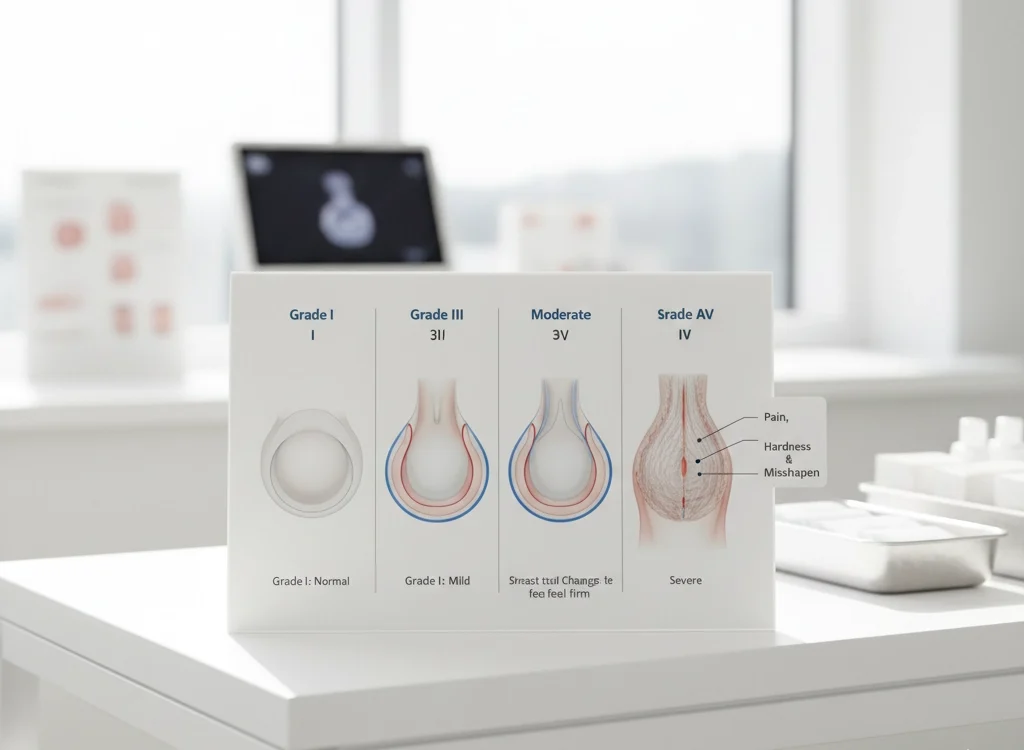
As the capsule wraps and tightens more around the implant, breast shape, projection, and even mobility can change with the help of encapsulation. The breast may look more circular, firmer, or placed higher than before. Plus, you may even find that the edges of the breast are getting sharper or in the case where the capsule is more rigid, a visible line can be there especially. The reason for these changes in the shape is that the tissue is compressing the implant and at the same time, it is restricting the natural movement of the implant. When touched and if compared with the other side, the breast may seem less natural.
Moreover, the comfort aspect also undergoes changes when the condition of encapsulation worsens gradually. Increased tension during any physical activity, stretching, or even in a normal daily routine, is one of the things you may experience. Occasionally, a few of them refer to the sensation of a hidden internal pressure that becomes more and more obvious while doing simple tasks. These problems may have an impact on the individual’s posture, their choice of clothes, as well as their confidence levels. The early stage of the problem, together with the evaluation, will actually make you aware of its cause and also, and you will be provided with the necessary guidance according to your requirements. Serving your mission by giving you further explanation and the indispensable care to keep your well-being and long-term results remains a task of Lin Europe Clinic.
Risk Factors for Developing Encapsulation
Among the risk factors for encapsulation are the patterns of one’s individual healing, the location of the implant, and the condition of the tissue after the operation. The body of every person produces scar tissue at different speeds, and a few specific biological reactions may speed up the capsule contracting process more. It can also escalate the risk of inflammation and infections that may become the cause of the production of excessive tissue that leads to tightening of the capsule. The reason for trauma may be the breast, even if it is a few months or years after the surgery, and it can later affect the capsule and start the chain of events that will result in its getting tight. Being aware of these aspects will certainly help you keep a closer eye on your implants.
Lifestyle factors that influence the condition of being encapsulated are also there. Smoking limits the energy that is given to the tissue and this may result in a scar being more rigid than it should be, while chronic pressure or repeated hitting of the chest can cause the capsule to get irritated. Additionally, the texture of the implants or their shape can eventually have an effect on capsule formation. By knowing your personal risk of getting this problem, you can always stick to your doctor’s follow-up schedule and keep a very diligent look at your breasts yourself. Lin Europe Clinic helps you accomplish this task through specialized evaluations and safety planning that lasts for a long time.
Treatment Options for Encapsulation

The treatment plan for a patient depends on the stage of the capsule that is causing the problem and whether the patient is presenting any symptoms. Abandonment, imaging studies, and nonsurgical methods that help to preserve tissue flexibility may be sufficient for the early cases. An ultrasound may be used to regularly check the condition, while targeted therapy may be employed to help in softening the capsule. The first and foremost reason why a person should get early care is to safeguard the breast’s shape as well as implant stability. The condition in which the capsule is still pliable but shows the first signs of folding is the one where this kind of intervention works best.
In most cases, the solution to moderate or severe breast implant encapsulation is surgery. The aim of the operation known as capsulotomy is to free the tight tissue, whereas capsulectomy achieves the goal of regaining the natural movement by completely discarding the capsule. Some cases may be eased by the replacement of the implant or by the facilitator of the stability of the aesthetic effect in the long term via a change of the location. Lin Europe Clinic is opening up the way for you to solve your health problems through a treatment plan that is perfectly suited to your symptoms, tissue features, and objectives. The safety of the patient, the predictability of the results, and the patient’s long-term comfort are at the center of every recommendation made by the clinic.
Breast Implants in Turkey
The country boasts the triumvirate of top-notch surgical care, cutting-edge technological instrumentation, and all-around patient support for breast implant surgery, which is a major attraction for patients. As well as the first-class quality of plastic surgery, the large number of successful cases is also a reason why many patients choose Istanbul as their destination. Besides using the most up-to-date imaging methods and surgical techniques, clinics also provide a care plan that extends even beyond the recovery period in order to guarantee the health of the implant. The standards that are set ensure the delivery of reliable care from the consultation to the monitoring after the operation.
Lin Europe Clinic is the place where all prominent fields of aesthetic medicine come together under one roof. These are four major areas: plastic surgery, facial aesthetics, hair transplantation, and general surgery. A breast implant consultation or treatment option in Istanbul is a way to get a very pleasant and easy experience of your own journey. The clinic is basically forming a plan with the main emphasis on healthy tissue over time, results that are stable, and patient-centered care. You are helped at every stage, starting with your first consultation and going on through your follow-up appointments.
References
American Society of Plastic Surgeons. (2023). Capsular contracture: Diagnosis and management guidelines. ASPS Clinical Resources. https://www.plasticsurgery.org
Headon, H., Kasem, A., & Mokbel, K. (2015). Capsular contracture after breast augmentation: An update for clinical practice. Archives of Plastic Surgery, 42(5), 532–543. https://doi.org/10.5999/aps.2015.42.5.532
Spear, S. L., Baker, J. L., & Little, J. W. (2019). Evaluating breast implant complications: A comprehensive review. Aesthetic Surgery Journal, 39(3), NP91–NP105. https://doi.org/10.1093/asj/sjy252
Barnsley, G. P., Sigurdson, L. J., & Barnsley, S. E. (2020). Textured versus smooth implants and the risk of capsular contracture. Plastic and Reconstructive Surgery, 145(1), 65–77. https://doi.org/10.1097/PRS.0000000000006366
Frequently Asked Questions About Breast Implant Encapsulation
Breast implant encapsulation is the condition when the scar tissue that naturally forms around the implant has become very tight and hard. The tightening of the scar tissue affects the breast shape, softness, and even the comfort of the breast over time.
The very first symptoms are increasing firmness and tightness as well as some mild discomfort. Along with that, you may also see some subtle changes of shape or less implant mobility.
Encapsulation diagnosis is made by the doctor during the clinical examination, and it is confirmed by imaging studies like ultrasound or MRI. These instruments help to locate the degree of tissue tightening and any structural alterations.
There are some non-surgical methods to treat encapsulation and also surgical correction that depends on the extent of the problem. The most proper method will be chosen by a doctor after a clinical evaluation.
The risk will increase if you are suffering from some kind of inflammation, have had a trauma, smoke, and also your own healing pattern. Moreover, some characteristics of implants may affect capsule formation.