Follow aftercare and avoid smoking.
The Biometrics of Follicular Survival and Neovascularization
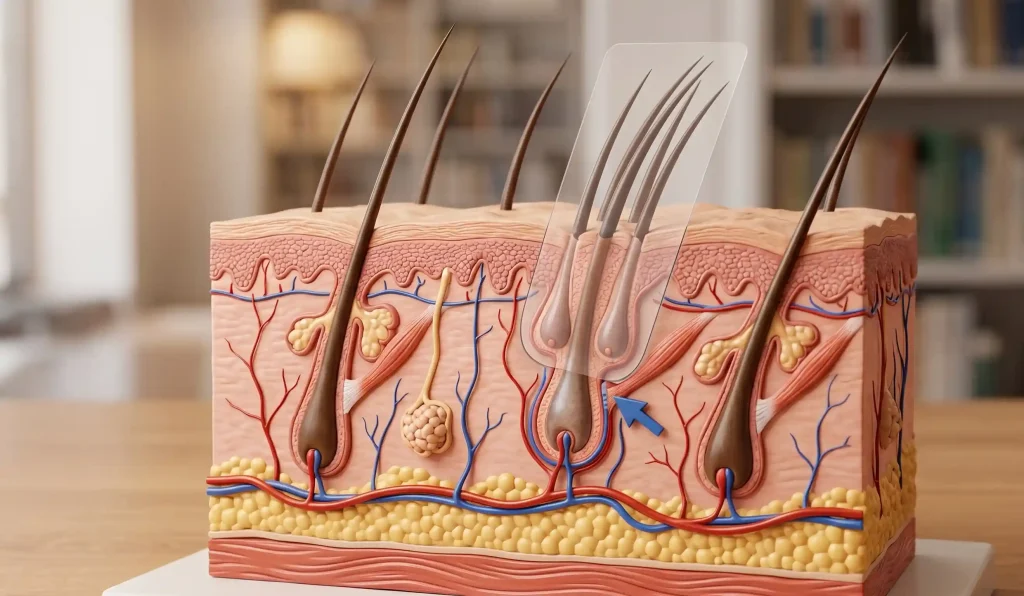
In hair restoration, the main factor for a finely sculpted, lively outcome is the successful “take” of the transplanted follicle. Biometrically speaking, as soon as a follicular unit is taken from the donor site, it is abruptly separated from its organismic blood supply. The time between its taking and the formation of a new supply of blood in the recipient site is a very important “golden window.” The ideal graft survival is greatly dependent on the quick onset of neovascularization – the formation of new capillaries to supply oxygen and glucose to the transplanted dermal papilla.
At LIN Europe Clinic, our explanation of inosculation is that the first 72 hours are a clinical necessity, during which the graft starts to “connect” to the scalp’s existing circulatory network. If this hemodynamic balance isn’t reached, the follicle can lead to a state of irreversible necrosis. Keeping a state of biological balance during this acute phase is vital. By shielding the recipient site against mechanical trauma and environmental stresses, you enable your body’s systemic vitality to be wholly dedicated to securing the new grafts into the dermal matrix, thus making sure that every piece grows into a permanent, high-definition hair shaft.
Hemodynamic Stability: The “No-Touch” Protocol
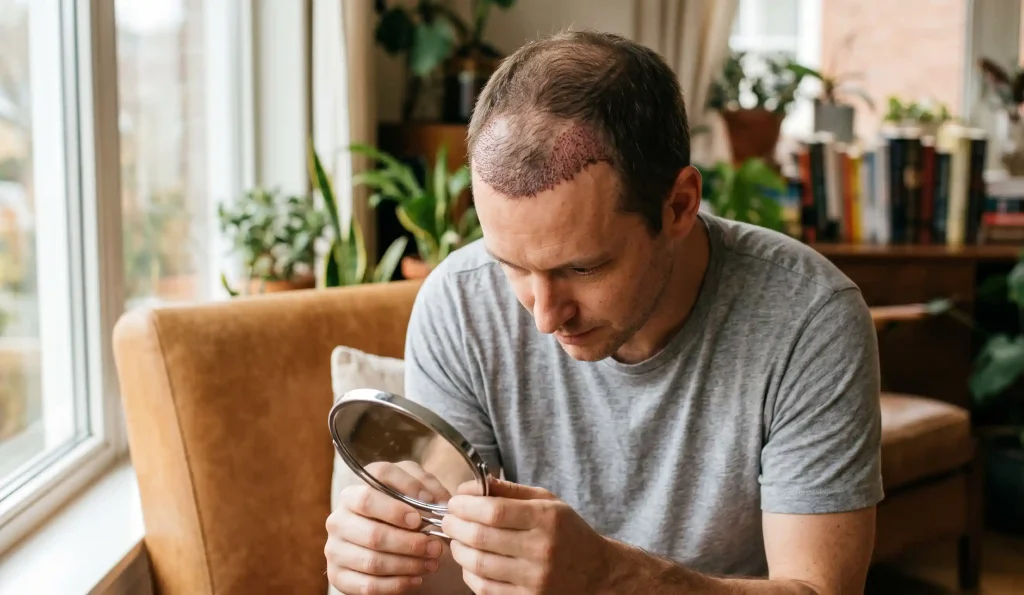
After a transplant, the achievement of structural harmony depends to a great extent on the physical stability of the grafts during the initial week. Clinically speaking, the follicles stay in their positions mainly thanks to the natural “glue” – fibrin and local coagulation. Any mechanical move like scratching, rubbing or accidental bumping can break the thin link between the graft and the surrounding tissues. So, a strict “no-touch” protocol is the absolute epitome of post-operative care.
We remind you at LIN Europe Clinic that even a slight rubbing or working of hair can lead to loss of the surgical brilliance of the operation. Besides physical contact, the management of the internal pressure is of equal importance. Blood pressure rise caused by heavy lifting or bending over can cause grafts to “pop” where the follicles are physically pushed out of their paths. By following professional rigor in your movements and keeping your head at a 45-degree position, you decrease the localized swelling, and you keep the vascular channels open and receptive.
Medical Innovation: Growth Factors and Metabolic Support
For a significant increase in graft survival, we rely on top-notch medical innovations such as Platelet-Rich Plasma (PRP) and growth factor serums. PRP is biologically a high concentration of autologous platelets that, upon activation, release Growth Factor, specifically Vascular Endothelial Growth Factor (VEGF), which is the protein responsible for triggering the development of new blood vessels exactly where they are most needed. Administering these growth factors during and post-surgery, we establish an environment suitable for rapid repair and graft integration at a cellular level.
Biological balance via these supports leads to a shortening of the “dormant” follicular phase, which is the most susceptible to the grafts. At LIN Europe Clinic, these medical innovations are just part of an entire recovery strategy. Besides PRP, Low-Level Laser Therapy (LLLT) may be a choice to electrify the mitochondria of hair cells. This surge in production of cellular energy (ATP) builds up the follicle against surgical shock and results in a healthier and more robust growth pattern. Employing our skill and knowledge at clinical mastery, your scalp will not just be a recipient site but a high-density biologic environment, maximizing your results.
Nutritional Rigor and Vascular Systemic Vitality
Your systemic health is the major factor that dictates the “soil” quality in which your hair will thrive after the surgery. Biometrically, the graft’s survival hinges on your internal biochemistry. Follicular health clinically requires, amongst others, a supply of amino acids constituting the major part of proteins, which in turn make keratin – the substance of hair. Moreover, micronutrients such as Zinc, Iron, and Biotin are needed for the metabolic processes accompanying dermal papilla maturation.
The professional rigor of your diet will be undermined if the vasoconstrictors are used frequently. Nicotine in particular is a considerable threat to systemic vitality; it causes the tiny capillaries of the scalp to narrow, thus drastically decreasing the oxygen supply to the new grafts. Even one cigarette is enough to throw off the biological balance that is necessary for neovascularization. At LIN Europe Clinic, we prepare customized dietary plans for our patients so that their blood is nutrient-rich and microcirculation remains unimpeded. By attending to your internal health first, you will grant the surgical brilliance of the transplant the potential to reach its highest level of success.
Scalp Hygiene and Dermal Matrix Integrity
The longevity of the grafts is also contingent upon the quality of the skin covering them. Biometrically, the scalp needs to be kept clean and free of any inflammatory debris to prevent adverse situations such as folliculitis or seborrheic dermatitis. Scab formation within the first two weeks is a normal healing step, but if these scabs become too thick or “crusty,” they can cause mechanical pulling of the grafts or bacterial trapping.
For structural harmony, scalp hygiene has to be carefully managed. The use of a pH-balanced, medical-grade shampoo is a step in the right direction to maintain the skin’s barrier functionality. At LIN Europe Clinic, we instruct our visitors on a special “tapping” wash method which cleans the recipient area without causing graft dislodgement. Such a level of professional care makes sure that the dermal matrix remains flexible and in good condition. By controlling potential infections and coordinating the falling off of scabs with clinical mastery, you ensure that follicles can easily proceed to the active growing phase, leading to a naturally looking, chiseled, and symmetric hairline.
FAQ:
You may be surprised to learn that your grafts have been permanently attached by the tenth day after surgery. Even if the grafts are newly planted, they can no longer be pulled out by regular day-to-day activities after this time.
Nicotin is a powerful vasoconstrictor which, by heavily constricting the blood vessels, results in oxygen deprivation to the follicles. You are strongly recommended to completely abstain from nicotine in order not to jeopardize the survival of your grafts.
In the first 7 to 10 days you are better off not wearing anything on your head. After this period, a very loose hat is okay but only for protection from the sun.
PRP contains a number of growth factors, which are responsible for accelerating the healing process of your scalp. Among other effects, PRP treatment enhances the generation of new blood vessels.
By a few days after the operation, you may already be able to undertake mild walking. In order to keep the hair grafts from being removed, you will need to postpone your inten
Unger, W. P., et al. (2010). Hair Restoration Surgery: Clinical Mastery and Biometric Outcomes. Informa Healthcare.
Tebbetts, J. B. (2002). Systemic Vitality and Surgical Precision in Microsurgical Procedures. Saunders Elsevier.
Janis, J. E., et al. (2005). Scalp Anatomy and Biometrics: Implications for Follicular Recovery. Plastic and Reconstructive Surgery.
Nahai, F. (2011). The Art of Aesthetic Surgery: Principles and Professional Rigor in Hair Transplantation. Quality Medical Publishing.
Cole, J. P. (2008). Medical Innovation in Follicular Unit Extraction and Graft Survival. Aesthetic Surgery Journal.