Procedure usually takes six to eight hours.
Procedural Biometrics And The Surgical Day
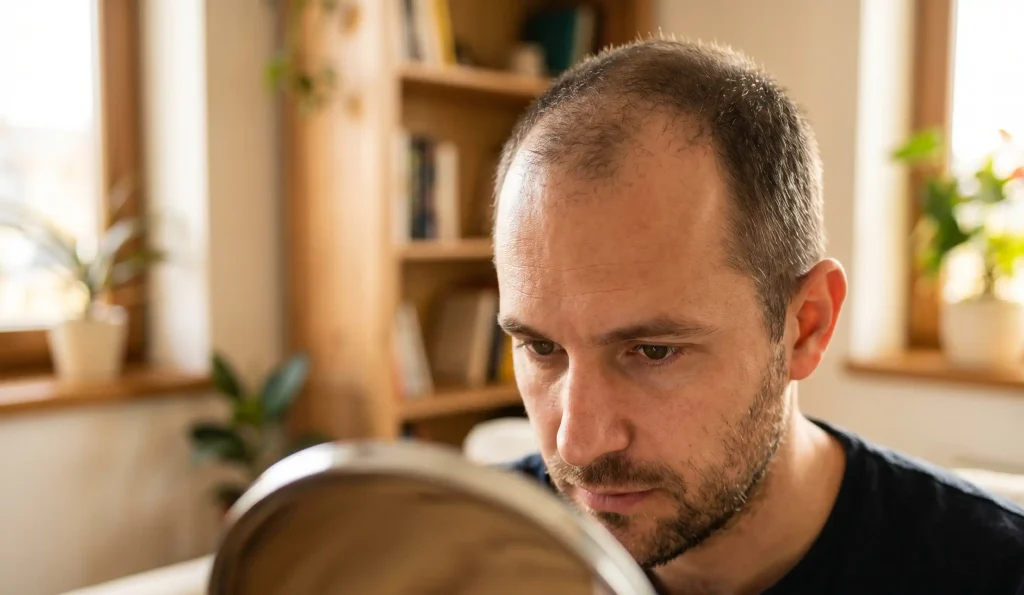
In the niche field of high-definition hair restoration, the “start to finish” of the actual surgical procedure is a marathon of technical precision. The typical duration of the surgery depends on the number of follicular units being transplanted—usually between 2,000 and 5,000 grafts—as it generally takes 6 to 10 hours to complete. From the point of view of biometrics, time is needed to maintain the systemic vitality of each graft during the extraction and implantation phases. The whole process is split up into detailed steps: initial designing and local anesthesia, extraction of single units (FUE), and making recipient sites, along with implantation. To get structural harmony, they have to proceed at a measured pace to be able to maintain the highest graft survival rates.
At Lin Health Europe Clinic, we consider the surgical day a clinical masterpiece. Our experts in Istanbul apply a team approach which reduces the “out-of-body” time of each follicle to guarantee that the biological integrity of your hair is maintained at every step of the high-definition procedure.
The Critical Window: Graft Anchoring and Early Recovery
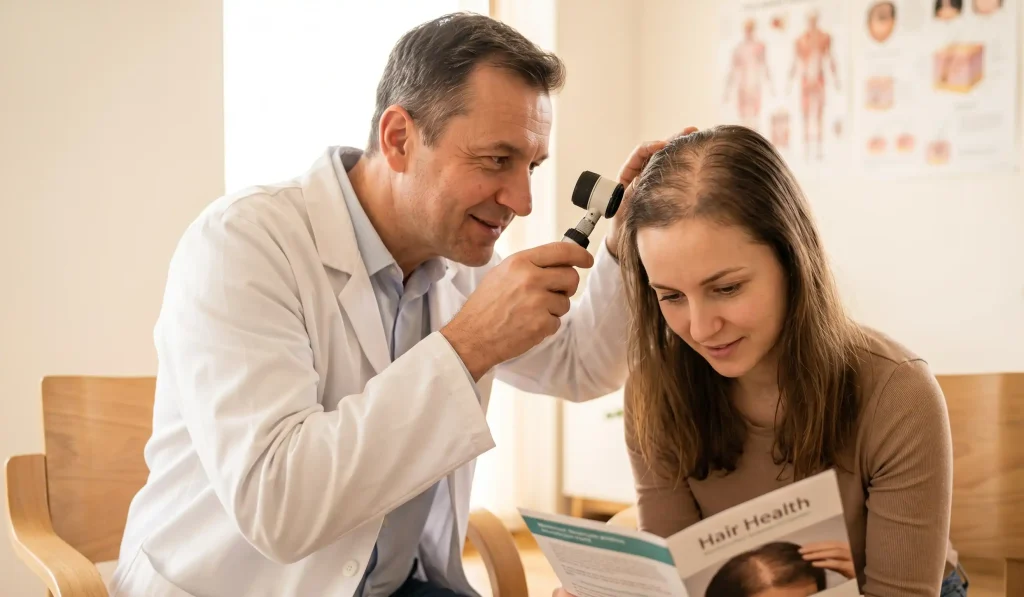
The “finish” of the first healing phase is reached about 10 -14 days after the surgery. At that moment, the scalp biometrics deal with graft anchoring and stabilizing the tissue matrix. Follicles start to establish a vascular connection with the scalp within 48 hours, a process that is completed on day 10. Primary incisions heal quickly, but the patients have to strictly follow the protocol to be able to handle the localized edema while also preventing mechanical trauma of the new grafts. After the two weeks, the “crusts” fall off naturally, and at the same time, the structural harmony of the scalp starts to revert to the baseline again.
At Lin Health Europe Clinic, we enrich the scientific approach to hair restoration by offering post-operative kits, specially made, for our international clients in Istanbul. Our medical team in Turkey is the one you should entrust with the guidance through these first 14 days so that your follicular units are tightly integrated, and your systemic vitality is supported.
The Growth Matrix: Maturation And The Shedding Phase
Weeks 2 to 8 mark a hefty biometric event when the phenomenon of telogen effluvium or “shock loss” takes place. This entails the transient dropping of the transplanted hair shafts as the follicles switch to their resting phase due to the physiological surgical stress. Although this might be a psychologically unsettling period for the patient, it is necessary for new, healthy hair growth. It is between months 3 and 6 that the “growth matrix” is switched on and that the first small, faint hairs start appearing on the scalp. This is the point at which the recovery from surgery is becoming the biological rebirth and the high-definition density is starting to get a shape.
We regard the phase of the so-called “ugly duckling” as one of the most crucial stages following a hair restoration procedure, as this is the time when new growth begins. Only on a healthy biological substrate, supported by the very best regenerative facilities in Turkey, will the follicles mature properly.
Achieving Total Structural Harmony: The Final Result
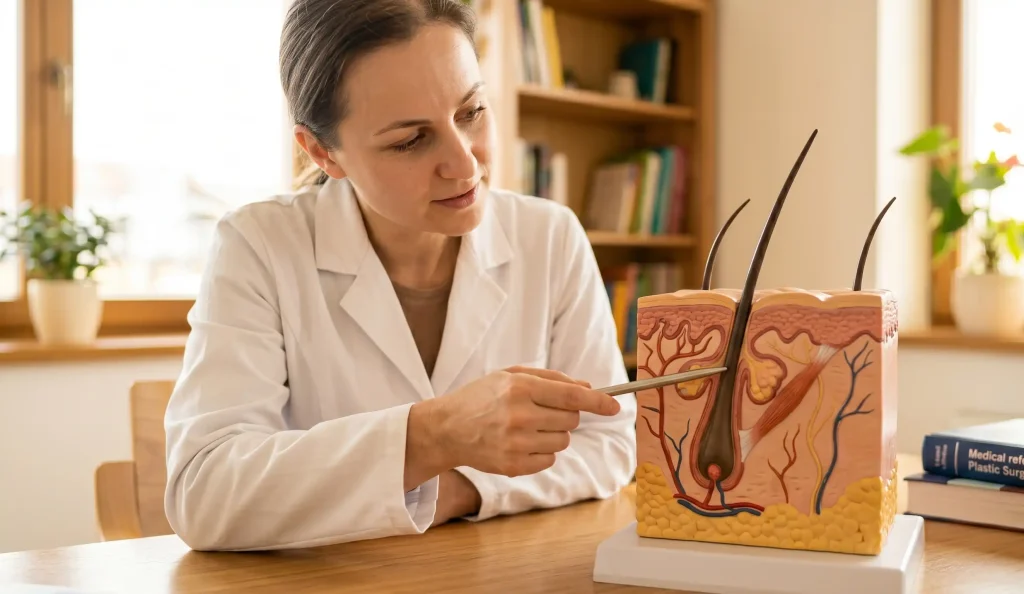
Usually, the ultimate outcome of your hair transplant is attained around 12 to 18 months after the operation. This long delay is determined by the normal life cycle of human hair, which undergoes shafts that gradually thicken, become more pigmented, and become denser. At one year, most people get about 80% to 90% of the final result, with the remaining months being basically a time for “textural maturation” and the “pattern stabilization” of the follicles. Complete structural harmony is achieved only when it becomes impossible to differentiate between the density and the flow of transplanted hair and the native hair.
The level of knowledge at Lin Health Europe Clinic includes controlling this long-lasting endeavor with extraordinary accuracy. Our clinics in Istanbul are equipped to not only provide systemic vitality and follicular health but also to keep pushing forward until your complete silhouette is a reality.
Hair Transplant in Turkey
Time management when having a hair transplant at Lin Health Europe Clinic resembles a highly complex journey that is carefully handled by first-class professional care. With our clinic in Turkey, you have a global refuge where surgical brilliance joins the highest safety standards as per the JCI accreditation, and this way, every hour of your surgery and every month of your recovery is matched perfectly to your aesthetic goals. We know that a hair transplant is a high-definition investment in your self-confidence, and what we want is to give you the most seamless, all-in-one environment where your results will be under control with clinical mastery and technical precision.
If you decide on our clinic in Istanbul, you are relying on a medical system that is excellent not only technically but also biologically for hair restoration. Our elite team takes advantage of the newest innovations in medicine in order to be sure that your switch to a more complete and lively head of hair is done with professional rigor and excellence right there in Turkey.
FAQ:
In fact, most cases of the 4,500-5,000 grafts range are done in one session of 8 to 10 hours at our Istanbul center to provide the highest possible graft survival and the best structural integration.
Within the first 10 days, the grafts are very vulnerable to falling off; after that, they have become biologically “locked in” within the tissue matrix of the scalp.
The main factor that determines the length of the timeline is the biologic growth cycle of the hair follicle. The follicle must first go through the resting phase before it can produce a hair shaft with the normal thickness and color.
In the “shedding phase” (months 1-3), the hair may be sparse, but at month 4 the new growth will be providing a natural high-definition density that will slowly mask the surgical area.
Indeed, Platelet-Rich Plasma (PRP) can improve the metrics of healing and may help in accelerating the follicles to the growth phase, as we frequently advise at Lin Health Europe Clinic.
Unger, W. P., and Shapiro, R. (2010). Hair Restoration Surgery: Biometrics and Procedural Mastery. Informa Healthcare.
Bernstein, R. M., and Rassman, W. R. (2002). Follicular Unit Extraction: Achieving Structural Harmony and Graft Security. Dermatologic Surgery.
Tebbetts, J. B. (2002). Systemic Vitality and Surgical Precision in Follicular Procedures. Saunders Elsevier.
Janis, J. E., et al. (2005). Scalp Anatomy and Biometrics: Implications for Recovery. Plastic and Reconstructive Surgery.