
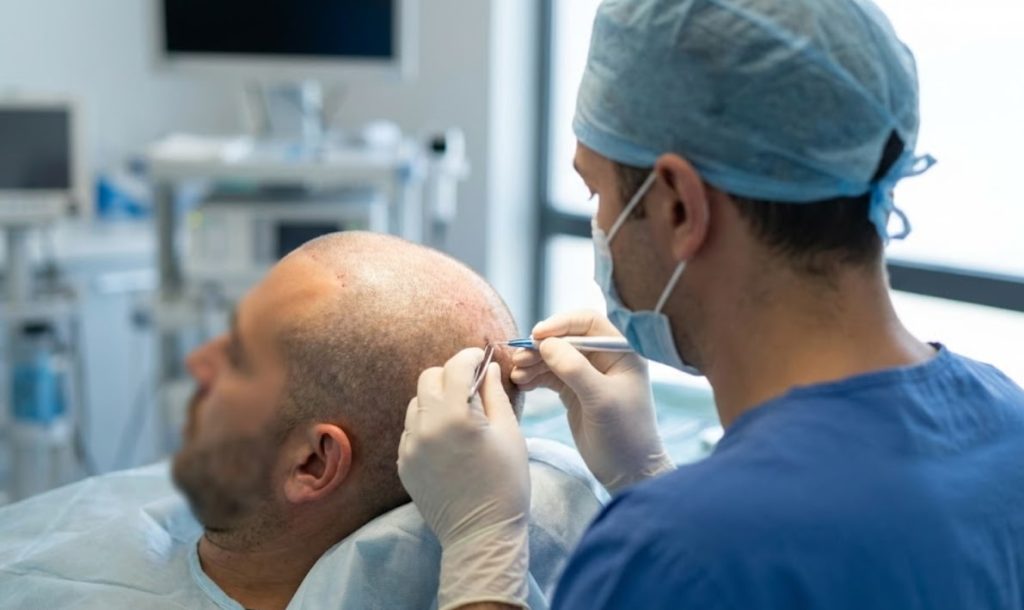
FUE is often considered the best for natural results.
After hearing that Turkey is the number one country for hair restoration, you might have decided to buy your hair back there. But, when you start looking at different clinic websites to decide which treatment suits you best, you’ll quickly become lost in a sea of acronyms: FUE, FUT, DHI, Sapphire. It’s quite a lot of information to digest. All you really want is your hair back, but now you have to pick the method of a medical procedure without being a doctor.
What patients usually want to know from the surgeons of Lin Europe Clinic is: “What’s the best type of hair transplant?” The truth is that there isn’t only one best method; the best method is only that which suits you the best. The decision whether to go for FUE (Follicular Unit Extraction) or DHI (Direct Hair Implantation) is dependent on the extent of hair loss, your hair characteristics and hair style goals. A comprehensive understanding of how each tool works is exactly what you need to be able to make a proper choice.
The Modern Standard: Sapphire FUE
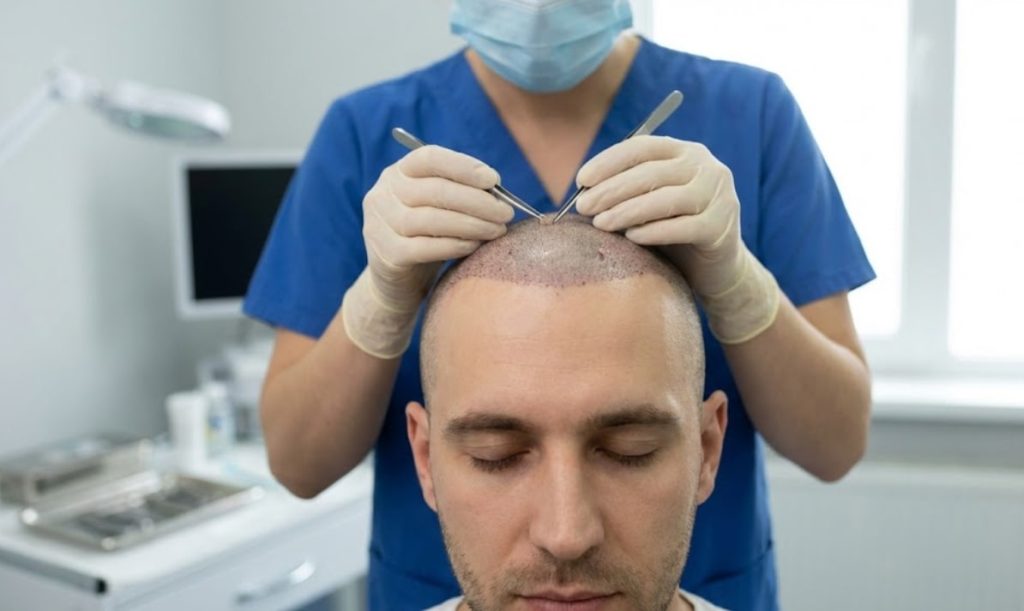
FUE lays the groundwork of today’s hair transplant industry. During a FUE procedure, grafts (hair roots) are taken individually from the back of the head (donor site). The main fracture is in how the grafts are placed.
With a standard or Sapphire FUE operation, the first step for the surgeon is to create a great number of very small micro-channels (holes) on the recipient bald area. At Lin Europe Clinic, we don’t use steel blades but blades that are made of Sapphire gemstone. A blade made of sapphire is not only sharper than a steel blade but also, it lasts longer thus, it gives cleaner and more precise V-shaped cuts which are very small and barely visible. When the micro-channels are all ready, the team puts hair grafts in the holes one by one with the help of forceps.
- Best Candidates: When it comes to patients with advanced balding (Norwood classification level 4 to 6), FUE is generally considered the “best” option. Why? Because it is much faster to open the channels and the maximum number of grafts (4,000 up to 5,000) you can put in the one session is very high, thus, a bit of time saving. FUE is the way to go if you want to cover a large area of the scalp that is still bald, as it is the fastest method to get the most coverage.
The Precision Tool: DHI (Choi Pen)
DHI is a furthering of the FUE tech in making improvements to the procedure. The first part of the process which involves collecting hair follicles remains unchanged but the implantation part is completely different. By use of a special apparatus known as the Choi Implanter Pen, the surgeon accomplishes the task of implanting the hair, following a reversal of the steps as he does not create the channels first.
Hair grafts get into the blade tube (the hollow needle) of the pen. After that, the operator presses a Choi pen to the head and, by means of a physical action of the instrument without a third hand, the hair is brought into the scalp at the very moment when the incision is being made. This means thereby that the angle, depth, and direction of every hair planted can be controlled to a tee.
- Best Candidates: For patients requiring high density of hair in a small spot (for example, the hairline) or those looking to thicken their existing hair, DHI is the “best” option. The introducer needle is so slim that your hairs can still be planted in between your current hair without causing any damage. As a result, you rarely (if at all) have to shave the receiving area and the “unshaven” transplant is, therefore, the method of choice for women or men.
The Donor Area: The Limit of “Best”
It is your “donor area” in the first place which initially limits you to how much hair you can really get from a hair transplant no matter what technique you use—this strip of hair encircling the lower half of your head.
Picking the best method is not only about optimal results but also about the safety of the patient, an experienced surgeon will tell you. The back of the head can be left looking barely bare and marked with patches, like a moth-eaten garment, as a result of plundering of the donor area or over-harvesting (taking too many grafts). No matter if it is FUE or DHI, at our clinic we determine the safe donor volume with extreme care so that whilst we work on the front we don’t spoil the back.
The Verdict: Coverage vs. Density
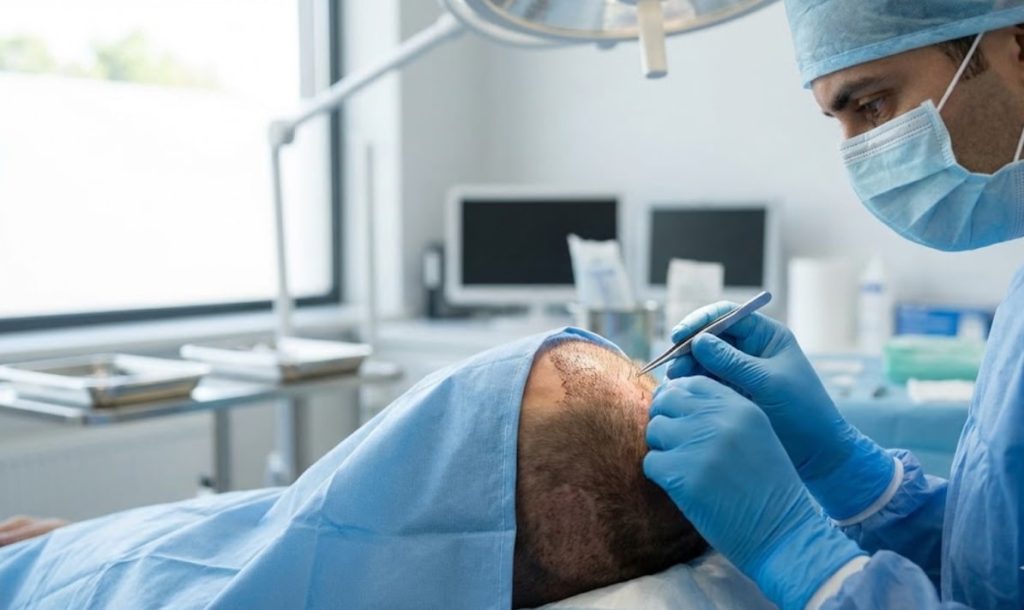
If you want me to make it easy for you, you can liken the whole thing to painting.
- Using Sapphire FUE is like painting with a good quality roller. It is very efficient, effective, and ideal for a quick and smooth coverage of large blank walls (big bald spots) with minimum trauma.
- DHI is like using a fine-point brush. It is slower and more precise, perfect for detailing the edges (hairline design) or filling in gaps without disturbing the surrounding area.
We at Lin Europe Clinic frequently do Hybrid Hair Transplants by first using Sapphire FUE to give the crown and mid-scalp adequate density and then going for DHI to get a high-definition, rugged front hairline that looks naturally as if it has grown.
Why Turkey Leads the Way
Forget how you opt for FUE or DHI, Turkey will still be the number one place to go because of just one factor: volume and experience. While a Turkish surgeon may be able to perform 500 procedures in one year, a European surgeon may only be able to perform 50. Such repetition results in expertise.
At Lin Europe Clinic in Istanbul, we let the evidence decide the technique. We examine your donor capacity and hair loss pattern and then tailor the treatment accordingly. We work with real Sapphire blades to reduce the trauma to the tissue so that no matter if you choose the pen or the blade, your result will be natural, dense, and durable.
Frequently Asked Questions About Hair Transplant
In cases of severe baldness where a large number of hair grafts is necessary, the Sapphire FUE hair transplant is generally considered the most appropriate treatment as it can cover a large area effectively in one session.
Generally, a DHI hair transplant is more costly than an FUE one, mainly because the operation is slower, needs more specially crafted tools (Choi pens), and takes more time to be finished.
A hair transplant is administered under local anesthesia, thus you will not experience pain during the operation; patients usually only feel a very brief grab when the numbing injection is given.
Hair transplants generally last for a lifetime as the hair follicles that are transplanted are taken from the back of the head, which is genetically resistant to the hormone (DHT) that causes hair thinning.
The scabs formed after a hair transplant usually disappear after 10 to 14 days, and the new hair will go through a shedding (shock loss) stage before growing permanently after 3 to 4 months.
Rassman, W. R., et al. (2002). Follicular unit extraction: Minimally invasive surgery for hair transplantation. Dermatologic Surgery.
Dousset, E. (2020). Direct Hair Implantation: A new standard? Aesthetic Medicine Journal.
Jimenez, F., & Alam, M. (2016). FUE complications and their management. Hair Transplantation.