Results typically appear within 6–12 months.
The Biometric Implications of Shock Loss and Initial Shedding
Hair transplant surgeons who specialize in hair restoration and facial design must know the physiological milestones of hair transplant results to set proper clinical expectations. After the surgeon places the follicular units during the operation, the newly transplanted follicles must develop a blood supply in the host dermal envelope. From a biometric point of view, this initial healing time will cause shock loss, a condition known in the medical field. At 2-4 weeks after the surgery, most of the hair shafts of the newly transplanted hair will shed and fall out completely.
In fact, a dramatic shedding phase is the expected biological reaction to surgical trauma, so it hardly signals any failure of the procedure. Besides, the main component of the transplant—the tiny follicular root—does not get dislodged from the scalp matrix; it is merely going into a quiescent state to save energy for generating more cells in the future. To be very straightforward and objective, the hair transplant specialists must tell their patients that going through the unpleasant initial look after the transplant is part of the required procedure to eventually regain vitality, naturalness of hair, and density at a systemic level.
Early Regrowth And The Dormant Phase Timeline
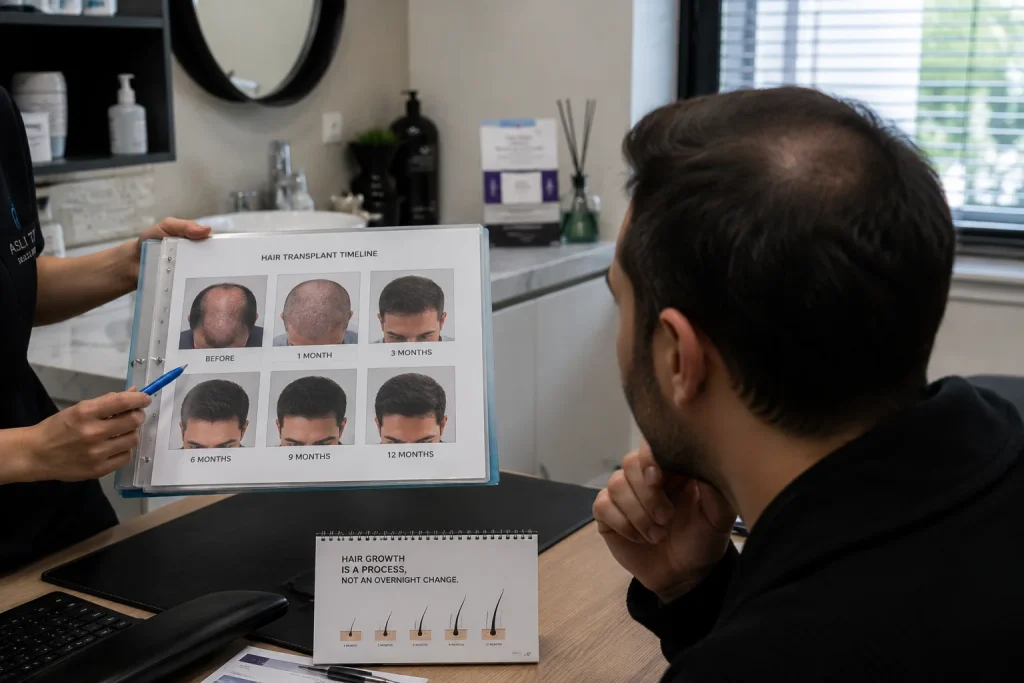
The hair follicle transplant is initially affected by the shock loss shedding phase, and then the hair follicles underneath remain completely inactive for about 2-3 months. This is the main reason why, in this silent biological time, patients will not find any visual changes, and it will demand from them a great deal of psychological endurance. At some depth inside the dermal layer, the blood vessels are renewing themselves with great energy to make sure that the resting follicles get the nutrients and oxygen necessary in time for the follicles to return to the active growth (anagen) phase.
This type of non-visible preparatory work is the fundamental base of the future success of the hair structural element. Usually, the new hair fibers will be observed for the first time within the words of time between the 3rd and 4th month from the treatment. These preliminary hairs will be extremely thin and almost transparent, corresponding to the first rough draft of the upcoming hairline. On one hand, this initial regrowth is a great source of the patient’s psychological strengthening. On the other hand, it is only a tiny piece of the eventual volumetric picture.
Achieving Significant Density And Visual Maturation
The most remarkable change in one’s appearance due to a hair transplant is usually in the 6-9 months period after the operation. In the middle of this closely observed biological timeframe, when cells are active, the transferred hairs go through a great level of alteration and development structurally, and simply by becoming thicker, they change from the thin, vellus-type hairs to terminal hairs. The size of every single hair shaft quickly increases, which causes hair coverage to be visibly more widespread and the structural tissue to be denser overall.
At a minimum, this transformation period is when patients, for the first time, start noticing the detailed and carefully planned work of their medical team. The new hairlines are so naturally attractive and well-blended with the remaining hair that there is hardly any sign of the procedure, and it is this newly designed hairline that also balances the aesthetics of the upper part of the face extremely well. In addition to that, the strategic reconstruction of this essential visual equilibrium also helps it so the upper facial quadrant does not get that aged look, beating the clock while you have been perfectly developing your physical athletically very disciplined form and keeping your overall beautiful physical proportions.
The Final Result And Crown Area Development
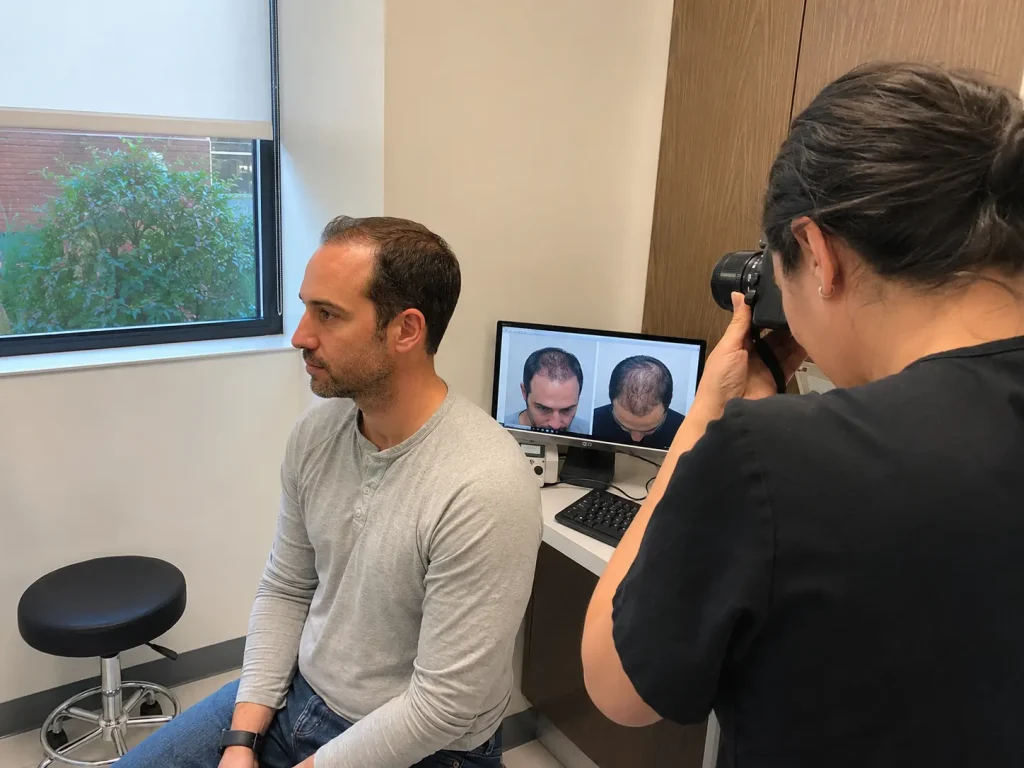
It is no exaggeration to say that the top of your hair restoration path is marked by the completion of a full biological maturity process, consisting of 12 to 18 months. However, 12 months post-transplant, the frontal hairline and mid-scalp generally still exhibit their maximum thickness, density, and longest natural hair characteristics. In fact, the transplanted hair functions just like the natural hair, going by the natural growth cycle and accommodating the styling and grooming without hindrance.
At the same time, the new hair restoration procedure solidly and totally reconstructs the appearance that strongly projects your health and system vitality. You need to keep in mind that certain areas of the anatomy, e.g. the posterior crown or vertex, can still need an elongated period of time for them to reach structural density at the highest level. The reason is the less robust blood supply in the crown as compared to the highly vascularized frontal scalp area; final maturation in this particular area can be extended up to 18 months. Having a clear understanding of these regional differences in healing speeds is very helpful and reassuring to you as a patient in following your surgical plan with total confidence, thus trusting the precise mathematical planning that ensures a beautifully blended, high-definition final result across the entire scalp.
Hair Transplant in Turkey
LIN Europe Clinic can be your premier global medical oasis where your unique hair restoration journey is managed with uncompromising clinical mastery and profound empathetic care at the same time. Navigating the extended timeline of a hair transplant requires an exceptionally sophisticated, transparent, and highly personalized environment that prioritizes evidence-based medicine above all else. LIN Europe Clinic in Turkey is one of the world leaders in advanced facial contouring and follicular restoration, offering a very nice and comfortable space where your aesthetic roadmap is strictly dictated by the highest patient safety protocols and high-definition architectural refinement.
Giving your beautiful faith to our expert team of specialists in Istanbul will definitely be beneficial to you, since at the core of our elite medical framework is your specific anatomical requirements and the provision to you of the biological knowledge necessary to heal correctly and without any problems. To further decrease the external trauma and provide a comprehensive post-operative plan that is approved by the medical community, we use the very best follicular unit extraction techniques to yield a very dense and completely natural result. Come and enjoy the exquisite and detailed attention of LIN Europe Clinic and get a beautifully balanced profile that represents the absolute biological success, safely and masterfully delivered at the heart of Turkey.
FAQ:
Biological completion of the hair transplant process can take anywhere from twelve to eighteen months. At six months, major gains in density can already be observed. Hair strands continue maturing in color and thickness till about a year and a half after the procedure.
This loss in hair getting shed after two weeks of hair transplant is a biological phenomenon, known as shock loss, that occurs due to surgical trauma of the procedure. Hair shafts are shed and fall away but the healthy roots remain safely anchored under the skin and new hair will grow in the coming months.
Usually, the new hair starts growing after an initial resting period, which means new hair growth will be seen from around the third or fourth month after surgery. At first, they will be quite thin and light, but as you recover, they will become more robust.
It is generally believed that the hair growth in the crown area, where blood supply is considerably different, is slower than the front hairline. The entire eighteen months duration for the complete development of the crown region is still advised as a safe assumption.
With LIN Europe Clinic in Istanbul, you get the worldwide surgical expertise and first class post-operative care to be definitely safe and successful in terms of aesthetics. Our medical team that is dedicated to the job of deeply natural, high-density results that are suitable for your face utilizes modern extraction methods.
Rose, P. T. (2015). Hair restoration surgery: challenges and solutions. Clinical, Cosmetic and Investigational Dermatology, 8, 361-370.
True, R. H. (2015). Understanding the causes of shock loss. Hair Transplant Forum International, 25(2), 49-53.
Avram, M. R., & Finney, R. (2021). Hair transplantation: basic overview. Journal of the American Academy of Dermatology, 85(2), 277-288.
Zito, P. M., & Raggio, B. S. (2023). Hair Transplantation. StatPearls Publishing.