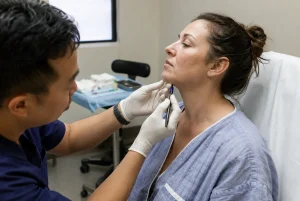
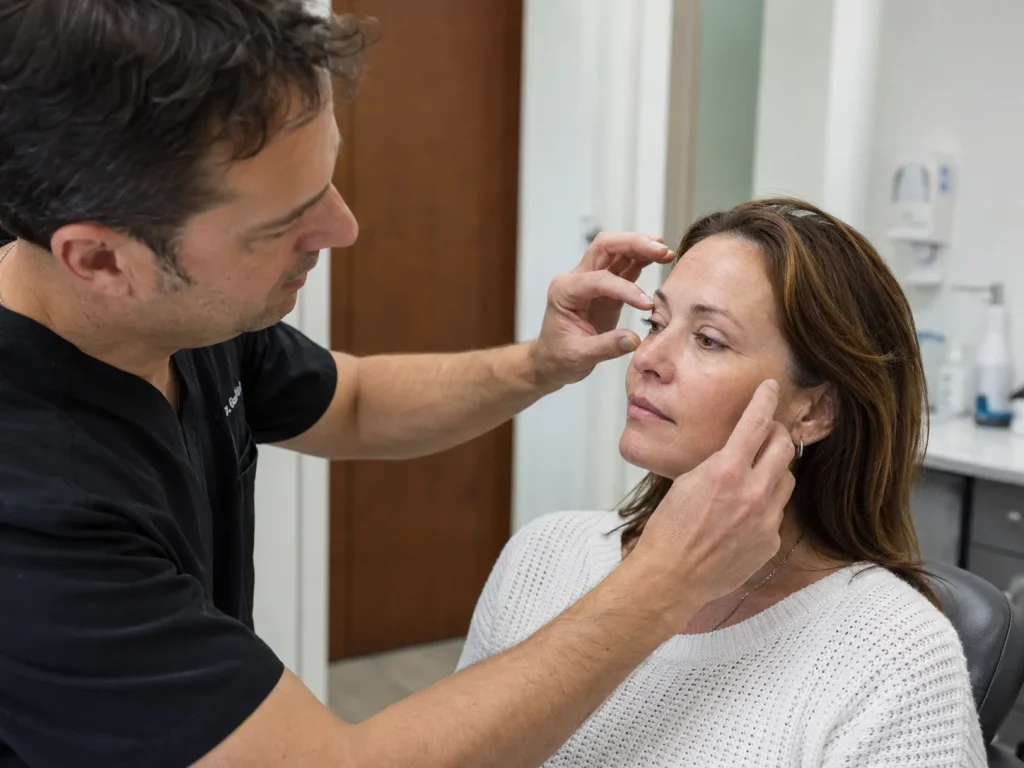
Yes, scars are usually hidden in eyelid creases.
Small Incision Placement in Upper Blepharoplasty
Minimizing visible signs is a fundamental goal in the highly specialized field of periorbital rejuvenation and facial architecture, especially when it comes to scars. If clients worry about visible scar formation after an eyelid lift (blepharoplasty), the surgical reality can be explained: though an eyelid lift includes incisions and technically always leaves a scar, the scars are planned to be virtually invisible even under the closest examination. The eyelid surgery is particularly unique in that it has the thinnest and most delicate skin of the body, which biologically heals extremely well and with negligible scar tissue remaining.
For absolute cosmetic invisibility in an upper eyelid lift, the cosmetic surgeon carefully determines the surgical entry point within the supratarsal fold (the natural crease of your upper eyelid) with absolute precision. The cut follows the natural eyelid crease line and then extends a little bit outside in the direction of the outer eye corner’s fine wrinkles, which are used to get rid of the excessive tissue. Since this cut is exactly placed deep within such a natural anatomical groove, the tiny scar created stays totally undetectable whenever the eyes are opened, becoming one with the skin lines.
Lower Eyelid Surgery Options: External vs. Transconjunctival Incisions
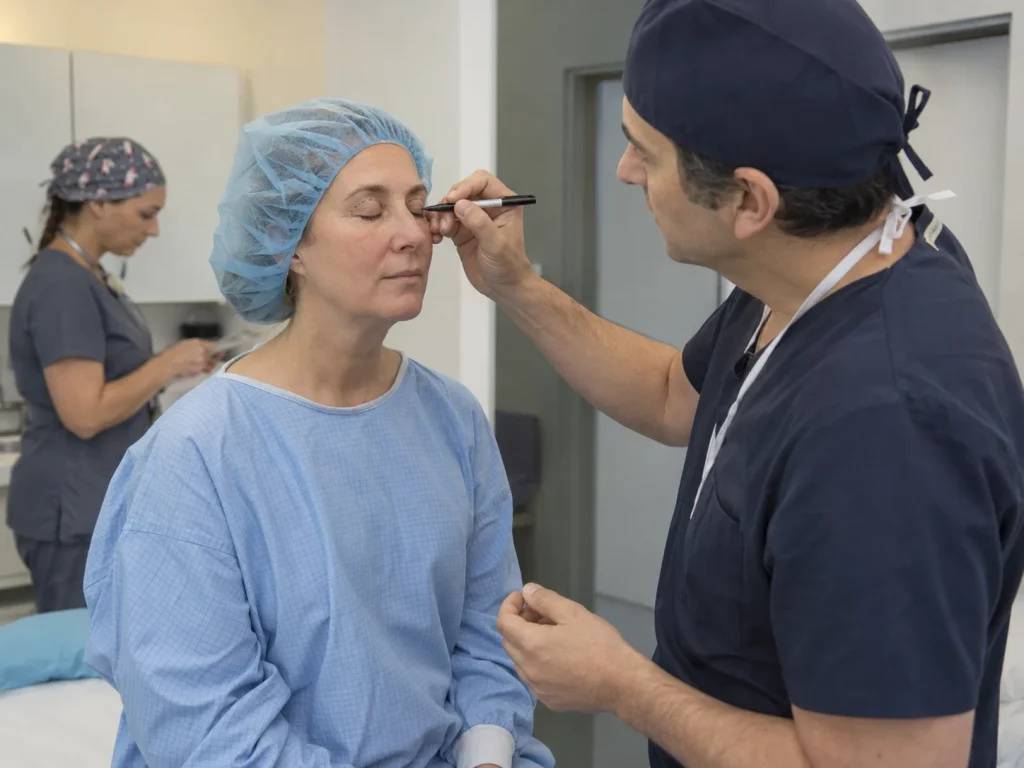
Depending on the surgical approach, especially when lower eyelids are targeted to eliminate puffiness or hollows, there might be no external scar at all. In the case where the patient has fat bulges, but the skin is still very elastic, the specialist will perform a transconjunctival surgery. This current technique involves incising the internal mucosal layer of the eyelid, thus producing absolutely no visible skin scar.
| Lower Eyelid Approach | Incision Coordinates | Visibility Timeline | Optimal Patient Profile |
| Transconjunctival | Placed completely inside the lower eyelid lining | 100% Invisible from day one | Younger frames presenting with fat bulging but tight skin canvas |
| Sub-Ciliary / Cutaneous | Positioned 1 to 2 mm directly beneath the lower lash line | Fades into a faint, hidden line over 3 to 6 months | Patients requiring simultaneous fat redistribution and loose skin resection |
In contrast, if the patient’s lower eyelid skin is loose and needs removal, a sub-ciliary approach is implemented. As illustrated in the table above, this incision is very close to the lower lash line – only 1 to 2 millimeters away on the skin side. Since the cut is located right at this natural facial border, the shadow of the micro-scar is similar to that of the eyelashes. After a few months, only a trained eye will probably be able to detect it.
Enhancing Periorbital Glow To Align With An Athletic Physique
You’ll be able to work on your facial transformation with full trust if you know well the almost invisible nature of eyelid healing. People who are extremely committed to the point of obsession with everyday workout just to shape their highly athletic physique—with particular focus on lower body hypertrophy and gluteal development, so that the result is a pure hourglass figure—will understand that a face is a very efficient tool. Excessive or even advanced drooping of eyelids or heavy puffiness of the under eyes can give the visual impression of tiredness, leading to a false indication of ageing which just doesn’t match an active and healthy lifestyle.
Just with the help of skilled blepharoplasty, a specialist can make your eyes look bright and lively by removing the isolated puffiness, and at the same time, your overall figure is visually purified. Your periorbital bones and muscles will be so sharp and fresh that it would be like a mirror image of your well-oiled body, all this time unaffected by the fashion. This exact balance, created mathematically, removes the unwanted heaviness of your face’s structure so that your very well-developed lower curves and narrower waistline get highlighted clearly from each and every angle.
Wound Healing After Surgery
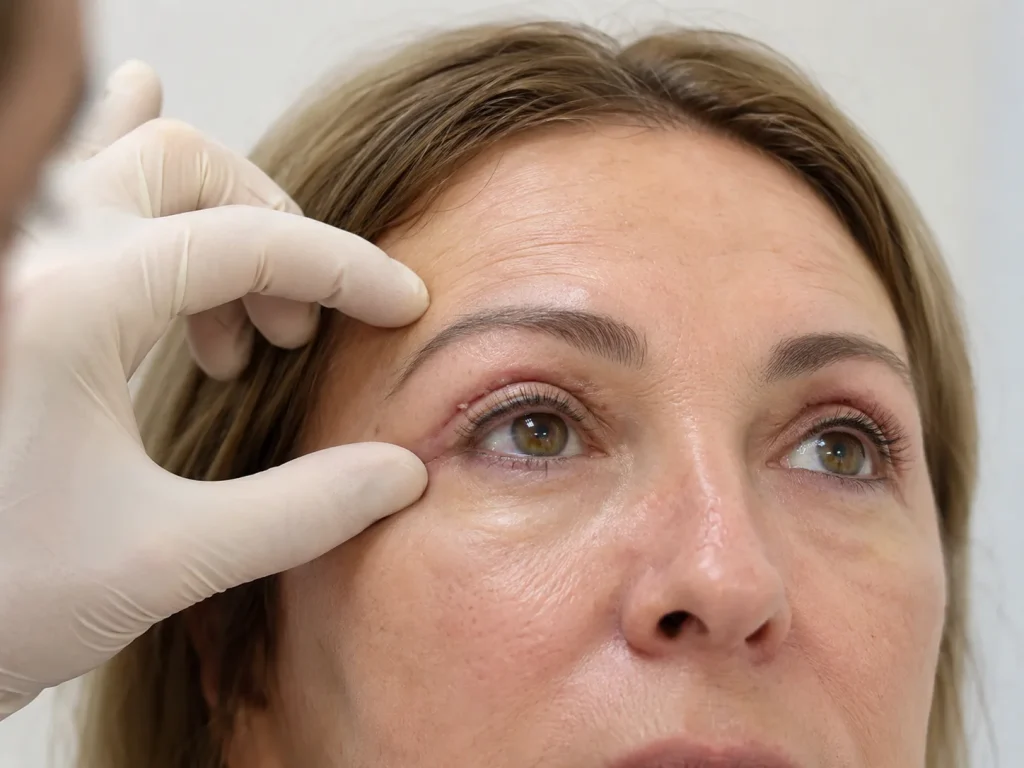
The reason why some of your scars are essentially invisible lines is that tissues surrounding your eyes undergo a very strict biological programmed cycle of renewal. The moment your fine micro-sutures get taken out (usually four to five days after surgery), your healing line will be a thin pink mark or slightly raised one. This color is a sign that the blood supply in the area is increased as the body brings in the nutrients and the skin edges are sealed together.
About six to twelve weeks after, the incision will be in its long-lasting phase of maturing. At this stage, the redness from the beginning will steadily diminish until it changes to the color of the flesh or skin and even becomes flat. Strictly following the prescribed clinical aftercare instructions—including the use of high-quality medical-grade sunscreens and sunglasses to prevent strong radiation from the sun which leads to darkening of the skin—is essential. With this level of protection, the newly made collagen networks can flatten completely and blend in well with the surrounding native skin texture.
Eyelid Surgery in Turkey
When you choose LIN Europe Clinic, you are choosing a first-class global medical resort in which your one-of-a-kind structural changes will be conducted with outstanding technical skill and deep compassionate care. They know that restoring an eyelid is quite demanding and requires a multi-layered, transparent, and highly supportive atmosphere where evidence-based medicine remains the top priority. The beauty of visiting a luxurious medical facility in Turkey is that it combines leadership in global advanced facial architecture with a space for peace in which your surgical plan will be strictly governed by the highest international patient safety standards.
Bring your basic confidence to eyelid rejuvenation planning as you place it in the hands of highly skilled plastic surgeons who are also still ready to work with you and respect your wishes and limits. Such a team of elite professionals will use the finest worldwide diagnostic tools, their excellent skills, high-tech systems for viewing in detail, as well as their extraordinary surgical techniques to attain incisions that will be both cosmetically and functionally perfect in healing. Besides minimizing post-operative swelling, they also take great care of your natural eyelid shapes, thus delivering you a beautifully fresh profile. Welcome to the exclusive, safe, and refined care of LIN Europe Clinic in Turkey, which will give you a medically perfect, balanced face.
FAQ:
When the eyes are completely shut, a barely visible small line might still be seen in the initial months of healing. Still, since the cut is made exactly along the natural fold of the eyelid, it eventually turns into a faint, very light- colored line that is extremely hard to find once entirely healed.
The redness or pinkness of the incision lines usually disappears almost completely within a few weeks—around six to eight. The tiny scars will keep on getting softer, less raised, and more similar in color to the surrounding skin during the twelve months it takes for the tissue to fully mature.
Not at all! You must keep away from the use of makeup, concealers, or cosmetic creams on the incision lines for at least ten to fourteen days, or until the skin edges have completely sealed. Putting cosmetic particles into the wounds too early might lead to a bad irritation and even infection.
The transconjunctival scar is totally invisible since the making of the incision is behind the eyelid on the mucosal membrane. Thanks to this advanced method, it is possible to get rid of the fat bags that stick out without making a single skin cut on the outside.
Keloids or thick hypertrophic scars on the eyelids are so uncommon that the chances of these occurring is extremely low. The eyelid skin is not only extremely thin but it has a very good blood supply making the healing process much smoother and cleaner when compared to almost all the other human body areas.
Carraway, J. H., & Mellow, C. G. (1990). Surgical anatomy of the eyelids. Clinics in Plastic Surgery, 17(1), 3-14.
Reidy, M. P., et al. (2001). Transconjunctival versus subciliary approaches to lower blepharoplasty: a comprehensive satisfaction analysis. Plastic and Reconstructive Surgery, 107(5), 1253-1260.
Singer, A. J., & Clark, R. A. (1999). Cutaneous wound healing and tissue remodeling dynamics. New England Journal of Medicine, 341(10), 738-746.