Usually around 250–350 cc, depending on body proportions.
The Volumetric Mathematics of Cup Size Increases
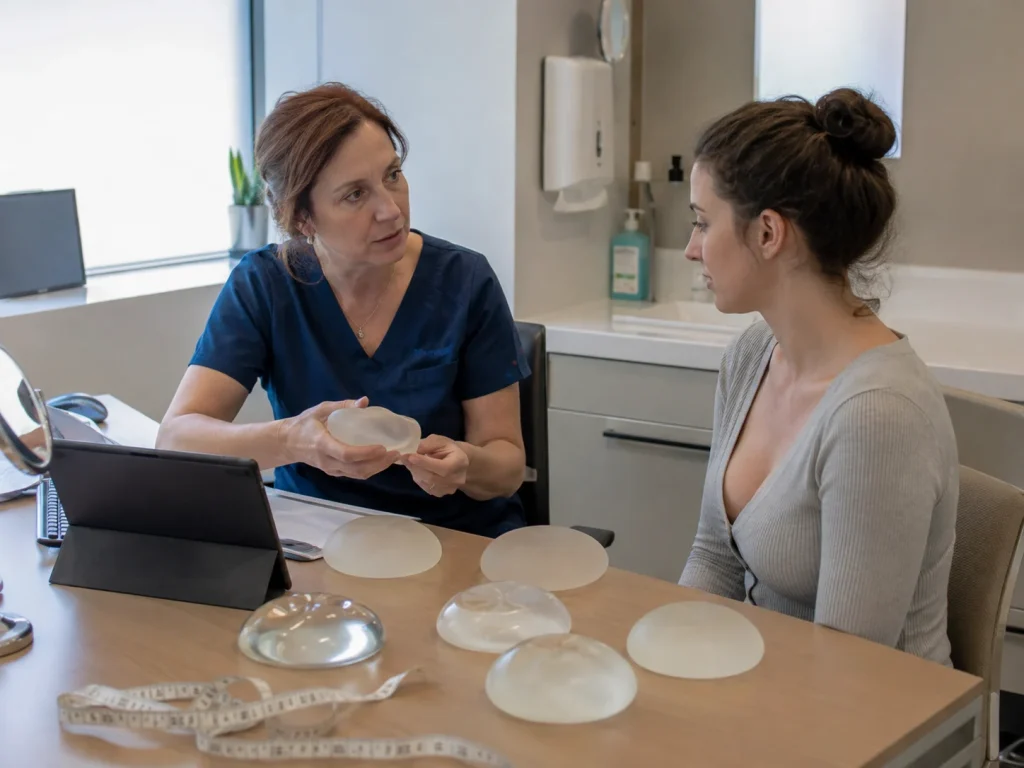
Tailoring breast implant sizes at such a level requires an accurate mathematical model. That is the case if you want to make it possible for your cup size to get bigger. First off, we are going to take an informal look at the fact that, in reality, sizes of bras differ considerably when we look at different brands, while, on the other hand, certified cosmetic surgeons all over are using cubic centimeters – this is the most scientific and clinically accurate way of describing the size of breast implants (cc). A clinical approximation, therefore, is to state that to elevate the breast size by one complete cup size, you will approximately need 150-200cc of implants.
Bridging the gap between the A and C level of the chest is equal to changing two cup sizes, which, from a medical point of view, means that patients mostly need an implant between 300cc and 400cc for their breasts to be fully round and proportional to C cups. But this mathematical average is only a starting guide; it will definitely change according to your personal physique, your breast tissue density, as well as the specific brand of the bra you use as an indicator. Therefore, you will always need a customized surgical measurement if you want accurate results.
Body Type Changes and Chest Base Width
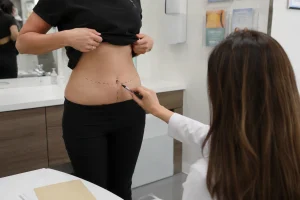
The concept and execution of the perfect C cup is not a one-size-fits-all formula. The actual results will depend very much on your particular chest characteristics. In other words, your plastic surgeon will assess the width of your chest area during the consultation. The breast base width, in fact, defines what the maximum diameter of the implant you can put in. Your skin may be stretched if you are going for a very wide implant. As a result, the implant may be shifted either to the armpit area or merged in the center between the chest (called symmastia), so it is necessary to look at both the beauty and the health aspects in making such a choice.
That being one of the unique aspects of our anatomy, two women with different frames who aim at upgrading their cup size from an A to a C can have such divergences that they require different-sized implants; for instance, a woman with a small, slender frame of body could get to C without any problems at all by placing 275cc to 300cc breast Implants. On the other hand, a lady who is naturally big-built might need implants that are 375cc to 400cc to spread the volume nicely across her wider chest structure and maintain the same projection in the forward direction as in C Cup.
Implant Profile And Skin Stretchability
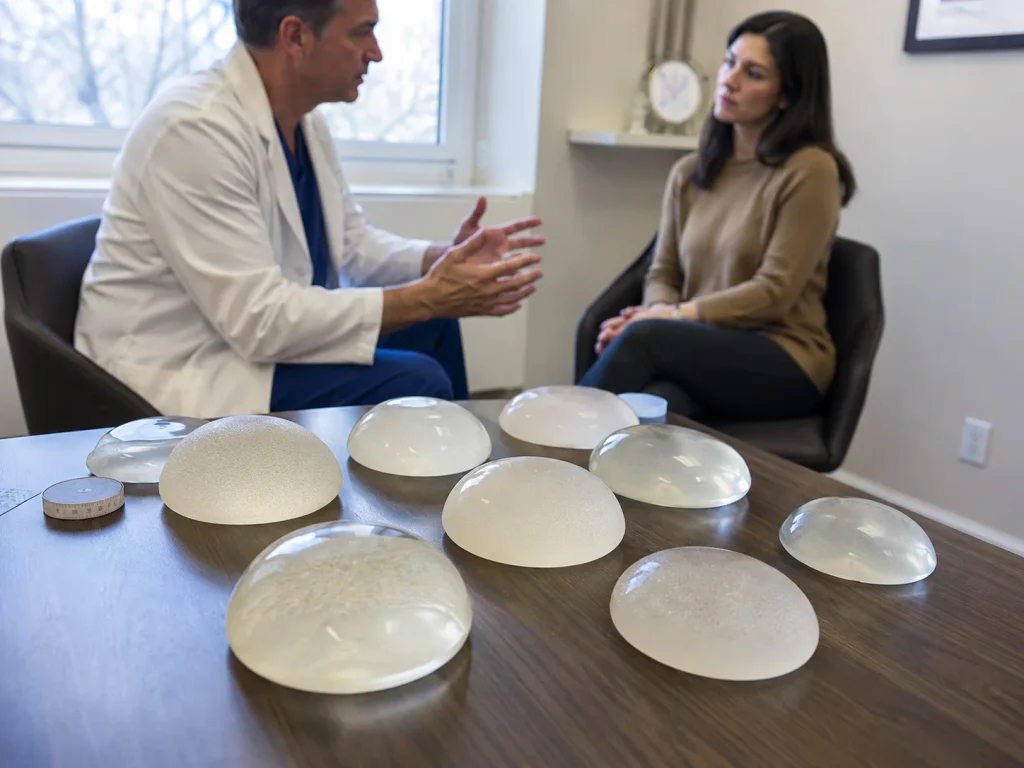
Apart from the quantity of implants expressed in cubic centimeters, there is another factor – the profile or projection of the implant that makes it so important to reach a C cup from such a tiny start. Simply, profile means the distance at which the implant sticks out from the body wall. In some cases, when a woman has a very small cup and, in addition, a narrow chest wall, it is highly common to use high profile or ultra-high profile implants. The surgeon can give enough forward motion of the implant by using such a type of implant profile to fill a C cup bra without over-extending the lateral base width of the patient’s chest in any way.
Moreover, the size of the skin envelope that has to hold the implant and the level to which it can be stretched also need the consideration in calculating the size of the implant for surgery. A woman who is still young, has never given birth, and therefore has a very flat and tight body has a skin envelope that is quite rigid. It is a bit risky to implant a large 400cc right away because it may stretch the skin and even the incision lines too much. To minimize this risk, our surgeon carefully measures how much stretch your skin is capable of. This way, the volume of implant that we choose can beautifully create a C cup without the risk of cutting of the blood supply or even causing an unnatural look because the skin is over stretched.
Keeping Everything Stable and Following Up Strictly
For highly sensitive individuals, strictly following the rules related to physical protection is the key component of the healing period that is not only essential but also indispensable to the physical transformation in terms of shape and size of your body after surgery. The creation of internal breast pockets and positioning of the implants with precision, as well as the surgical incisions, are highly delicate and require mechanical protection at every opportunity during the critical first weeks after the surgery in order for the collagen and the connective fibrin bonds to form firmly and without any complications.
In order to prevent undue stress on your newly healing tissues and consequently avoid the deep edema that may occur, you need to take an exclusive lie-down on your back with your torso raised at the beginning and middle stages of recovery. Moreover, using surgical post-operative compression bras, which are very soft and supportive in different shapes during the first days after surgery (around 4-6 weeks), prevents mechanical stress, supports incision lines, facilitates smooth tissue adherence, and strictly prevents the use of nicotine, which can rob healthy tissues of their blood supply.
Breast Implants in Turkey
When you become a patient of LIN Europe Clinic, you are not only coming into contact with top-notch surgeons but also benefiting from a great environment of the clinic where medical procedures and beauty techniques blend with caring and understanding towards human beings. We are proud of our luxury medical facility at LIN Europe Clinic, and it ranks in the top worldwide in providing advanced breast sculpting and plastic surgery follow-ups. It is our unique peaceful retreat at the heart of Turkey that you can completely entrust your future plans for your appearance and your health, and which you can feel totally confident that you are being treated according to the highest standards of patient safety from a global point of view.
In short, by having cosmetic surgery at our state-of-the-art facility in Turkey, you get to work in close cooperation with the top medical personnel who, besides their great skills, can take excellent care of your health and appearance. As a result of working together, the outcome of your medical journey will be the shape of your body and the physical look that will truly reflect your most beautiful self!
FAQ:
You would likely require breast implant size in the range of 300cc to 400cc to achieve a A cup to C cup size increase generally. However, to some extent the volume depends on your actual natural tissues (e.g. chest width and breast tissue size) and how tall you are.
In plastic surgery, as a rule of thumb, an increase of 1 cup size is about 150-200cc. Still, the sizes of bras can be extremely different from brand to brand.
Yes. That jump from the A to C is really a two-cup-size change very regularly done and that can be accomplished safely with the right implant size and shape.
In fact, the high-profile one goes out further and has the effect of a larger depth, yet a smaller base width. For instance, the one with a high-profile is a very good choice for people with narrow chests who want a full, curvy figure but at the same time avoiding the implant bulge at the sides.
The 350cc implant can indeed appear very natural especially if the surgeon places it beneath the chest muscle and then also shapes it to complement the patient’s natural chest size or ribcage base width.
Tebbetts, J. B. (2002). High-definition breast augmentation: Tissue dimensional planning and implant profile selection for A-to-C cup transitions. Plastic and Reconstructive Surgery, 110(2), 566-577.
Spear, S. L. (2006). Surgical planning in breast augmentation: Managing narrow base widths, tight skin envelopes, and high-profile projection vectors. Clinics in Plastic Surgery, 33(4), 543-552.
Rohrich, R. J., et al. (2014). Advanced postoperative care, deep pocket dissection stability, and risk mitigation protocols in breast augmentation. Aesthetic Surgery Journal, 34(5), 587-595.