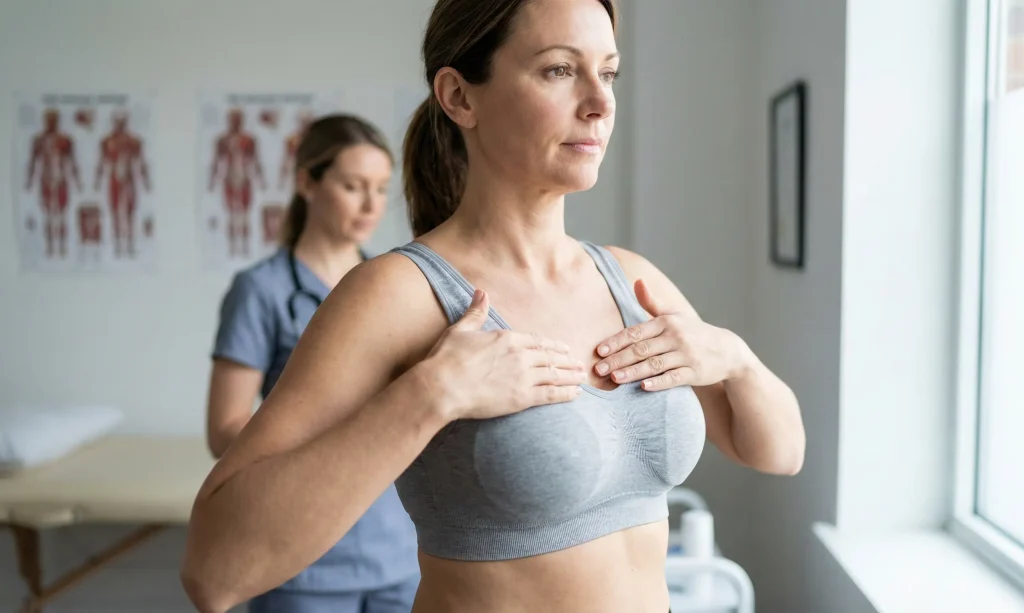
Yes, gentle massage may help reduce the risk.
Often, patients are concerned about capsular contracture even before a consultation for breast augmentation. This problem is regarded as the most severe long-term complication following breast implant surgery. The body invariably develops a layer of scar tissue around a foreign material, which happens with breast implants as well. If this scar tissue tightens and squeezes the implant, the breast can turn hard, misshapen, and the patient may also suffer from pain. At Lin Europe Clinic, we are aware that natural beauty is only the starting point, but in order to keep that result, one has to be knowledgeable and take care in advance. We are the most comprehensive plastic surgery facility in Istanbul.
We offer you the confidence and safety you can rely on. You have an important role in your recovery. Quite a few patients wonder whether they can use massage techniques to prevent the scar from hardening. How effective the massage is depends only on the type of implant and the surgical plan in your case. We make patient education our first priority to make sure that you comprehend the biological processes going on in your body. If you follow our specific postoperative guidelines, not only will you lower your risk of complications to a minimum, but you will also be able to enjoy soft and natural-looking results for many years.
Understanding the Formation of the Fibrous Capsule
The body of a human being has a very powerful immune system that is able to isolate foreign bodies for your protection. When you have a breast implant put in, your body starts right away, even before you notice it, to surround the implant with collagen fibers. These EOS-implants in surgery are called fibro-capsules. If the healing goes well, the capsule protective layer will be so thin that you will not even be able to feel it. It helps in the best way possible by keeping the implant at its place inside the breast pocket.
Cuproetic capsular contracture is an example of the situation when the healthy process of tissue repair gets over-excited. Myofibroblasts, the cells that are specialized in this kind of work, signal the collagen fibers to shrink and thicken. Such shrinking of the pack, which is the pocket, causes the implant surface to reduce. Sometimes the operation results only in increased firmness, at other times the implant will be severely distorted. Knowing that the normal capsule and the pathological contraction are different will help you recover more efficiently as you will be able to self-monitor your condition. You have to inform your doctor right away if there is any change of breast softness.
The Mechanism of Implant Displacement Exercises

Doctors generally recommend that patients with smooth round implants perform implant displacement exercises, also referred to as massages, at home. Massage mechanically stretches the formation of the capsule. You keep the implant moving right up to the limits of the surgical pocket. Thus you stop the collagen fibers from maintaining a stiff, inelastic pattern. Keeping the pocket slightly bigger than the implant will automatically result in the device being soft and mobile.
You need to consider these exercises as part of your physical therapy for your chest. The constant displacement allows the pocket to keep its normal size throughout the period when the healing process is the most sensitive. Usually, the starting time of this procedure is around 3 weeks after the operation when the wound edges have gained enough resistance. Daily monitoring of the tissue’s state sends the appropriate signal for flexibility to be maintained. Patients who are diligent in following their regimen often witness a significant increase in the ultimate satisfaction rate and the softness of their breasts.
Contraindications for Textured Implants
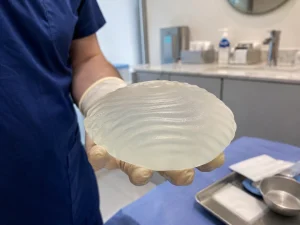
If you happen to select textured or anatomic (teardrop) implants, then most of the rules apply to you very differently. The implants are manufactured with a rough surface so that it can attach to the breast tissue the same way Velcro does. This attachment totally locks out the implant from rotating. A teardrop implant’s rotation would cause the breast to lose its normal shape. Therefore, product massaging of textured implants is generally discouraged by surgeons.
Massaging a textured implant sets up the stage for wear and tear between the rough surface of the shell and the delicate tissue inside your body. A rubbing or friction of this kind will lead to the creation of a container filled with fluid (seroma). That is why the inflamatory response is the one that eventually leads to the greater intra-mammary pressure and the formation of the capsular contracture. You should double-check with your doctor what type your implant is before you try any movement. Following your device-specific instructions will prevent you from getting hurt and guarantee your healing goes well.
The Role of Biofilm and The “No-Touch” Technique
The research of today pointedly reveals that bacterial biofilm is the culprit behind almost all the cases of capsular contracture. It turns out that the bacteria from skin or milk ducts could stick to the implant shell during the operation. These bacteria generate a long-lasting, slight infection which leads to the immune system thickening the wall as its response. So, the emphasis is now on sterile surgery techniques rather than on postoperative massage only.
At Lin Europe Clinic, we are employing the “No-Touch” technique in order to remove completely this risk. We use a Keller funnel which is a sterile insertion tool for the implant. This way, the implant will not be in contact with your skin or the surgeon’s gloves before entering the breast pocket. Additionally, we do pocket irrigation with antibiotics. Strict adherence to our very high sterility standards has significantly lowered the incidence of infections. The Operating Room is where it all starts, your safety, even before your recovery begins.
Medical Management with Leukotriene Inhibitors
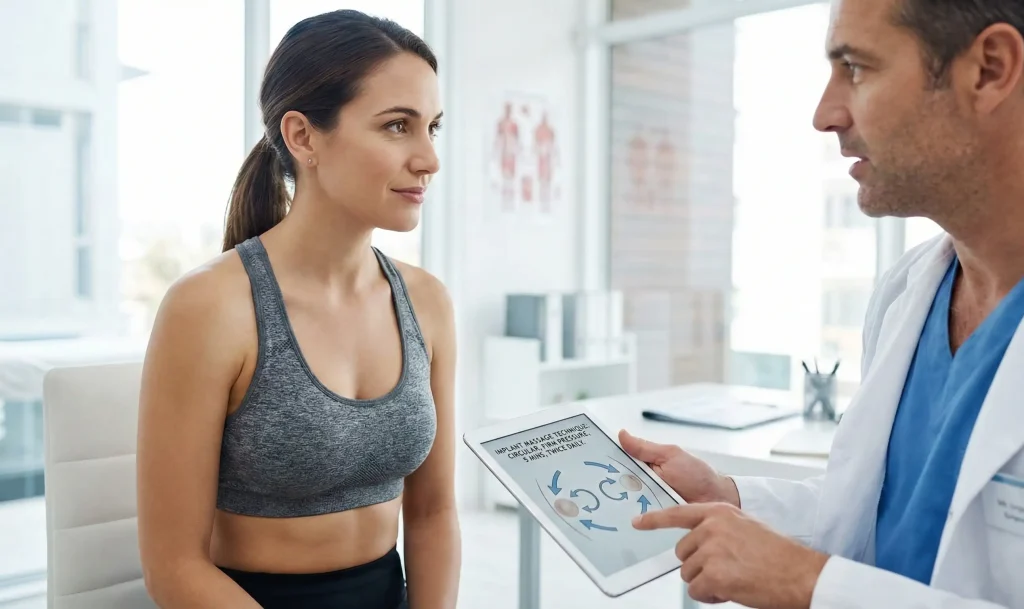
Doctors will assign you to take certain medications in order to help your body keep the capsules soft, especially the ones that are over both your breasts. Medicinal substances like zafirlukast or montelukast (Singulair) serve as leukotriene inhibitors. These drugs target and inhibit inflammatory chemicals that lead to the contraction of scars. Initially, the main purpose of those drugs was to treat asthma but now, they are also used for preventing and treating early-stage capsular contracture most effectively.
If you happen to realize that your breasts are hardening, you might be given a prescription of those medications at that moment. By continuing using the medication for a period of 3 months, you are able to get back the softness which is lost as a result of the firming process. This pharmacological approach is in line with the displacement exercises for smooth implants. When you combine surgical precision, mechanical therapy, and medical management, you will be fully protected against complications.
Breast Augmentation in Turkey
Choosing Lin Europe Clinic for your breast augmentation in Turkey means you want the best medical standards available in the world. We combine into a seamless whole best practices to reduce the risk of complications such as capsular contracture from the very initial step with the use of high-tech surgical techniques. Our surgeons utilize FDA-approved implants from leading global brands to ensure superior durability and safety. To maintain a sterile environment, which significantly reduces the biofilm formation risk, we combine this with the rigorous “No-Touch” technique.
More than simply the operation, your stay in Istanbul is an experience of being taken care of. We even think of the smallest things like your VIP transfer and luxury accommodation so that you can totally concentrate on recovery. Besides, our team will teach you insightful tips on how to do displacement exercises to your own satisfaction and comfort level if your implant type calls for it after the surgery. At Lin Europe Clinic, we blend medical expertise and world-class hospitality to help bring back your lost confidence.
Frequently Asked Questions About Massage and Capsular Contracture
Massage is a method that can prevent capsular contracture in patients with smooth implants by essentially making the surgical pocket open and flexible; however, it is a method that needs to be done regularly every day.
You should start the massage to prevent capsular contracture only when your surgeon has given you the green light that your cuts have healed well enough, which is normally around three weeks after surgery.
When you do massage to prevent capsular contracture, the tissue feels pressure or tightness, but the feeling of sharp pain or damage to the tissues should not be caused by the massage.
General deep tissue massage does not prevent capsular contracture; only specific implant displacement exercises that stretch the internal scar capsule provide medical benefit.
Physicians often combine leukotriene inhibitors such as Singulair with massage to prevent capsular contracture as these drugs lower the level of inflammation that causes the scar to become hard.
Adams, W. P., Jr. (2009). The process of breast augmentation: four sequential steps for optimizing outcomes for patients. Plastic and Reconstructive Surgery.
Headon, H., et al. (2015). Capsular contracture after breast augmentation: An update for clinical practice. Archives of Plastic Surgery.
Pajkos, A., et al. (2003). Detection of subclinical infection in significant breast implant capsules. Plastic and Reconstructive Surgery.