
Calf implants enhance leg volume.
In the field of lower-limb aesthetics, “chicken legs” (calf hypoplasia) is a condition where the gastrocnemius muscles are not sufficiently volumized or defined to proportionally balance the upper leg and torso. While muscle fibers can be hypertrophied through isolated resistance training, there are cases when genetics or congenital diseases hinder a person from getting the desirable athletic, muscular shape. Calf implants serve as the final, permanent surgical option by inserting high-strength silicone prosthetics inside calf tubes to create the illusion of a well-trained muscle.
At Lin Health Europe Clinic, we regard calf augmentation as a very precise structural correction. If our international patients come to Turkey for treatment, we make it clear that this intervention is far beyond just increasing the leg size, but rather about the harmonious re-shaping of the silhouette of the leg. We are the top facility for lower body contouring, providing such a level of surgical expertise that implants become part of your existing subcutaneous adipose tissue and muscle fascia, resulting in a powerful but naturally looking profile.
Anatomical Placement: Subfascial vs. Submuscular
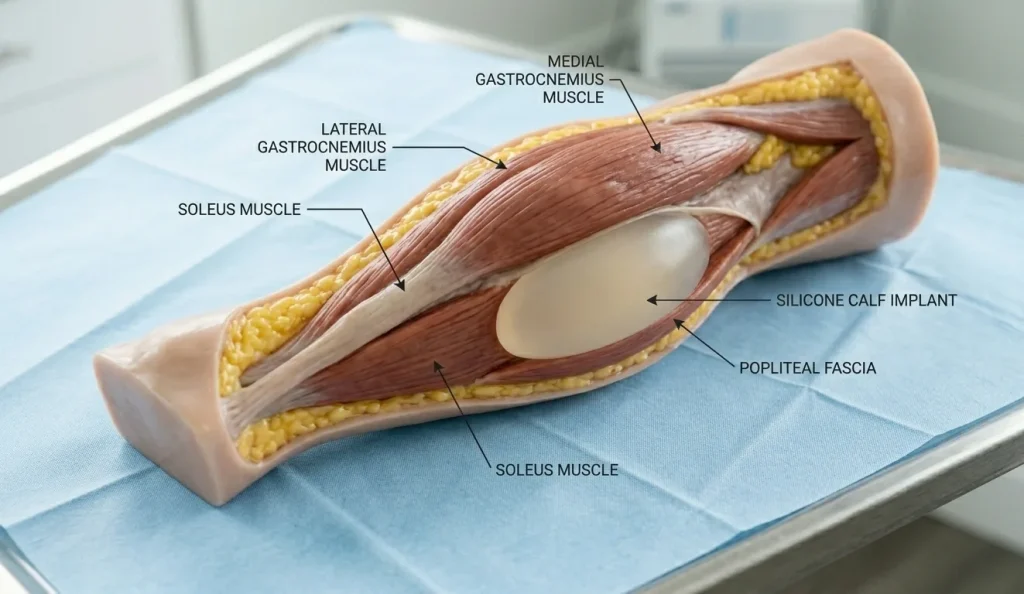
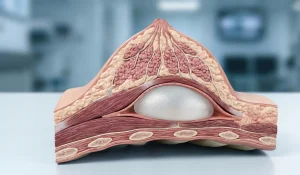
The clinical success of a calf implant hinges upon the anatomical relation of the implant and the calf muscle (gastrocnemius). The most frequently used method is subfascial placement, which means that the implant is placed under the muscle’s tough connective tissue (fascia). This gives the implant enough support to stay in place and at the same time, it is covered by a suitable amount of tissue so the person cannot feel it if it is touched. Sometimes, to integrate the implant deeper, the less common and more technically demanding option of submuscular placement may be used in certain reconstructive cases.
At Lin Health Europe Clinic, our Turkey-based surgeons follow the safest and most precise techniques to carve a perfect implant “pocket”. We strive to position the implant in such a way that it closely resembles the natural medial (inner) or lateral (outer) head of the calf muscle. Our renowned clinic’s client implants are meticulously positioned with the highest accuracy of the anatomy, which is evidence of our leading global standard of structural body surgery.
Implant Material and Morphological Design
Calf implants are made from solid silicone that has high cohesivity. These implants are firmer than breast ones which have a gel-like form and softness, since the calf prosthetics’ aim is to imitate the density of the contorted muscle tissue. They come in a variety of shapes, primarily “cigar-shaped” or anatomical, to harmonize with the patient’s stature and the extent of the projection desired. Medicalwise, these implants are meant for permanent use and therefore do not require “exchanges” as some other augmentation modalities do.
In Turkey, the Lin Health Europe Clinic team assists you in making a perfect selection with the help of 3D scanning in determining the exact length and volume needed for a correction of your particular defect or definition deficiency. They are known worldwide for using only the finest, biocompatible materials, which not only look great but are also well-tolerated by the human body. Their dedication to preserving the quality ensures that your results will maintain their beauty over time.
Surgical Access and Scar Management
The usual calf implant operation involves a horizontal incision within the natural fold behind the knee (popliteal fossa). Due to the anatomical feature of this region, any scar that results, will be almost invisible when the person is standing or taking a walk. A surgical instrument is used to make a path through the tissues down to the calf from where the prosthetic is inserted. As part of the normal physiology, a transient localized edema (swelling) is anticipated during the initial phase of tissue accommodation to the newly introduced volume.
The secret weapon of Lin Health Europe Clinic is the impeccable way our team handles wound closure. We implement in Turkey a sewing technique that results in very low tension and a popliteal scar that becomes little more than a fine and barely visible line after maturing. We are convinced that the highest-quality outcome always necessitates a real concern for the recovery details. Our clinic is at the forefront of the provision of a comprehensive “Scar Care Protocol” that guarantees that the only reminder of your surgery will be your altered and confident posture.
Recovery: Mobility and Compression
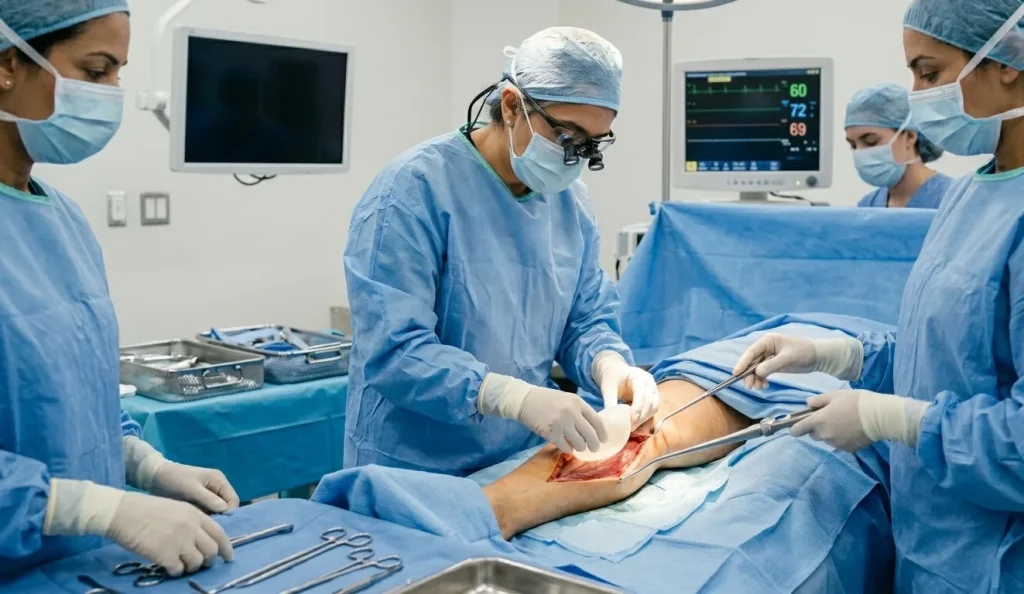
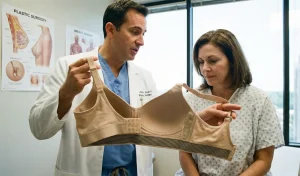
After calf augmentation, to ensure the fixing of the implant in place and to totally prevent its displacement or migration, the patient is expected to abide by a meticulously designed clinical recovery plan. Thus, during the initial 7 to 10 days, only a few, very short walks are allowed and at the same time, the legs have to be kept elevated in order to govern the movement of fluids (drainage and reabsorption). Wearing compression stockings that are of high quality is a must in order to support the subcutaneous adipose tissue as well as to ensure the killing of the implants is at the correct spot during the very first stage of neocollagenesis.
At Lin Health Europe Clinic, we prepare our international visitors physically through our specialized physiotherapy sessions to be held in Turkey. We encourage continuous, but slow, increases in activity with the aim that the muscle and the fascia will accommodate the implant without being strained too much. Our clinic in Turkey is at the industry’s edge because we offer a 24/7 medical support network that you could tap into anytime, and thereby, the transition of your return-from-anesthesia time-to-workout is under the best professional and top-class care handling.
Calf Implants in Turkey
True transformation is all about structural integrity; this is what Lin Health Europe Clinic is all about. Our center in Turkey combines the beauty of personalized patient care and excellence in medical technology, producing a very pleasant environment and a major enabling factor for your surgery. Being situated in centrally located JCI-accredited hospitals means that we have the necessary infrastructure to continue as the world leaders in international medical tourism and lower-limb reconstruction.
Picking Lin Health Europe Clinic equals having surgical experts at your disposal in Turkey. The global recognition of our surgical team goes hand in hand with their commitment to natural symmetry and safety in the long run for every new patient, regardless of nationality. We have the experience and skill set to make your dreams come true, from your initial 3D anatomical analysis to your final reveal, and, at the same time, provide the professional rigor and elite hospitality that have made up our reputation as a leading player in the aesthetic medicine field. Your road to a more athletic and harmonious body will be navigated securely by the world’s best at your side.
Frequently Asked Questions About Calf Implants
Yes, calf implants perform a permanent structural enhancement by literally adding volume to the gastrocnemius area. In contrast to temporary fillers, these high-strength silicone prosthetics are intended to be a lifetime solution after they are successfully incorporated into your leg’s anatomy.
The procedure is done under general anesthesia and you will feel tightness and soreness of the muscles after the first week of recovery. We will give you pain medication that is very effective, and our team in Turkey will also help you follow the pain relief protocols.
A majority of patients can return to light walking after one week and be able to carry out their usual daily routines after three weeks. Meanwhile, the high-impact physical exercise and heavy leg training must be avoided for at least 6 to 8 weeks to allow the implants to become completely stable.
Calf implants placed by the experts at Lin Health Europe Clinic are so deeply integrated that even a trained eye would hardly tell the difference between them and the natural muscle. In Turkey, we emphasize anatomical shaping and subfascial placement to deliver a result that is firm, symmetrical, and athletic.
Today’s calf implants are solid, cohesive silicone, so they do not contain the liquid that can “leak” or “pop” like a balloon. They are very durable and have been developed to be able to resist the mechanical stresses of walking and physical activities over long periods of time.
Glicenstein, J. (1979). Correction of calf hypoplasia by silicone implants. Aesthetic Plastic Surgery.
Aiache, A. E. (1991). Calf augmentation. Plastic and Reconstructive Surgery.
Kalixto, M. A., & Vergara, R. (2003). Subfascial calf augmentation. Aesthetic Plastic Surgery.
Novack, B. H. (2004). Calf implants: A review of 10 years of experience. Plastic and Reconstructive Surgery.