Tight capsule or swelling delays softening.
The Biometrics of Post-Operative Edema
In the very narrow field of mammary restoration, the reality of a breast implant feeling firm right after surgery is a biomarker of physiological normalcy at the start. The medical side of it tells that the main cause of hardness right after the operation is localized edema – the swelling with fluid, which is a part of the body’s inflammatory cascade. This liquid raises the pressure inside the breast pocket, which in turn results in the tissue feeling tense and “tight”. This is exactly what the body needs for the first healing phase, as it is working on stabilizing the site of the operation.
At Lin Health Europe Clinic, we inform our patients that this stage could stretch for a few weeks. Giving structural harmony to the breasts is a question of letting the lymphatic system properly drain this extra fluid. Until the swelling goes down, the breast implants won’t be able to bend into their final, soft form. The level of detail in recovery at this moment reflects your systemic vitality; the body is especially working on the biologic remodeling around the implant to secure the balance and stability in the later stages.
The “Muscle Clamp” Effect in Submuscular Placement
A lot of times, the guests associate the hardness of the breast implants with the implant’s anatomical position. If the implant is positioned “under the muscle,” i.e. submuscularly, the pectoralis major muscle will serve as a very firm “clamp” naturally over that device. At the biometrics level, it is necessary for that muscle to get stretched and relaxed so that it can take up the new volume. Generally speaking, the muscle’s resistance is the main cause of the top part of the breast remaining firm and high in the first few months.
To reach the highest level of a natural feel, the muscle must “give in” to the implant, which, in surgical brilliance terms, is called “dropping and fluffing”. Changing gradually, the muscle fibers get used to pulling, and thus, the breast implants can settle down in the lower part of the breast pocket. Being in our Istanbul sanctuary, we provide professional care by closely following this change, muscle integration with the device resulting in a chiseled, yet soft, aesthetic silhouette.
Capsular Contracture and Biological Balance

The most important clinical problem related to breast implants not softening as per the routine timeline is the problem called capsular contracture. Biometrically, when any foreign object is placed in the body, it forms a thin layer of fibrous tissue, a “capsule.” When the capsule thickens excessively or tightens, it can lead to implant compression, resulting in a persistent feeling of hardness, pain, or changes in shape.
Being conscious of systemic health means recognizing the inflammatory response early on. Understanding our mastery in clinical skills delivered at Lin Health Europe Clinic, it is possible to distinguish between normal post-surgical hardness and the onset of contracture. We work with medical innovation methods such as controlled massage or pills that regulate myofibroblasts within the capsule. Conserving the structural harmony of the breast pocket is a necessity to make sure that the implant stays soft and symmetrical for a long time.
Cohesivity and the Rheology of Silicone Gel
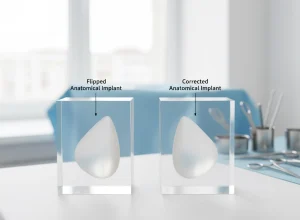
It is well known that the breast implants themselves contribute to their level of firmness when touched. Biometrically speaking, the latest “Gummy Bear” or highly cohesive silicone gels are built to hold their shape. These products possess a greater number of molecular cross-links that offer excellent structural support but could be firmer upon touch than standard liquid silicone or saline.
If you are a fan of the form-stable implant due to its surgical brilliance and high-definition projection, you most probably will take a longer time to feel “soft” compared to the less cohesive gels. Attaining biological balance implies matching the implant cohesivity with your own tissues. At Lin Health Europe Clinic, we combine professional rigor in the selection process to make sure that the implant density is closely aligned to your natural biometrics, resulting in a form both well defined and touch responsive.
Breast Implants in Turkey
By opting for Lin Health Europe Clinic, you are, in fact, making a step into a world-class sanctuary that remains at the forefront of clinical mastery in terms of managing your recovery. Understanding the “settling” period as a moment of uncertainty for many guests, our center in Turkey is one of the frontrunners in medical innovation, offering highly detailed monitoring and expert advice to make sure that the comfort and softness levels of your breast implants reach their utmost point.
When taking Lin Health Europe Clinic as your choice, you will be depending on a medical organization that is a meeting point of safety and artistry. Our work is supported with professional care so that your achievements remain stable, vibrant, and in perfect structural harmony. Enjoy a silhouette that embodies the very best of aesthetic and biological balance with the wonderful care of Lin Health Europe Clinic. In the heart of Turkey, your road to a smoothly and naturally soft profile is perfectly managed.
FAQ:
Usually, the tissue takes about three to six months to relax and the implants to settle. However, your body’s healing speed and the kind of device used are the main factors that determine this process.
Breast massages done in a particular way may be able to enlarge the breast pocket and help the gel to settle in a natural way. These movements should only be done if you have the direct advice of your surgical mastery team.
The initial feeling of hardness is generally due to localized edema and the chest muscles pressing the device. It’s simply a part of the inflammatory reaction that disappears when the restoration of systemic vitality occurs.
Symptoms may include a hard lump under the skin, pain or discomfort in the area, and a change in the shape or position of the breast. If you notice any of the above symptoms, please contact your doctor immediately so that a thorough examination can be done.
Saline units might possess a more consistent elasticity, while the latest solid silicone gels are created to imitate the natural tissue. The feeling of softness is very much dependent on the size of the implant and your own biological tissue coverage.
Tebbetts, J. B. (2002). Systemic Vitality and Surgical Precision in Mammary Procedures. Saunders Elsevier.
Adams, W. P. (2011). Breast Augmentation: Clinical Mastery and Biometric Stability. Saunders Elsevier.
Janis, J. E., et al. (2005). Thoracic Anatomy and Biometrics: Implications for Implant Softening. Plastic and Reconstructive Surgery.
Nahai, F. (2011). The Art of Aesthetic Surgery: Principles and Professional Rigor in Post-Operative Care. Quality Medical Publishing.
Maxwell, G. P., and Gabriel, A. (2014). The Evolution of Breast Implants and Biological Tissue Maturation. Aesthetic Surgery Journal.