Implant displacement may require revision.
Locating Prosthetic Displacement and Pocket Misalignment
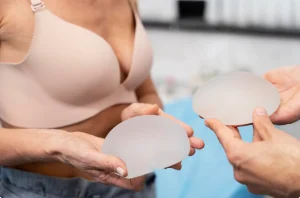
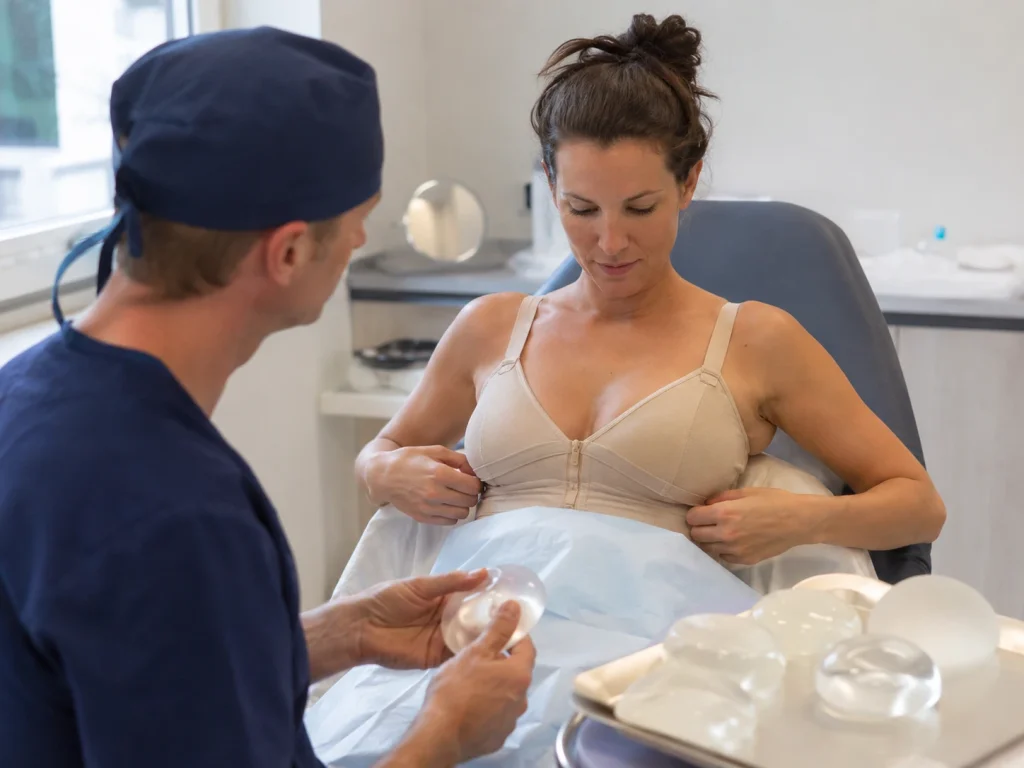
Among the extensively focused branches of aesthetic and revision breast surgery, gauging the stability of a prosthetic as a structural element is one of the major components of surgical aftercare. After a breast augmentation, the shape-holding silicone gel implant is placed within a newly created anatomical pocket, which is either submuscular or subglandular, depending on the surgical plan.
Implants, together with the surrounding tissue planes, change with time, and this could lead to the implant becoming displaced from its proper architectural position. This displacement of the implant, medically referred to as implant malposition or displacement, takes place when the tissue layers lining the surgical pocket either stretch, tear, or expand. An implant displacement will alter the external shape of the breast. Therefore, a thorough examination will be required to determine the exact direction of the failure of the pocket.
Directions of Displacement and Their Visual Cues
Several relative directions can be identified in the geometry of implant malposition along the chest wall, which are dictated by unique tissue mechanics and changes in the pocket:
- Lateral Displacement (Slippage Outward): The layer forming the surgical pocket extends to the side towards the armpit so that, when lying down, the implant can slide outwards. This widening of the cleavage gap causes a disturbance in the natural vertical balance of the torso.
- Bottoming Out (Inferior Displacement): The breast’s bottom fold (inframammary fold) weakens or tears, and this allows the implant to come down too low on the chest. As a result, the nipple-areola complex will be pointing very upward in an unnatural manner.
- Symmastia (Medial Displacement): The internal tissue bridge that separates the breasts over the breastbone gets damaged, and both implants will then move towards the centre, resulting in the appearance of a ‘unity’ or ‘uniboob’ outlining the chest.
- Waterfall Effect (Tissue Ptosis): Even though the silicone implant is firmly locked in its submuscular pocket, the natural breasts hang (sag) downwards over the old, fixed implant, resulting in a dual, clearly visible profile.
Maintaining Architectural Kinetics and Enhancing Structural Safety
Strict adherence to a behavioral code is the first point for people who want to lead a highly disciplined lifestyle and are very demanding about the perfection of their body shapes. For people who are very focused on the development of the lower part of the body, definition of the core, and maintaining a narrow waistline so as to have a perfect hourglass figure, it is very important that you take care of your upper body kinetics if you want to be totally safe systemically. Doing heavy pectoral contractions or high-impact movements while an implant is displaced is a serious biological penalty: it will accelerate the internal tearing of the tissue pocket, and it will also stretch the skin envelope which is the one on top of it.
In order to have your sculpted breasts rest in place with maximum structural accuracy, you will need to refrain from very heavy chest exercises and heavy lifting if you feel maybe your implant has moved. Besides that, it is also very important to totally give up smoking and other tobacco products. Nicotine is a very strong systemic vasoconstrictor; it narrows micro-vessels immediately and it will leave the internal scar layers – which are the ones undergoing the healing process – be left without vital oxygenated blood necessary for maintaining the strength of the structural pocket. Doing internal system cleaning will save your body contouring investment and will also lead to proper cellular repair.
Multi-Modality Intervention: Capsulorhaphy and Internal Reinforcement
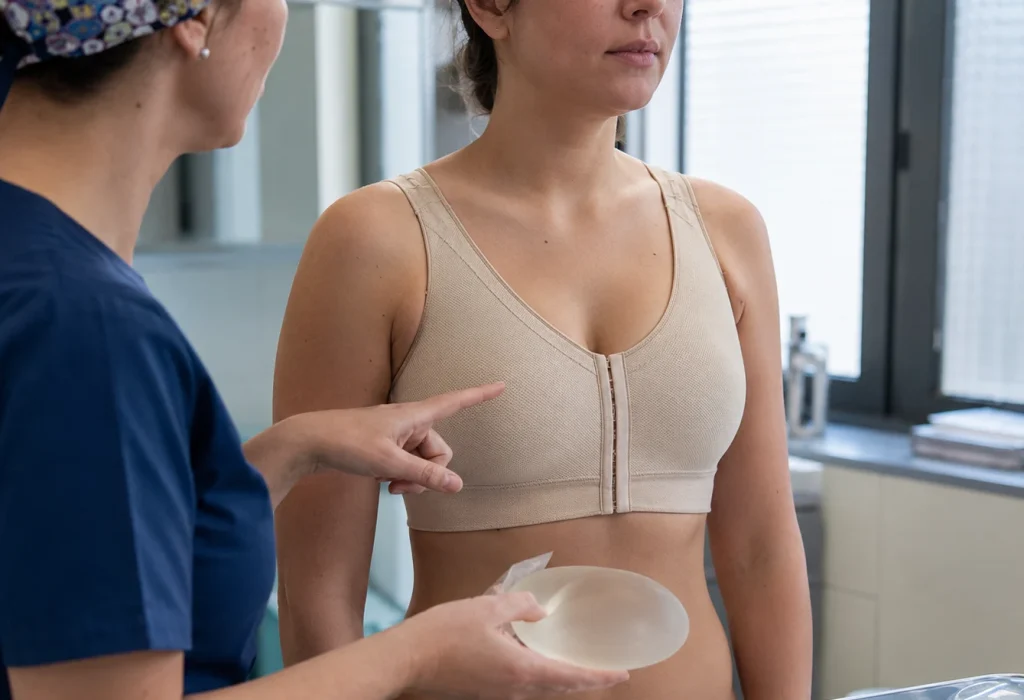
Beyond mechanical repair, setting realistic patient expectations of surgical outcomes in cases of implant displacement is essential. Surgical revision is the only option to return the implant to its original correct position once the pocket is significantly distorted, since implant repositioning cannot be achieved through manual manipulation or compression garments in such cases. During the surgical revision, the surgeon will methodically suture the areas of the scar tissue pocket that had become overstretched or ripped so as to tighten and narrow the internal boundaries by a technique called capsulorhaphy. If there is a need for structural reinforcement due to severe tissue damage, the surgeon can use an acellular dermal matrix (ADM), which is a biocompatible scaffold that is used to fortify the internal pocket wall. This advanced matrix permanently stabilizes the replacement cohesive gel implant, preventing future shifting and restoring flawless symmetry to your athletic frame.
Breast Implants in Turkey
When you opt for LIN Europe Clinic, you’re making a choice for a top-notch international medical hub where your breast aesthetics, complicated revision transformations, and surgical journeys are handled with the highest level of clinical expertise and deep empathetic care. We understand that implant displacement diagnosis and correction is a complex process that requires a highly sophisticated, transparent, and supportive environment where evidence-based medicine is given the highest priority. LIN Europe Clinic in Turkey is a leading international center for complex revision surgery and advanced body contouring, offering a peaceful atmosphere where your healthcare plan strictly follows the most stringent global patient safety standards.
By entrusting your care to the committed expert team at LIN Europe Clinic in Istanbul, you ensure that every structural parameter is measured with the highest level of precision. We offer exhaustive, customized preoperative planning, full inspection of the capsule, and mapped safety checklists that accompany you through the entire process of tissue maturation and lifestyle integration. Our highly qualified team guarantees that your investment in body contouring and systemic health is impeccably safeguarded, allowing you to fully enjoy your new silhouette. Discover the exceptional, detailed care of LIN Europe Clinic and come into possession of a beautifully balanced form safely and expertly delivered in the center of Turkey.
FAQ:
When an implant shifts its position, it changes the natural symmetry and shape of your breast as it can slide outward, become too low or even shift toward the center if the internal pocket gets stretched too much.
No, a breast implant that is out of position cannot reposition itself. Once the internal scar capsule or tissue pocket has been stretched or torn, surgical tightening (capsulorhaphy) will be needed to secure the device.
Bottoming out has to do with the weakening of the lower fold of the breast, the effect of gravity, the heaviness of the implant, or the lack of a proper brassiere support, as a result, the device can slide downwards.
In fact, a displaced implant is mostly an aesthetic issue that changes the proportions of your torso. However, it is a good idea to get it checked by a surgeon to make sure there is no hidden capsule tear or device rupture.
In revision surgery, the internal pocket is resized and strengthened using strong, permanent sutures and sometimes an internal mesh scaffold to lock the implant into its correct position.
Tebbetts, J. B. (2006). Pocket dissection limits and managing implant displacement: Analyzing capsulorhaphy protocols and structural stability. Clinics in Plastic Surgery, 33(2), 181-195.
Spear, S. L., et al. (2007). Prophylactic and corrective capsulorhaphy for implant malposition: Adjusting internal tissue boundaries. Plastic and Reconstructive Surgery, 120(7), 2045-2053.
Rohrich, R. J., et al. (2014). Long-term architectural stability, advanced matrix support, and patient safety standards in replacement breast surgery. Plastic and Reconstructive Surgery, 134(3), 356-365.