Modern implants are generally considered safe.
The Biometrics of Medical-Grade Silicone and Biocompatibility
Within the realm of breast augmentation and body enhancement, the safety of the implants used is considered the number one priority. The most common and entirely reasonable question by our patients is whether breast implants contain toxic chemicals that might poison the body. Strictly speaking, from the perspective of biometric safety, the answer is no. The latest breast implants are made with medical-grade silicone elastomers of the highest purity. Silicone is a totally biocompatible, chemically inert substance, which means it will not react with human tissues, change cellular DNA, or release any harmful heavy metals into your blood.
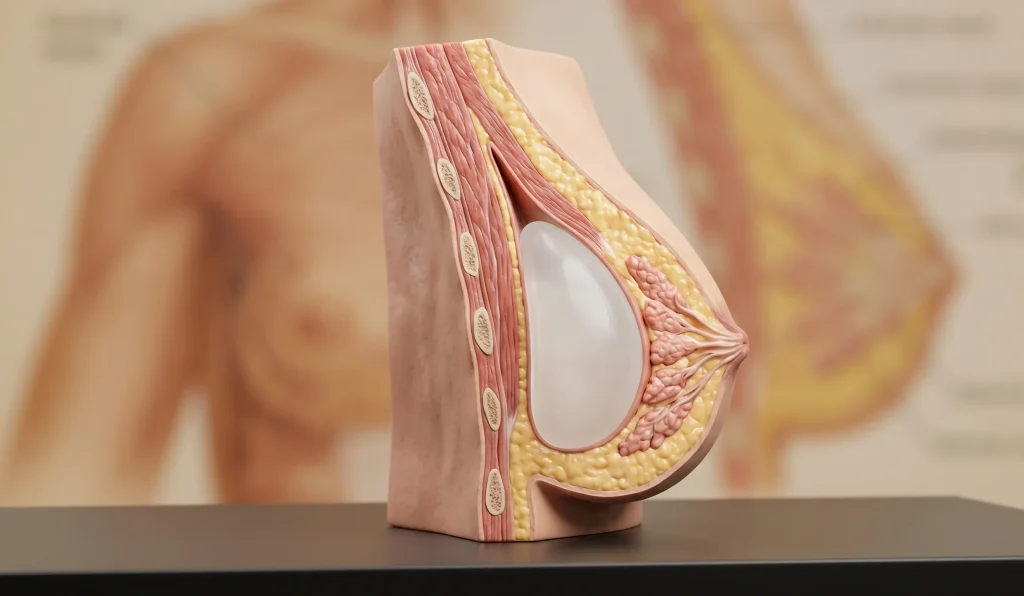
At LIN Europe Clinic, we inform that medical-grade silicone is among the materials most extensively tested and most reliable in the worldwide medical community. It is basically the very model biocompatible substance that is also used to make various life-supporting medical devices, including cardiac pacemakers, artificial joints, and intravenous tubing. The human body is so tolerant of it because it is biologically inert. We use only first-class, FDA-approved breast implants to ensure that your breast augmentation is not only safe but also faithfully mirrors your native biological balance without introducing any harmful substances into your physiological environment.
Medical Innovation: Form-Stable Cohesive Gel Technology

At one point, the hazards of silicone toxicity were reasoned to be possible due to the earliest models of implants used in the 1980s, which contained liquid silicone gel. If such a device ruptured, the liquid silicone could travel to nearby lymph nodes. But today, thanks to medical innovation, this risk was completely eliminated by the development of highly cohesive, form-stable silicone—nicknamed “gummy bear” implants.
The best implants today have a strongly linked cross-shaped network of molecules inside. So instead of being a liquid, the silicone behaves more like a solid piece of material. Therefore, if the shell is cut or torn, the gel is unable to leak, spill, or travel anywhere in your body since it stays completely local and is always structurally stable. This neat move in surgical brilliance even ensures that should there be any kind of trauma to the chest, the internal parts of the implant will remain in the same place, and your systemic vitality will be shielded for many years to come.
Understanding Breast Implant Illness (BII) and Immune Response
Even though implants are not chemically toxic, there is a need to maintain honesty and openness in medical practice by talking about Breast Implant Illness (BII). BII is a name given to a range of different whole-body symptoms—like tiredness, joint pain, and memory problems—that have been introduced by a small number of patients after breast augmentation. It should be emphasized that BII is not a result of toxic exposure, but rather an immunological phenomenon.
In very rare instances, a person’s very sensitive immune system might identify the implant as a foreign body and respond by producing a chronic, low-grade inflammatory condition. At LIN Europe Clinic, such issues are handled with utmost professional rigor. If a patient’s immune system results in incompatibility with a foreign object, it is possible in a surgical procedure called en bloc capsulectomy to systematically remove both the implants and the scar tissue surrounding them. At the same time, taking the device away halts the immune response and reverts the body to its natural state. Nonetheless, for most of the world’s patients, the immune system accepts the silicone without causing any issues, resulting in a permanent state of structural harmony.
BIA-ALCL: Texture Profiles and Elite Clinical Standards

Yet another issue that has made headlines from time to time is Breast Implant-Associated Anaplastic Large Cell Lymphoma (BIA-ALCL). First, it should be emphasized that this is not breast cancer; it is a very rare, curable cancer of the immune system that only occurs in the rolling scar tissue lining immediately around the implant. Worldwide clinical evidence has shown that BIA-ALCL is linked only to heavily macro-textured implants, which are devices that have a rough, sandpaper-like surface that very aggressively grips the chest tissue and causes continuous irritation.
Employing top-notch clinical skills, international safety authorities have almost entirely discontinued the supply of strongly macro-textured implants. At LIN Europe Clinic, we entirely disallow the use of very textured implants. We only work with ultra-smooth or advanced nano-textured implants, which can move effortlessly against the natural breast tissue without causing severe inflammatory friction. Thanks to this careful selection of implants, we are capable of completely eradicating BIA-ALCL-associated risks, and your breast augmentation operation is carried out according to the highest safety and world-class standards.
Breast Implants in Turkey
Opting for LIN Europe Clinic is your ticket to a global health resort where the interplay of pioneering anatomical science and relentless patient safety is placed at the forefront. We know that deciding on a breast augmentation is a big step, so you need to distinguish between false information on the internet and real medical facts to be able to relax completely. Our luxury facility in Turkey is a world leader in body contouring methods, providing a perfect setting where your health for the years to come is the top priority and closely monitored.
When you put your deep trust in LIN Europe Clinic, you are selecting a top-tier medical platform that works with full disclosure and professional care. We oversee your whole transformation journey with accuracy, using only devices that are the most rigorously tested in the world and approved by both the FDA and CE. Savor the exquisite care at LIN Europe Clinic and get a magnificent, youthful, beautifully sculpted figure that represents the absolute height of aesthetic and biological success, delivered safely in Turkey.
FAQ:
No, contemporary breast implants are created from medical-grade, highly purified silicone which is totally biocompatible and chemically non-reactive. They do not release harmful chemicals or heavy metals into your blood, organs, or breast milk.
Modern cohesive gel implants are often called solid gummy bears because even when their outer silicone shell gets punctured, the gel inside maintains its overall shape. The silicone will neither flow nor disseminate through your body, thus your soft tissues will remain completely unaffected.
Based on clinical identification, Breast Implant Illness is an inflammatory condition, local or systemic, that a very minimal percentage of women suffer from due to the hyperactivity of their immune system. It happens as the body’s immune response to an implanted foreign body, not due to toxicity of the implant itself.
No, a large number of comprehensive research projects carried out over the decades have demonstrated that breast implants are not a cause of breast cancer and they do not hinder the cancer treatment methods. However, there is a very rare type of lymphoma which is only linked to heavily textured implants, hence high-quality clinics only use the safest, smooth-shell option.
Both saline and highly cohesive silicone implants have been approved by the FDA, subjected to strict testing, and deemed absolutely safe for long-term implanting inside human bodies. Saline implants are injected with a sterile saltwater liquid which your body can easily absorb in the event of a rupture, however, modern silicone gel implants provide a better, more natural sense of touch.
Coroneos, C. J., Selber, J. C., Offodile, A. C., Garvey, P. B., & Clemens, M. W. (2019). US FDA Breast Implant Postapproval Studies: Long-term Outcomes in 99,993 Patients. Annals of Surgery, 269(1), 30-36.
Spear, S. L., Murphy, D. K., & Allergan Silicone Breast Implant US Core Clinical Study Group. (2014). Natrelle round silicone breast implants: Core Study results at 10 years. Plastic and Reconstructive Surgery, 133(6), 1354-1361.
Kaplan, J., Rohrich, R. J., et al. (2021). Breast Implant Illness: A Topic in Review. Gland Surgery, 10(1), 430-443.
Clemens, M. W., Brody, G. S., Mahabir, R. C., & Miranda, R. N. (2015). How to Diagnose and Treat Breast Implant-Associated Anaplastic Large Cell Lymphoma. Plastic and Reconstructive Surgery, 135(4), 1010-1020.
McGuire, P., Reisman, N. R., & Murphy, D. K. (2019). Risk Factor Analysis for Capsular Contracture, Malposition, and Late Seroma in Subjects Receiving Natrelle 410 Form-Stable Silicone Breast Implants. Plastic and Reconstructive Surgery, 143(1), 9-19.